Thermal performance of hempcrete blocks: resistance, thermal lag and comfort
Hempcrete blocks offer a range of thermal resistance depending on thickness (from 1.5 to 4.6 m².K/W) and provide up to 18.5 hours of thermal lag at 30 cm, delivering effective summer comfort through delayed heat transfer and moisture regulation.
 By Julien Compain
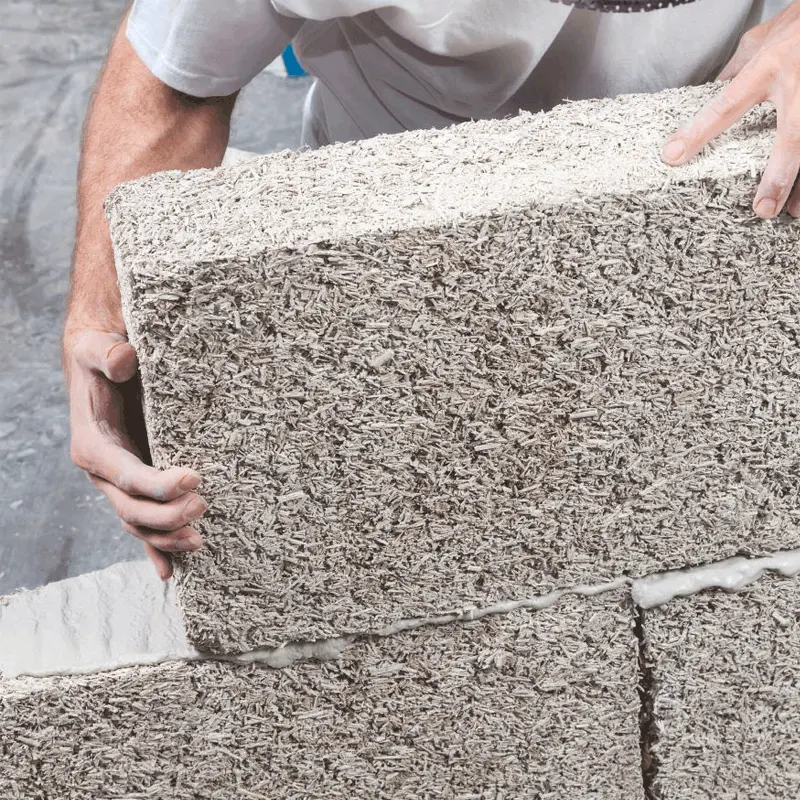
Hempcrete blocks offer a range of thermal resistance values depending on thickness (from 1.5 to 4.6 m².K/W) and provide thermal lag of up to 18.5 hours at 30 cm, delivering effective summer comfort through delayed heat transfer and moisture regulation.
Thermal conductivity and resistance
Two key figures are enough to frame the subject.
Thermal conductivity λ measures how easily heat passes through a material: the lower the value, the better the insulation. Hempcrete typically has a λ of around 0.065 W/(m.K).
Thermal resistance R is derived from conductivity and thickness: R = thickness ÷ λ. It is expressed in m².K/W, and the higher the value, the better the wall resists heat loss.
An honest perspective
With λ ≈ 0.065, hemp insulates less effectively per unit thickness than mineral wool (λ ≈ 0.035) or polyurethane (λ ≈ 0.025). Greater thickness is therefore needed to achieve the same R. However, unlike these insulants, hempcrete blocks also act as a wall, provide thermal mass, and regulate humidity. Comparing only by R gives an incomplete picture.
For a more detailed look at this topic, see the page Comparison with concrete block, brick, aerated concrete and mineral wools.
What thickness for what performance?
| Thickness | Thermal resistance R (m².K/W) | Thermal lag (h) | Block weight (kg) | Typical use |
|---|---|---|---|---|
| 10 cm | 1.5 | 6.1 | 6.5 | Partition walls, lightweight lining |
| 15 cm | 2.3 | 9.25 | 10 | Standard internal lining, partitions |
| 20 cm | 3.0 | 12.3 | 13 | High-performance internal (IWI) and external (EWI) insulation, timber frame infill |
| 30 cm | 4.6 | 18.5 | 21 | High-performance EWI, full wall with distributed insulation |
The BIOSYS building system offers a 30 cm hempcrete block with a nominal thermal resistance of 4.6 m².K/W. For thermal studies, the practical value used is 4.2 m².K/W, taking into account thermal bridges from the reinforced concrete post-and-beam structure. This distinction is important for thermal consultants and regulatory calculations.
Each thickness is suited to specific uses. 10 cm blocks are ideal for partitions and lightweight linings, while 15 cm is typical for standard internal insulation. 20 and 30 cm thicknesses are suitable for enhanced IWI or EWI performance, with a notable improvement in thermal comfort.
The choice of thickness should be based on technical constraints and regulatory targets. The MULTICHANVRE simulator allows you to fine-tune the required thickness to achieve a given thermal resistance.
Thermal lag: the key to summer comfort
Thermal lag is the time it takes for external heat to pass through the wall and reach the interior. This property is particularly important for comfort during hot weather.
A 30 cm hempcrete block wall offers a thermal lag of around 18.5 hours. In practice, the peak external heat in mid-afternoon (around 3 pm) reaches the inside in the early morning the next day (~9 am). This time shift allows you to benefit from cool night air by opening windows and prevents heat build-up in the house.
By comparison, mineral wool with equivalent thermal resistance provides a lag of only 4 to 6 hours, resulting in an indoor heat peak in the evening—just when occupants are seeking cooler conditions. This difference is a key factor in reducing the need for air conditioning and maintaining natural thermal comfort.
Thermal lag should be factored into overall performance calculations, even if it is not given much weight in current regulations. For more details, see the guide Thermal performance of hempcrete blocks: R, thermal lag and summer comfort.
Thermal mass and the warm wall effect
Hempcrete has a density of around 300 kg/m³, placing it between lightweight insulants and heavyweight materials. This mass is sufficient to store heat while still providing good insulation.
This thermal mass plays a dual role:
- It dampens daily temperature swings, reducing indoor temperature fluctuations.
- It creates a warm wall effect in winter, where the internal surface temperature of the wall stays close to the ambient air, avoiding the cold radiation often felt from poorly insulated walls.
This level of comfort, which is hard to quantify by R-value alone, contributes to a pleasant indoor environment and can allow you to lower your heating setpoint, leading to energy savings.
This thermal mass is a specific advantage of hempcrete blocks compared to very lightweight or thin insulants, which do not provide this benefit.
Moisture regulation and indoor air quality
The woody core of the hemp stem (shiv) gives the block notable hygroscopic properties. It absorbs water vapour when the air is humid and releases it when the air is dry, helping to stabilise indoor relative humidity within a comfortable range.
The benefits are many:
- Improved respiratory comfort, as air that is too dry or too humid can cause discomfort or health issues.
- Reduced risk of condensation and mould growth, especially useful in older or poorly ventilated buildings.
- Protection of the building fabric, particularly in renovation, where vapour permeability is essential for material durability.
To preserve this regulatory function, the choice of render is crucial. It is recommended to use vapour-open renders such as lime, earth or clay indoors, and lime with full mesh reinforcement outdoors. Impermeable renders, such as some plasters or paints, block this capacity and should be avoided. For more details, refer to the guide Which renders for hempcrete block walls? Complete guide 2026.
Hempcrete blocks are also rated A+ for indoor air quality, confirming they emit no harmful substances.
Acoustics: absorption and sound comfort
The cellular structure of hemp shiv provides a measured sound absorption coefficient of α = 0.85 for the BIOSYS system. This indicates a strong ability to absorb sound waves, helping to reduce airborne noise.
In practice, you can expect:
- Noticeable reduction of noise between rooms, especially for partition walls.
- Less reverberation in living spaces, improving acoustic comfort.
While these acoustic benefits do not match walls specifically designed for sound insulation, they are a real asset in homes, offices and commercial buildings.
Limitations and practical considerations
A few points to bear in mind to avoid unrealistic expectations:
- Significant thickness: To achieve high thermal resistance values (R = 4.6 m².K/W), a minimum thickness of 30 cm is needed. This can be an issue in renovations where living space is limited.
- Loss of usable floor area: For internal wall insulation (IWI), the block thickness reduces usable space—an important trade-off to consider.
- Thermal bridging: Openings, junctions and penetrations can reduce overall performance. Careful installation and suitable detailing are essential.
- Non-loadbearing: Hempcrete blocks are not structural. They must be supported by a loadbearing wall or frame (timber or reinforced concrete in the case of BIOSYS).
- Thermal study required: For projects subject to regulation, a thermal study that accounts for the specific properties of hempcrete blocks is essential to validate actual performance.
For more technical information on installation and constraints, see the documentation on the Technical documentation: installation guide, quick reference and flyer in PDF page.
Certification, technical assessment and regulation
The MULTICHANVRE range is currently undergoing certification, which will further strengthen official recognition of its performance.
The CSTB Technical Assessment (Avis Technique) previously held by the BIOSYS system has expired and is currently being renewed.
The values used for thermal studies include the effects of thermal bridges, particularly for BIOSYS, and are essential for regulatory compliance.
Hempcrete blocks contribute positively to RE2020 (France's environmental building regulation), thanks to:
- Thermal insulation performance.
- Thermal mass and lag, improving summer comfort.
- CO₂ storage, confirmed by a verified FDES (environmental product declaration).
This bio-based material is part of a comprehensive, sustainable environmental approach. For more on these aspects, see Hempcrete block and RE2020: what the regulations say.
Further resources and practical guides
To support both professionals and private individuals in their projects, several resources are available:
- The MULTICHANVRE simulator to adjust thickness according to thermal resistance targets.
- Practical guides on installation, compatible renders and maintenance, including How to install a hempcrete block: technical guide for IWI, EWI, partitions, floors and Which renders for hempcrete block walls? Complete guide 2026.
- Detailed technical documentation for professionals, available at Technical documentation: installation guide, quick reference and flyer in PDF.
- Case studies and feedback on Projects completed with hempcrete blocks.
- A responsive sales team with a 48 working hour turnaround for quote requests via Request a quote.
These tools make it easier to integrate hempcrete blocks into new-build or renovation projects, ensuring technical and regulatory consistency.
Frequently asked questions
What thickness of hempcrete block should I choose for effective insulation?
The choice depends on the application and desired performance. For standard internal insulation, 15 cm with R = 2.3 m².K/W is common. For high performance, 30 cm gives R = 4.6 m².K/W. The MULTICHANVRE simulator helps you fine-tune to your requirements.
How important is thermal lag for summer comfort?
Thermal lag is the time it takes for heat to travel through the wall. With 18.5 hours at 30 cm, hempcrete blocks shift the heat peak to the night, reducing daytime overheating and improving comfort without air conditioning.
How do hempcrete blocks regulate humidity in a house?
Thanks to the hemp shiv, the block absorbs water vapour when the air is humid and releases it when dry, stabilising relative humidity within a comfortable range. This improves indoor comfort and protects the building fabric.
Are hempcrete blocks compatible with all types of render?
No, to preserve their hygroscopic properties, you should use vapour-open renders such as lime, earth or clay indoors, and lime outdoors. Impermeable renders block humidity regulation and should be avoided.
Can hempcrete blocks be used as loadbearing walls?
Hempcrete blocks are not structural. They must be used to line an existing loadbearing wall or as infill in a frame, such as timber or reinforced concrete (as in the BIOSYS system).
What are the main limitations of hempcrete blocks for insulation?
The main constraints are the thickness required for high thermal resistance, the loss of usable floor area with IWI, and the need for careful installation to minimise thermal bridging.
How is the thermal performance of hempcrete blocks accounted for in RE2020?
Hempcrete blocks contribute positively to RE2020 thanks to their insulation, thermal mass, thermal lag and CO2 storage. Environmental data sheets and a thermal study are still required to validate performance.
Read next
Planning a hemp block project?
Tell us about your project: we will reply within 48 working hours with a tailored costing.