Hemp blocks: the complete guide
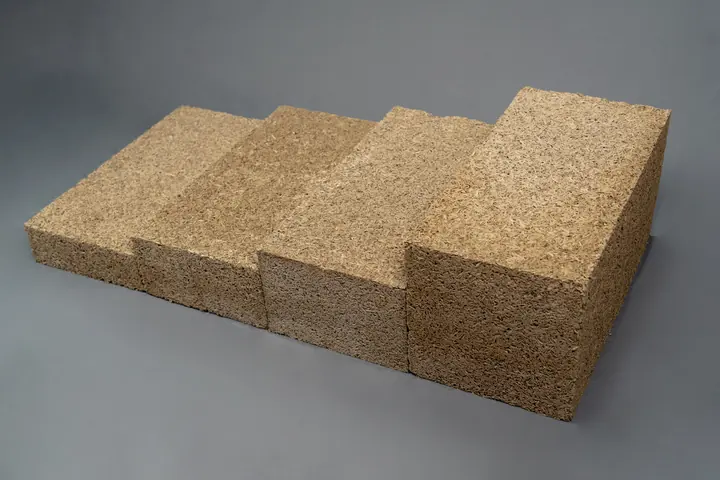
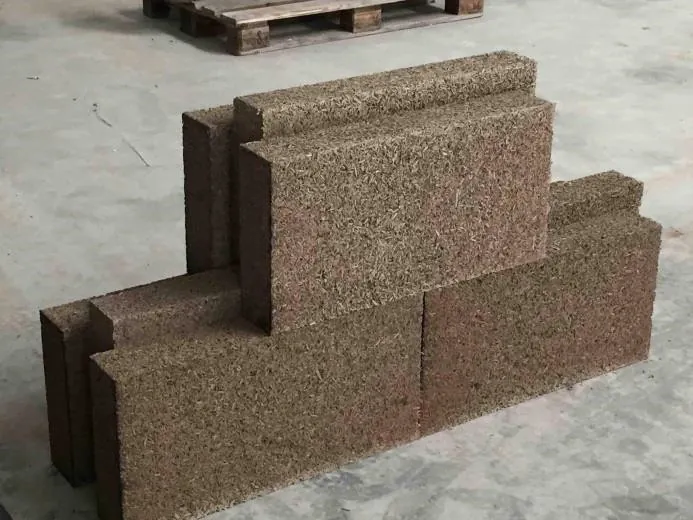
Also known as hempcrete blocks, lime-hemp blocks or hemp bricks, they are a bio-based, prefabricated masonry insulation material that combines insulation, thermal mass and humidity regulation in a single wall.
What is a hemp block?
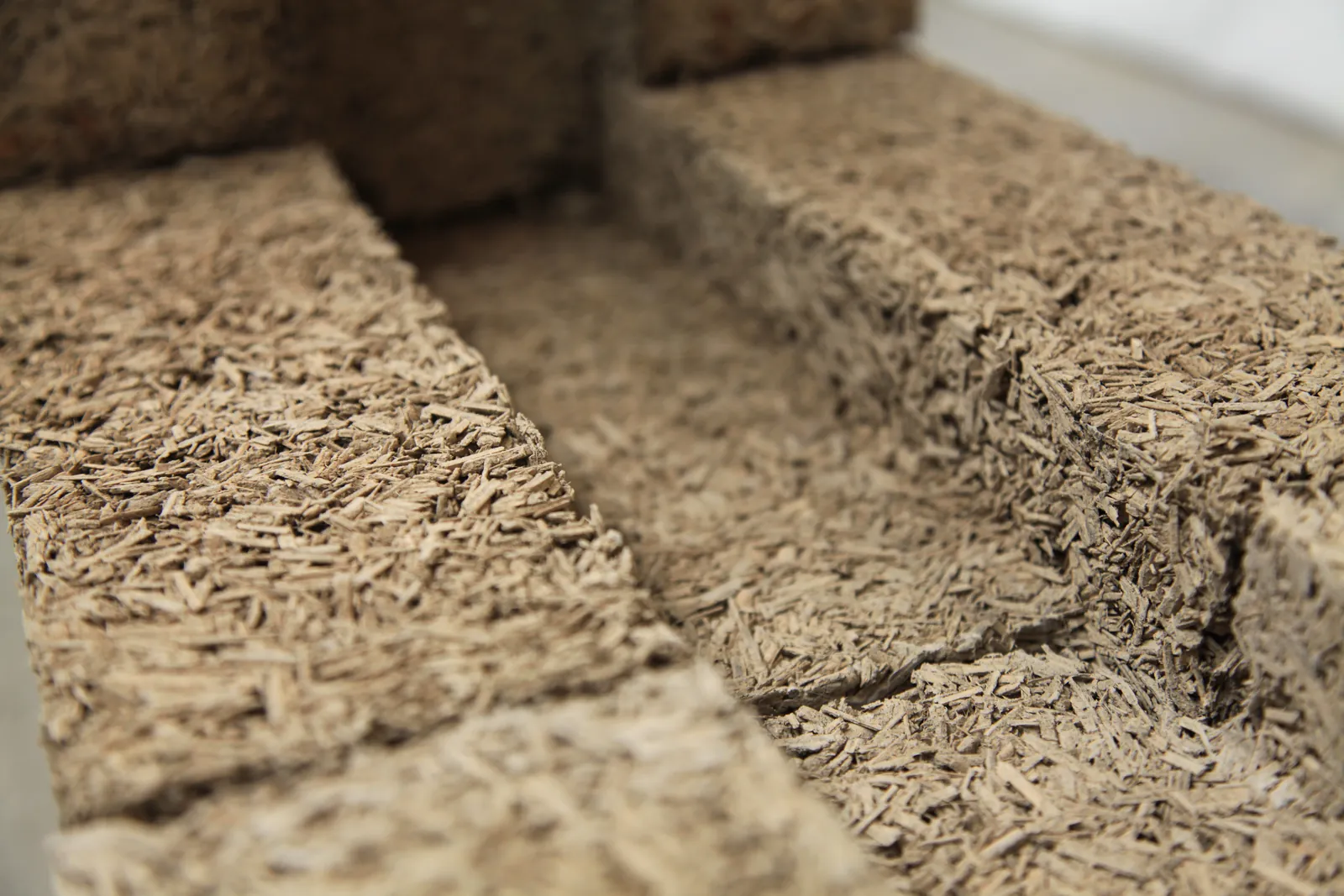
A hemp block is hempcrete prefabricated in a factory and delivered ready to lay. It combines hemp shiv, the woody core of the hemp stalk, with a natural mineral binder. Unlike hempcrete cast on site (the “wet” method), the block does away with drying time and is laid like a standard concrete block, with thin joints or simply by interlocking (BIOSYS system).
It is an insulating, breathable material: it creates a healthy building envelope that insulates against heat loss, regulates humidity and dampens noise.
The block does not carry the loads of the structure: it must be combined with a load-bearing structure (supporting wall, timber frame, or reinforced concrete post-and-beam structure in the case of the BIOSYS system).
Technical specifications
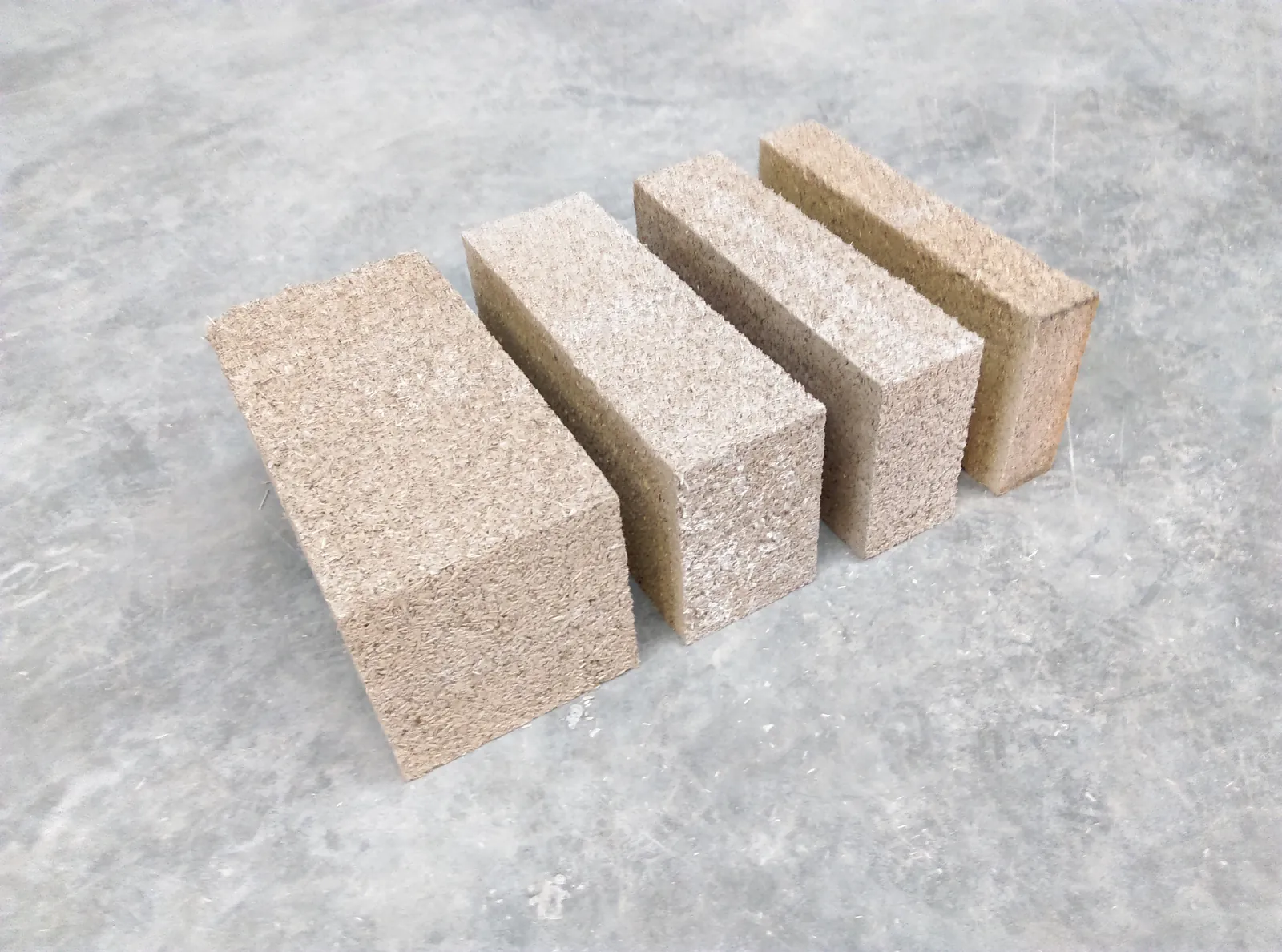
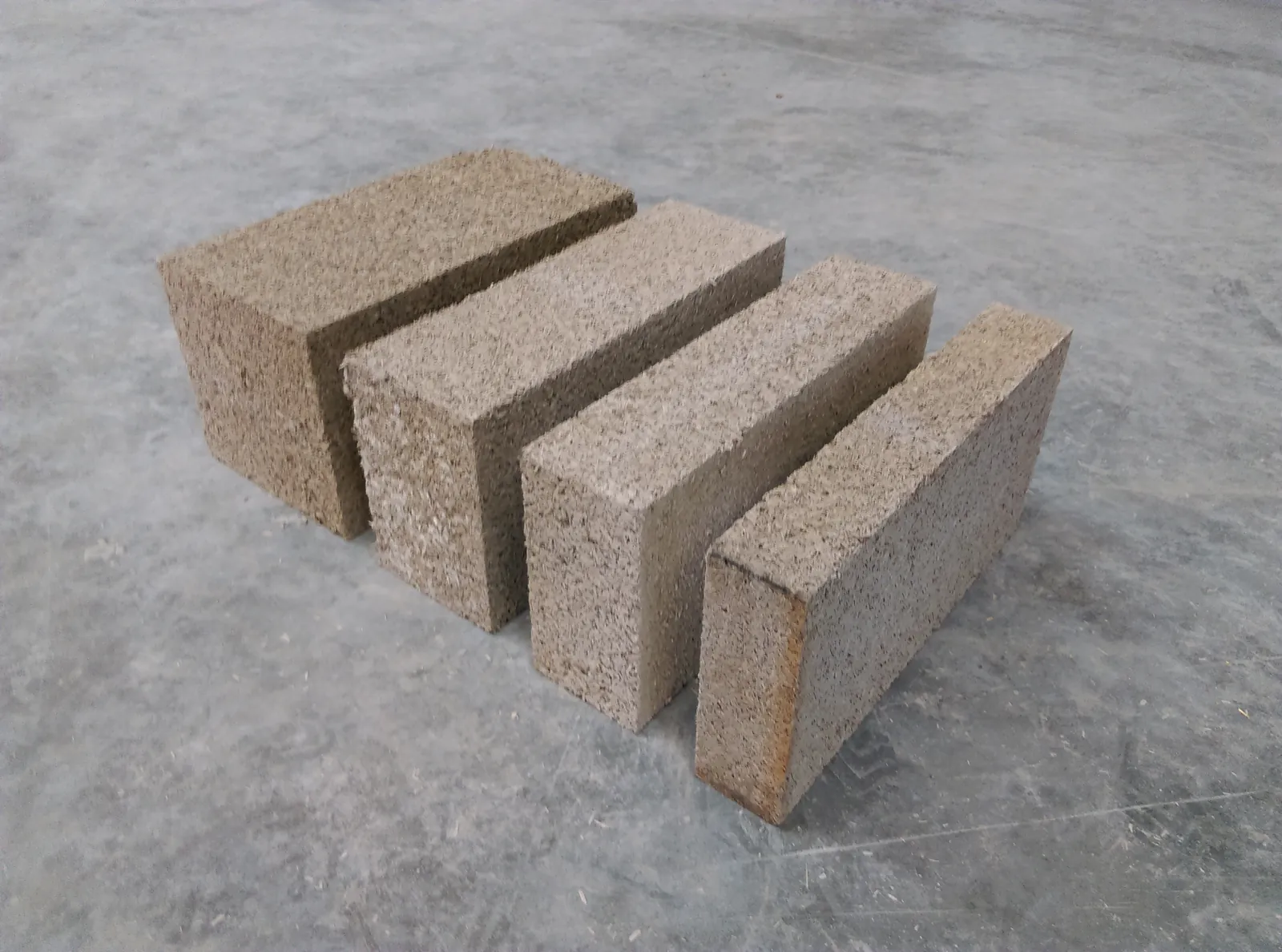
The essentials of our MULTICHANVRE hemp block (straight edges), as documented in our installation guide.
Our two ranges
MULTICHANVRE for insulating, lining and building partition walls. BIOSYS for building façade walls in new builds. Thermal resistance is given as a dry value and as a design value: the design value accounts for the moisture content of the material once installed, and is the one used in thermal studies.
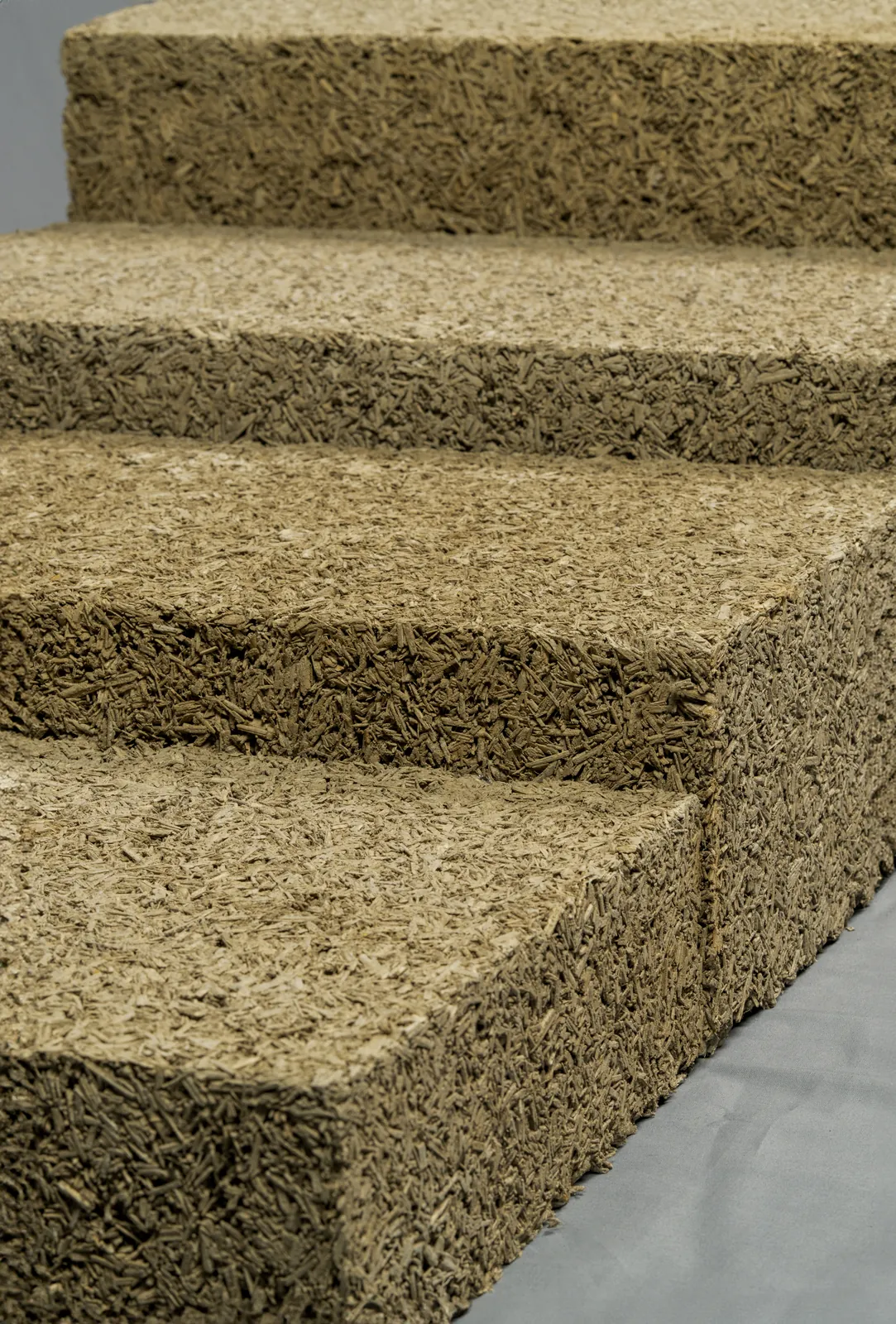
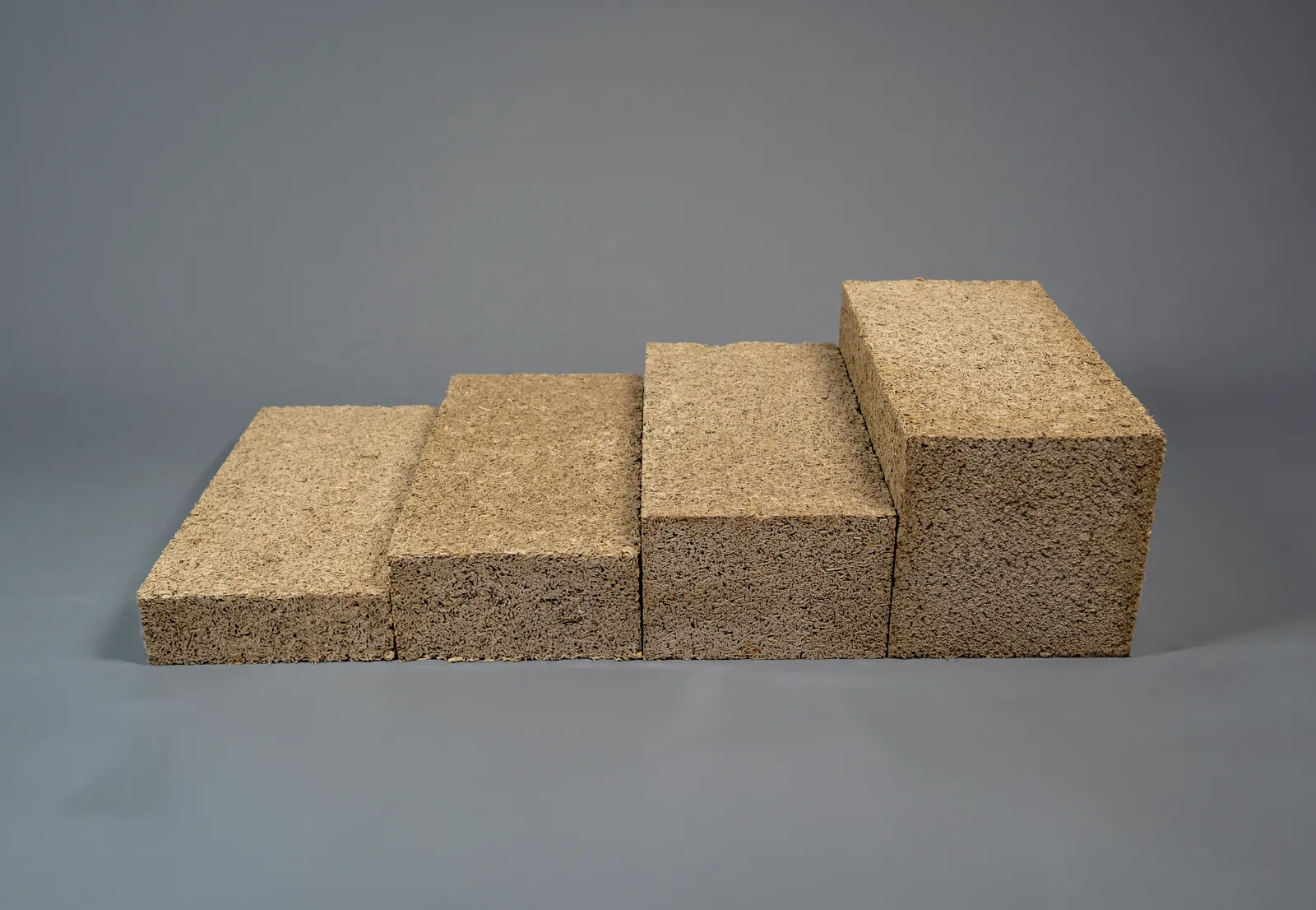
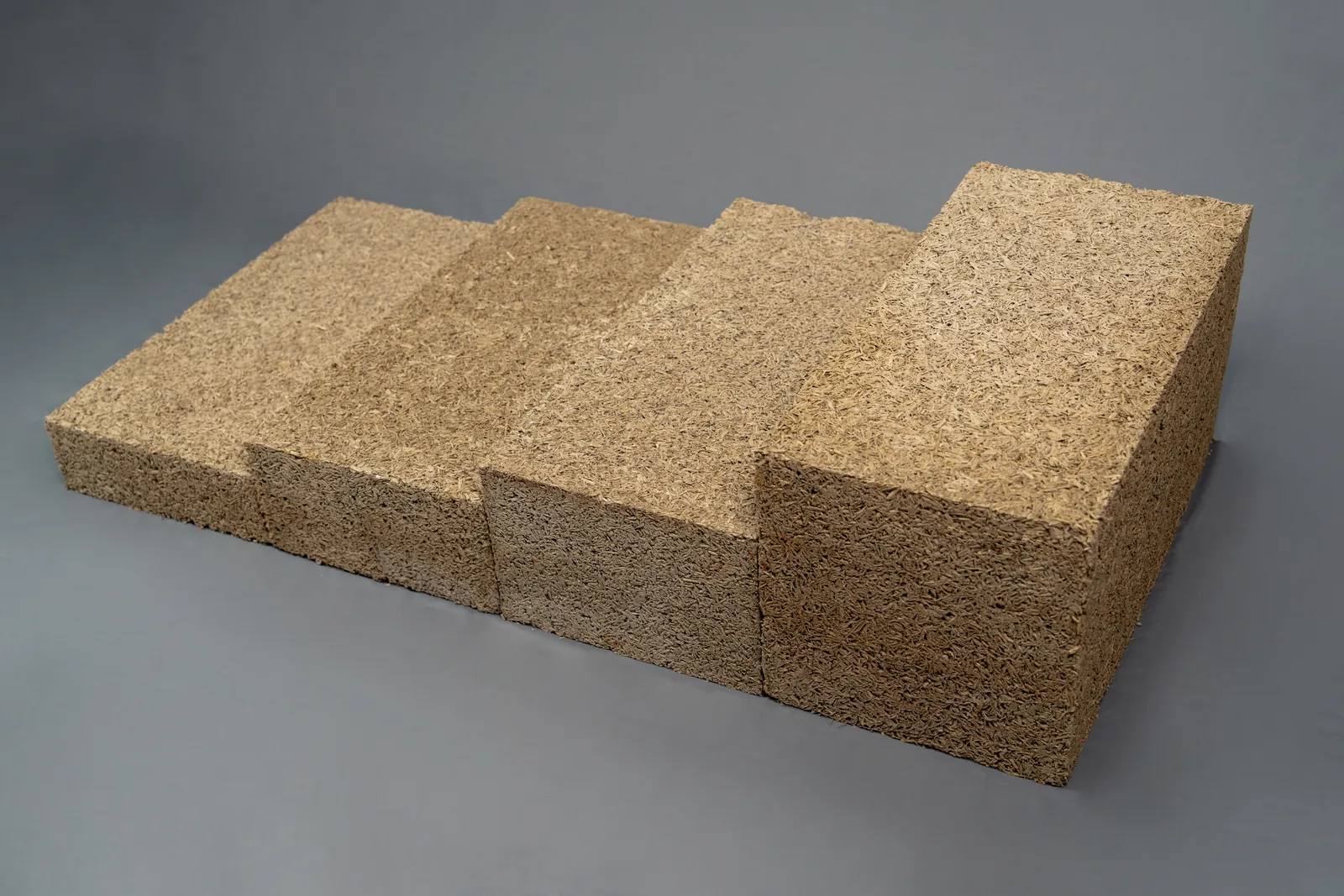
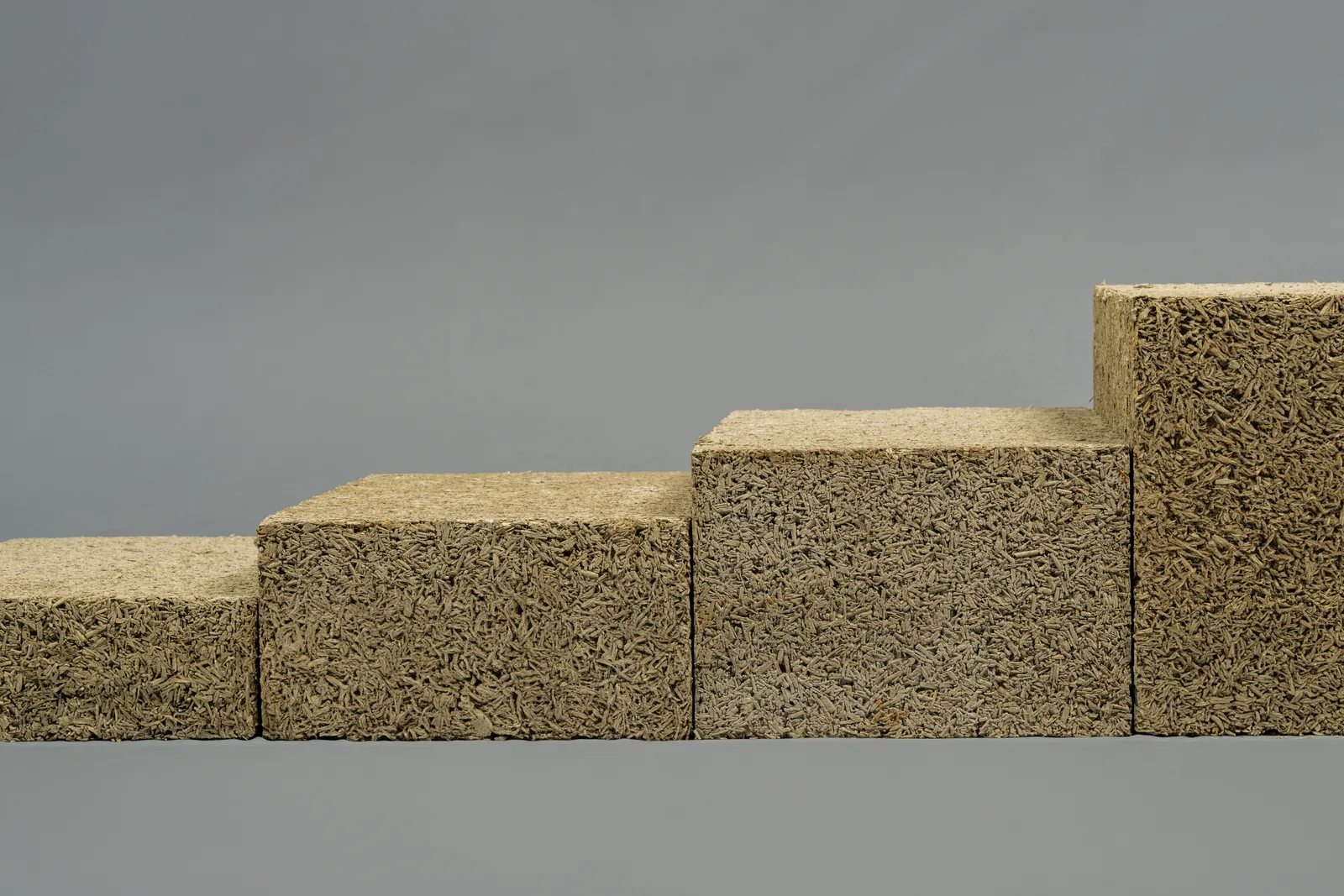
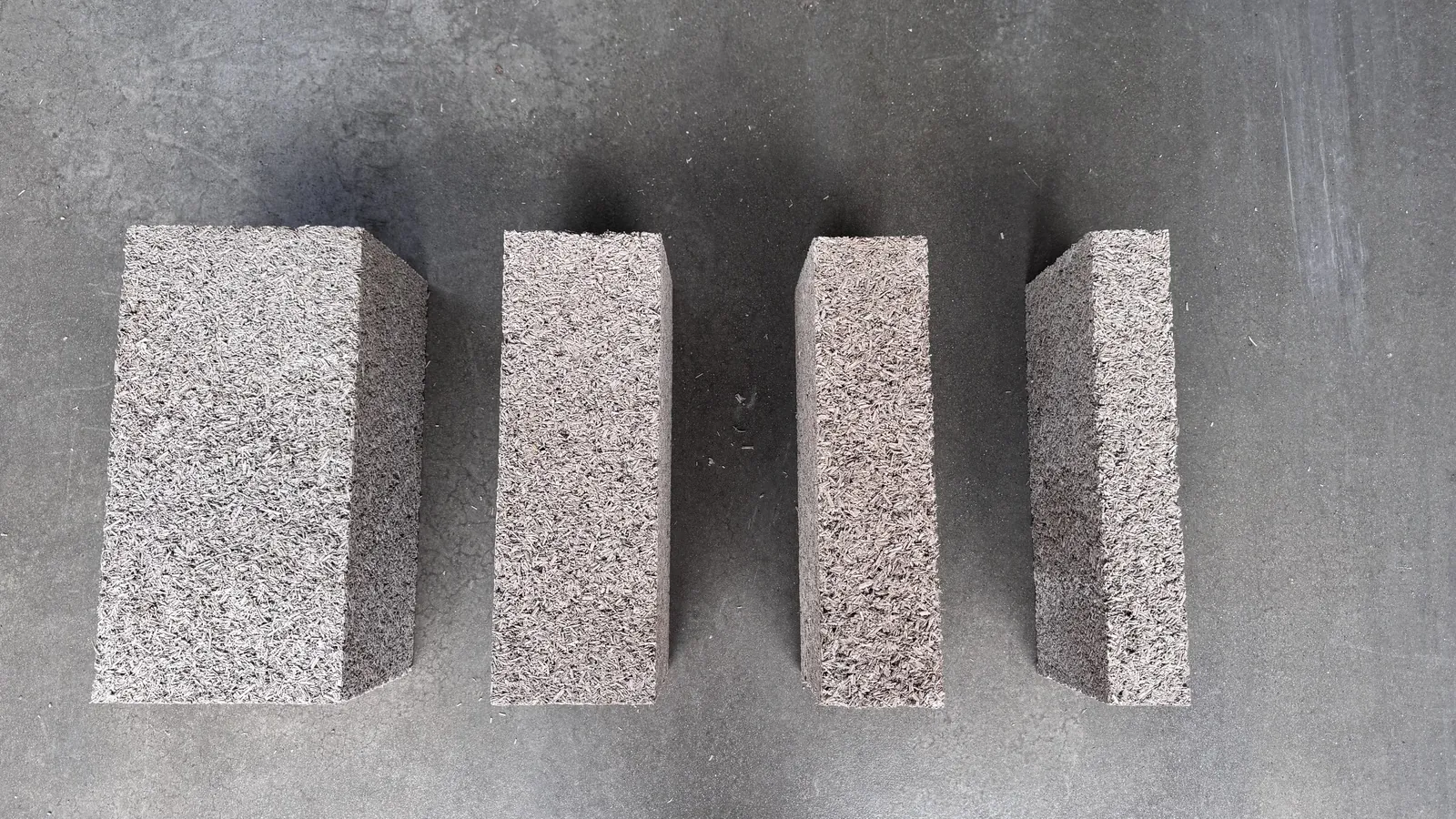
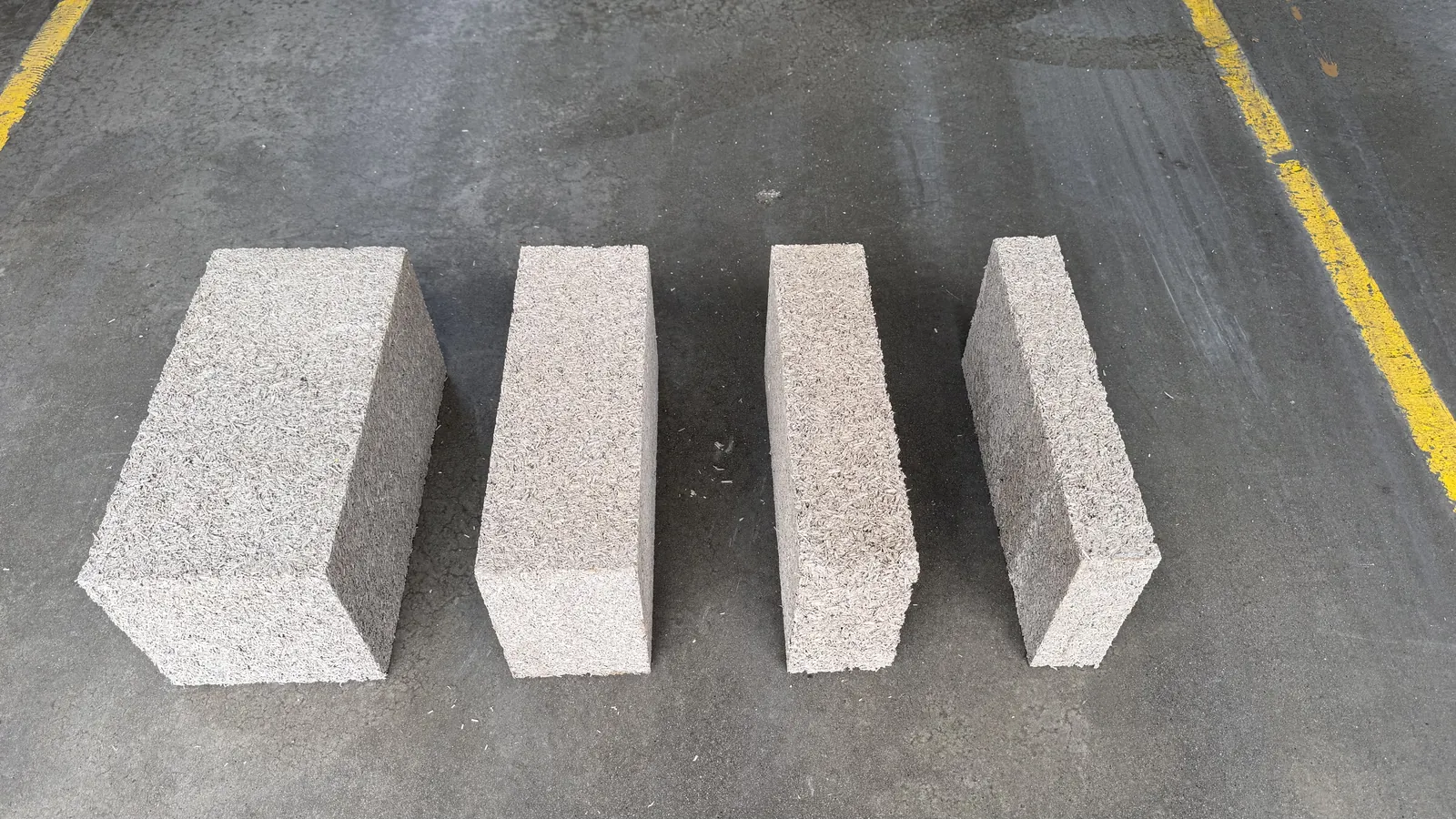
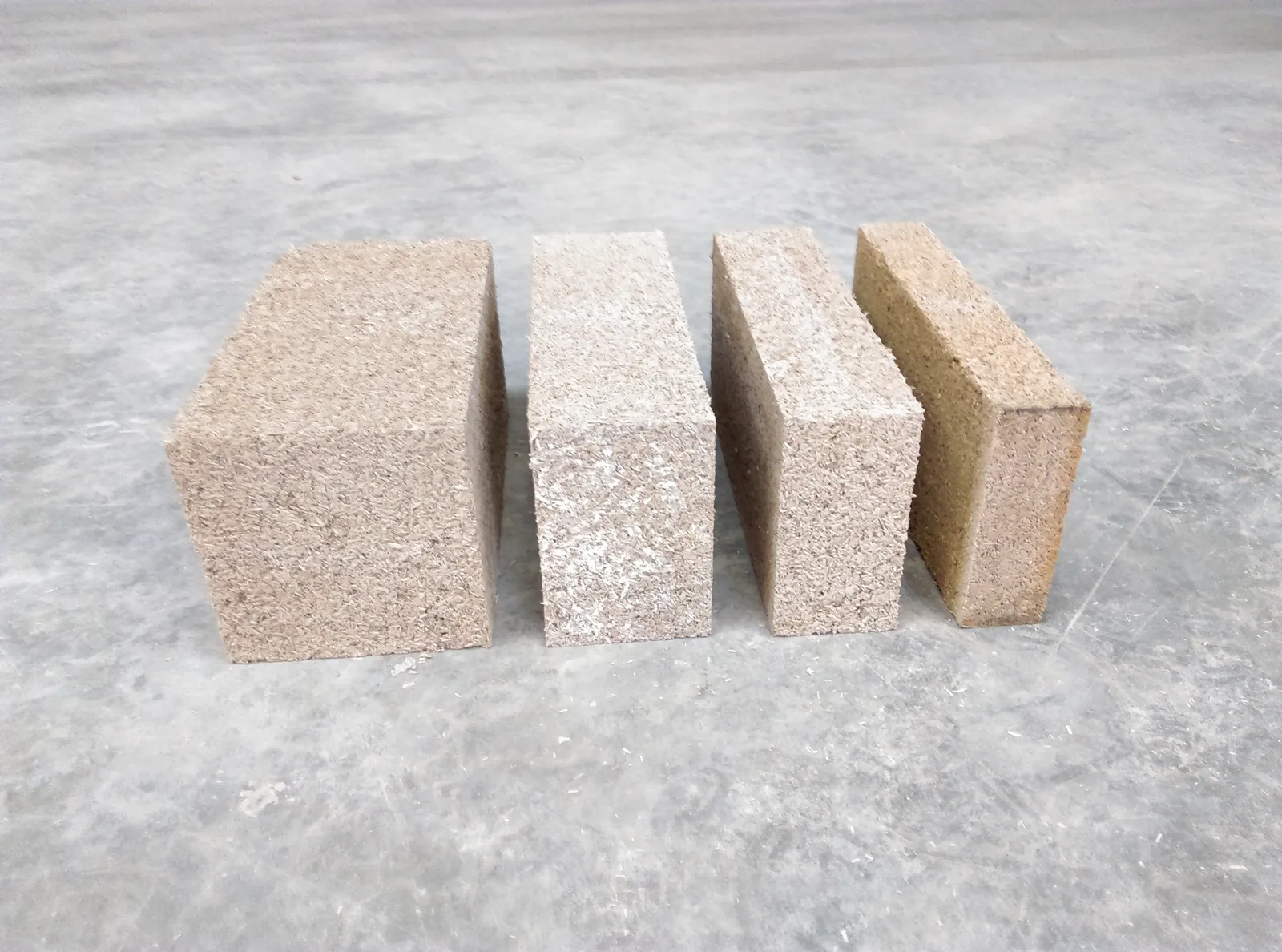
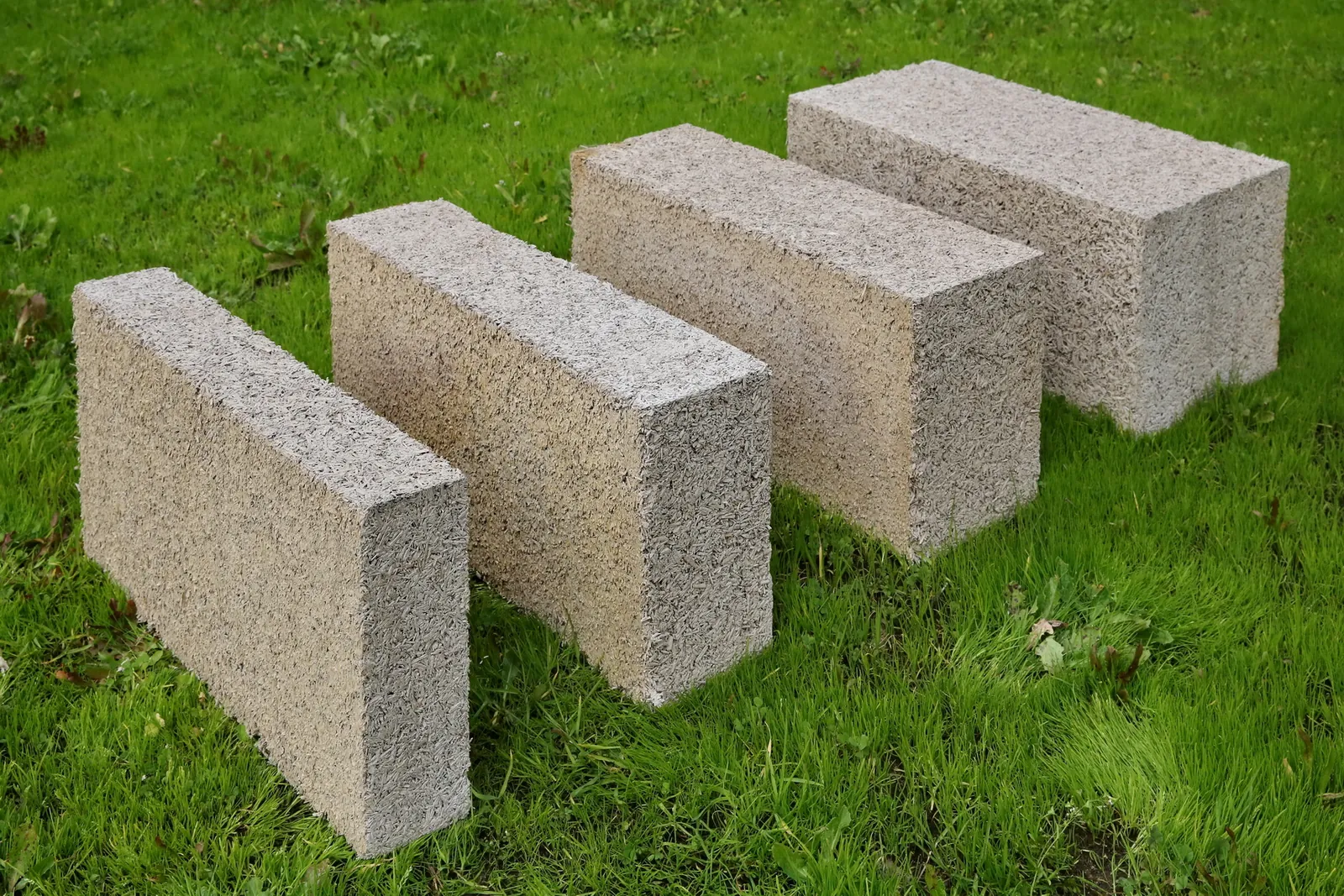
 Insulation · 4 thicknesses
| Thickness | R dry value | R design value | Thermal lag | Weight | Packaging | Recommended use |
|---|---|---|---|---|---|---|
| 10 cm | 1.5 | 1.4 | 6.1 h | 6.5 kg | 120 blocks · 21.6 m²/pallet | IWI / EWI |
| 15 cm | 2.3 | 2.1 | 9.25 h | 10 kg | 80 blocks · 14.4 m²/pallet | IWI / EWI / partition walls |
| 20 cm | 3.0 | 2.8 | 12.3 h | 13 kg | 60 blocks · 10.8 m²/pallet | IWI / EWI / partition walls / infill / floors |
| 30 cm | 4.6 | 4.2 | 18.5 h | 21 kg | 56 blocks · 10.08 m²/pallet | High-performance IWI and EWI / heavy partition walls / infill / floors |
 Construction · dry interlockingDry interlocking, no adhesive or mortar
| Block | Dimensions | Weight | Packaging | Role |
|---|---|---|---|---|
| Standard block | 60 × 30.8 × 30 cm | 21 kg | 24 blocks · 4.44 m²/pallet | Main wall sections |
| Column block | 15 × 15 cm cavity | 16 kg | 24 blocks/pallet | Formwork for concrete columns |
| Double column block | two 15 × 15 cm cavities | 15 kg | 24 blocks/pallet | Formwork for adjoining columns, double stiffeners, mullions and piers |
| U-shaped ring beam block | 15 × 22 cm cavity | 14 kg | 24 blocks/pallet | Formwork for beams, lintels and gable rakes |
| Starter base | 25 cm long | 7.8 kg | 120 pcs · 30 linear m/pallet | Raises the 1st course |
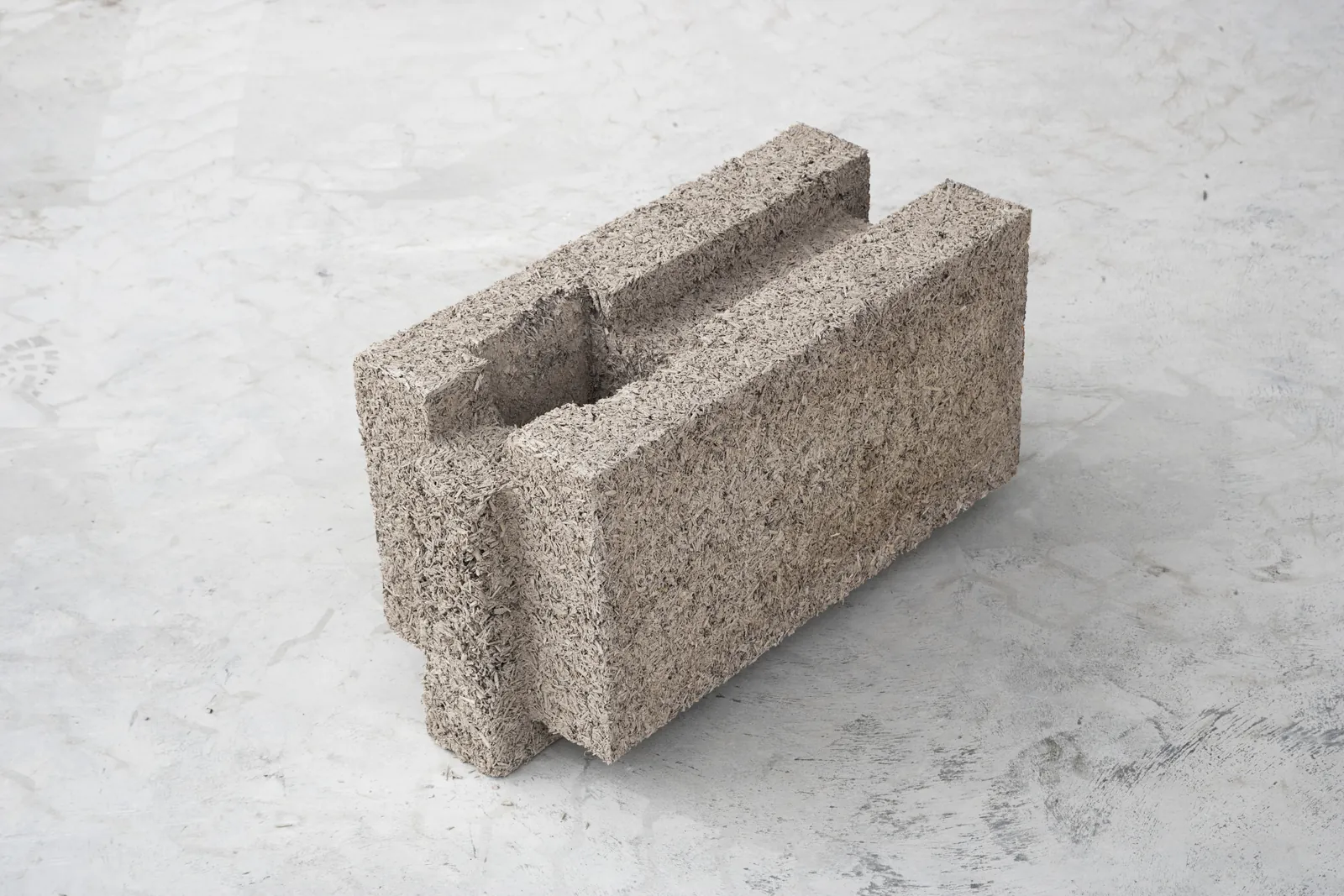
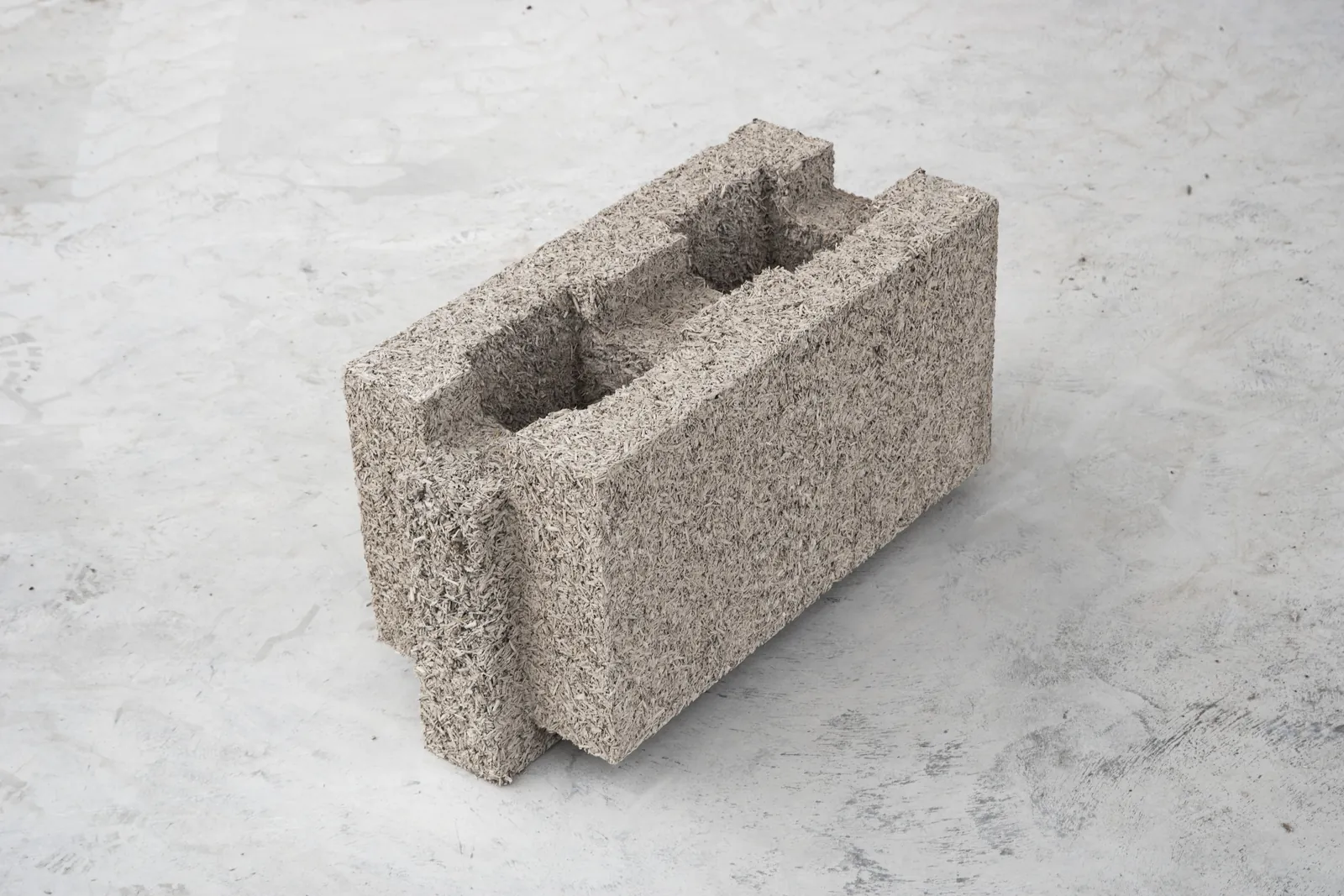
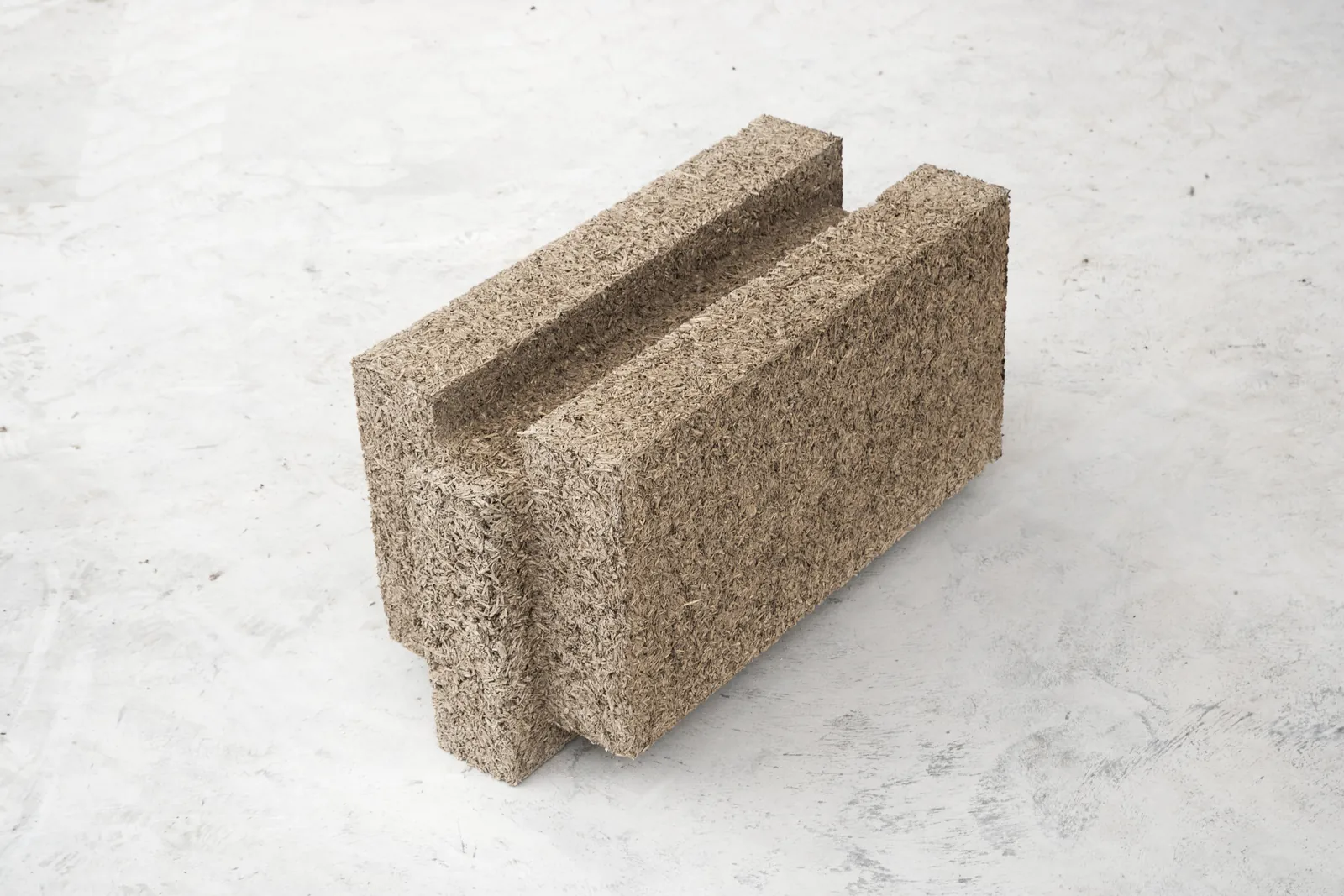
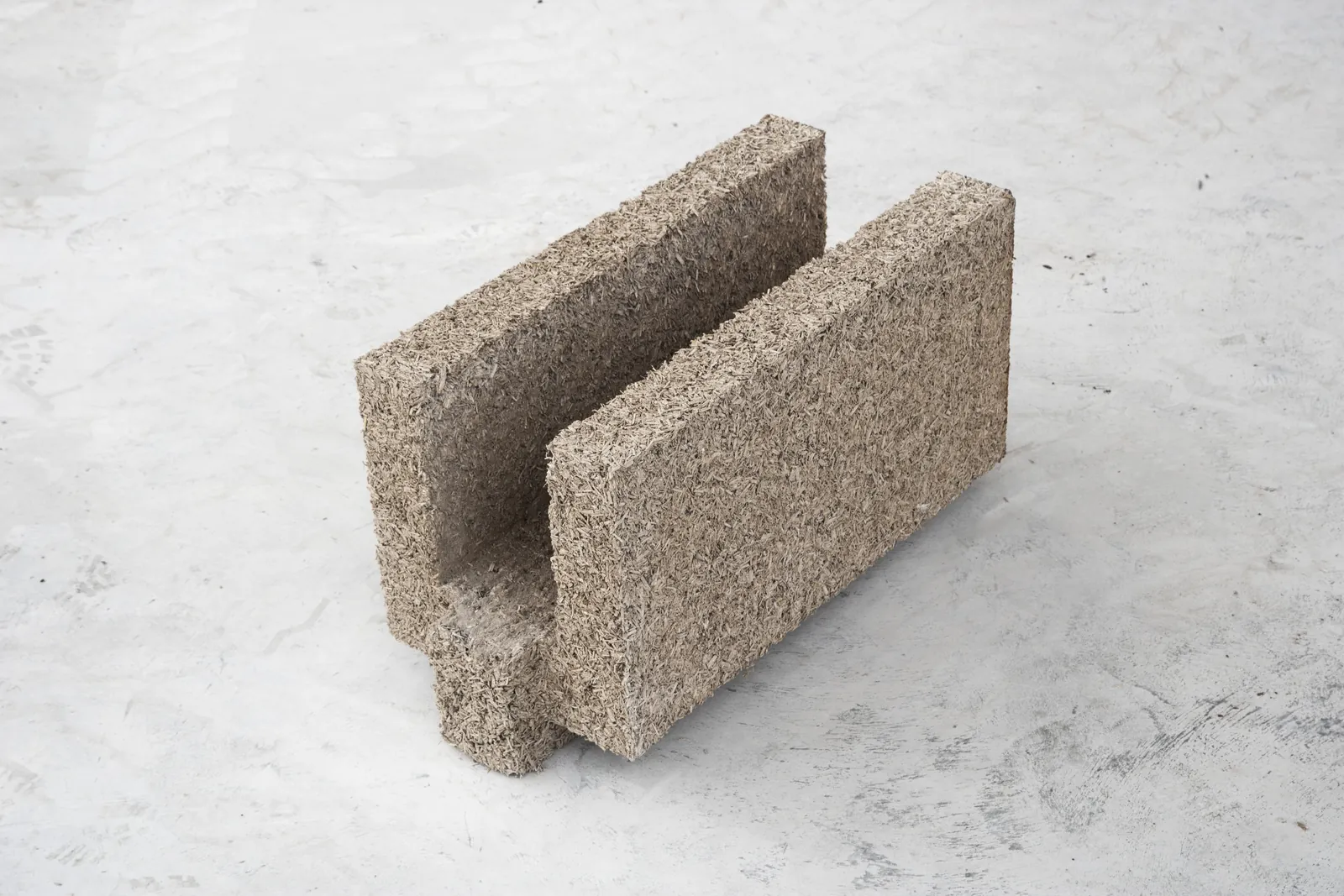
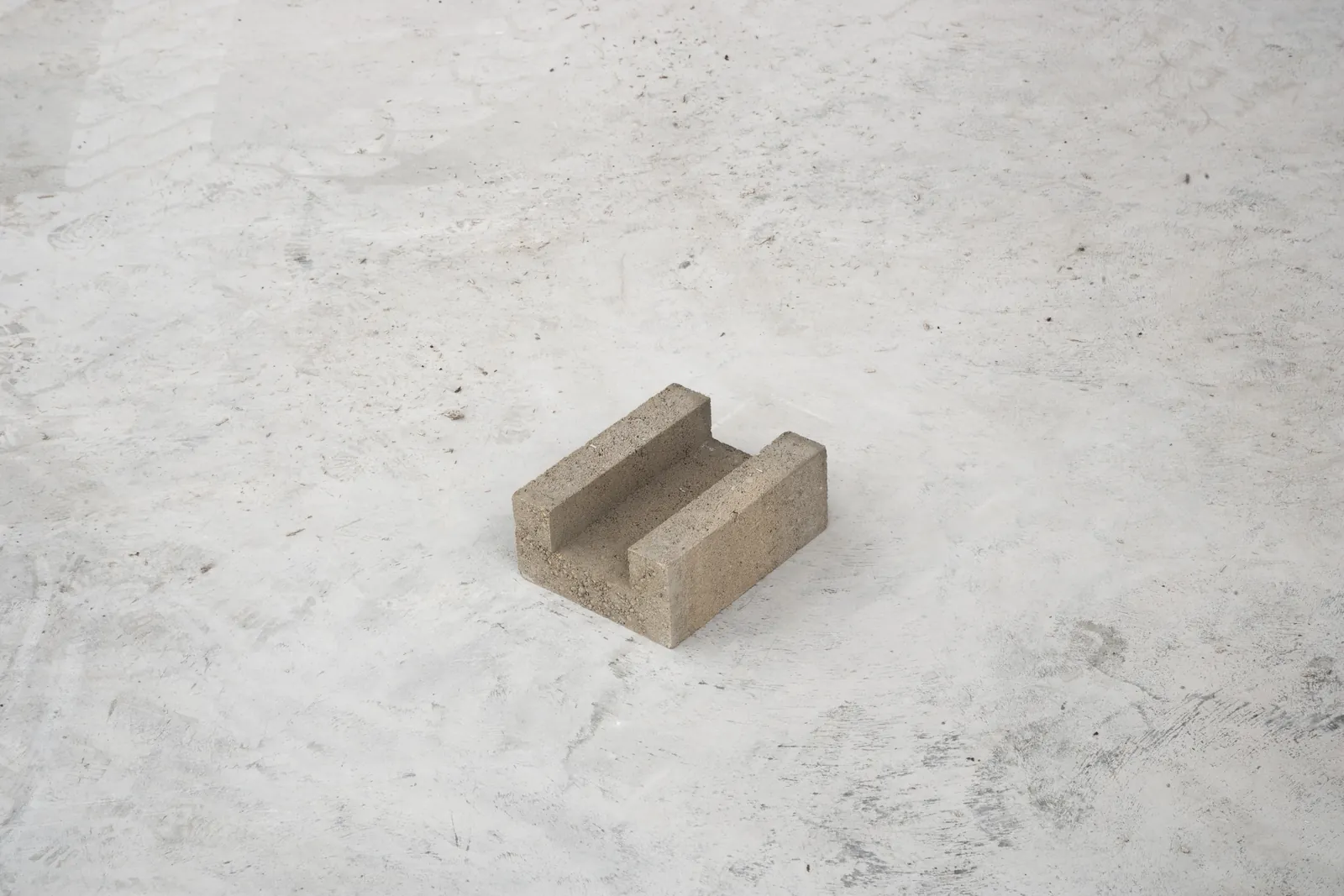
All 30 cm BIOSYS blocks have an R dry value of 4.6 m².K/W and an R design value of 4.2 m².K/W. The design value includes the moisture correction for the material once installed. It is the value to use in a thermal study.
The MULTICHANVRE thermal lag is calculated using the standard formula; the figure given for BIOSYS (8 to 10 h) comes from internal, non-standardised Vicat tests: the two values cannot be compared directly.
Palletised in 4 layers. BIOSYS pallets cannot be split, except for double column blocks and starter bases. For special packaging, please get in touch.
MULTICHANVRE: installation in three steps
Download the installation guide (PDF, in French)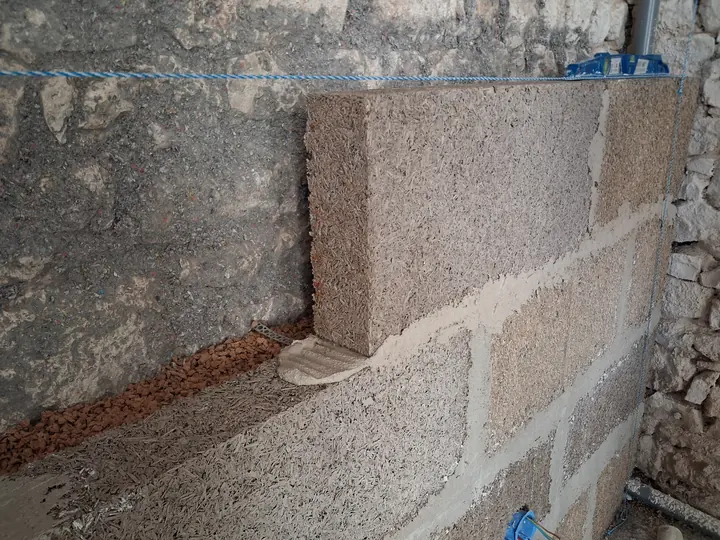
Lay
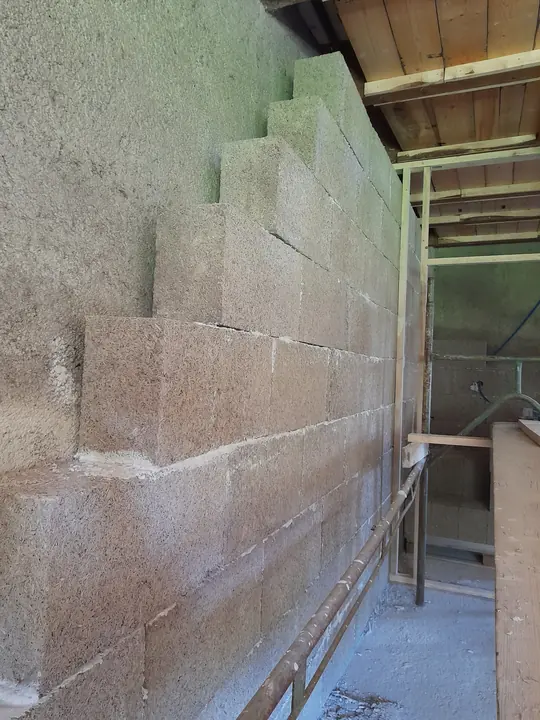
Lime-based mortar, applied with a notched trowel, with staggered joints (thin joints of ~3 mm).
Tie in
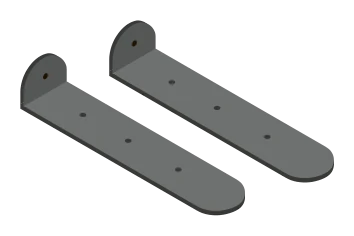
Mechanical fixing to the supporting wall (connecting brackets, strap sections, fixing washers: 2 to 5 per m²).
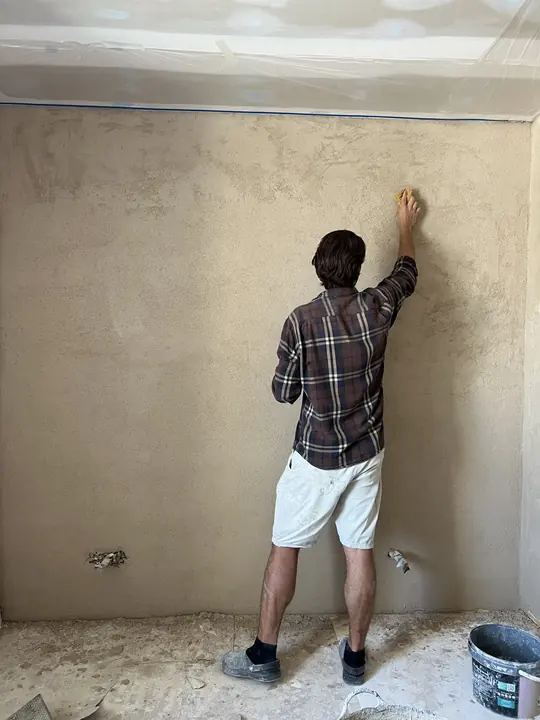
Render
Lime, gypsum plaster, raw earth or clay finish indoors. Lime render outdoors.
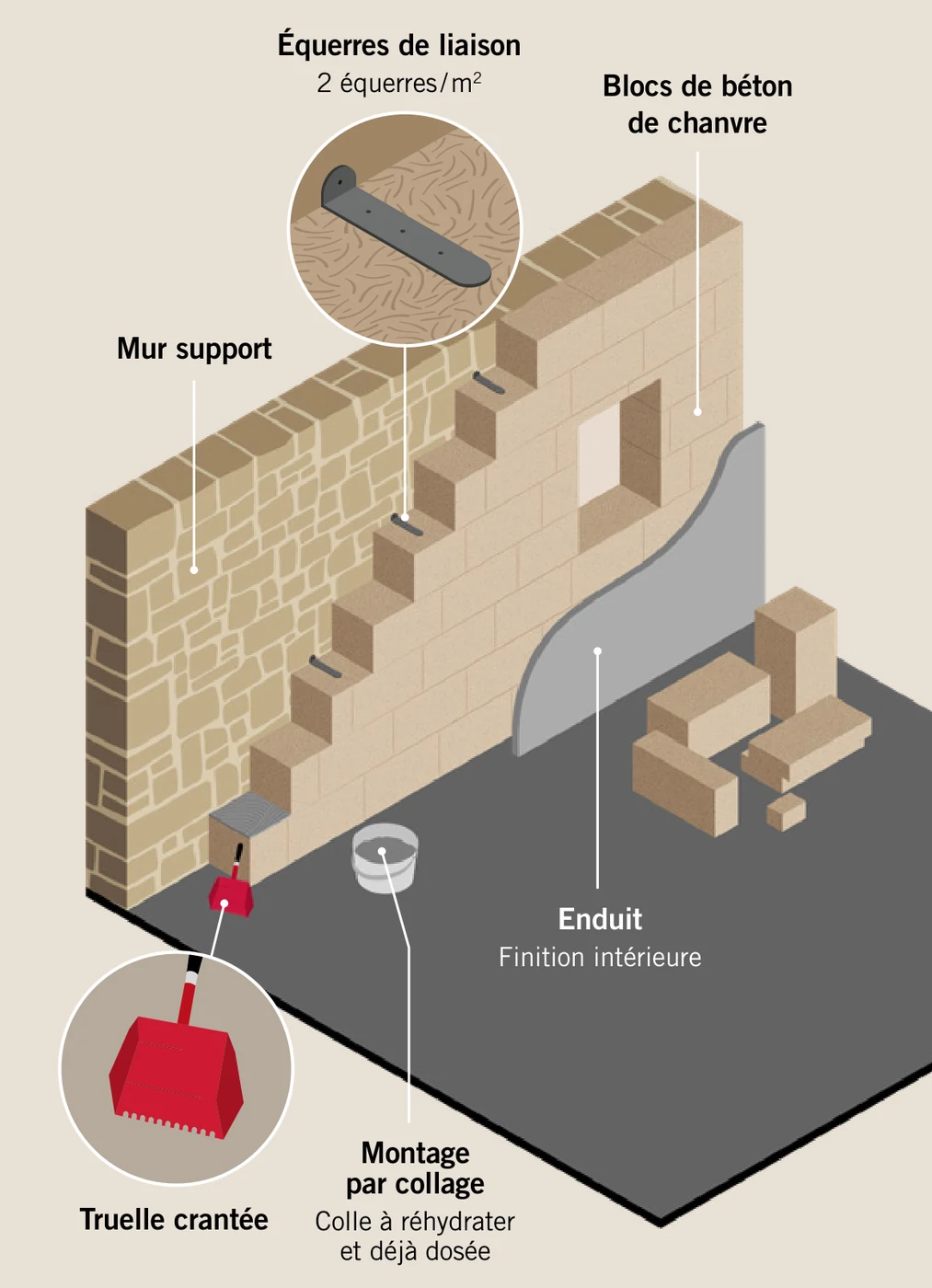
Internal insulation of a stone wall
- Supporting wall: old stone or rammed-earth wall, concrete blocks or bricks
- Hempcrete blocks: laid with staggered joints against the wall
- Connecting brackets: 2 brackets per m² to secure the lining
- Laying: with a notched trowel, adhesive or mortar
- Plaster: lime, gypsum or raw earth interior finish
BIOSYS: installation in three steps
Dry interlocking, no adhesive or mortar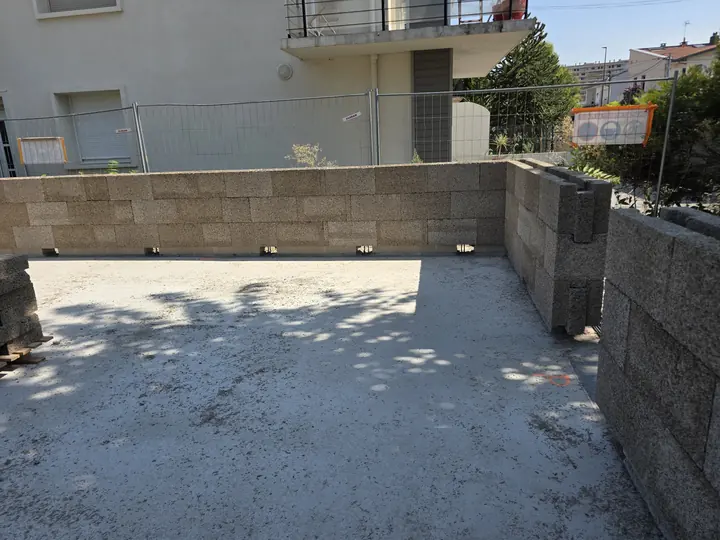
Interlock
Tongue-and-groove blocks laid dry on the starter base, with no adhesive or mortar.

Pour
Columns, ring beams and lintels cast in reinforced concrete in the cavities: the block acts as insulating permanent formwork.
Render
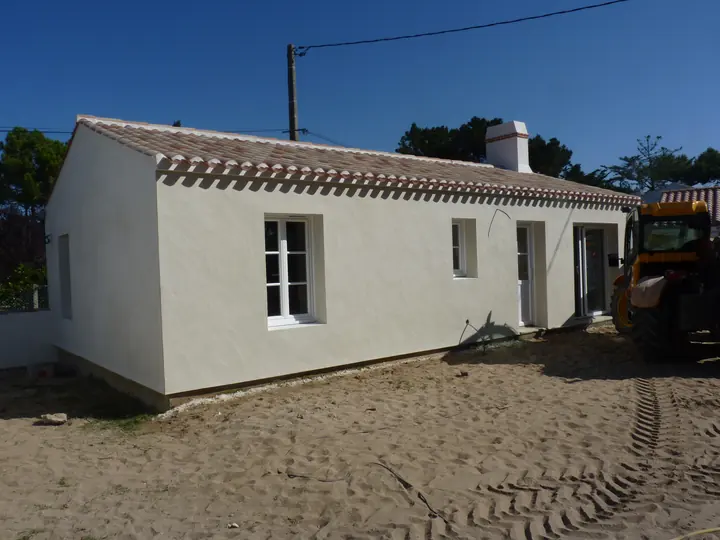
Lime-rich render outdoors. Indoors, sprayed plaster, plasterboard, lime or raw earth.
Find out more
Hemp blocks: your questions answered
What is a hemp block?
It is hempcrete prefabricated in our factory: 84% hemp shiv, the woody core of the hemp stalk, bound with Vicat prompt natural cement, which lets water vapour pass through. Moulded in a 60 × 30 cm format with a density of around 300 kg/m³, it arrives on site dry and is laid just like a conventional block.
How much does a hemp block cost?
As a guide, based on public prices seen at builders’ merchants: from €35/m² incl. VAT in 10 cm, €51/m² in 15 cm, €66/m² in 20 cm and €95/m² in 30 cm. The final price is set by the merchant: it depends on the area, the thickness chosen and the installation accessories. Request a free quote.
Is a hemp block wall load-bearing?
No. Neither MULTICHANVRE nor BIOSYS is load-bearing: the block is always combined with a load-bearing structure (post-and-beam, supporting wall, frame, etc.). With BIOSYS, the blocks act as insulating permanent formwork and as infill for a reinforced concrete structure.
Can a hemp block replace a concrete block?
Not for carrying loads: a concrete block is load-bearing, a hemp block is not. What it does replace is the insulation you would otherwise have to add to the concrete block: a concrete block wall can be lined with hemp blocks on the inside or the outside, and the hemp block serves as infill for a post-and-beam structure or a frame. See our comparison of hemp blocks, concrete blocks, brick and aerated concrete.
What thickness of hemp block should I choose?
10 cm (R 1.5), mainly used for internal wall insulation (IWI) and external wall insulation (EWI). 15 cm (R 2.3) for IWI, EWI and partition walls. 20 cm (R 3.0), which adds infill and floors. 30 cm (R 4.6) for high-performance insulation, heavy partition walls, infill and floors. These resistances are dry values in m².K/W; the design values, to be used in a thermal study, are 1.4, 2.1, 2.8 and 4.2.
Does a hemp block insulate on its own?
Yes: it is an insulation material in its own right, with a dry thermal conductivity λ of around 0.065 W/(m.K), not just a masonry block. The thickness sets the performance, from R 1.5 in 10 cm to R 4.6 in 30 cm. And it brings what lightweight insulation cannot: thermal mass, a thermal lag of up to 18.5 hours in 30 cm and natural humidity regulation.
How much does a hemp block weigh?
A MULTICHANVRE block weighs 6.5 kg in 10 cm, 10 kg in 15 cm, 13 kg in 20 cm and 21 kg in 30 cm. The standard BIOSYS block (60 × 30.8 × 30 cm) weighs 21 kg.
What are the drawbacks of hemp blocks?
It is best to know them before you choose. The block is not load-bearing and needs a structure. It is not rot-proof: pallets must be stored under cover, in the dry and without stacking, and the wall is protected from rain by a mesh-reinforced lime render. High thermal resistance takes thickness (30 cm for R 4.6). Finally, MULTICHANVRE is going through certification: an ATEx (French experimental technical assessment) covering internal insulation is under review at the CSTB (French building science centre). The Avis Technique (French technical approval) that BIOSYS held has expired and its renewal is under way.
Hemp blocks or cast-in-place hempcrete?
The block arrives dry and ready to lay: no drying time on site, no wasted material and no specialist equipment. Sprayed or shuttered hempcrete, applied wet, has to dry before it can be rendered. See our materials comparison.
Where can I buy hemp blocks?
From our network of distributor merchants: we do not sell direct. The blocks are made and stored at our factory in Mérey-sous-Montrond (Doubs) and delivered throughout France, within a week on average. Tell us about your project: we will point you to the right product and the right merchant within 48 working hours.
Planning a project with hemp blocks?
Tell us about your project: we will point you to the right product and the right thickness.
Request a quote