Hempcrete blocks and RE2020: what the regulations say and what it means for you
RE2020 sets strict standards for energy efficiency, 50-year carbon footprint and summer comfort. Thanks to its carbon storage, breathability and thermal mass, hempcrete block is well placed to meet these requirements. Its use is backed by verified FDES (Environmental and Health Product Declarations) under the INIES programme.
 By Julien Compain
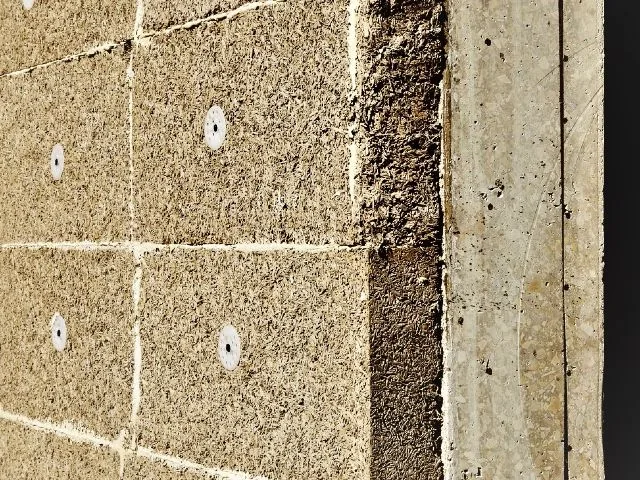
RE2020 requires energy efficiency, a 50-year carbon footprint assessment, and summer comfort. Thanks to its carbon storage, breathability and thermal mass, the hemp block meets these requirements. Its use is supported by verified FDES (Environmental and Health Product Declarations) as part of the INIES programme.
What’s new with RE2020?
The 2020 Environmental Regulation (RE2020) applies exclusively to new builds and replaces RT2012, introducing a broader and more demanding assessment framework. It is based on three simultaneous requirements:
- Energy efficiency: maintaining and strengthening targets for reducing energy consumption, with a greater push for renewable and low-carbon energy sources;
- Carbon footprint: calculated by life cycle analysis (LCA) over 50 years, this new requirement means greenhouse gas emissions must be assessed and limited for the building’s construction, use and end-of-life;
- Summer comfort: assessment of thermal comfort in hot periods, measured in degree-hours of discomfort, with regulatory thresholds to limit the need for air conditioning.
Compared to RT2012, RE2020 takes a more holistic approach, considering both energy performance and the environmental impact of materials. It particularly encourages the use of bio-based materials such as hemp blocks, which stand out for their ability to store carbon and contribute to natural thermal regulation.
The hemp block, a factory-made product, fits perfectly into a dry construction process, reducing drying times and simplifying logistics. These features are valued under RE2020, which considers the entire life cycle and quality of installation of materials.
Carbon storage in hemp blocks
Hemp is a fast-growing plant that naturally captures carbon dioxide (CO₂) during its growth phase through photosynthesis. This captured carbon is partly retained in the hemp shiv, the woody core of the stem, which makes up 84% of the hemp block’s composition.
When the shiv is incorporated into the finished material, this carbon remains locked in the wall structure throughout the building’s lifespan, helping to reduce the building’s overall carbon footprint.
In a 50-year life cycle analysis (LCA) as used for RE2020, this storage capacity significantly changes the emissions assessment. Unlike conventional materials, which only generate emissions, the hemp block’s net emissions are partly offset by this storage.
What’s more, the hemp supply chain is mostly local: France is Europe’s leading producer, which limits transport-related emissions—an important factor in LCA. As a result, the hemp block benefits from a reduced and controlled carbon footprint.
The FDES for the BIOSYS system, for example, must be used as part of a methodical calculation: its values are specific to the product, the scope and the reference service life. They cannot be directly compared to other FDES without considering these parameters.
FDES: a key requirement for RE2020 compliance
The Environmental and Health Product Declaration (FDES) is a standardised document describing the environmental impacts of a construction product over its entire life cycle. It is drawn up according to strict standards to ensure data comparability and reliability.
For RE2020, the FDES is essential: design offices use it in their calculations to assess the building’s carbon footprint. Without an FDES, a product is assigned a default value—usually unfavourable—which disadvantages bio-based and innovative materials.
The BIOSYS system, developed in partnership with the Vicat group, has a validated FDES, allowing it to be properly accounted for in regulatory calculations. In addition, this system is rated A+ for indoor air quality, confirming very low emissions of volatile organic compounds (VOCs)—an important point for health requirements.
This classification contributes to indoor comfort and meets the expectations of professionals and homeowners concerned about healthy living environments.
CSTB Technical Approval: assurance for installation and insurability
A Technical Approval (ATec) issued by the Centre Scientifique et Technique du Bâtiment (CSTB) is a rigorous assessment of the suitability of an innovative construction method or material. It precisely defines the scope of use, installation conditions and expected performance.
The CSTB Technical Approval previously held by the BIOSYS system has expired and is currently being renewed. To date, it is the only bio-based hempcrete construction system to have received such approval. It covered the use of BIOSYS blocks with a reinforced concrete post-and-beam structure for distributed insulation façade walls in single-family homes and small commercial buildings, up to two storeys (R+1) and lightweight roofs.
This recognition is crucial for insurability. A system covered by a Technical Approval is validated for use within its defined scope, making it easier for insurers to provide cover and for the ten-year guarantee to apply.
To ensure this cover, three best practices should be followed:
- Check that the Technical Approval is valid at the date of the works;
- Obtain written confirmation from the contractor’s insurer that the system is covered;
- For BIOSYS, ensure that installers have completed the installation training provided by our partner Vicat.
These steps ensure regulatory compliance and the long-term durability of buildings constructed with hemp blocks.
Hemp blocks in renovation: regulatory framework and technical relevance
RE2020 applies only to new builds and does not cover energy renovation. The regulatory framework for renovation is based mainly on existing thermal regulations and renovation grant schemes.
In this context, hemp blocks are particularly relevant for older buildings, often built from stone, rammed earth or cob. These traditional walls require vapour-open materials to avoid problems caused by internal condensation: timber frame decay, saltpetre, and render deterioration.
Hemp, thanks to its breathability and ability to regulate humidity within a comfortable range, respects the original hygrothermal behaviour of the wall, reducing risks and improving indoor comfort.
Renovation requires a specific approach, and we recommend consulting the installation guide for advice on adapting solutions to the constraints of older buildings.
Financial support and schemes for bio-based insulation under RE2020
Although RE2020 does not apply to renovation, energy renovation grant schemes are regularly updated and include criteria relating to thermal performance and quality of workmanship.
Key eligibility criteria include:
- A minimum thermal resistance, which varies depending on the scheme and climate zone—compare with the values in the thermal performance guide for hemp blocks;
- The qualification and certification of the contractors carrying out the works, ensuring compliance and quality of execution.
The amounts, conditions and criteria for grants such as MaPrimeRénov' (the French state renovation grant) or other regional schemes may change from year to year. It is therefore essential to check with official bodies or a France Rénov’ adviser for up-to-date information at the time of your project.
A well-documented application, including the product’s FDES, will help secure grant approval.
Thermal performance of hemp blocks: resistance, thermal lag and mass
The MULTICHANVRE range offers straight-edged blocks in a 60 × 30 cm format, available in four main thicknesses for different uses:
- 10 cm: thermal resistance R = 1.5 m².K/W, thermal lag 6.1 hours, approx. weight 6.5 kg per block — for partitions and light wall linings;
- 15 cm: R = 2.3 m².K/W, lag 9.25 hours, weight 10 kg — standard lining and partitions;
- 20 cm: R = 3.0 m².K/W, lag 12.3 hours, weight 13 kg — high-performance internal (IWI) and external (EWI) wall insulation;
- 30 cm: R = 4.6 m².K/W, maximum lag 18.5 hours, weight 21 kg — high-performance EWI.
Hemp blocks are not load-bearing; they must be used to line a load-bearing wall or to fill a timber frame. Installation is by trowel with a suitable mortar, in staggered joints, then finished with a compatible render (plaster, lime, earth or clay indoors; lime with mesh outdoors).
The significant thermal lag—up to 18.5 hours for 30 cm thickness—greatly improves summer comfort by delaying and reducing indoor heat peaks.
Compared to mineral insulation, hemp blocks require greater thickness to achieve the same thermal resistance, which can reduce usable floor area for internal insulation. This trade-off should be considered according to project priorities.
For help choosing the most suitable thickness, see our dedicated guide for technical advice and feedback.
Quantitative comparison: carbon and thermal impact of hemp blocks
| Material | FDES | Thermal resistance R (m².K/W) | Density (kg/m³) | Fire rating |
|---|---|---|---|---|
| BIOSYS block (60 × 30.8 × 30 cm) | Verified FDES | 4.6 (useful value 4.2) | ≈ 300 | B-s1 d0 |
| MULTICHANVRE block 30 cm | Same formulation | 4.6 | ≈ 300 | B-s1 d0 |
| Traditional concrete block | Value not provided | ≈ 0.2 to 0.3 | ≈ 1800 | Not classed as bio-based |
| Aerated concrete | Value not provided | ≈ 1.0 to 1.5 | ≈ 400 to 700 | Not classed as bio-based |
| Mineral wool (glass or rock) | Value not provided | 2.5 to 4.0 (depending on thickness) | ≈ 30 to 100 | Not classed as bio-based |
Hemp blocks have a relatively low density, contributing to good thermal mass and significant thermal lag—key factors for summer comfort. Their thermal resistance can reach 4.6 m².K/W at 30 cm thickness, comparable to thick mineral insulation but with the added benefit of carbon storage.
The BIOSYS system, with its useful R value of 4.2, demonstrates the performance achievable in real-world conditions. In addition, hemp blocks are rated B-s1 d0 for fire, confirming satisfactory fire safety performance.
Hemp blocks also offer good acoustic performance, with a sound absorption coefficient α of 0.4, adding another dimension of comfort.
Material choice should take into account the project context, space constraints and overall objectives, including usable floor area, thermal performance, environmental impact and regulatory requirements.
Frequently asked questions about hemp blocks and RE2020
The most common questions concern the compliance of hemp blocks with RE2020, the nature and importance of the FDES, insurability of construction systems, specifics for renovation, and available financial support. Our FAQ provides clear answers and points to further resources.
For more technical information, we also recommend the thermal performance guide and the dedicated BIOSYS system section.
Frequently asked questions
Are hemp blocks recognised under RE2020?
RE2020 does not certify materials but assesses buildings for energy efficiency, carbon footprint and summer comfort. Hemp blocks have a validated FDES and, thanks to their carbon storage and thermal mass, meet these criteria well.
What is an FDES and why is it essential for RE2020?
The Environmental and Health Product Declaration (FDES) details the environmental impacts of a product using a standardised method, and is essential for RE2020 calculations. Without an FDES, the material is penalised by default in the assessment.
How do hemp blocks store carbon?
Hemp blocks contain 84% hemp shiv from a plant that absorbs CO₂ as it grows. This carbon remains locked in the wall structure for the building’s entire lifespan, reducing the material’s carbon footprint.
Is the BIOSYS system covered by ten-year insurance?
The CSTB Technical Approval previously held by the BIOSYS system has expired and is being renewed. This recognition makes it easier for insurers to provide cover and for the ten-year guarantee to apply when installed correctly.
Does RE2020 apply to renovation?
No, RE2020 only applies to new builds. For renovation, existing thermal regulations and grant schemes apply, where thermal performance and contractor qualifications are the main criteria.
What are the technical limitations of hemp blocks for RE2020?
To achieve high thermal resistance values, hemp blocks require greater thickness, which can reduce usable floor area for internal insulation. This trade-off should be considered for each project.
What financial support is available for bio-based insulation?
Support often depends on meeting a minimum thermal resistance and on the contractor’s qualifications. Amounts and conditions change regularly, so check with official bodies or a France Rénov’ adviser.
Read next
Planning a hemp block project?
Tell us about your project: we will reply within 48 working hours with a tailored costing.