Choosing the right renders for hempcrete block walls
For hempcrete block walls, always opt for vapour-open renders such as lime, clay or gypsum indoors, and lime render outdoors. Avoid impermeable cement renders, acrylic paints or vapour barriers, as these trap moisture and damage the wall.
 By Julien Compain
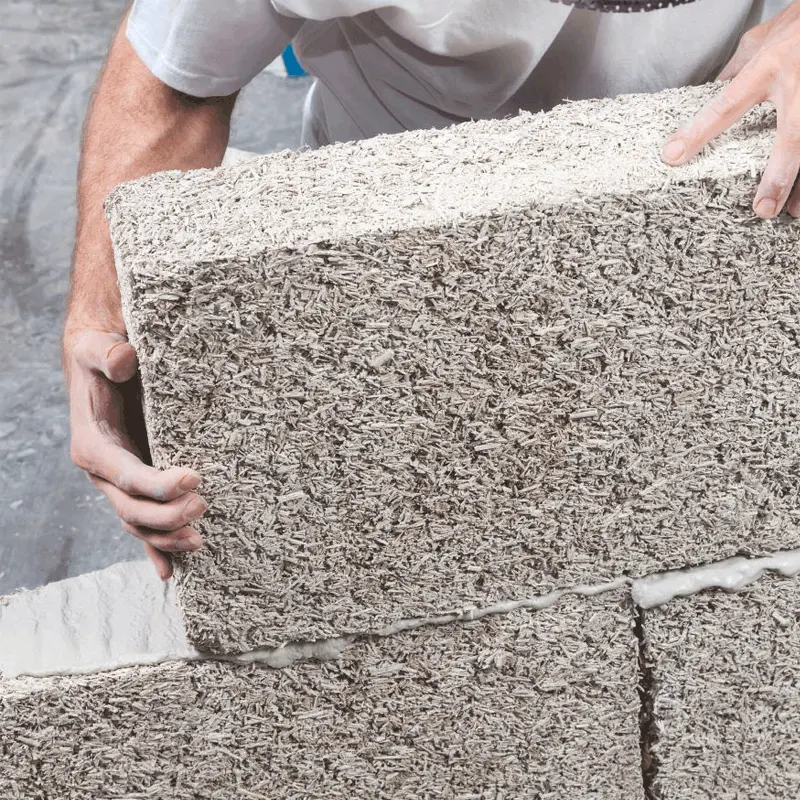
For hemp block walls, always choose vapour-open renders such as lime, plaster or earth for interiors, and lime for exteriors. Avoid impermeable cement renders, acrylic paints or vapour barriers, which trap moisture and damage the wall.
The golden rule
The key feature of hemp blocks is their ability to regulate indoor humidity by absorbing and releasing water vapour. This hygroscopic behaviour helps keep walls healthy and reduces the risk of internal condensation, a common cause of material degradation. Any render applied to a hemp block wall must therefore remain vapour-permeable.
Any impermeable finish, whether a cement render or a plastic film, blocks the natural movement of water vapour. Moisture can still enter the wall by capillary action or through micro-cracks, but cannot escape, leading to water build-up, gradual deterioration of the block, and loss of its insulating and hygrothermal properties.
However, this technical requirement does not restrict your choice of finishes, which remain varied and suitable for many architectural styles. The only constraint is to select materials compatible with the breathability and humidity regulation of hemp, which is possible with several types of interior and exterior renders.
Interior finishes
Hemp blocks are supplied ready for rendering, with no need for a bonding coat or primer. Several interior render options are possible on this substrate:
Plaster
Plaster, whether spray-applied or hand-trowelled, is the most common and cost-effective interior solution. It is vapour-permeable, bonds naturally to the block, and creates a smooth, easily sanded surface. This finish is often chosen for renovation projects, especially for its speed of application.
Plasterboard
Plasterboard on a metal frame is also possible. This method is ideal if you want a perfectly flat surface or need to integrate electrical and plumbing services. However, plasterboard creates an additional layer that slightly reduces direct contact between the room air and the wall mass, and so marginally lessens the block’s natural humidity regulation.
Lime renders
Lime renders, whether air lime or natural hydraulic lime, are particularly well suited to hemp blocks. These renders are highly vapour-permeable, preserving the wall’s hygrothermal properties. They provide a matt, mineral look that is valued for its natural appearance and superior durability compared to plaster. However, they require more time and specialist skills to apply, which means a higher cost.
Earth or clay renders
Earth or clay renders further enhance the humidity buffering of hemp blocks, providing a strong moisture buffer. This natural finish has a warm, textured appearance. It must be applied by a professional trained in earth building techniques. This type of render is especially suitable for projects that prioritise bio-based materials and want to maximise indoor air quality.
Exterior finishes
For facades, render choices are more limited, with strict requirements for vapour permeability and weather resistance. Renders must allow water vapour to escape while providing effective protection from driving rain.
The main rule is to use lime-rich renders. Air lime or natural hydraulic lime allows vapour to pass through, protects the wall from the elements, and contributes to the durability of the finish. Ready-mixed cement renders should be avoided as they are too impermeable and trap moisture.
There are three key points to watch when applying exterior renders:
- Wall base: Always provide a plinth with a capillary break to prevent rising damp from the ground, which is a common cause of premature render failure.
- Roof overhangs: Adequate overhangs protect the facade from direct rain and improve the longevity of renders.
- Window sills: These should be designed to prevent concentrated run-off on the facade, which can locally damage the render.
What to avoid
| To avoid | Why |
|---|---|
| Impermeable cement render | Blocks vapour movement, traps moisture in the wall |
| Film-forming acrylic paint | Creates an impermeable surface film, same effect as cement render |
| Systematic vapour barrier | Counterproductive: neutralises hemp’s humidity regulation |
| Impermeable insulation lining | Traps vapour between two impermeable layers, risk of internal condensation |
| Vinyl wallpaper | Impermeable film on the inside, blocks vapour and encourages condensation |
As for vapour barriers, these are not needed in standard hemp block wall configurations, since the material naturally regulates humidity. Using one systematically is often counterproductive, as it blocks the wall’s breathability and increases the risk of internal condensation. For rooms with high humidity or specific regulatory requirements, consult a building physics specialist before considering a vapour barrier.
Paints for hemp block walls
If you want to paint a hemp block wall, choose mineral paints that maintain the wall’s breathability. Lime, potassium silicate or casein paints are suitable as they allow vapour to diffuse while offering a wide range of colours.
An essential technical criterion is the Sd value (water vapour diffusion equivalent). The lower this value, the more vapour-permeable the finish. This is a more reliable indicator than unquantified marketing claims such as “microporous” or “breathable”. Always check this value with the manufacturer to ensure compatibility with hemp blocks.
How to choose a render for a hemp block wall
- Interior or exterior use: For facades, choose lime; for interiors, you have a wide choice between plaster, lime, earth or plasterboard, depending on your needs.
- Budget and timescale: Plaster is economical and quick to apply, while lime and earth require more time and specialist skills.
- Humidity requirements: For renovating old buildings or in damp areas, earth and lime optimise regulation and wall durability.
If you are unsure about a particular configuration, the technical team is available to provide tailored advice, especially for thermal or architectural studies. For more technical details, see the technical documentation and installation guide available on the site.
Comparison of compatible renders and their characteristics
| Type of render | Permeability (Sd value) | Durability / resistance | Application complexity | Indicative relative cost |
|---|---|---|---|---|
| Sprayed plaster | Low (permeable) | Moderate, interior use | Simple, quick | Low |
| Plasterboard | Low, but reduces direct wall contact | Good, interior | Easy to fit, requires framing | Moderate |
| Air lime render | Very low (excellent permeability) | High, good weather resistance | Moderate, needs skill | High |
| Hydraulic lime render | Low to moderate depending on mix | Very high, suitable for exteriors | Moderate to complex | High |
| Earth / clay render | Very low (strong humidity buffer) | Moderate, needs maintenance | Complex, artisanal | Variable, often high |
| Single-coat cement render | High (low permeability) | High but not compatible | Simple | Low |
Best practice for protecting and maintaining exterior renders
- Careful installation of plinths: Provide a capillary break to limit rising damp.
- Adequate roof overhangs: These protect facades from direct rain and extend render lifespan.
- Window sill design: Ensure effective water run-off to avoid pooling and concentrated run-off.
- Regular inspection: Check the condition of renders to spot any cracks or damage early and carry out maintenance as needed.
Application examples and feedback
Hemp block walls are finished with suitable renders depending on the building type and local climate:
- Renovation: Earth or lime are preferred for their ability to manage the higher humidity often found in older buildings, while allowing the walls to breathe.
- New build: Interior plaster is common for its ease, while lime on the exterior ensures a durable, vapour-open facade.
- Damp areas: Highly permeable renders such as hydraulic lime or earth are recommended to reduce the risk of condensation and deterioration.
Each situation requires tailored technical support, especially for the precise choice and application of render mixes, to ensure the wall’s durability and thermal and hygrothermal performance. The site offers a detailed guide to compatible renders for hemp blocks and case studies illustrating these solutions.
For any specific queries, the technical team can provide personalised advice and a quote.
To learn more about the material, its composition and performance, see the page on composition and characteristics of hemp blocks.
Frequently asked questions
Why shouldn’t you use cement render on a hemp block wall?
Cement render is too impermeable to water vapour, blocking moisture movement and trapping water in the wall, which can cause condensation, damage and loss of hemp’s regulatory properties.
Can you install a vapour barrier on a hemp block wall?
In standard situations, a vapour barrier is not needed as hemp blocks naturally regulate humidity. Using one can be counterproductive, preventing the wall from breathing and encouraging condensation.
What are the criteria for choosing a paint compatible with hemp blocks?
Choose vapour-permeable mineral paints, such as lime or silicate, and check that the stated Sd value is low to ensure the wall can breathe.
What are the benefits of earth renders on hemp blocks?
Earth renders enhance hemp’s natural humidity regulation by providing a strong moisture buffer, with a warm, natural look, but require specialist artisanal application.
How do you protect hemp block walls outdoors?
Use vapour-permeable lime renders, ensure plinths have a capillary break, provide adequate roof overhangs, and design window sills for good rainwater run-off.
Can you use plasterboard on a hemp block wall?
Yes, on a frame, it provides a flat surface and makes it easy to run services, but it does slightly reduce direct contact with the wall mass and so its humidity regulation.
Are there guides or resources for applying renders to hemp blocks?
Yes, technical guides and resources are available on the site, especially in the professional documentation section, to support both tradespeople and self-builders.
Read next
Planning a hemp block project?
Tell us about your project: we will reply within 48 working hours with a tailored costing.