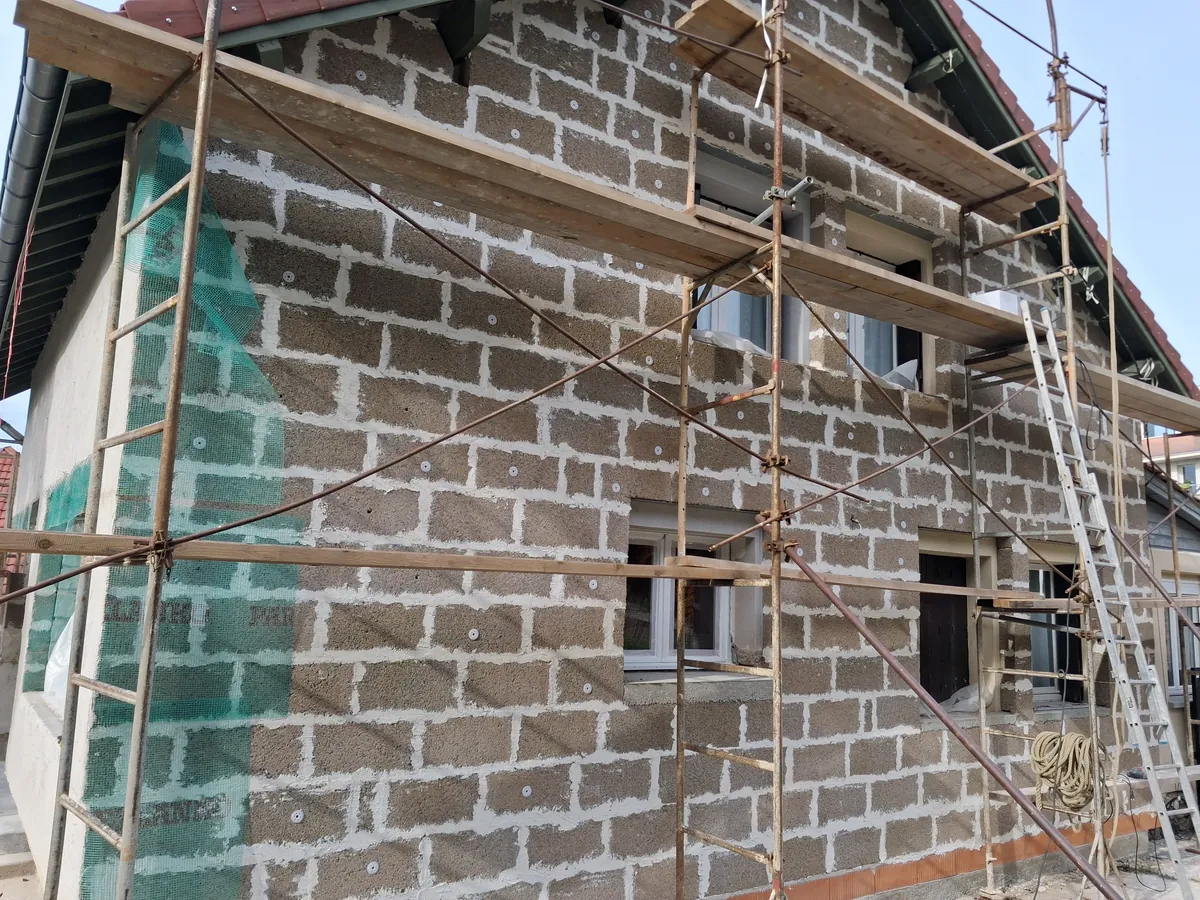
30 cm hempcrete block for external wall insulation (EWI)
The 30 cm hempcrete block is a high-performance format with R = 4.6 m².K/W and a thermal lag of 18.5 hours, specifically designed for external wall insulation (EWI). Its thickness is too great for internal use, but as EWI, it optimises thermal comfort and mass without reducing living space.
| Range | MULTICHANVRE |
|---|---|
| Format | 600 × 300 mm |
| Thermal conductivity λ | 0.065 W/(m.K) |
| Density | ≈ 300 kg/m³ |
| Thermal resistance R | 4.6 m².K/W |
| Installation | High-performance EWI, full wall construction |
The 30 cm hemp block, a high-performance format with R = 4.6 m².K/W and a thermal lag of 18.5 hours, is specifically designed for external wall insulation (EWI). Its thickness is too great for internal insulation, but for EWI it optimises thermal comfort and mass without reducing the living space.
Overview of the 30 cm hemp block in the MULTICHANVRE range
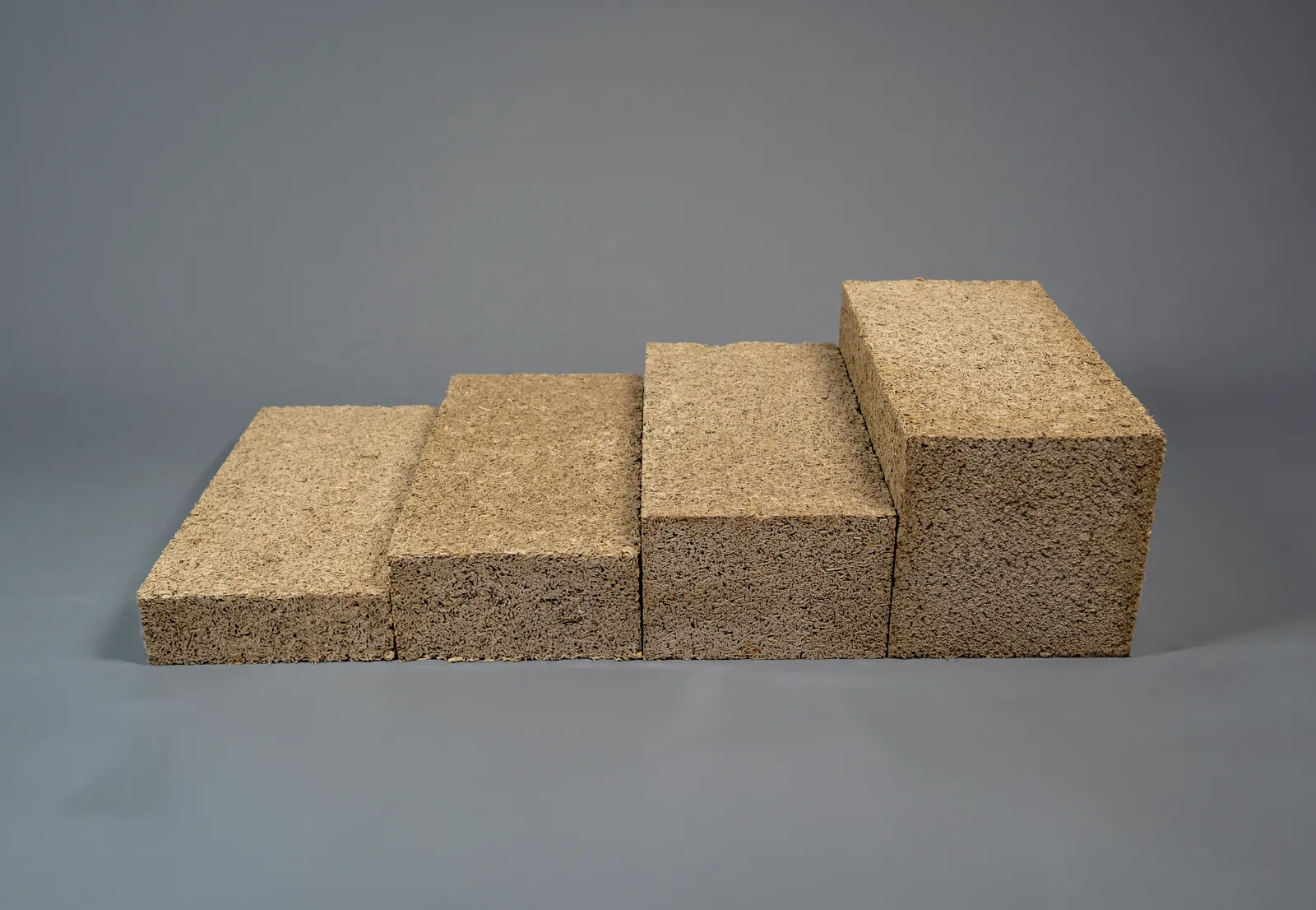
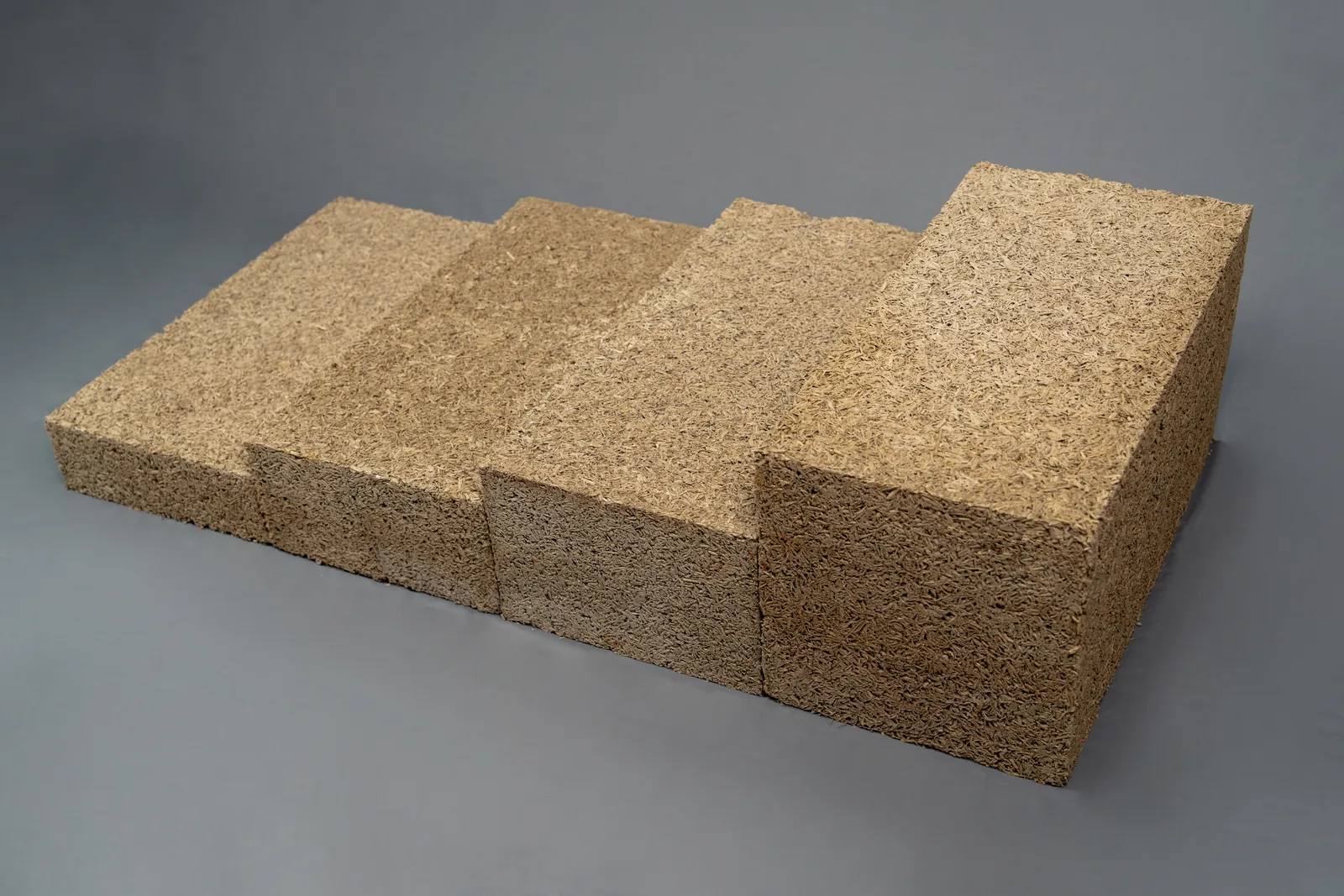
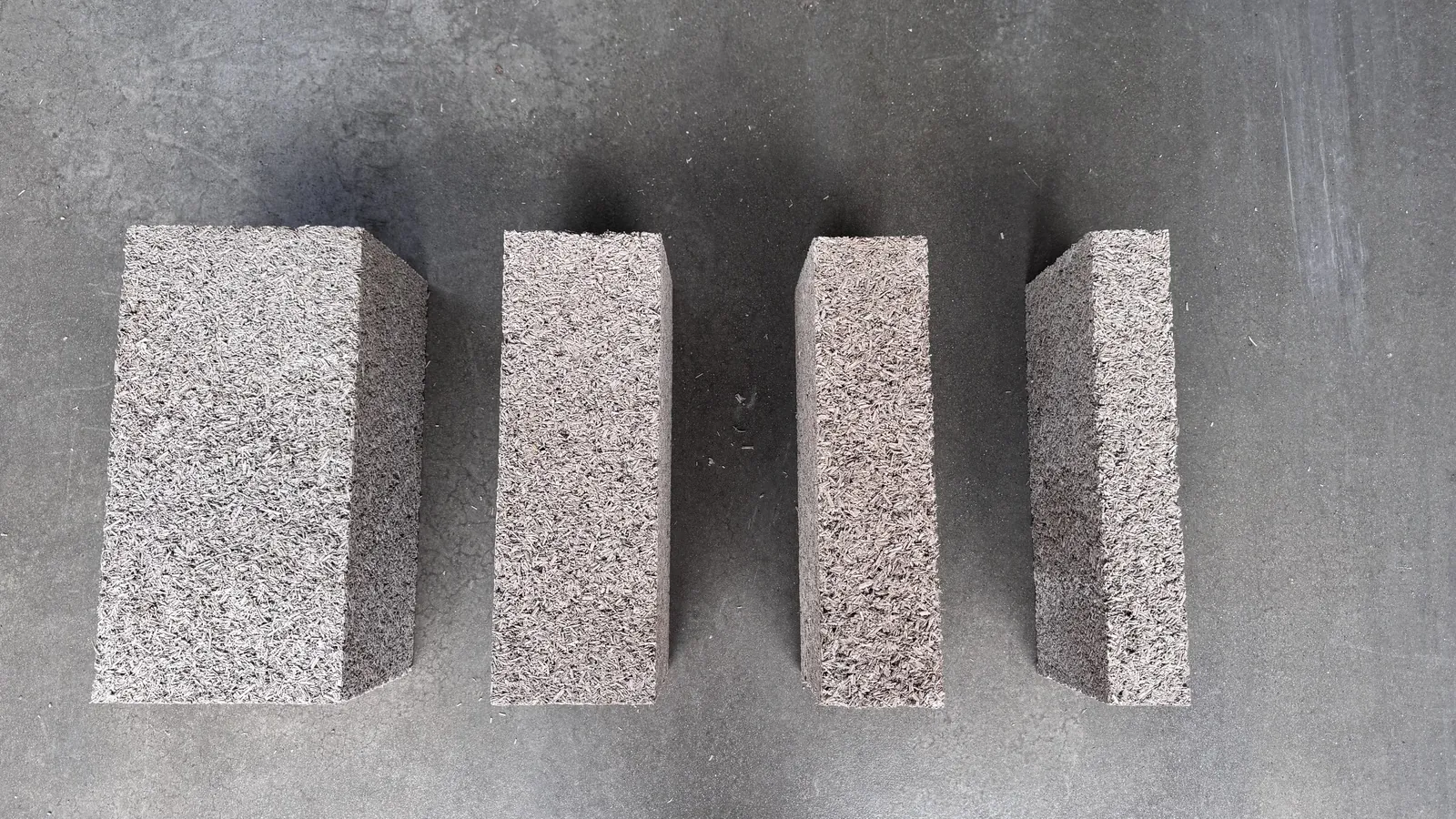
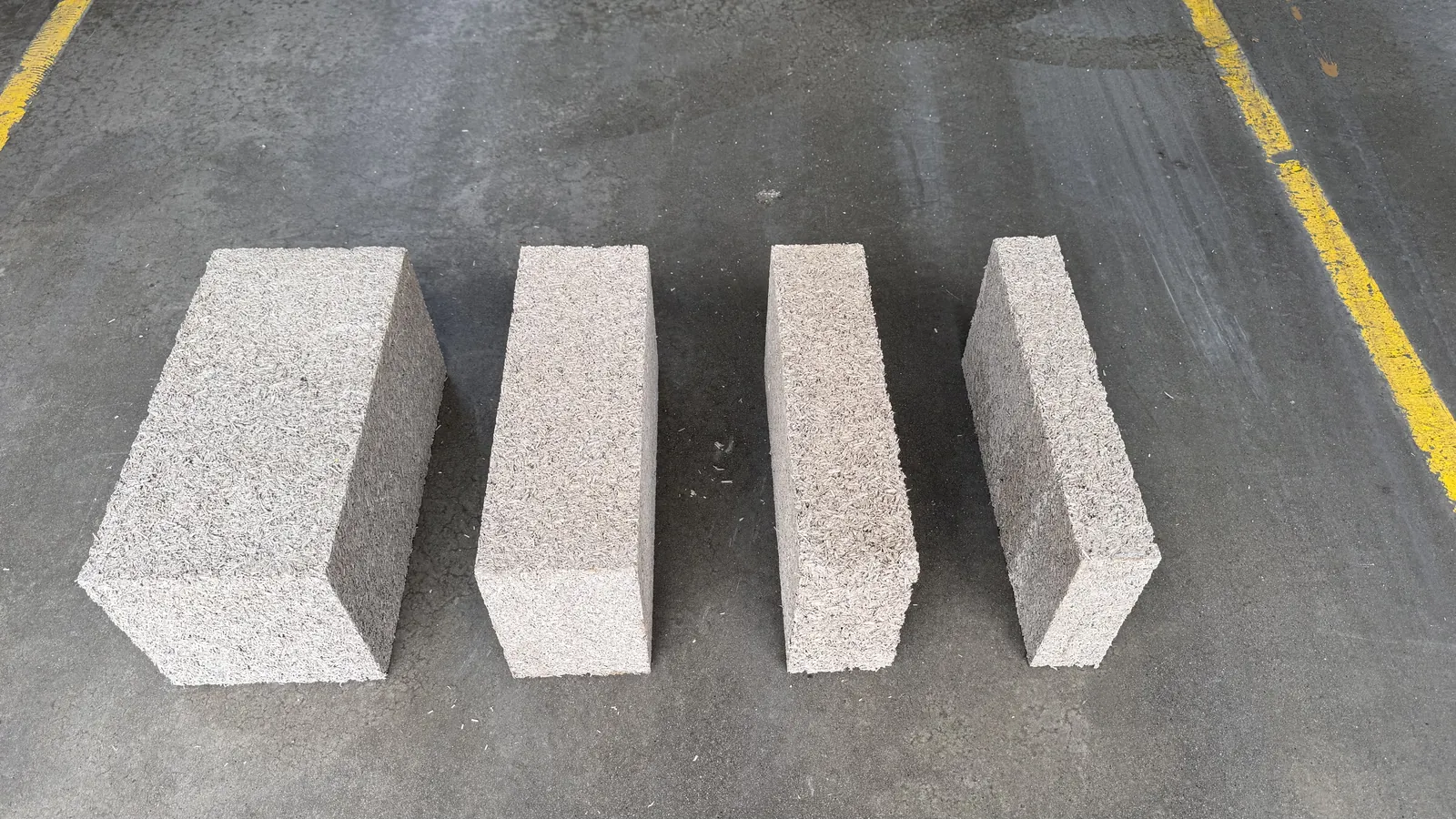
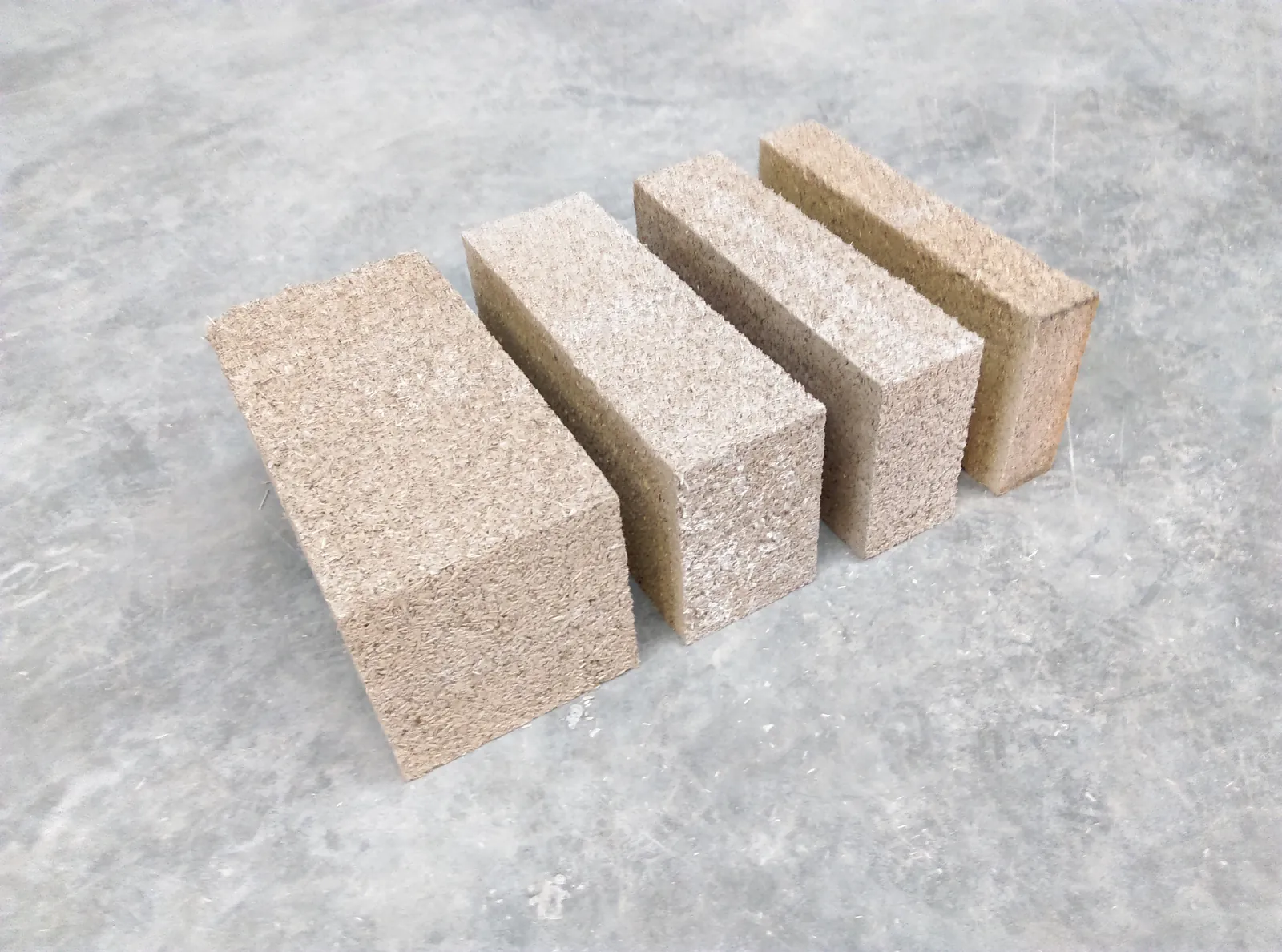
The 30 cm hemp block is the flagship high-performance format in the MULTICHANVRE range offered by blocs-de-chanvre.fr. The range also includes blocks in 10, 15 and 20 cm thicknesses, each suited to specific uses. For example, the 10 cm block is intended for lightweight partitions and linings, while the 15 cm block meets standard needs for lining and partitioning. The 20 cm block is commonly used for high-performance internal or external wall insulation. Finally, the 30 cm block, due to its thickness, is reserved for external wall insulation where high thermal performance is required.
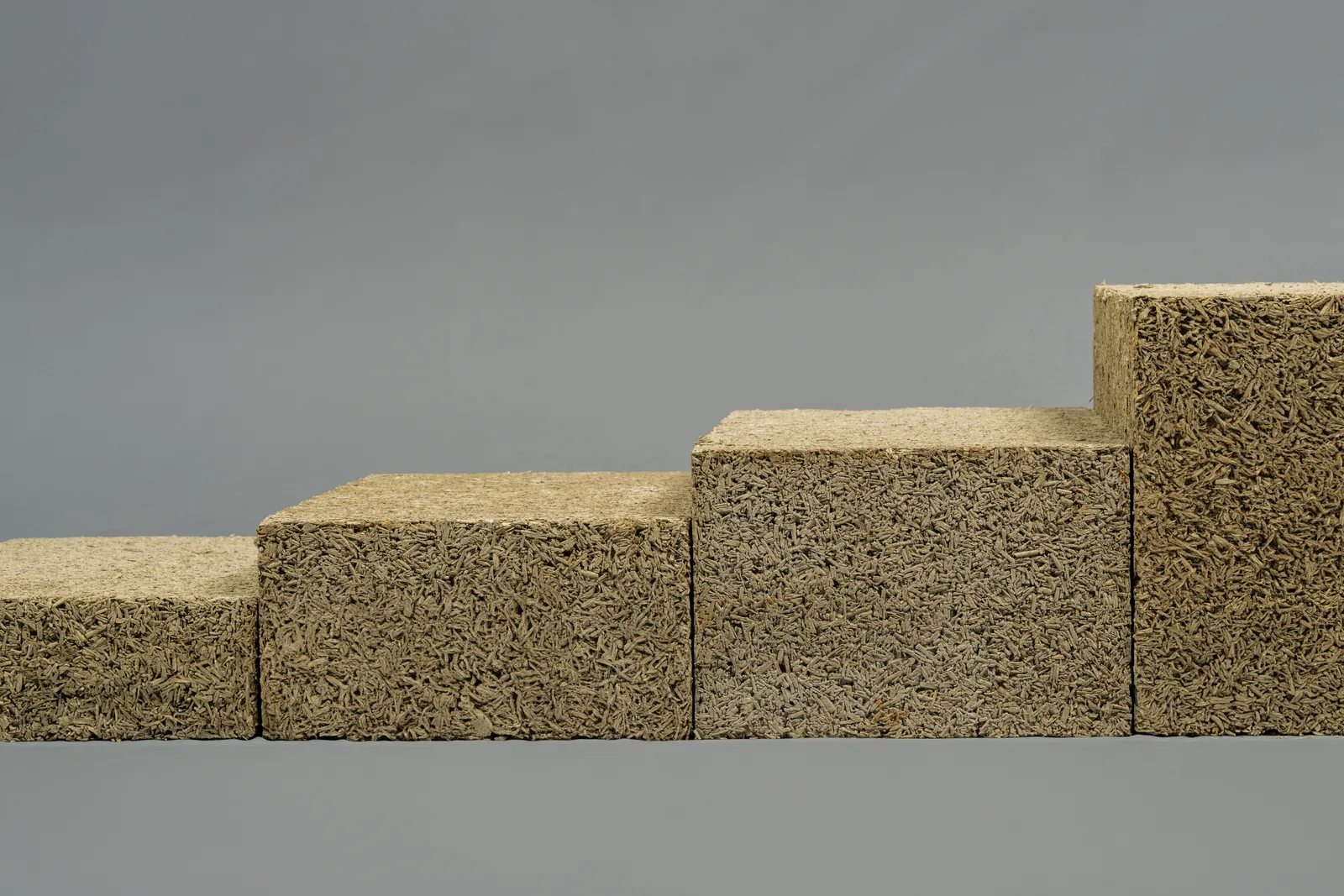
The composition is consistent across the range: all blocks are made with 84% hemp shiv, the woody core of the hemp stem, and a mineral binder—Vicat natural prompt cement—which ensures vapour permeability. This formulation gives the material a density of around 300 kg/m³ and a dry thermal conductivity of about 0.065 W/(m.K). Indoor air quality is rated A+, indicating very low pollutant emissions, and the block also offers good fire resistance (class B-s1 d0). These blocks are renewable, recyclable, and made from 100% French raw materials.
For more on the composition and general properties of the blocks, see Hempcrete block: composition, properties, range and The MULTICHANVRE range: thicknesses, R, thermal lag, packaging.
Technical specifications of the 30 cm hemp block for EWI
| Data | Value |
|---|---|
| Dimensions | 60 × 30 cm, 30 cm thick |
| Thermal resistance R | 4.6 m².K/W |
| Thermal conductivity λ | ≈ 0.065 W/(m.K) |
| Thermal lag | ≈ 18.5 h |
| Unit weight | 21 kg |
| Wall mass | ≈ 90 kg/m² |
| Palletisation | 56 blocks per pallet, covers 10.08 m² |
The standard block measures 60 cm long by 30 cm high and 30 cm thick. With a unit weight of 21 kg, a complete wall made from these blocks weighs around 90 kg/m². This mass is an important factor to consider for fixings and substrate compatibility.
The thermal resistance R of 4.6 m².K/W makes this block a high-performance insulator, suitable for the latest thermal regulations. The thermal lag of around 18.5 hours contributes to thermal mass and summer comfort, delaying heat transfer to the interior.
For more detailed technical information, see the MULTICHANVRE range page: The MULTICHANVRE range: thicknesses, R, thermal lag, packaging.
How the 18.5 h thermal lag improves comfort
Thermal lag is the time it takes for heat to pass through a material. With a lag of around 18.5 hours, the 30 cm hemp block significantly delays the transfer of heat absorbed by the façade to the inside of the building. In practice, the peak heat absorbed in mid-afternoon will only be released indoors the following morning, after a night’s ventilation has removed the previous day’s heat.
This thermal mass is a major advantage in temperate to warm climates, where summer heatwaves can cause uncomfortable overheating. It helps keep indoor temperatures stable and pleasant, reducing the need for air conditioning.
By comparison, lightweight EWI insulants such as mineral wool or expanded polystyrene have a much lower thermal lag, typically between 2 and 5 hours. This means they are less able to manage large solar gains over the course of a day.
A real-world example: in a 1970s house externally insulated with hemp blocks, the attic bedroom stayed below 27°C in August thanks to this thermal mass. This result demonstrates the value of the 30 cm hemp block for improving summer comfort, especially in spaces prone to overheating.
For more on these concepts, see the guide Thermal performance of hemp blocks: R, thermal lag and summer comfort.
Installing the 30 cm hemp block for external wall insulation
- Fixings: The block is fixed to the supporting wall using metal brackets, with two to five fixings per square metre. Blocks are laid in staggered joints, bonded with lime mortar applied using a notched trowel. This method ensures both mechanical and thermal continuity.
- Preparing the base of the wall: Insulation must stop 15 cm above ground level. This is achieved with a ventilated starter profile, preventing direct contact with the soil and reducing the risk of damp. A waterproof render is applied to the plinth to protect the base of the façade.
- Moisture protection: The block must never be in permanent contact with water. The external render is essential for weatherproofing against driving rain, while remaining vapour-open to maintain natural moisture regulation.
- Detailing at junctions: Roof overhangs should be extended, usually with additional rafters, to protect the insulated façade. Window sills need to project with a drip edge, and rainwater downpipes should be offset to prevent water splashing onto the render.
- Recommended renders: A lime render is applied in three coats, including full fibreglass mesh reinforcement to improve mechanical strength and prevent cracking. This type of render is compatible with the block’s vapour permeability and provides lasting protection for the façade.
This installation requires specialist know-how, particularly to ensure continuous weatherproofing and careful detailing at junctions. Technical data sheets and installation guides are available on the technical documentation page with recommended best practices.
Weight of the 30 cm hemp block and implications for the substrate
With a unit weight of 21 kg per block and a wall mass of around 90 kg per square metre, EWI using 30 cm hemp blocks represents a significant load for the supporting structure.
This load must be considered during the initial assessment of the supporting wall, especially in renovation. The masonry must be sound, with no crumbling, and any existing render must be well bonded. Bracket fixings must be anchored into solid material to ensure long-term stability.
A crumbling or cracked wall, or one with degraded render, may not support this load, which could lead to serious defects or even the risk of the insulation falling. In such cases, remedial work to the substrate or a lighter insulation solution may be required.
This technical constraint highlights the importance of a thorough survey before installation. For more on assessments, see Internal hemp insulation for stone walls: technical checklist before works.
Comparing the 30 cm hemp block with common EWI insulants
| Insulant | Thickness (cm) | Thermal resistance R (m².K/W) | Thermal conductivity λ (W/(m.K)) | Thermal lag (h) | Weight (kg/m²) |
|---|---|---|---|---|---|
| Hemp block 30 cm | 30 | 4.6 | ≈ 0.065 | ≈ 18.5 | ≈ 90 |
| Expanded polystyrene | 20 | 4.0 | ≈ 0.035 | 2 to 4 | 10 to 20 |
| Mineral wool | 20 | 4.0 | ≈ 0.035 | 3 to 5 | 15 to 30 |
| Aerated concrete | 25 | 3.5 | ≈ 0.12 | 8 to 10 | 200 to 400 |
This table summarises key characteristics of the 30 cm hemp block and common EWI materials. Compared to polystyrene or mineral wool, the hemp block is much heavier and thicker for a similar R-value. However, its thermal lag is far superior, offering much better summer comfort.
Aerated concrete is even heavier, but its thermal lag is still lower than hemp. These technical differences must be weighed against usage requirements, budget, durability and environmental criteria.
For a detailed technical comparison, see EWI comparison: hemp block or polystyrene.
Limitations and advice for using the 30 cm hemp block in EWI
- Not suitable for internal insulation: The 30 cm thickness is too great for internal wall insulation, as it significantly reduces living space—an important consideration in renovation.
- Waterproofing requirements: EWI installation requires careful detailing at junctions (roof, windows, rainwater outlets) to prevent water ingress that could damage the insulation or structure.
- Impact on planning and budget: Roof adaptations, such as extending overhangs, and repositioning rainwater downpipes represent a significant cost, often estimated at 10–15% of the total budget.
- Balancing thickness, performance and cost: It is recommended to carry out a detailed thermal study and technical assessment to optimise the required thickness, target performance and available budget. Sometimes, a compromise with a 20 cm block or another suitable insulant may be more appropriate.
These points are discussed in the guide Which hemp block thickness should you choose for your insulation?
Environmental and hygrothermal aspects of the 30 cm hemp block
The 30 cm hemp block is made from a bio-based formulation with 84% hemp shiv, sourced from 100% French raw materials, significantly reducing the environmental impact of transport and production. The binder is Vicat natural prompt cement, a hydraulic binder that is vapour-open and less energy-intensive than conventional cements.
The block naturally regulates humidity, maintaining relative humidity within a comfortable range. This ability to buffer moisture improves indoor air quality and contributes to the building’s durability.
The carbon footprint is low, with a verified FDES (Environmental and Health Declaration Sheet). The CO₂ stored in the hemp biomass helps the material achieve carbon neutrality.
Finally, indoor air quality is rated A+, meaning the hemp block emits little or no volatile organic compounds (VOCs), supporting a healthy indoor environment.
For more information, see Hemp as a material: the French supply chain and environmental impact.
Preparing and planning an EWI project with 30 cm hemp blocks
- Preliminary technical survey: A thorough check of the condition and strength of the supporting wall is essential. This assessment should be carried out before ordering to anticipate any necessary repairs or reinforcements.
- Thermal study: To correctly size the insulation thickness and check compliance with current regulations (notably RE2020), it is advisable to commission a thermal study.
- Required adaptations: The roof must be adapted to extend overhangs and protect the new insulated façade. Rainwater downpipes should also be repositioned to prevent water splashing.
- Coordination of trades: Installation requires coordinated work by bricklayers, renderers and roofers to ensure best practice and long-term durability.
- Logistics: Blocks are delivered on pallets, 24 units per pallet. It is important to plan for dry, sheltered storage away from moisture and impacts to maintain product quality.
- Lead times: Commercial responses are provided within 48 working hours, making it easy to plan your project quickly.
For any specific request or quote, you can request a quote directly online.
Frequently asked questions
Why is the 30 cm hemp block only used for external insulation?
The 30 cm thickness is too great for internal insulation, as it significantly reduces living space. For EWI, this thickness is placed outside without affecting the interior volume, optimising thermal comfort.
What precautions are needed for EWI fixings?
Fixings are made with two to five fixings per square metre, with staggered joints bonded using lime mortar. The supporting wall must be sound and able to take the load of around 90 kg/m².
How does the 18.5-hour thermal lag improve summer comfort?
This lag shifts the afternoon heat peak so it is only released indoors the following morning, after a night’s ventilation, helping to prevent daytime overheating in living spaces.
What render is recommended to protect hemp blocks in EWI?
A lime render applied in three coats with full fibreglass mesh reinforcement is recommended. It provides effective protection against driving rain while remaining compatible with the block’s moisture-regulating properties.
Is the 30 cm hemp block compatible with all substrates?
No, it requires a sound loadbearing wall with well-bonded render and fixings anchored into solid material. A prior assessment is essential to avoid the risk of damage or collapse.
What roof adaptations are needed for EWI with 30 cm hemp blocks?
Roof overhangs must be extended, often with additional rafters, and rainwater downpipes repositioned. These adaptations represent a significant part of the project budget.
How does the hemp block contribute to indoor air quality?
Thanks to its natural composition and moisture regulation, the block is rated A+ for indoor air quality, limiting pollutant emissions and supporting a healthy indoor climate.
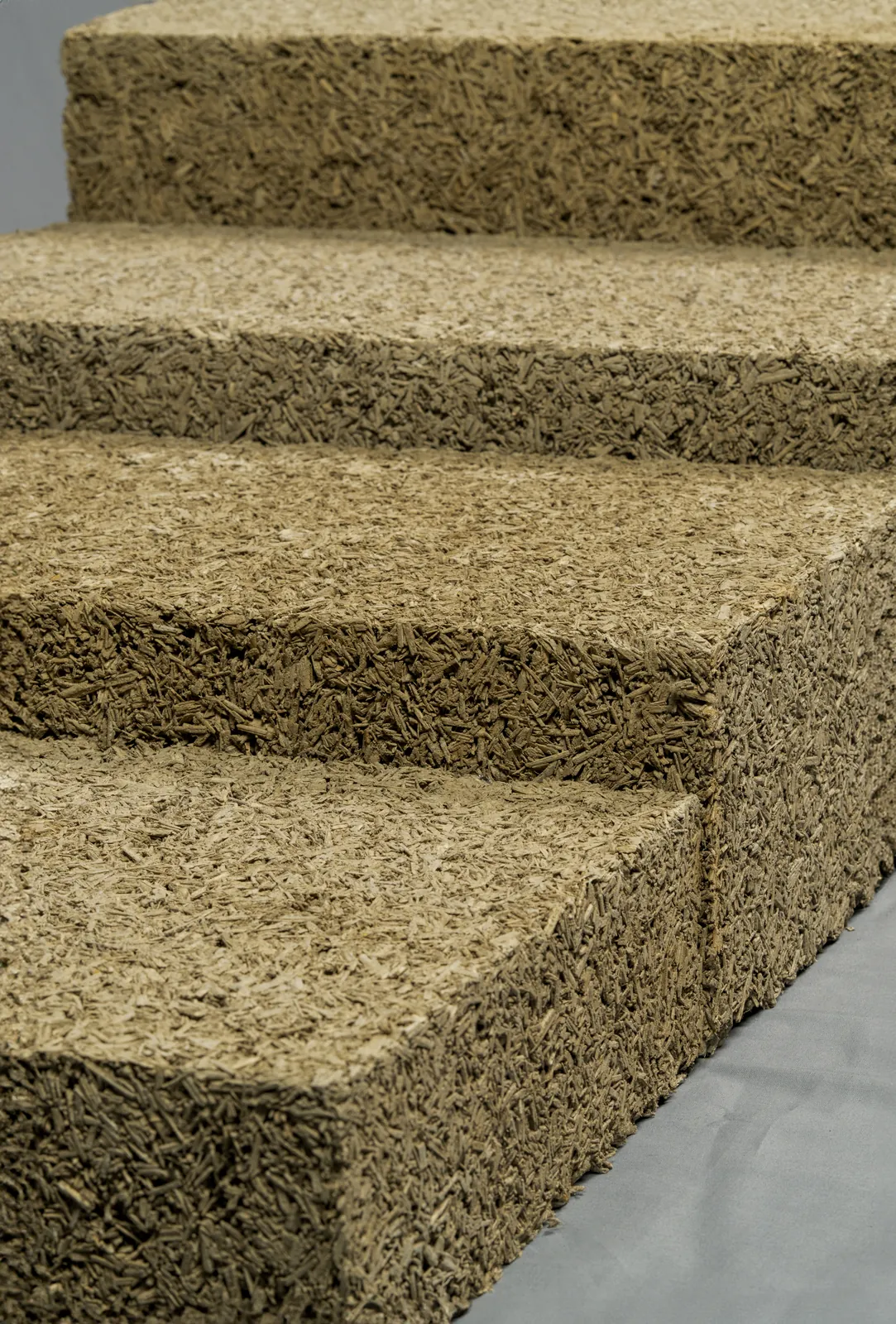
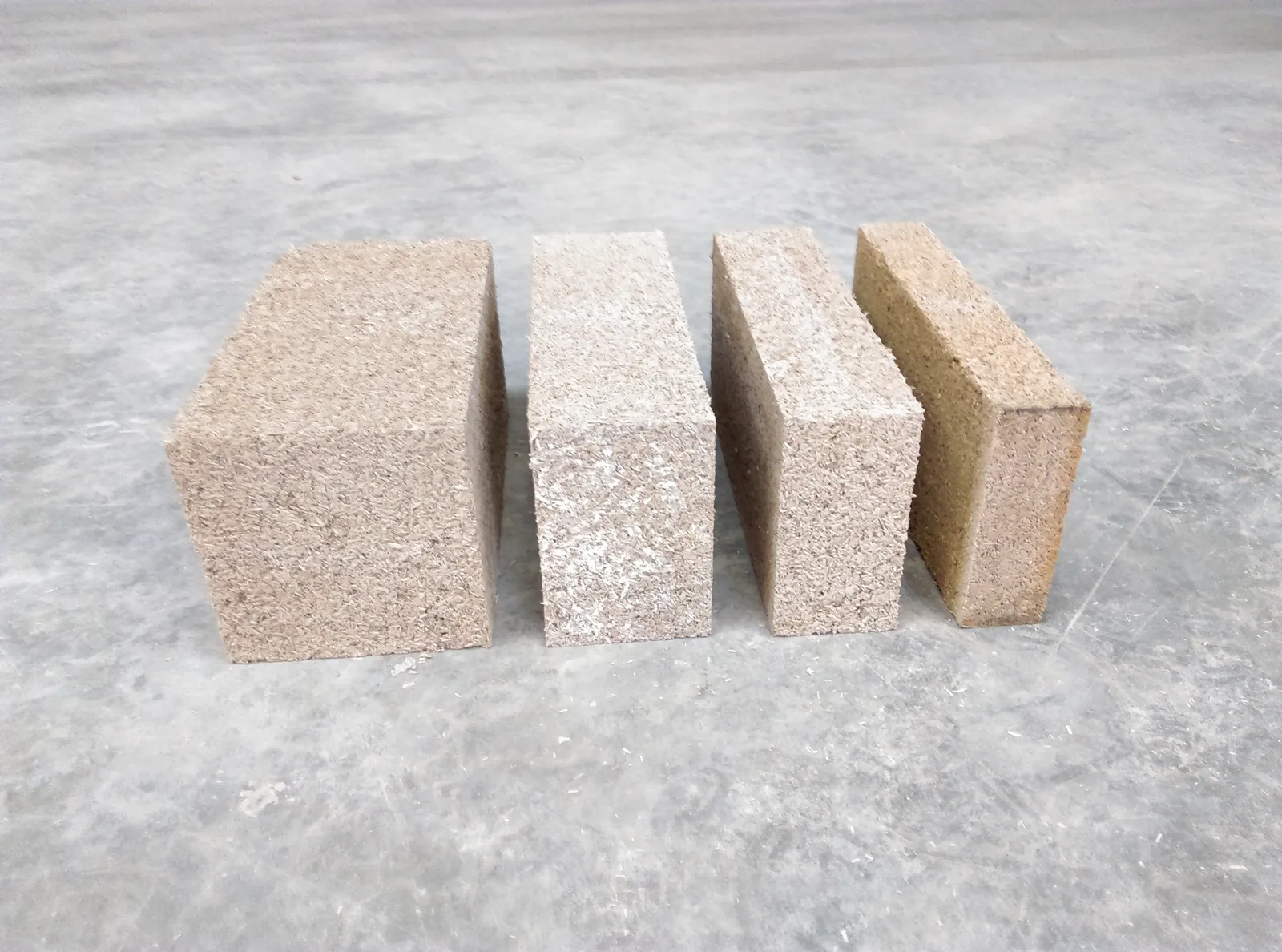
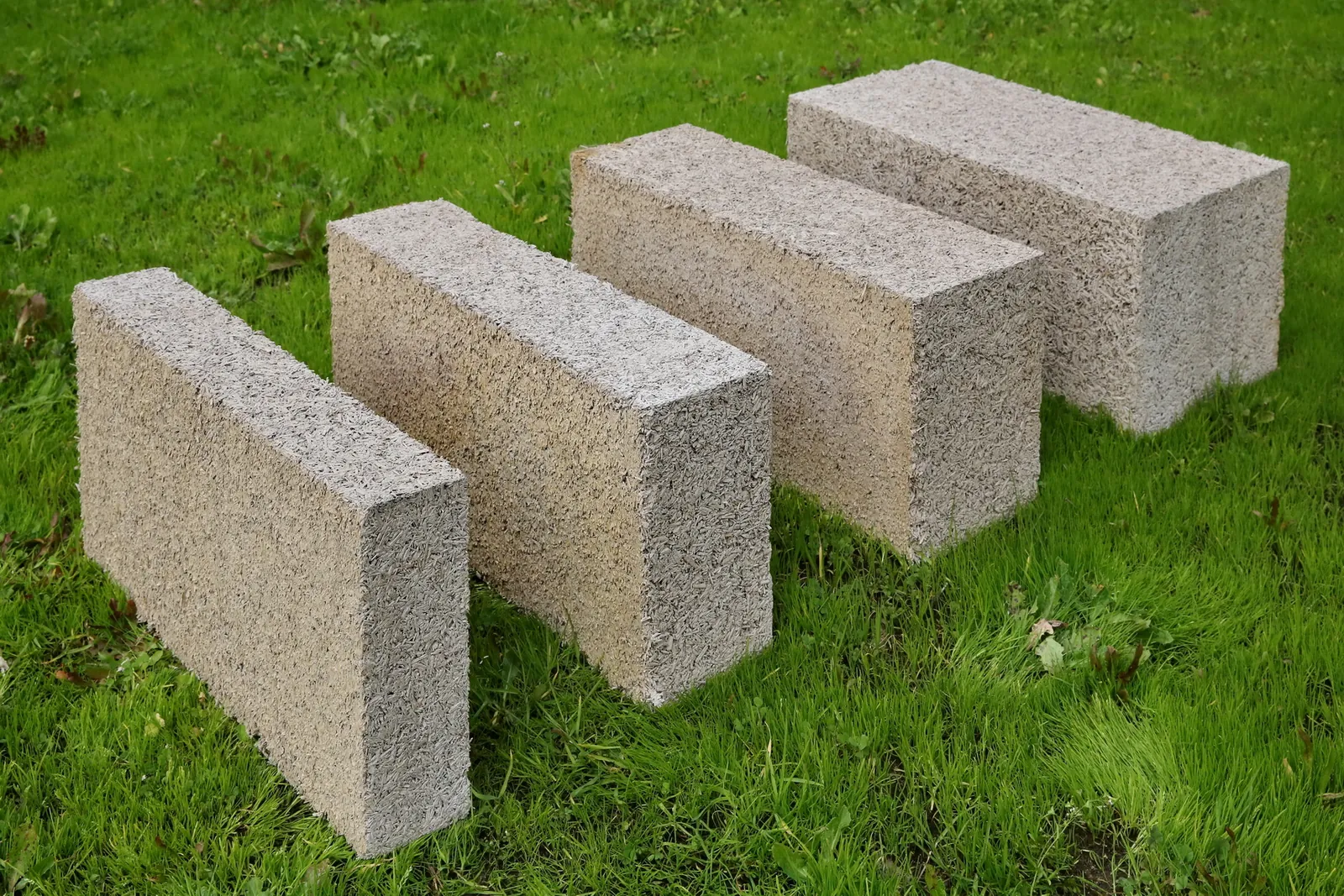
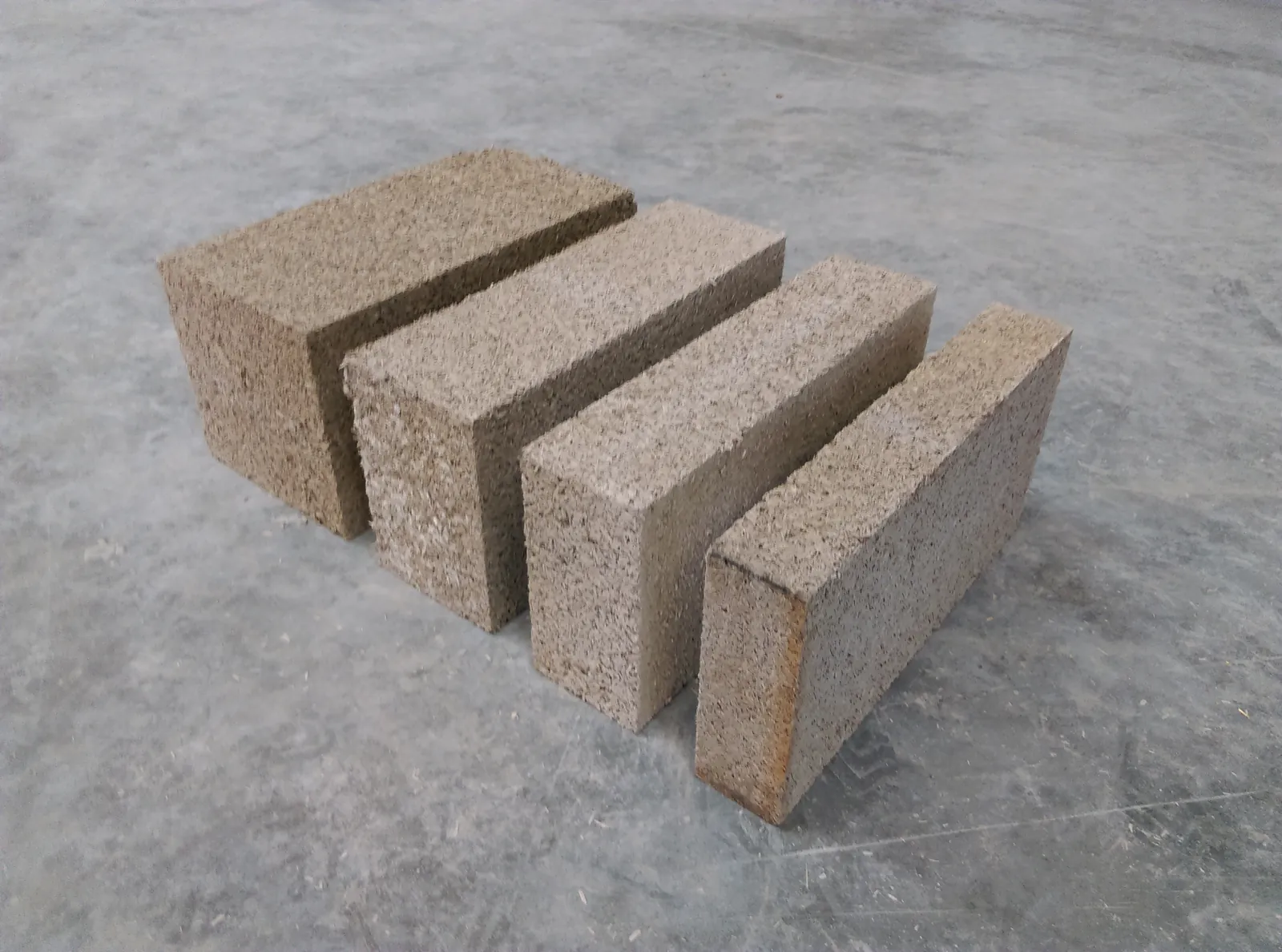
The MULTICHANVRE range in pictures
Read next
Planning a hemp block project?
Tell us about your project: we will reply within 48 working hours with a tailored costing.