Lifespan and maintenance of a hempcrete block wall
A well-built hempcrete block wall will last as long as the main structure. Maintenance focuses on finishes and protecting the facade, with regular checks of renders, water points and drainage. The material itself requires no special upkeep.
 By Julien Compain
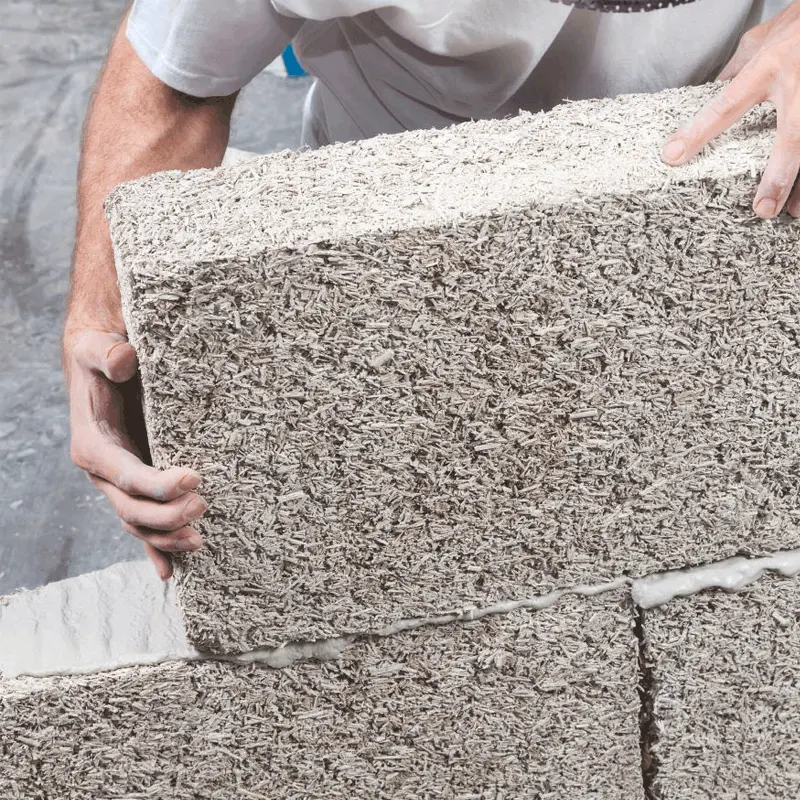
The lifespan of a well-designed hemp block wall matches that of the main structure. Maintenance focuses on the finishes and protecting the façade, with regular checks of the render, water points and water run-off. The material itself requires no specific upkeep.
Fire performance
This is the most common concern, and the answer is counter-intuitive: hempcrete is rated B-s1, d0 under the European classification.
This rating breaks down into three key aspects. “B” means the material is difficult to ignite, just below non-combustible materials. “s1” indicates very low smoke emission—a major factor, as most fire victims are affected by toxic smoke. “d0” means no flaming droplets are produced during combustion.
This performance is due to the mineralisation of the hemp shiv: the woody fibre is encapsulated in a mineral binder, here Ciment Naturel Prompt Vicat. The shiv is no longer exposed to air as in conventional plant-based materials, but integrated into a mineral matrix, giving hempcrete properties similar to lightweight concrete, with improved fire resistance.
This mineralisation clearly distinguishes hempcrete from non-mineralised plant materials, which are more flammable and generate more smoke and flaming droplets.
Rodents and insects
Another common concern is that this plant-based material might attract rodents or insects. In fact, hempcrete is naturally resistant to these pests for two main reasons:
- Its mineral hardness: the hemp shiv is encapsulated in the mineral binder, making the structure hard and unsuitable for burrowing or nesting.
- No nutritional value: mineralised hemp shiv is lignified and offers no food interest to insects or rodents.
Moreover, no insecticide or fungicide treatment is applied to the material, which contributes to its A+ rated indoor air quality and limits its impact on the indoor environment.
It should be noted, however, that careful installation is essential with any material. Openings at the base of the wall, unsealed ducts or unprotected gaps can allow rodents to enter the air gap or timber frame, regardless of the wall material itself.
Particular attention must therefore be paid to sealing all junctions and ensuring continuous protection against intrusion.
Moisture: the real issue
The main factor affecting the durability of a hemp block wall is moisture management. This is not a weakness of the material, but a constraint linked to its hygroscopic properties.
The hemp block actively regulates ambient humidity: it absorbs water vapour and then releases it, providing natural moisture regulation within a comfortable range, improving indoor comfort and protecting the wall from stagnant water that could cause mould or damage.
The combination of hemp shiv and natural prompt cement is highly resistant to mould, provided installation guidelines are followed:
- Never seal the wall: compatible, vapour-open renders are essential. Cement renders or waterproof film-forming paints block vapour diffusion, turning the wall into a moisture trap. For more information, see our guide to compatible renders.
- Protect the base of the wall: it is crucial to provide a capillary break and raise the first course of blocks. Rising damp from the ground is not managed by the block and can cause damage if it enters the masonry.
- Protect the façade: adequate roof overhangs, window sills with effective water run-off, and a treated plinth are essential to prevent rainwater ingress.
These principles apply to all permeable masonry, including stone and earth construction.
Expected lifespan
Hempcrete is a relatively new industrial material, with the first French projects dating from the 1990s. There is therefore no century-long track record for this specific product, so caution is advised regarding any claims to the contrary.
However, several observations support confidence in its durability:
- The components are stable: the binder is a natural prompt cement, not prone to rapid degradation, and the hemp shiv is mineralised, preventing biological decomposition.
- Buildings constructed in the 1990s and 2000s are still standing, with no documented structural deterioration.
- CSTB Technical Assessments are based on a reference lifespan in line with standard building practice.
In practice, the lifespan of a properly designed, protected and maintained hemp block wall matches that of the main structure. It is usually the finishes that require periodic attention, rather than the material itself.
Routine maintenance
Hempcrete requires no specific maintenance. The focus is mainly on the elements that surround and protect the wall:
| Element | Frequency | What to check |
|---|---|---|
| External lime render | Annual visual check | Cracks, detachment, areas of water run-off |
| Base of wall and plinth | Annually | Signs of damp, efflorescence, vegetation in contact |
| Gutters and downpipes | Twice a year | Overflow directed towards the façade |
| Window sills | Annually | Effective water run-off, sound joints |
| Internal finishes | As required | Refresh with vapour-open products |
Any crack in the external render should be repaired locally with a lime render to prevent water entering the wall over several seasons. Maintaining water protection and vigilance around water points are essential to ensure the wall’s longevity.
For detailed advice on installation and maintenance, see our installation guide and the page dedicated to lifespan and maintenance.
End of life
Hempcrete is a renewable, bio-based and recyclable material. At end of life, walls can be dismantled and crushed for reuse as backfill or aggregate, without the issues associated with synthetic insulation or mineral fibres.
This ability to be recycled within the construction sector significantly reduces environmental impact. It is also recognised in the life cycle assessment (LCA) used for RE2020 (France’s environmental building regulation).
The 100% French origin of the raw materials—especially the hemp shiv and natural prompt cement binder—helps limit transport-related carbon emissions and ensures a positive environmental balance.
Risks from design and installation errors
The durability of a hemp block wall depends heavily on the quality of design and workmanship. Several risks should be noted:
- Poor moisture management: lack of protection at the base of the wall or use of waterproof renders prevents the wall from breathing, leading to water stagnation, deterioration of finishes, or even structural damage.
- Unsuitable renders: film-forming or cement renders do not allow water vapour to pass through. Their use can trap moisture in the wall, causing cracks or detachment.
- Structural defects: unprotected openings or poorly executed joints can allow water ingress or unwanted air movement.
To ensure the wall’s longevity, it is recommended to follow best practice: use lime-based mortar with a notched trowel, staggered joints, mechanical fixings to the substrate, and suitable vapour-open renders.
Best practice for extending lifespan and easing maintenance
To maximise durability and simplify maintenance, several recommendations should be followed:
- Use compatible renders: favour lime, earth or clay renders, which maintain the wall’s vapour permeability and allow natural moisture management.
- Install water protection with care: gutters, window sills with effective water run-off, and sufficient roof overhangs to protect the façade.
- Regularly check vulnerable points: monitor for cracks, render detachment, signs of damp at the base of the wall and at junctions.
- Refer to technical documentation: for installation, maintenance and repairs, the guides available on the website and professional documentation are essential resources.
These best practices are essential to fully benefit from the advantages of hempcrete, including its moisture regulation, thermal mass and its contribution to RE2020.
Frequently asked questions
What is the typical lifespan of a hemp block wall?
The lifespan of a well-designed and maintained hemp block wall generally matches that of the main structure—several decades. The components are stable, and no rapid structural ageing has been observed to date.
Does hempcrete attract rodents or insects?
No. Thanks to its mineralisation and hardness, hempcrete does not provide a habitat or food source for rodents or insects. However, careful installation is essential to prevent entry points.
What are the main maintenance points for a hemp block wall?
Maintenance focuses mainly on external renders, the base of the wall, gutters, window sills and internal finishes. The aim is to monitor and repair cracks, prevent water ingress and maintain water protection measures.
Can hemp blocks be used for floor insulation under screed?
Yes, hemp blocks can be used as floor insulation under screed, providing effective moisture regulation and insulation. Practical guides are available for the correct installation method.
Which renders are compatible with hemp block walls?
Lime, earth or clay renders are recommended for their vapour permeability. Cement renders or film-forming paints should be avoided as they trap moisture and hinder the wall’s ability to manage humidity.
How is a hemp block wall recycled at end of life?
Hempcrete can be crushed and reused as backfill or aggregate, without the issues associated with synthetic insulation, reducing waste and supporting a more sustainable life cycle.
Does hempcrete require special maintenance against moisture?
The material naturally regulates moisture, but it is essential to follow installation guidelines to avoid sealing the wall and to protect areas exposed to rainwater or ground moisture.
Read next
Planning a hemp block project?
Tell us about your project: we will reply within 48 working hours with a tailored costing.