Regulations and standards for hempcrete block walls in construction
Hempcrete block walls must comply with RE2020, particularly for thermal insulation (R-value) and indoor air quality (A+). Installation must follow our guidelines and best practice, and the project should be validated by your structural engineer and insurer. Hempcrete blocks are not load-bearing; always check structural and hygrothermal compatibility.
 By Julien Compain
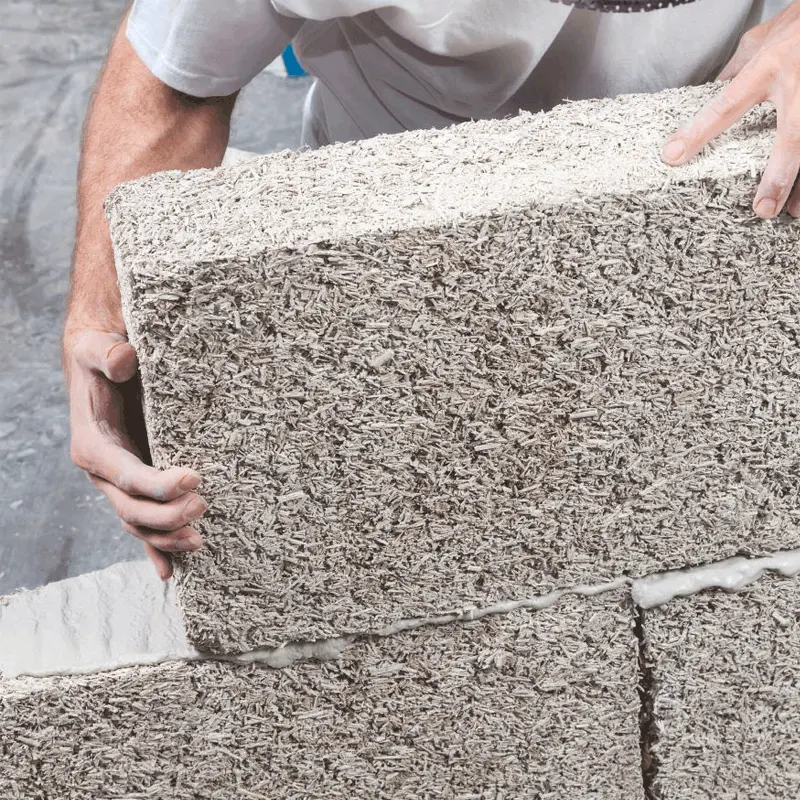
The hempcrete block wall must comply with the requirements of RE2020 (France's environmental building regulation), particularly for thermal insulation (R-value) and indoor air quality (A+ rating). Installation must follow our installation guides and best practice, and the project must be validated by the design office and insurer. Hempcrete blocks are not load-bearing; their structural and hygrothermal compatibility must be checked.
Regulatory framework for hempcrete block walls
In France, new builds are subject to the RE2020 environmental regulation, which sets requirements for the energy and environmental performance of buildings. This regulation aims to limit energy consumption and reduce the carbon footprint of construction, directly affecting the choice of insulation materials, including hempcrete block walls.
Best practice is defined by the Documents Techniques Unifiés (DTU – French construction standards), which set out the correct installation techniques for materials and ensure compliance. For hempcrete blocks, in the absence of a dedicated DTU, reference is made to the manufacturer’s technical data sheets and installation guides, and the project must be validated by the design office and insurer.
For thermal performance, French and European standards set minimum required thermal resistance (R-value) depending on climate zone and building type (residential, commercial). Regulations on indoor air quality set limits on emissions of volatile organic compounds (VOCs) and other pollutants, where hempcrete blocks achieve an A+ rating.
Where available, technical assessments validate the performance, safety and installation of a system. For example, the Avis Technique (French technical approval) previously held by BIOSYS has expired and is being renewed, and the MULTICHANVRE range is undergoing certification. These documents are essential for regulatory acceptance in projects.
For further details, see our dedicated guide to RE2020 and regulations for hempcrete blocks.
Thermal performance and RE2020 requirements for hempcrete block walls
RE2020 sets minimum R-values for opaque walls, varying by climate zone and building use. MULTICHANVRE hempcrete blocks are available in four thicknesses, each with a corresponding R-value:
- 10 cm: R = 1.5 m².K/W
- 15 cm: R = 2.3 m².K/W
- 20 cm: R = 3.0 m².K/W
- 30 cm: R = 4.6 m².K/W
The BIOSYS system achieves a thermal resistance of 4.6 m².K/W (useful value 4.2), meeting the high standards required for high-performance new builds.
Thermal lag is around 18.5 hours for the 30 cm block, contributing to the wall’s thermal mass and improving summer comfort by delaying heat transfer indoors. This is particularly beneficial in areas where thermal regulation is important.
For internal wall insulation (IWI), it’s important to note that hempcrete blocks require greater thickness than mineral wool to achieve the same R-value, which reduces usable floor area. This trade-off should be considered in design or renovation. As the insulation is not load-bearing, it must be combined with a supporting wall.
Specific cases
- Renovation: Hempcrete blocks provide insulation compatible with older walls, especially stone, thanks to their vapour permeability and moisture regulation.
- New build: The choice of thickness and system (BIOSYS or MULTICHANVRE) depends on the desired energy performance and the load-bearing structure.
- Timber frame: Blocks are used as infill, allowing the wall’s thermal performance and vapour permeability to be tailored.
- Stone wall: Internal insulation with hempcrete blocks must consider hygrothermal compatibility to avoid moisture issues.
For more technical information, see the MULTICHANVRE 20 cm product data sheet and the thermal performance guide for further details.
Fire safety and classification of hempcrete block walls
Hempcrete blocks are rated B-s1 d0 for fire, meaning they produce very little smoke and do not form flaming droplets in the event of fire. This classification meets regulatory requirements for the fire reaction of insulation materials in buildings.
In public-access buildings (ERP) and homes, fire safety requirements are strict. As hempcrete block walls are not load-bearing, they must be part of an overall construction system that complies with current regulations.
Renders and plasters play an important role in fire resistance. On hempcrete block walls, applying lime-based render, spray plaster, earth or clay plasters helps improve fire protection and ensures regulatory compliance.
For detailed advice and to address project-specific requirements, see the guide to fire resistance of hempcrete blocks.
Hygrothermal compatibility and indoor air quality
Hempcrete block walls actively regulate building humidity, helping maintain stable relative humidity within a comfortable range. This reduces the risk of condensation and damp within the wall, supporting durability and indoor comfort.
The material is rated A+ for indoor air quality, confirming very low emissions of pollutants and VOCs. Its natural composition—84% hemp shiv and a mineral binder (Vicat natural prompt cement)—further enhances this quality.
To avoid moisture problems, wall configurations must be carefully considered, especially for old or very damp walls. The choice of render is crucial: indoors, lime-based, spray plaster, earth or clay plasters are recommended to ensure the wall remains vapour-open and breathable. Outdoors, a lime render with full mesh reinforcement is advised to protect the block without sealing it.
These aspects are covered in detail in the comprehensive guide to compatible renders for hempcrete blocks.
Comparison table: technical and regulatory characteristics of MULTICHANVRE and BIOSYS hempcrete blocks
| Characteristic | MULTICHANVRE 10 cm | MULTICHANVRE 15 cm | MULTICHANVRE 20 cm | MULTICHANVRE 30 cm | BIOSYS |
|---|---|---|---|---|---|
| Dimensions (cm) | 60 × 30 | 60 × 30.8 × 30 | |||
| Thickness (cm) | 10 | 15 | 20 | 30 | 30 |
| Thermal resistance R (m².K/W) | 1.5 | 2.3 | 3.0 | 4.6 | 4.6 (useful value 4.2) |
| Thermal lag (h) | 6.1 | 9.25 | 12.3 | 18.5 | 18.5 |
| Block weight (kg) | 6.5 | 10 | 13 | 21 | Not specified |
| Pallet coverage (m²/pallet) | 21.6 | 14.4 | 10.8 | 10.08 | Not specified |
| Certification / Avis Technique | Certification in progress | Avis Technique CSTB renewal in progress | |||
| Recommended use | Partition walls, light lining | Standard lining, partitions | High-performance internal (IWI) and external (EWI) insulation | High-performance external insulation (EWI) | Reinforced concrete post-and-beam structure, dry-stacked infill |
Installation aspects in line with professional standards
MULTICHANVRE hempcrete blocks are laid with a special lime-based mortar, applied using a notched trowel. Blocks are laid with staggered joints and fixed to the substrate with brackets—about two per square metre—to ensure the mechanical stability of the lining.
Note that hempcrete blocks are not load-bearing. They are designed to line a supporting wall or to infill a frame, so coordination with the load-bearing structure—whether concrete, masonry or timber frame—is essential.
Professional standards also specify that installers must be properly trained and qualified to ensure correct installation. Mastery of the specific techniques for hempcrete blocks, especially mortar mixing and application, is essential.
Finishes must be compatible with the material: lime, spray plaster, earth or clay plasters for interiors, and lime render with full mesh reinforcement for exteriors. These finishes ensure the wall remains vapour-open and durable.
For more on installation, the comprehensive technical installation guide provides all necessary details, as does the document available for professionals on the Technical documentation page.
Regulatory environmental impact and carbon footprint of hempcrete block walls
Hempcrete block walls are recognised for their low carbon footprint, particularly due to the CO₂ storage provided by the hemp shiv, which makes up 84% of the composition. This storage contributes to a positive carbon balance under RE2020.
The FDES (French environmental product declaration) is verified, placing hempcrete blocks among the low-impact bio-based materials. The local supply chain ensures all raw materials are 100% French, from hemp cultivation to manufacturing at the Mérey-sous-Montrond factory.
The material is renewable and recyclable, supporting a sustainable approach. On site, dry construction and prefabrication reduce drying times and moisture-related issues.
These aspects are covered in detail in the feature on hemp as a material, which looks at the French supply chain and environmental impact.
Frequently asked questions about hempcrete block wall regulations
The most common questions concern RE2020 compliance, use as a load-bearing wall, regulatory thicknesses, fire classification, compatible renders, technical approval guarantees, and indoor air quality. These points are summarised in the separate FAQ to support both professionals and private individuals in their projects.
For a deeper understanding and tailored advice, we recommend consulting the guides and product data sheets on the site.
For example, see the product data sheets: sizes, lambda, thermal resistance or the page dedicated to the two hempcrete block brands.
Frequently asked questions
Are hempcrete block walls compliant with RE2020?
Hempcrete blocks meet RE2020 requirements, particularly for thermal resistance and low carbon impact, with systems such as BIOSYS. Some MULTICHANVRE products are currently undergoing certification.
Can a hempcrete block wall be used as a load-bearing wall?
Hempcrete blocks are not load-bearing. They are used for insulation or as infill on a supporting structure such as a concrete wall or timber frame.
What are the regulatory thicknesses for insulating a wall with hempcrete blocks?
MULTICHANVRE blocks are available in 10, 15, 20 and 30 cm thicknesses, with R-values from 1.5 to 4.6 m².K/W, allowing thickness to be adjusted to meet thermal needs and regulations.
What is the fire classification of hempcrete block walls?
The blocks are rated B-s1 d0 for fire, meaning limited reaction to fire, but overall safety also depends on the complete system and finishes.
Which renders are compatible to meet regulations on hempcrete block walls?
Lime-based, spray plaster, earth or clay plasters are suitable for interiors. For exteriors, a lime render with full mesh reinforcement is recommended.
What is the status of the BIOSYS Avis Technique?
The CSTB Avis Technique for BIOSYS has expired and is being renewed. The system’s performance (R 4.6 m².K/W, useful value 4.2, fire resistance EI 90) and installation on reinforced concrete post-and-beam structures are still described in our technical data sheets and installation guide.
How can indoor air quality be ensured with a hempcrete block wall?
Hempcrete blocks are rated A+ for indoor air quality. Their natural composition and moisture regulation help limit pollutants and excess humidity.
Read next
Planning a hemp block project?
Tell us about your project: we will reply within 48 working hours with a tailored costing.