Hempcrete block fire resistance: a complete technical guide
Hempcrete blocks are rated B-s1 d0 for fire, confirming their non-flammable nature and minimal smoke emission. This makes them suitable for a wide range of building applications, provided they are installed correctly and finished with appropriate renders to ensure fire safety.
 By Julien Compain
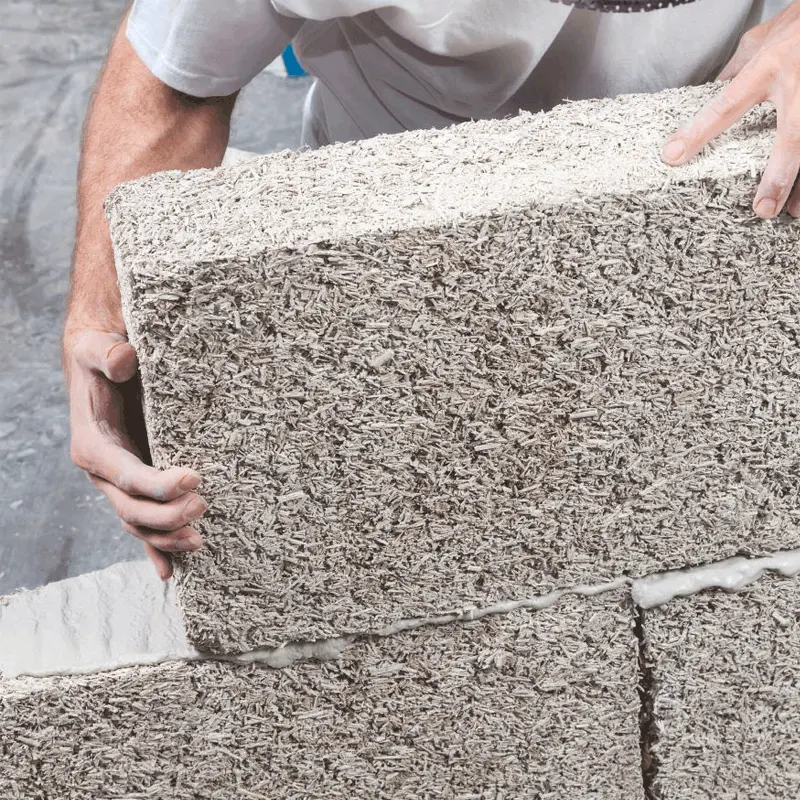
The hempcrete block is rated B-s1 d0 for fire performance, confirming its non-flammable nature and absence of dense smoke emission. This makes it a suitable material for a range of construction uses, provided it is installed correctly and finished with an appropriate render to ensure fire safety.
Introduction to fire resistance in bio-based materials
The fire resistance of a material refers to its ability to retain its mechanical properties and limit its contribution to the spread of fire when exposed to intense heat. In construction, fire resistance is a key regulatory requirement, crucial for safeguarding both occupants and property.
Bio-based materials, derived from renewable resources such as hemp, have specific behaviours when exposed to fire. Their organic composition can make them more susceptible to combustion than traditional inorganic materials. However, their formulation and installation can be optimised to reduce these risks.
Under French and European regulations, insulation materials must meet defined fire reaction classes, which assess flammability, smoke production, and flaming droplets. These requirements are set out in standards such as NF EN 13501-1, which applies to construction products.
Fire properties of hempcrete blocks: classification and characteristics
The hempcrete block manufactured by Vieille Matériaux is rated B-s1 d0. This means the material is hardly flammable (B), produces very little smoke (s1), and does not generate flaming droplets (d0) in the event of fire. These features are essential for limiting fire spread and risks to occupants.
The binder used, Vicat natural prompt cement, is a vapour-open hydraulic binder that is non-combustible and contributes to the fire stability of the block. Unlike organic binders, it does not fuel combustion, further enhancing the overall fire resistance of the material.
At a thickness of 30 cm, the hempcrete block provides a thermal lag of around 18.5 hours, which also helps limit the risk of rapid wall heating in a fire. This thermal mass, combined with low flammability, increases the fire safety of the construction system.
In practice, the block does not ignite spontaneously and does not emit dense smoke, which is an advantage for residential or commercial buildings. However, this performance also depends on the quality of installation and the finishes applied.
Standards, certifications and technical assessments for fire resistance
The BIOSYS building system achieves a fire resistance of EI 90 and a fire reaction rating of B-s1,d0.
The MULTICHANVRE range is currently undergoing certification (an ATEx for internal insulation is being processed by CSTB), meaning its properties, including fire resistance, are being thoroughly assessed to meet regulatory and standard requirements.
Applicable standards include NF EN 13501-1 for fire reaction classification and the requirements of the French Construction and Housing Code relating to fire safety. It should be noted that the fire resistance of a complete wall depends on all its components, including the substrate, renders, and load-bearing structure.
Regulations often require checking the compatibility of hempcrete blocks with other materials and providing additional protection depending on the building type and intended use.
Fire resistance comparison: hempcrete block versus other insulations
| Material | Fire rating | Flammability | Smoke production | Flaming droplets | Typical thickness (cm) |
|---|---|---|---|---|---|
| Hempcrete block (MULTICHANVRE 30 cm) | B-s1 d0 | Low | Very low | None | 30 |
| Expanded polystyrene (EPS) | E to F depending on formulation | High | Significant | Possible | 8-10 |
| Mineral wool (glass or rock wool) | A1 | Non-flammable | Very low | None | 8-15 |
| Aerated concrete | A1 | Non-flammable | Very low | None | 20-30 |
The hempcrete block offers a very favourable fire reaction, close to inorganic materials such as aerated concrete and mineral wool. However, it requires a greater thickness than mineral insulations to achieve equivalent thermal resistance, which can reduce usable floor area for internal wall insulation (IWI).
Compared to polystyrene, the hempcrete block provides much better fire safety, with no emission of toxic smoke or flaming droplets. This makes it a sound choice for buildings where fire safety is a priority.
Installation, particularly the use of suitable renders, plays a key role in ensuring these performances. A wall insulated with hempcrete blocks should be protected internally with a plaster or lime render to optimise fire resistance.
Expert advice: ensuring fire resistance with hempcrete blocks
The fire resistance of hempcrete blocks depends not only on their composition but also on the quality of finishing and installation. Renders are fundamental:
- For interiors, use renders such as spray-applied plaster, lime, or earth, all recognised for their thermal mass and non-combustible behaviour.
- For exteriors, lime render with full mesh reinforcement is recommended to protect the block from external exposure while maintaining its fire properties.
Blocks should be laid with a lime-based mortar applied using a notched trowel, in staggered joints. This ensures strong mechanical bonding and limits thermal bridging and air infiltration, which indirectly supports fire performance.
Fixing to the substrate with brackets (around 2 per m²) stabilises the wall and prevents blocks from detaching in the event of thermal or mechanical shock. Careful installation is therefore a key safety factor.
Precautions vary depending on use:
- For IWI, consider the loss of usable floor area due to block thickness and ensure adequate ventilation.
- For EWI, lime render with mesh reinforcement is essential.
- For partitions, lightweight 10 or 15 cm blocks may suffice, with particular attention to joint continuity.
- For timber frame infill, compatibility between materials and protection against localised fire risks must be considered.
For further guidance, see the guide to compatible renders for hempcrete blocks and the technical documentation and installation guide.
Limitations and precautions for hempcrete block fire resistance
It is important to note that hempcrete blocks are not load-bearing. They must be combined with an independent structural frame (supporting wall or timber frame). This requirement affects structural design and, indirectly, the overall fire safety of the building.
Usage conditions, especially exposure to moisture and maintenance of renders, affect durability and fire resistance. Damaged or poorly maintained renders can compromise fire protection.
Fire behaviour also depends on other materials in contact, such as joinery, additional insulation, or finishes. A holistic approach to the construction system is therefore essential.
For high-risk applications, such as public buildings or in high-risk zones, a specific assessment by a design office or fire safety expert is recommended to validate the use of hempcrete blocks.
How fire resistance affects your choice of hempcrete block
The B-s1 d0 fire rating of hempcrete blocks meets local fire safety regulations and supports the aims of RE2020 (France's environmental building regulation), which promotes low-impact bio-based materials.
Choosing the right block involves balancing thermal performance, thermal mass (lag), and fire safety. The need for sufficient thickness to achieve thermal resistance may affect design and cost, but also provides beneficial thermal mass in the event of fire.
Hempcrete blocks work well with other bio-based or traditional materials, especially in hybrid systems combining insulation and structure. For more information, see the technical resources on both hempcrete block brands or the 30 cm hempcrete block for EWI: high-performance thermal insulation.
For a certified turnkey solution, the BIOSYS building system provides a robust framework. The sales team is also available to answer specific questions and provide a quote via contact#devis.
Frequently asked questions
What is the fire rating of hempcrete blocks?
Hempcrete blocks are rated B-s1 d0, meaning they are hardly flammable and produce very little smoke in the event of fire.
Are hempcrete blocks suitable for insulation in fire-prone areas?
Yes, thanks to their B-s1 d0 fire rating and the use of suitable renders, they can be used in fire-risk zones, provided all relevant regulations and standards are followed.
How does natural prompt cement binder affect fire resistance?
The Vicat natural prompt cement binder is a vapour-open, non-combustible hydraulic binder that helps maintain the fire stability of hempcrete blocks by preventing the binder from igniting.
Which renders are recommended to enhance fire resistance?
Renders such as spray-applied plaster, lime, or earth are suitable for interiors, while lime render with full mesh reinforcement is recommended for exteriors to maintain fire resistance.
Are hempcrete blocks load-bearing?
No, hempcrete blocks are not load-bearing. They are used to line a supporting wall or infill a frame, so a separate structural support is required.
Does the BIOSYS system have fire resistance certification?
The BIOSYS building system achieves a fire resistance of EI 90 and a fire reaction rating of B-s1,d0. The CSTB Technical Assessment (Avis Technique) previously held has expired and is currently being renewed.
What is the role of staggered joints in the fire resistance of blocks?
Staggered joints provide strong mechanical bonding between blocks and limit thermal bridging and air infiltration, thus contributing to overall performance, including fire resistance.
Read next
Planning a hemp block project?
Tell us about your project: we will reply within 48 working hours with a tailored costing.