Hempcrete blocks for external wall insulation: a complete guide before you start
External hempcrete blocks are a high-performance bio-based material for external wall insulation (EWI). They require a good understanding of their properties, correct installation with suitable lime-based renders, and a balanced choice of thickness for both thermal performance and usable space. This guide details the key steps and checks before use.
 By Julien Compain
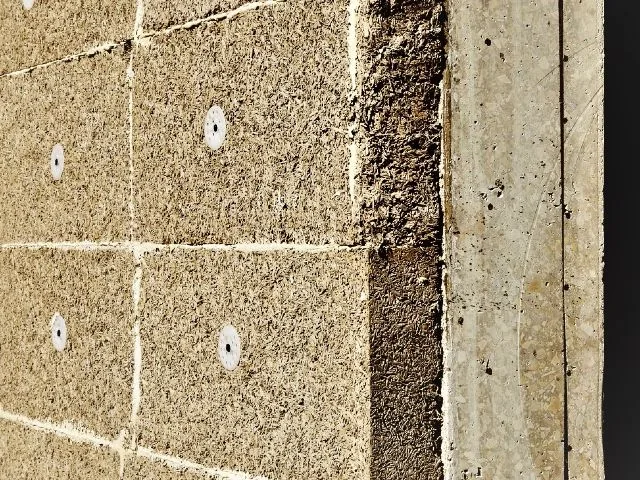
The external hemp block is a high-performance bio-based material for external wall insulation (EWI). It requires a good understanding of its characteristics, correct installation with suitable renders, and a balanced choice of thickness to achieve both thermal performance and usable floor area. This guide details the key steps and points to check before use.
Understanding external hemp blocks: composition and properties
The hemp block used for external insulation is made primarily from hemp shiv, which accounts for around 84% of the material. The binder used is Vicat natural prompt cement, a hydraulic binder that is vapour-open, ensuring the elements are held together while maintaining breathability. The blocks come in a standard size of 60 × 30 cm, with various thicknesses available up to 30 cm in the MULTICHANVRE range.
The blocks have a thermal conductivity λ of around 0.065 W/(m.K), making them effective insulators, especially thanks to significant thermal lag, which can reach 18.5 hours for 30 cm blocks. This lag helps keep interiors cooler in summer by delaying heat transfer. The density is around 300 kg/m³, giving the material good thermal mass and favourable hygrothermal properties. The block also helps regulate indoor humidity, maintaining relative humidity within a comfortable range.
In terms of safety, the material is rated B-s1 d0 for fire, meaning it produces very little smoke and no flaming droplets. Indoor air quality is rated A+, indicating very low emissions of volatile compounds. Finally, hemp blocks are renewable, recyclable, and sourced from a French supply chain, making them a coherent and local ecological choice.
Choosing the right thickness and thermal resistance for effective external insulation
The MULTICHANVRE range offers four standard thicknesses: 10, 15, 20 and 30 cm. Each thickness corresponds to a specific thermal resistance (R):
- 10 cm – R = 1.5 m².K/W
- 15 cm – R = 2.3 m².K/W
- 20 cm – R = 3.0 m².K/W
- 30 cm – R = 4.6 m².K/W
For external wall insulation, the 30 cm thickness is recommended to achieve high thermal performance in line with RE2020 (France's environmental building regulation). However, this choice involves a trade-off with available living space and the cost of materials and installation. The thicker the block, the more material needs to be handled and the more space is taken up on site, which affects both costs and logistics.
The choice of thickness should also take into account the type of building and the local climate. For example, in regions with harsh winters, a greater thickness will provide better insulation and comfort. In milder areas, intermediate thicknesses may be sufficient, depending on the thermal study. It is therefore advisable to consult a design office or the technical team to tailor the thickness to your specific project.
For more on choosing the right thickness and its implications, see the guide Which hemp block thickness should you choose for your insulation?
Compatibility and limitations of hemp blocks for external insulation
Hemp blocks are non-loadbearing insulators. They must therefore be used as a lining on an existing loadbearing wall or as infill in a suitable frame. Externally, they are particularly suitable for EWI on old stone, concrete or timber frame walls, providing a breathable, hygrothermal solution.
External installation requires specific precautions due to exposure to the weather. The material naturally regulates humidity, but must not be exposed directly to rain or standing water. Protection with a suitable external render, especially a lime-based render with full mesh reinforcement, is essential to ensure the durability and longevity of the system.
In addition, the thickness required for good thermal performance means the system projects out from the building, which can be a constraint in certain urban or heritage contexts. For internal wall insulation (IWI), this thickness can also reduce usable floor area, which is an important consideration.
Finally, to ensure the system's durability, it is vital to follow technical recommendations strictly, particularly for staggered joints, mechanical fixing to the substrate, and finishing with render. Failure to follow these rules can lead to problems with moisture, cracking or premature deterioration.
Installing and applying hemp blocks for external insulation
The MULTICHANVRE system, designed for external insulation, uses straight-edged blocks laid in bonded masonry with a lime-based mortar applied using a notched trowel. The blocks are laid in a staggered bond to ensure continuous insulation and minimise thermal bridging.
Mechanical fixing between the blocks and the substrate is achieved using brackets, on average two per square metre, ensuring the lining is mechanically stable. The external finish is a lime-based render, applied with full mesh reinforcement to protect the block while maintaining vapour permeability.
The key installation steps are:
- Preparation and cleaning of the loadbearing substrate
- Laying the blocks in bonded masonry, applying lime-based mortar with a notched trowel and creating staggered joints
- Fixing the brackets to the substrate
- Applying compatible lime-based renders, with full mesh reinforcement
Because the blocks are prefabricated in the factory, on-site drying times are reduced, making installation faster than with traditional insulants that require long curing times.
To minimise thermal bridging and ensure continuous insulation, it is important to ensure joints are well sealed and the connection to the substrate is carefully executed. The guide How to install a hemp block: technical guide for IWI, EWI, partitions, floors provides further information on best practice.
Thermal performance comparison and usage conditions (summary table)
| Thickness (cm) | Thermal resistance R (m².K/W) | Thermal lag (h) | Block weight (kg) | Area per pallet (m²) | Recommended use |
|---|---|---|---|---|---|
| 10 | 1.5 | 6.1 | 6.5 | 21.6 | Partitions, lightweight lining |
| 15 | 2.3 | 9.25 | 10 | 14.4 | Standard lining, partitions |
| 20 | 3.0 | 12.3 | 13 | 10.8 | High-performance internal (IWI) and external (EWI) insulation |
| 30 | 4.6 | 18.5 | 21 | 10.08 | High-performance external (EWI) insulation |
The BIOSYS system, manufactured in partnership by Vieille Matériaux and branded by the Vicat group, is another construction system for external insulation. It uses 60 × 30.8 × 30 cm blocks, dry-stacked (tongue and groove) without glue or mortar. This system offers a thermal resistance R of 4.6 m².K/W (useful value 4.2) and a laying rate of up to 30 m² per day (on a suitable site, with two operatives, including the structure). The system is based on a reinforced concrete post-and-beam frame and meets specific site requirements.
For more details on these systems, see The MULTICHANVRE range: thicknesses, R, thermal lag, packaging and The BIOSYS building system for technical features and uses.
Maintenance, durability and environmental impact of external hemp blocks
Hemp blocks are highly durable, provided the finishing renders are properly maintained. Their formulation, based on hemp shiv and natural prompt cement, gives them natural resistance to rodents, reducing the risk of biological degradation. The material's dimensional stability, combined with vapour permeability, also contributes to its longevity.
From an environmental perspective, hemp blocks are renewable and recyclable. The supply chain is 100% French, limiting transport and associated emissions. The material also stores CO₂, helping to reduce the building's carbon footprint, which is important for compliance with RE2020. The FDES (French environmental product declaration) is verified and included in environmental assessments.
Hygrothermally, the block helps improve indoor air quality (A+ rating) and regulates humidity, keeping relative humidity within a comfortable range. This improves comfort and reduces the risk of condensation. As for maintenance, renders should be checked regularly and repaired if necessary to protect the block from external damage.
The guide Service life and maintenance of a hemp block wall: complete guide details recommendations for prolonging the system's performance and lifespan.
Indicative budget and tips for preparing your external insulation quote
The indicative price for hemp blocks starts at around €35/m² incl. VAT for a 10 cm thickness. This price increases with thickness, due to the greater quantity of material and weight to handle. These figures are indicative only and should be confirmed with a personalised quote from the manufacturer or distributor.
The overall budget should also include the cost of renders, substrate preparation, installation, and any mechanical fixings such as brackets. Installation by a qualified professional is recommended to ensure compliance with technical guidelines and long-term durability.
Commercial responses are generally provided within 48 working hours, so you can quickly obtain the information needed to plan your project. It is advisable to contact the technical team for a personalised thermal study and tailored support.
For more pricing information, the guide Hemp block prices per m²: 2026 benchmarks and technical comparisons provides a comprehensive overview.
Resources and documentation for further research before you start
Before installing external hemp blocks, it is useful to consult the available technical resources. The website offers guides and flyers on installation, compatible renders, and best site practices. The CSTB Technical Assessment (Avis Technique CSTB) for the BIOSYS system has expired and is currently being renewed.
Comparative studies are also available, putting hemp blocks in perspective with other insulants such as polystyrene, glass wool or aerated concrete, to assess advantages and limitations for different uses. In addition, practical guides focus on insulating stone walls and renovation projects, providing detailed technical insight.
Comprehensive product data sheets provide precise information on block sizes, thermal conductivity and resistance. There are also specific resources for architects, tradespeople and project managers, making it easier to integrate the material into projects that meet regulatory and environmental requirements.
For further reading, the following links are recommended: Which renders for a hemp block wall? Complete 2026 guide, EWI: hemp block or polystyrene? Advantages, limitations and comparison, and Technical documentation: installation guide, cheat sheet and flyer (in French) in PDF.
Frequently asked questions
Can hemp blocks be used for external insulation without risk of moisture?
Yes, provided installation guidelines are followed, especially using lime-based renders and protecting against the weather. The block regulates humidity but must not be exposed directly to standing water.
What thickness of hemp block should I choose for external insulation compliant with RE2020?
The 30 cm thickness with a thermal resistance R of 4.6 m².K/W is recommended for high-performance external insulation compliant with RE2020, but the choice depends on the project and local climate.
Are hemp blocks compatible with all types of existing walls?
Hemp blocks are non-loadbearing and must be installed on a solid loadbearing wall or suitable frame. They are particularly suitable for renovation on stone, concrete or timber frame walls.
Which renders are suitable for external finishing on hemp blocks?
Lime-based renders, applied with full mesh reinforcement, are recommended to ensure good vapour permeability and protection against external damage.
Can I install hemp blocks for external insulation myself?
Installation requires skills in bonded masonry, render application and adherence to correct procedures. It is advisable to refer to the technical guide or use a professional.
What is the lifespan of a wall insulated with external hemp blocks?
With regular maintenance of the renders and proper protection, a wall insulated with hemp blocks can last several decades, with natural resistance to rodents and good dimensional stability.
What is the difference between the MULTICHANVRE and BIOSYS systems for external use?
MULTICHANVRE offers straight-edged blocks laid with mortar, suitable for various thicknesses. BIOSYS is a dry-stacked system combined with a reinforced concrete post-and-beam structure.
Read next
Planning a hemp block project?
Tell us about your project: we will reply within 48 working hours with a tailored costing.