Technical and regulatory review of hempcrete blocks for insulation and construction
Hempcrete blocks are valued for their thermal and environmental qualities. Installation must comply with RE2020, our installation guides and best practice to ensure regulatory compliance, fire safety and indoor air quality. The material is suitable for a range of uses, provided thickness and installation meet the required standards.
 By Julien Compain
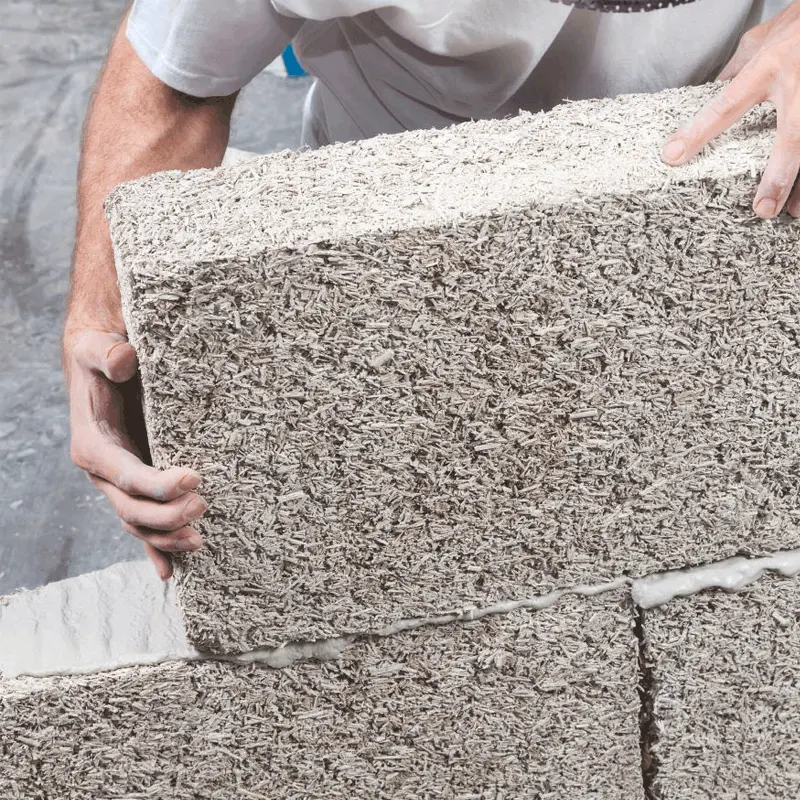
Hempcrete blocks are renowned for their thermal and environmental performance. Installation must comply with RE2020 (France’s environmental building regulation), our installation guides, and best practice to ensure compliance, fire safety, and indoor air quality. The material is suitable for a range of applications, provided the correct thickness and installation method are used.
Regulatory overview of hempcrete blocks
Hempcrete blocks are covered by French thermal regulations, in particular RE2020, which sets standards for the energy and environmental performance of new buildings. These blocks meet the requirements of this regulation thanks to their suitable thermal resistance and low carbon footprint.
- Regulatory status: Hempcrete blocks are a recognised bio-based insulation material, used for wall linings or infill, but are not load-bearing. Their use must be based on validated technical documentation, such as Avis Techniques (AT, French technical approvals) or ongoing certifications.
- Assessments: The CSTB Avis Technique previously held by BIOSYS has expired and is currently being renewed; our FDES (environmental product declarations) are verified under the INIES programme. The MULTICHANVRE range is undergoing certification, offering increasing reliability for construction professionals.
- Fire rating: Hempcrete blocks are rated B-s1 d0, meaning limited reaction to fire and no emission of toxic smoke. This classification is important for fire safety in buildings.
- Indoor air quality: The blocks are rated A+, confirming very low emissions of volatile organic compounds (VOCs), which helps create a healthy indoor environment.
- Environmental regulation: The material helps reduce greenhouse gas emissions in buildings thanks to its bio-based, renewable and recyclable composition, and a verified FDES. Its use is encouraged under RE2020, which rewards the low carbon footprint of materials.
For more on regulations and environmental impact, see Hempcrete blocks and RE2020: regulations, impacts and detailed uses.
Thermal performance and regulatory requirements
Hempcrete blocks offer different levels of thermal resistance depending on thickness, making it possible to meet the various regulatory requirements set by RE2020. This regulation sets minimum thermal performance thresholds to reduce energy loss from buildings.
- Thermal resistance (R): The MULTICHANVRE range is available in four thicknesses, with R values from 1.5 m².K/W at 10 cm to 4.6 m².K/W at 30 cm. These values suit applications from light wall linings to high-performance external wall insulation.
- Thermal lag: Hempcrete blocks offer significant thermal lag, up to 18.5 hours at 30 cm thickness, helping to improve summer comfort by delaying heat transfer indoors. This parameter is considered in regulations to help prevent overheating.
- Physical limitations: To achieve the required thermal resistance, hempcrete blocks need to be thicker than some thin insulants (such as mineral wool or polystyrene). For internal wall insulation (IWI), this can reduce usable floor area, so it’s a technical trade-off to consider.
- Recommended uses: For IWI, 15–20 cm blocks are generally preferred, while for external wall insulation (EWI), 20–30 cm is suitable. The choice depends on the project, target performance and architectural constraints.
A cross-section diagram showing insulation with a 20 cm MULTICHANVRE block is available in the section Thermal performance of hempcrete blocks: R, thermal lag and summer comfort.
Technical approvals and certification: current status
Avis Techniques issued by CSTB (French building technical centre) confirm that products are fit for use under current regulations. They are essential for innovative materials such as hempcrete blocks.
- BIOSYS system: a dry-stacked building system whose CSTB Avis Technique has expired and is being renewed. This document details the conditions of use, performance and installation rules to ensure regulatory compliance.
- MULTICHANVRE range: Currently undergoing certification. This process involves extensive technical testing to validate performance and durability before official recognition, as with BIOSYS.
- Installation requirements: To comply, blocks must be laid with lime-based mortar in staggered joints, mechanically fixed to the substrate with brackets (about 2 per square metre), then finished with suitable renders. These requirements ensure stability and continuous insulation.
- Structural limitations: Hempcrete blocks are not load-bearing. They are used only to line a supporting wall or to infill a timber or concrete frame. This limitation must be considered at the design stage.
- Insurance and 10-year guarantee: have your project validated in advance by your insurer and design office, and follow the instructions in our installation guides.
A photo of a BIOSYS site shows dry-stacking of interlocking blocks on a concrete frame. More technical details are available on the BIOSYS construction system page and on The MULTICHANVRE range: thicknesses, R, thermal lag, packaging.
Environmental compliance and carbon footprint of hempcrete blocks
Hempcrete blocks are a bio-based, renewable and recyclable material, addressing growing concerns about the environmental impact of construction.
- FDES declaration: The environmental and health declaration shows a declared carbon impact in the block’s FDES, which is low compared to other conventional insulation materials.
- Raw material origin: 100% French, including 84% hemp shiv and a vapour-open hydraulic binder (Vicat natural prompt cement). This local sourcing reduces transport emissions and supports the national supply chain.
- Bio-based material: Hemp absorbs CO₂ as it grows, helping to reduce the overall carbon footprint of buildings insulated with this material.
- RE2020 compatibility: Hempcrete blocks are suitable for this regulation, which values both energy and environmental performance, particularly through life cycle assessment.
- Moisture regulation: The blocks help naturally regulate indoor humidity, keeping it within a comfortable range and improving comfort and durability.
For a full overview of the supply chain and environmental impact, see Hemp as a material: the French supply chain and environmental impact.
Comparison table: thermal resistance and uses by thickness
| Thickness (cm) | Thermal resistance R (m².K/W) | Thermal lag (h) | Block weight (kg) | Blocks per pallet | Pallet area (m²) | Recommended uses |
|---|---|---|---|---|---|---|
| 10 | 1.5 | 6.1 | 6.5 | 120 | 21.6 | Partition walls, light lining |
| 15 | 2.3 | 9.25 | 10 | 80 | 14.4 | Standard lining, partitions |
| 20 | 3.0 | 12.3 | 13 | 60 | 10.8 | High-performance internal (IWI) and external (EWI) insulation |
| 30 | 4.6 | 18.5 | 21 | 56 | 10.08 | High-performance external wall insulation (EWI) |
| BIOSYS system: R = 4.6 m².K/W (useful value 4.2), blocks 60 × 30.8 × 30 cm, dry-stacked on reinforced concrete post-and-beam frame, installation rate 30 m²/day with two operatives. | ||||||
This table summarises the main characteristics of the MULTICHANVRE range and the BIOSYS system. It highlights the importance of choosing the right thickness to meet technical and regulatory requirements. For a dedicated thickness guide, see Which hempcrete block thickness should you choose for your insulation?.
Regulatory installation: requirements and best practice
Hempcrete blocks must be installed according to technical requirements to ensure performance, durability and regulatory compliance.
- Installation method: For the MULTICHANVRE range, lime mortar is applied with a notched trowel in staggered joints, ensuring a uniform and airtight bond. The blocks are fixed to the supporting wall with brackets, 2 to 5 per m², to guarantee mechanical stability.
- Compatible finishes: Internally, hempcrete block walls can be finished with spray plaster, lime, earth or clay. Externally, lime-based renders with full mesh reinforcement are recommended to protect the wall and allow it to breathe.
- Bond to substrate: Continuity of insulation is ensured by mechanical fixing and render, preventing thermal bridging and moisture ingress. Careful installation is essential to achieve this.
- Moisture management: The block allows natural humidity regulation, but installation must not block vapour diffusion, to prevent internal condensation risks.
- Durability: The material is naturally rodent-resistant and durable if properly protected. Its Vicat natural prompt mineral binder, which is vapour-open, contributes to its stability.
For detailed installation techniques, see the guide How to install hempcrete blocks: technical guide for IWI, EWI, partitions, floors and recommendations on finishes in Which renders for hempcrete block walls? Complete guide 2026.
Regulatory implications for professionals and homeowners
Hempcrete blocks are a technical material requiring a balance between performance, thickness and practical constraints. They are suitable for both homeowners and professionals, with specific regulatory implications.
- For tradespeople and architects: Knowledge of Avis Techniques, standards and installation requirements is essential to design and deliver compliant, durable buildings.
- Renovation and new build: Hempcrete blocks can be used in renovation to improve the thermal performance of existing walls, especially in stone houses, or in new builds with timber or concrete structures.
- Thickness and floor area trade-off: For internal wall insulation, block thickness can reduce usable floor area, which must be considered in the project. This compromise is often discussed with the client.
- Documentation requirements: Quotes must be precise and indicate an indicative price from around €35/m² for 10 cm thickness. Commercial response time is 48 working hours, enabling good planning.
- Resources: The site offers comprehensive technical documentation, guides, product data sheets and case studies, available to both professionals and homeowners to support their projects.
For more on technical choices, the site offers resources such as Which hempcrete block thickness should you choose for your insulation? and case studies at Projects completed with hempcrete blocks.
Frequently asked questions
Are hempcrete blocks recognised by French thermal regulations?
Yes, hempcrete blocks comply with the thermal requirements of RE2020, thanks to their suitable thermal resistance and low environmental impact.
What certifications guarantee the quality of hempcrete blocks?
The Avis Technique previously held by BIOSYS has expired and is being renewed, and the MULTICHANVRE range is undergoing certification: the stated performance is based on our technical data sheets and verified FDES.
What thermal resistance is needed for hempcrete block insulation?
Depending on application, thicknesses range from 10 to 30 cm, providing thermal resistance from 1.5 to 4.6 m².K/W, meeting regulatory requirements.
Can hempcrete blocks be used for load-bearing construction?
No, hempcrete blocks are not load-bearing. They are used to line a supporting wall or to infill a timber frame.
Which renders are compatible with hempcrete blocks in renovation?
Internal finishes can include spray plaster, lime, earth or clay, while for external use, lime-based renders with full mesh reinforcement are recommended.
How do hempcrete blocks provide summer comfort?
The thermal lag, up to 18.5 hours at 30 cm thickness, improves thermal mass and summer comfort.
Do hempcrete blocks reduce usable floor area with internal insulation?
Yes, the need for greater thickness to achieve regulatory thermal resistance can reduce usable floor area, which should be assessed.
Read next
Planning a hemp block project?
Tell us about your project: we will reply within 48 working hours with a tailored costing.