Hemp block insulation under screed: technical guide and advice
Insulating under screed with hemp blocks provides variable thermal resistance depending on the thickness chosen, natural moisture regulation, and excellent thermal lag. Laid on a clean, level slab, it requires protection from moisture and can be adapted to the technical constraints of both renovation and new build projects.
 By Julien Compain
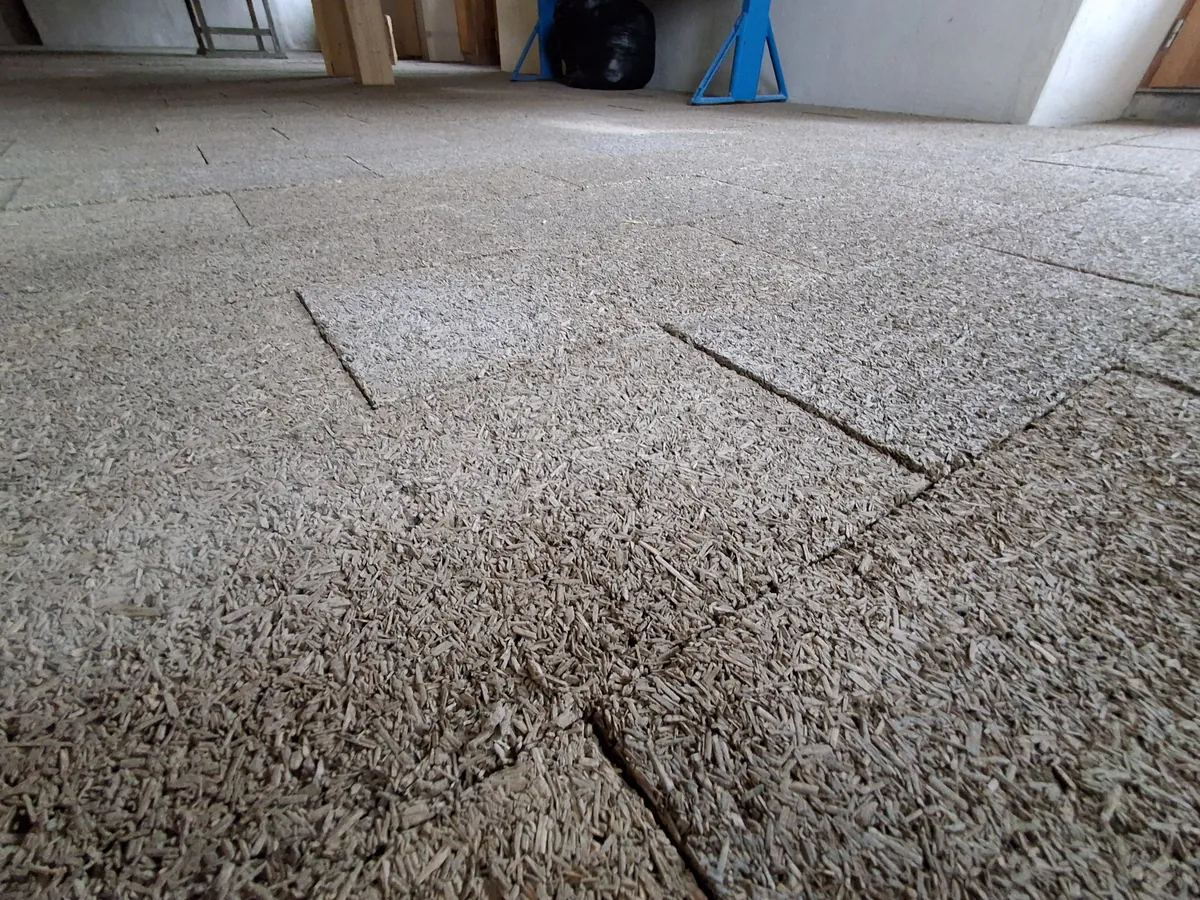
Subfloor insulation using hemp blocks offers variable thermal resistance depending on the chosen thickness, natural humidity regulation, and excellent thermal lag. Laid on a clean, level slab, it requires protection from moisture and adapts to the technical demands of both renovation and new-build projects.
Properties of hemp blocks for subfloor insulation
Hemp block is a bio-based composite material, made up of 84% hemp shiv—the woody core of the hemp stem—mixed with a mineral binder, Vicat Natural Prompt Cement. This formulation gives the material specific properties suited to thermal insulation and moisture regulation.
- The standard block size is 60 × 30 cm, with a density of around 300 kg/m³.
- Thermal conductivity in dry conditions is approximately 0.065 W/(m.K), making hemp a medium-performance thermal insulator.
- Natural humidity regulation is a key benefit: the material maintains a stable relative humidity within a comfortable range, reducing the risk of condensation and helping to improve indoor air quality.
- Thermal resistance varies with block thickness, from 1.5 m².K/W at 10 cm up to 4.6 m².K/W at 30 cm.
- Thermal lag reaches 18.5 hours for a 30 cm thickness, providing significant thermal mass and improved summer comfort.
- The block is rated B-s1 d0 for fire, has an A+ rating for indoor air quality, and an acoustic absorption coefficient α of 0.4, which can help with floor sound insulation.
MULTICHANVRE range: thermal resistance and dimensions by thickness
The MULTICHANVRE range consists of straight-edged blocks in a 60 × 30 cm format, designed for brickwork installation with staggered joints using lime-based mortar. These blocks are supplied on pallets and available in four thicknesses, meeting a variety of subfloor insulation needs.
The blocks are non-loadbearing and are intended for wall lining or infilling a timber frame. Their use depends on the chosen thickness:
- 10 cm (R = 1.5 m².K/W): suitable for partitions and lightweight linings; block weight approx. 6.5 kg; 21.6 m² per pallet.
- 15 cm (R = 2.3 m².K/W): commonly used for linings and partitions; weight 10 kg; 14.4 m² per pallet.
- 20 cm (R = 3.0 m².K/W): suitable for high-performance internal (IWI) and external (EWI) wall insulation; weight 13 kg; 10.8 m² per pallet.
- 30 cm (R = 4.6 m².K/W): high-performance external wall insulation; weight 21 kg; 10.08 m² per pallet.
Blocks are laid with notched trowel-applied mortar, in staggered joints, mechanically fixed to the substrate with brackets (about two per square metre), before applying a compatible render.
| Thickness (cm) | Thermal resistance R (m².K/W) | Thermal lag (h) | Approx. weight (kg) | Pallet size (m²/pallet) | Recommended use |
|---|---|---|---|---|---|
| 10 | 1.5 | 6.1 | 6.5 | 21.6 | Partitions, lightweight lining |
| 15 | 2.3 | 9.25 | 10 | 14.4 | General lining, partitions |
| 20 | 3.0 | 12.3 | 13 | 10.8 | High-performance IWI and EWI |
| 30 | 4.6 | 18.5 | 21 | 10.08 | High-performance EWI |
How hemp subfloor insulation works and its benefits
Hemp acts as a natural humidity regulator, helping to maintain stable indoor moisture levels within a comfortable range. This reduces the risk of condensation within the floor structure and supports the long-term durability of the insulation system.
Significant thermal lag—up to 18.5 hours for 30 cm thickness—delays the transfer of external heat into the building, providing thermal comfort in summer and greater thermal mass for the building.
- CO₂ storage is a notable environmental benefit, as hemp is a renewable biomass that absorbs carbon during growth.
- Factory-made blocks mean no on-site drying time, reducing moisture risks and speeding up installation.
- Once the screed is poured, the floor load is distributed, making the system suitable for standard domestic use.
Installation requirements for hemp subfloor insulation
Laying hemp blocks under a screed requires a suitable substrate to ensure the insulation’s durability and performance:
- The substrate must be a clean, level, dry slab. Flatness is crucial, as any defects will be reflected in the screed and may affect the final floor finish.
- MULTICHANVRE blocks are laid in bonded masonry with lime-based mortar, in staggered joints, ensuring good cohesion and continuous insulation.
- Mechanical fixing to the substrate with brackets is essential—about two per square metre—to reinforce the stability of the insulation.
- A traditional screed is poured directly over the blocks, providing a surface ready for the final floor finish.
- A waterproof barrier, usually a sealing membrane, must be installed beneath the insulation to prevent rising damp, especially on old slabs without a ventilated sub-base.
- Compatibility with different types of screeds (cement, anhydrite) and floor coverings (tiles, parquet, etc.) is possible, provided technical guidelines are followed.
Limitations and precautions for hemp subfloor insulation
Hemp does have certain constraints to consider:
- The thickness required to achieve the same thermal resistance as mineral or synthetic insulation is greater. This can reduce usable floor area and ceiling height, especially in renovation projects.
- Prolonged exposure to moisture before installation must be avoided, so the material needs careful protection during storage and fitting.
- This system is not suitable for areas with rolling or industrial loads, due to the low load-bearing capacity of the blocks alone.
- Strict adherence to technical recommendations is essential for durability and performance, particularly regarding waterproofing beneath the slab and screed installation.
Comparison table: MULTICHANVRE blocks for subfloor insulation
| Thickness (cm) | Thermal resistance R (m².K/W) | Thermal lag (h) | Weight (kg) | Pallet size (m²/pallet) | Recommended use |
|---|---|---|---|---|---|
| 10 | 1.5 | 6.1 | 6.5 | 21.6 | Partitions, lightweight lining |
| 15 | 2.3 | 9.25 | 10 | 14.4 | General lining, partitions |
| 20 | 3.0 | 12.3 | 13 | 10.8 | High-performance IWI and EWI |
| 30 | 4.6 | 18.5 | 21 | 10.08 | High-performance EWI |
Thermal performance and compliance with RE2020 regulations
MULTICHANVRE hemp blocks can achieve thermal resistance levels that meet the requirements of RE2020 (France's environmental building regulation), especially for new builds and major refurbishments.
- Thermal resistance ranges from 1.5 to 4.6 m².K/W depending on thickness, allowing insulation to be tailored to project needs.
- Hemp’s humidity regulation helps maintain long-term thermal performance by limiting condensation and degradation.
- The material’s low carbon footprint, evidenced by a verified FDES, and 100% French-sourced raw materials, contribute to a limited environmental impact.
- A bespoke thermal study is still required to determine the exact thickness needed and ensure overall building compliance.
Comparing hemp subfloor insulation with other common insulants
Hemp blocks differ from mineral or synthetic insulation in several technical respects:
- Thickness: To achieve equivalent thermal resistance, hemp requires greater thickness, which can be a constraint in renovation projects.
- Humidity regulation: Hemp provides natural moisture regulation, a significant advantage over conventional insulants that may be prone to condensation.
- Thermal mass: High thermal lag improves summer comfort, whereas some thin insulants do not contribute to thermal mass.
- Installation and protection: Hemp requires specific precautions against moisture before and during installation, unlike some synthetic insulants.
- Durability: Hemp blocks are renewable, recyclable, and naturally rodent-resistant—unlike many mineral or synthetic insulants.
- Cost: Indicative prices start at around €35/m² incl. VAT for 10 cm thickness, with higher costs for greater thicknesses.
Further resources and technical guides for hemp subfloor insulation
To help with installation and sizing of hemp block subfloor insulation, several technical resources are available:
- Practical guide to correct installation: details the installation steps and necessary precautions.
- Technical guide and site feedback on thickness: helps you choose the right thickness for regulatory requirements.
- Product data sheets and technical documentation: detailed information on block characteristics and technical support.
- Advice on compatible renders and maintenance and durability guide: to ensure the longevity of insulated walls.
- Hemp block applications and case studies: insulating floors on slab: real-world examples of use.
These resources provide comprehensive technical support to help ensure the success of projects using hemp subfloor insulation.
Frequently asked questions
What thickness of hemp block should I choose for subfloor insulation?
The thickness depends on the required thermal resistance and site constraints. The 10 cm block (R=1.5 m².K/W) is common in renovation, while thicknesses up to 30 cm (R=4.6 m².K/W) are used in new builds.
How should the floor be prepared before laying hemp blocks under a screed?
The floor must be clean, level, dry and stable. A waterproof membrane should be laid under the blocks to prevent rising damp, especially on old slabs without a ventilated sub-base.
Can hemp blocks support the load of a floor under a screed?
Yes, once the screed is poured, the load is distributed and suitable for standard domestic use, but not for industrial premises or rolling loads.
What are the implications for ceiling height with this insulation?
The thickness of the insulation reduces ceiling height. In renovation, removing the old floor finish partially offsets this loss. In new builds, the height can be set as required.
Should hemp be protected from moisture before and during installation?
Hemp must be protected from prolonged moisture before installation. A waterproof barrier is installed beneath the insulation to prevent rising damp.
What are the thermal benefits of hemp under screed?
As well as good thermal resistance, hemp offers significant thermal lag and natural humidity regulation, contributing to stable thermal comfort.
Are there certifications for these subfloor blocks?
The MULTICHANVRE system is currently undergoing certification (an ATEx for internal insulation is being processed by CSTB), while the Technical Approval previously held by BIOSYS has expired and is being renewed.
Read next
Planning a hemp block project?
Tell us about your project: we will reply within 48 working hours with a tailored costing.