Insulating a floor slab with hempcrete blocks: method and feedback
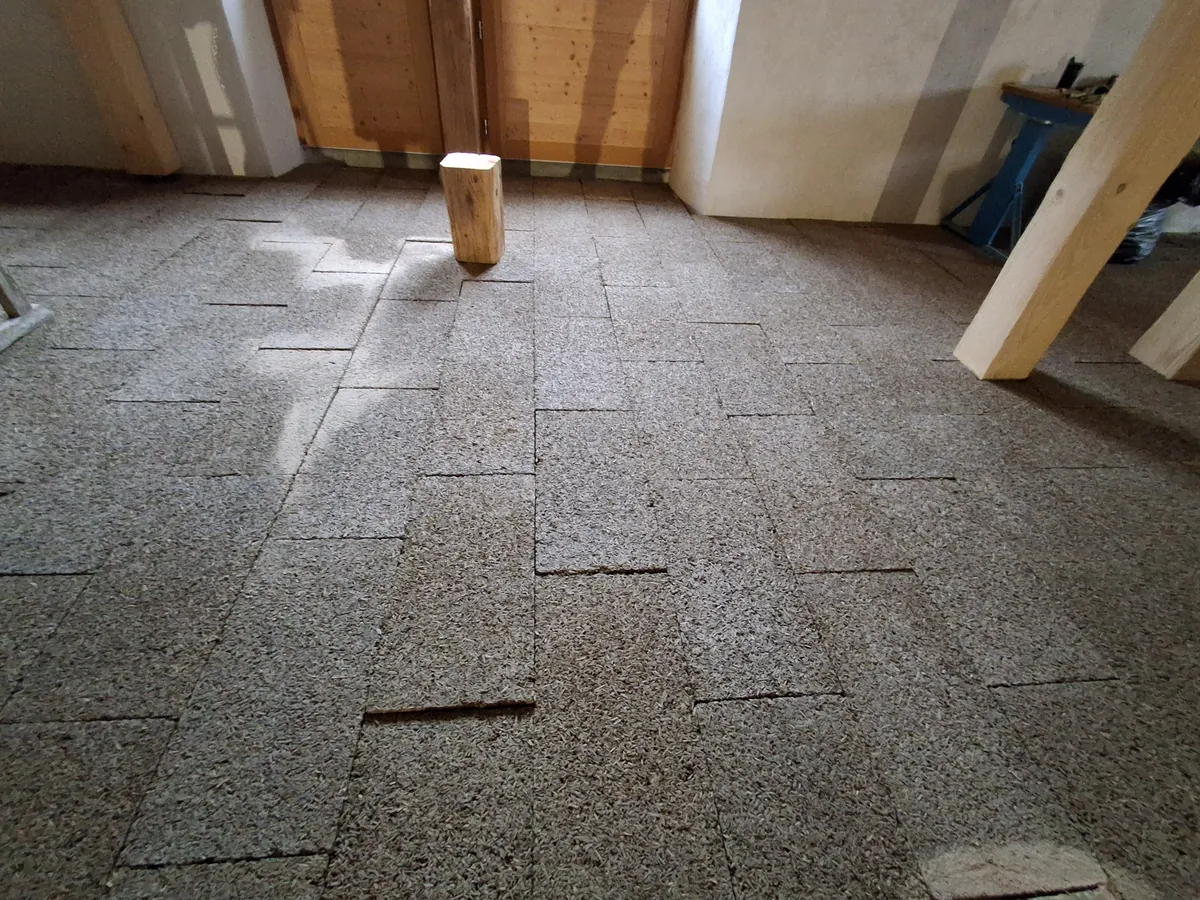
Insulating a floor slab with hempcrete blocks is a suitable solution for renovation projects, helping to reduce heat loss and control moisture. Laid in a 15 cm layer beneath a dry screed, the blocks provide comfortable flooring and improved humidity regulation. Key installation points include fitting a vapour barrier beneath the insulation and ensuring the slab is level.
| Solution used | Floor · 15 cm |
|---|---|
| Area treated | 78 m² of flooring |
| Town | Arc-sous-Cicon |
| Département | Doubs |
| Year | 2024 |
Insulating a floor slab with hemp blocks is a suitable solution for renovation projects, helping to reduce heat loss and control moisture. When installed in a 15 cm layer beneath a dry screed, the blocks provide good underfoot comfort and improved humidity regulation. The installation process requires a vapour barrier beneath the insulation and a level slab.
Assessment
As part of a renovation, it is essential to accurately diagnose the issues associated with an uninsulated concrete floor slab. This type of slab, often poured directly onto the ground without a ventilated sub-base or insulation, presents two main challenges:
- Identifying heat loss: An uninsulated ground-bearing slab typically accounts for 7 to 10% of a home's energy losses. This cold surface, which does not benefit from direct heat input, remains permanently cool, reducing underfoot comfort and increasing the sensation of cold, even when the heating is on.
- Impact of moisture and rising damp: Without a waterproof barrier, moisture from the ground rises through the concrete. This moisture then spreads to the edges of rooms, causing damp patches at the base of walls, encouraging mould growth and affecting indoor air quality.
The combination of these two phenomena leads to discomfort and can compromise both the durability of the building and the health of its occupants. The assessment should therefore include a check of the floor surface temperature and monitoring of relative humidity in the affected rooms.
Thermal and hygrothermal properties of hemp blocks for floor insulation
Hemp blocks are well suited to floor slab insulation, particularly the MULTICHANVRE 15 cm range, which offers a proven technical solution:
- Thermal conductivity: With a lambda value (λ) of around 0.065 W/(m.K), hemp blocks provide a thermal resistance R of approximately 2.3 m².K/W for a 15 cm thickness. This meets renovation requirements for improving floor thermal comfort.
- Thermal lag: A lag time of around 9 hours for 15 cm helps limit rapid temperature changes, contributing to summer comfort by delaying heat build-up at the surface.
- Humidity regulation: Hemp is naturally hygroscopic, able to regulate indoor relative humidity within a comfortable range. This helps manage moisture beneath the slab and prevents internal condensation, provided a polythene sheet is installed beneath the insulation to block rising damp.
- No risk of internal condensation: The system includes a polythene sheet beneath the blocks, acting as a waterproof barrier against rising moisture. This allows the floor to dry upwards while preventing water accumulation in the insulation.
These thermal and hygrothermal properties make hemp blocks a relevant choice for floor slabs, combining insulation, user comfort and moisture protection.
Chosen system for floor insulation
| Layer | Thickness |
|---|---|
| Remove tiles + bedding screed | − 6 cm |
| Levelling compound | + 0.5 cm |
| MULTICHANVRE 15 cm block — R = 2.3 m².K/W | + 15 cm |
| Dry fibre-gypsum screed | + 2.5 cm |
| Finishing floor covering | + 2 cm |
| Total height used | + 14 cm |
The adopted floor insulation system consists of several functional layers, starting from the existing slab:
- Removal of tiles and bedding screed: This step recovers headroom and removes poorly insulating or damaged layers.
- Levelling compound: A 0.5 cm layer is applied to ensure a perfectly flat surface, essential for the dry screed and the quality of the final floor covering.
- Laying 200 µm polythene sheet: This sheet is spread over the slab and turned up 15 cm at the edges to form a waterproof barrier against rising damp. It is placed beneath the blocks to protect the insulation and prevent moisture ingress.
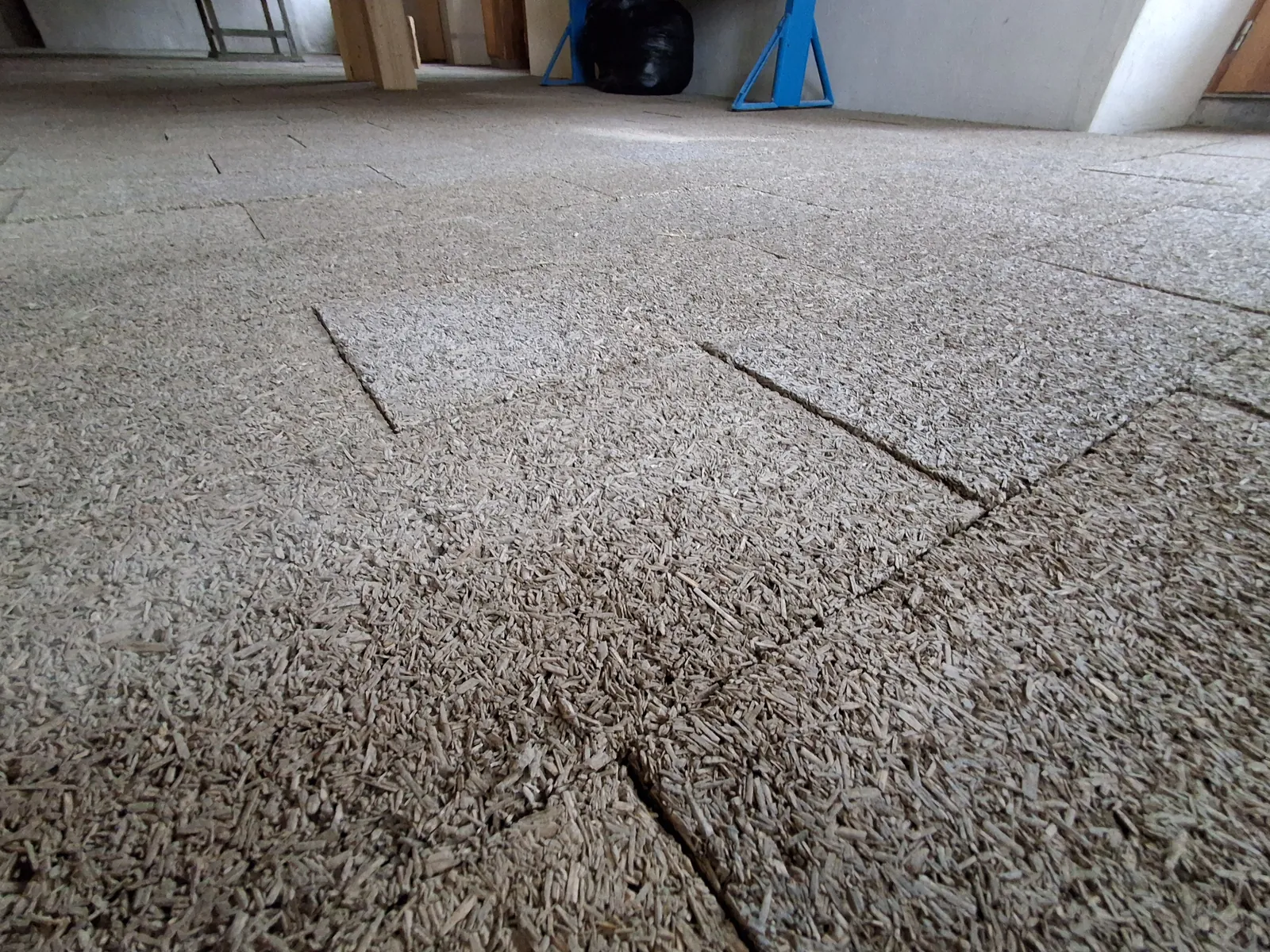
- Laying MULTICHANVRE 15 cm blocks: The blocks are laid in a staggered pattern, dry and without adhesive, ensuring continuous insulation. This dry installation is quick and minimises drying time.
- Resilient edge strip: Fitted around the perimeter to separate the screed from the walls and reduce impact sound transmission.
- Dry fibre-gypsum screed: Distributes loads and provides a surface ready for the final floor covering. Installation requires careful levelling and well-finished joints.
- Finishing floor covering: Floating wood flooring, bonded tiles or other compatible coverings, installed over the dry screed.
For a full breakdown of installation steps, see our practical installation guide.
Installation precautions
Successful floor slab insulation with hemp blocks depends on several key precautions:
- Sound or remediated slab: The slab must be clean, stable and free from damage. If moisture is present, pre-treatment is needed to prevent water migrating beneath the insulation.
- Strictly level surface: The dry screed will exactly follow the slab's level. Levelling compound is therefore essential to remove defects and ensure the final floor covering is sound.
- Polythene sheet placement: This sheet must be placed strictly beneath the blocks, never above, to block rising damp while allowing vapour to escape upwards.
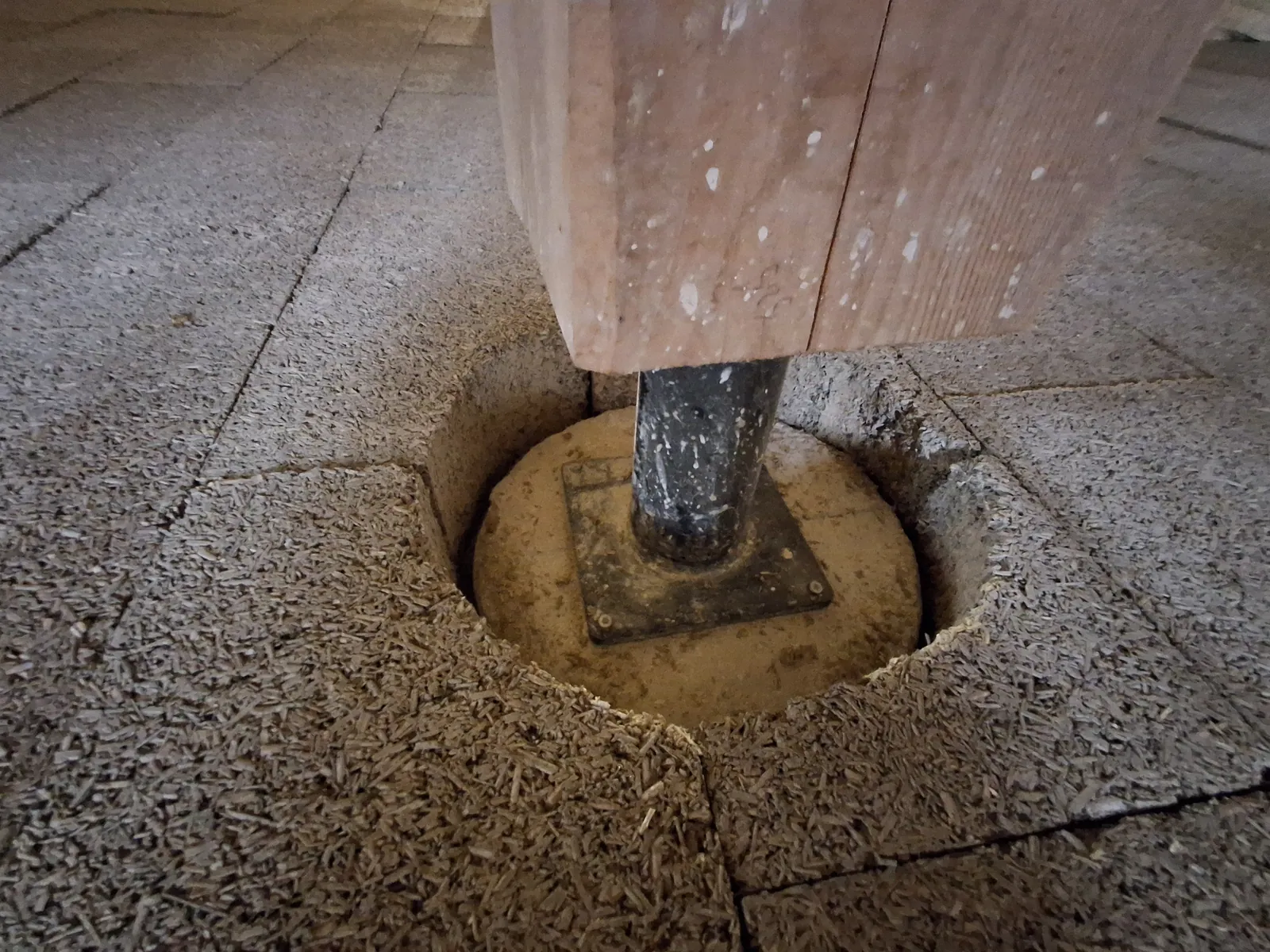
- Accurate block cutting: Blocks should be cut carefully to ensure good thermal continuity and avoid rigid thermal bridges. Staggered joints also help maintain continuity.
- Load compatibility: Hemp blocks are non-loadbearing. They support normal domestic loads once the screed is in place, but are not suitable for heavy rolling or industrial loads.
Following these technical guidelines ensures the insulation's durability and effectiveness, while maintaining the building's acoustic and thermal comfort.
How it improves thermal and indoor comfort
Installing hemp block floor insulation brings tangible improvements:
- Higher floor surface temperature: In the renovation project studied, the floor surface temperature rose from 15°C to 18.5°C in winter, with the same air temperature setting. This reduces the sensation of cold underfoot, improving everyday comfort.
- Reduction of damp patches: The waterproof barrier beneath the blocks stopped rising damp, while lime render around the edges allowed the lower walls to dry out, eliminating damp marks.
- Improved indoor air quality: The hemp block's natural humidity regulation keeps relative humidity within a comfortable range, reducing condensation risk and supporting a healthy indoor environment.
- Summer comfort: The material's thermal lag helps prevent summer overheating, contributing to the floor's thermal stability.
These benefits demonstrate the value of hemp blocks for effective, durable and healthy floor slab insulation.
Technical comparison with other floor slab insulation solutions
Hemp blocks are one of several under-screed insulation options, each with their own characteristics:
- Thermal resistance: For the same thickness, hemp blocks (R ≈ 2.3 m².K/W at 15 cm) are less insulating than synthetic or mineral products such as glass wool or expanded polystyrene. Greater thickness is usually needed to achieve equivalent performance.
- Thermal mass and lag: Unlike conventional insulations, hemp blocks provide significant thermal mass and greater lag, which is beneficial for summer comfort.
- Vapour permeability: Hemp is vapour-open and naturally regulates humidity, unlike impermeable insulations that require specific systems to manage condensation.
- Impact on ceiling height: The required thickness and associated layers (dry screed, polythene sheet) use up around 14 cm of headroom, a factor to consider in renovation projects where ceiling height is limited.
- Durability and environment: The material is bio-based, renewable, recyclable and stores CO₂, offering an environmental advantage over petrochemical insulations. Its natural resistance to rodents and use of Vicat natural prompt cement further enhance its durability.
For a detailed comparison, see the technical comparison with other common materials.
Indicative price and impact on ceiling height
The cost of hemp blocks for floor slab insulation starts at around €35/m² incl. VAT for the 10 cm version; this is a guide price to be confirmed by a quote based on project specifics and quantities.
The ceiling height used by the complete system depends on the preparatory work and layers installed. In the project shown, removing the tiles and bedding screed limited the final build-up to around 14 cm, including:
- 15 cm hemp block
- 2.5 cm dry fibre-gypsum screed
- Levelling compound and other associated layers
This is a key consideration in design, especially where ceiling height is restricted. The choice between thermal performance and living space should be based on a suitable thermal study.
Further resources and technical guides
For more on installation, finishing and integrating hemp blocks into floor slab insulation, several resources are available:
- The practical installation guide details every step for dry screed applications.
- Product data sheets, such as for the MULTICHANVRE 15 cm block, provide precise technical data for sizing.
- The applications for IWI, EWI, partitions, floors and timber frame infill page shows possible uses for hemp blocks, including floor insulation.
- The technical documentation in the professionals section offers PDF guides (in French), cheat sheets and additional technical data sheets.
These resources help ensure correct and optimised installation, guaranteeing the performance and longevity of the insulation system.
Frequently asked questions
Can hemp blocks be laid directly onto a concrete slab?
Yes, provided the slab is sound, clean and, if necessary, protected from moisture by a polythene sheet beneath the blocks to prevent rising damp.
What thickness of hemp block is recommended for insulating a floor slab?
15 cm is commonly used under screed, providing a thermal resistance of around 2.3 m².K/W, suitable for renovation projects.
Is it always necessary to lay a polythene sheet beneath hemp blocks?
For old slabs without a ventilated sub-base, yes. The polythene sheet forms a barrier against rising damp without preventing upward moisture evaporation.
What type of screed can be used over hemp blocks?
A dry screed made from fibre-gypsum boards is suitable, as is a liquid anhydrite screed installed with separation to distribute loads and secure the floor.
How much ceiling height is lost when insulating a floor with hemp blocks?
The height used depends on the layers installed. In the project shown, 14 cm was required, including removal of the existing tiles.
Are hemp blocks loadbearing for floor insulation?
No, hemp blocks do not support heavy structural loads, but they do take normal domestic loads once the screed is in place.
What are the advantages of hemp blocks for a floor slab?
In addition to thermal insulation, hemp blocks naturally regulate humidity, improve summer comfort thanks to their thermal mass, and offer a favourable environmental profile.
Similar projects in pictures
MULTICHANVRE projects of the same kind, carried out by our customers.
Read next
Planning a hemp block project?
Tell us about your project: we will reply within 48 working hours with a tailored costing.