Internal insulation of stone walls with hemp: benefits and limitations
Hemp blocks provide an effective solution for insulating stone walls internally, thanks to their moisture regulation and vapour-open properties. While they offer less thermal efficiency per thickness than some mineral wools, requiring greater thickness, their superior hygrothermal comfort and straightforward installation help offset the higher cost. Hemp blocks are non-loadbearing and must be used with a supporting structure.
 By Julien Compain
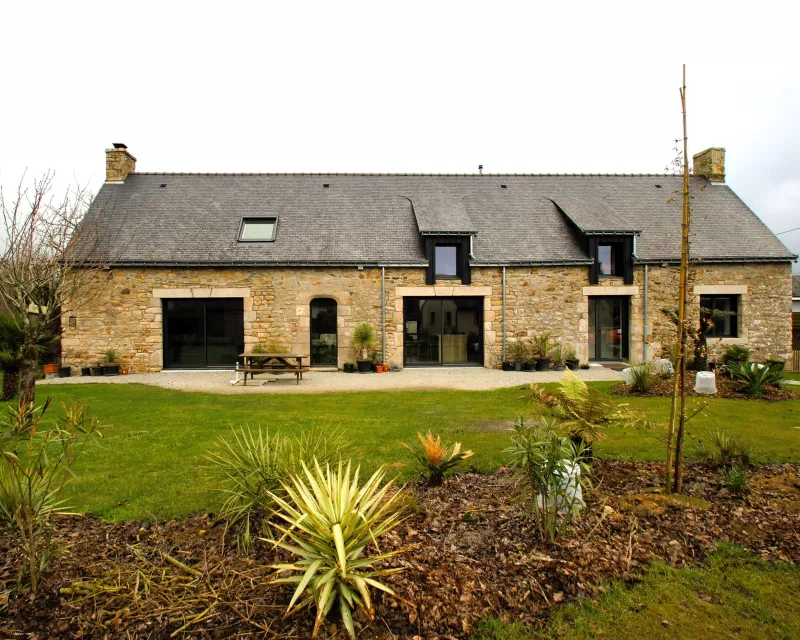
The hempcrete block provides effective internal insulation for stone walls, thanks to its ability to regulate humidity and allow vapour to pass through. While it offers less thermal compactness than some mineral wools and therefore requires greater thickness, its superior hygrothermal comfort and straightforward installation help offset the higher cost. It is non-loadbearing and must be used with a supporting structure.
Thermal performance and required thickness
The thermal conductivity of a hempcrete block is around 0.065 W/(m·K), which is higher than that of certain mineral wools or synthetic insulations. To achieve equivalent thermal resistance, hemp therefore requires a greater thickness. For example, a 20 cm MULTICHANVRE block provides a useful value of around 2.8 m²·K/W, whereas a thin layer of mineral wool can achieve higher R values with less thickness.
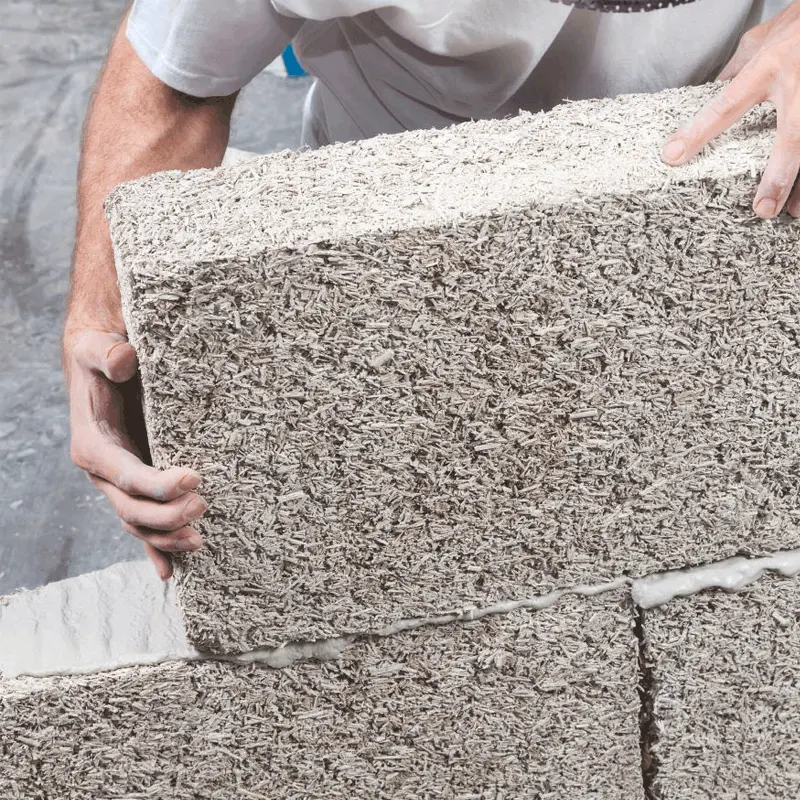
This need for increased thickness means a noticeable reduction in usable floor area when insulating internally (IWI). This should be considered when weighing up thermal comfort against loss of space. To minimise this impact, it is important to select the right thickness for your thermal requirements, using the recommended useful values from a thermal study—especially those for MULTICHANVRE blocks.
- MULTICHANVRE blocks available in 10, 15, 20 and 30 cm thicknesses.
- Useful thermal resistance from 1.4 m²·K/W (10 cm) to 4.2 m²·K/W (30 cm).
- Thermal lag up to 18.5 hours for 30 cm, ideal for summer comfort.
This thermal lag, calculated using the standard formula, is another advantage of the material, helping to limit indoor temperature swings. For more details on choosing the right thickness, see our dedicated guide.
Moisture management and humidity regulation
Hempcrete is vapour-open, which helps regulate humidity in insulated walls. This vapour permeability reduces the risk of internal condensation, provided that the wall has at least one face open to water and vapour transfer. A vapour barrier is therefore not always required, simplifying installation and maintaining the wall’s breathability.
For older stone walls, which are often sensitive to moisture, this is a major advantage. It helps maintain a stable humidity level, preventing water-related damage. However, in rooms exposed to water splashes or high humidity, additional protection is needed—for example, a plasterboard lining suitable for wet areas.
- Vapour permeability supports humidity regulation.
- Vapour barrier often not required, except in specific cases.
- Preliminary study needed for walls closed on the opposite side.
- Limitations in wet rooms—additional protection required.
This natural moisture management contributes to the building’s durability and indoor comfort. To find out more, see our page on breathable insulation.
Cost and overall budget for hempcrete block insulation
The indicative price of MULTICHANVRE blocks varies by thickness, from €35/m² incl. VAT for 10 cm to €95/m² incl. VAT for 30 cm. These prices are for guidance only and must be confirmed by a quote from our partner builders’ merchants.
Compared to conventional insulations such as mineral wool or polystyrene, hempcrete blocks are more expensive per square metre. However, this cost reflects their hygrothermal performance and humidity regulation, which can reduce the risk of defects and improve comfort.
The overall budget should also include installation, accessories, mortar and compatible finishes (lime render, spray plaster, etc.). Laying with staggered joints and lime mortar is straightforward but requires care, which can affect labour time.
- Indicative prices per m² incl. VAT: €35 (10 cm) to €95 (30 cm).
- Higher cost than conventional insulations, offset by specific benefits.
- Include installation and finishing costs.
- Tip: request a free quote via our online form.
Installation and compatibility with stone buildings
MULTICHANVRE blocks are installed in three stages: apply a lime-based mortar, lay the blocks with staggered joints and at least one-third overlap, then apply a render. Joints are thin, around 3 mm, which helps reduce thermal bridging.
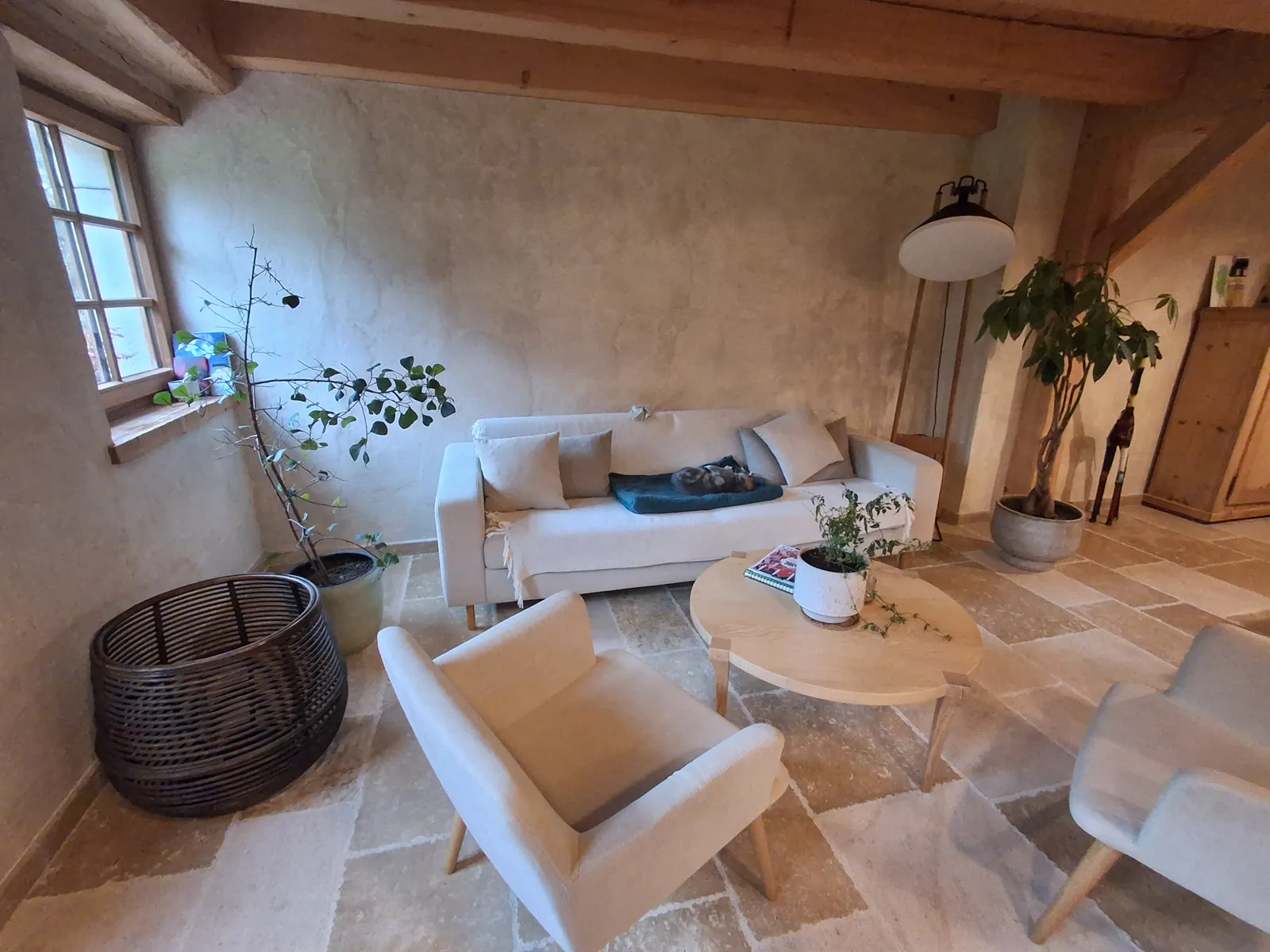
This method is compatible with stone walls, even irregular ones, thanks to the flexibility of the mortar and the use of brackets or strapping. Electrical services can be run in chases, drilled holes, or in the gap between the wall and lining, with appropriate filling.
It is important to note that hempcrete blocks are not loadbearing. They must be used with an existing supporting structure, such as a supporting wall or timber frame. This is a key consideration when choosing your construction method.
- Laid with staggered joints and thin mortar joints.
- Can be fixed to irregular walls using mortar and brackets.
- Services run in chases or the gap behind the lining.
- Non-loadbearing block—requires a supporting structure.
For more details on installation, see our dedicated page.
Durability, maintenance and resistance to biological attack
Hempcrete naturally resists rodents and pests, thanks to its formulation. However, blocks must be stored carefully—dry, sheltered, and not stacked—to prevent damage before installation.
The durability of the blocks is proven by reference projects since 2017, as well as use in France since the 1980s with few reported issues. Maintenance mainly concerns the render, which may require occasional repairs depending on exposure.
- Natural resistance to rodents and pests.
- Careful storage required before installation.
- Proven durability over several years of use.
- Maintenance limited to render, with possible repairs.
For more on these topics, see our guide to durability and maintenance.
Environmental impact and carbon footprint of hemp solutions
Hemp cultivation is highly effective at capturing atmospheric carbon during growth, which is then stored in the block. This sequestration is recognised by the annual issue of carbon credits by Vieille Matériaux. The plant grows quickly, without irrigation or pesticides, supporting the sustainability of the resource.
However, life cycle carbon assessments assume all captured carbon is released at end of life, which limits how results are interpreted. Hempcrete should therefore be assessed with care, and not automatically labelled as “low carbon”.
Compared to mineral or synthetic insulations, hempcrete blocks are renewable and offer natural regulation, but the overall impact depends on many factors.
- Significant carbon capture during hemp growth.
- Carbon stored in the block, carbon credits issued.
- Carbon footprint at end of life is limited by LCA assumptions.
- Qualitative comparison with mineral and synthetic insulations.
For more information, see our page on the hemp sector and its environmental impact.
Key technical characteristics: comparison table
| Characteristic | MULTICHANVRE hempcrete block 20 cm | Mineral wool (e.g. rock wool) |
|---|---|---|
| Thermal conductivity λ (W/(m·K)) | ≈ 0.065 | ≈ 0.035 |
| Useful thermal resistance R (m²·K/W) | 2.8 (20 cm) | ≈ 3.5 (10 cm) |
| Thermal lag (hours) | 12.3 | 3 to 5 (varies by product) |
| Density (kg/m³) | ≈ 300 | ≈ 40-60 |
| Reaction to fire | B-s1,d0 | A1 (non-combustible) |
| Sound absorption coefficient | 0.4 | 0.9 (varies by thickness) |
| Compatibility with damp stone walls | Good (vapour-open, regulates humidity) | Poor (risk of condensation if vapour barrier is poorly installed) |
| Indicative price per m² incl. VAT | ≈ €66 | ≈ €15–25 (depending on product) |
| Fixing loads | Yes, 20 cm and 30 cm: up to 10 kg per direct fixing, more with chemical anchors | Difficult—requires framework or special supports |
| Vapour barrier required | Not always, except in specific cases | Often required to prevent condensation |
Practical tips and precautions before insulating a stone wall internally
- Assess the condition of the wall and check for damp or defects before starting.
- Select the right thickness to achieve the desired thermal resistance, taking into account the loss of floor space.
- Check that finishes are compatible with hempcrete blocks, especially lime render, spray plaster or earth render (finishes and render compatibility for hempcrete blocks).
- Consider the impact on usable space and possible compromises (choosing the right hempcrete block thickness).
- Consult a thermal study and get technical advice to confirm your choices.
- For technical questions or a quote, use our dedicated form: it’s free and will put you in touch with your nearest partner merchant.
These precautions ensure reliable, long-lasting installation, tailored to the specific needs of traditional stone buildings.
Frequently asked questions
Are hempcrete blocks suitable for all stone walls for internal insulation?
Hempcrete blocks are suitable for stone walls, especially in renovation. They regulate humidity well but require the wall to be sound and a thermal study to confirm the required thickness for your needs.
Is a vapour barrier needed with hempcrete block insulation?
A vapour barrier is not always necessary with hempcrete, which is vapour-open. However, the wall must have one face open to moisture transfer. If the opposite side is closed, a study is recommended.
How do you fix suspended items to a wall insulated with hempcrete blocks?
Direct fixings into the blocks are only possible with 20 cm and 30 cm thicknesses, and there are specific load limits. For heavier items, fixings must be anchored to the supporting structure.
What is the main drawback of internal hempcrete block insulation compared to mineral wool?
The main drawback is the greater thickness needed to achieve the same thermal resistance, which reduces usable floor area. However, hemp compensates with its hygrothermal comfort.
Can hempcrete blocks be used for insulation under screed on stone walls?
Yes, some MULTICHANVRE blocks are suitable for floor insulation under screed, but for use on stone walls, they should be used as internal lining in line with the recommended range and applications.
What internal finishes are compatible with hempcrete blocks?
Suitable finishes include spray plaster, lime or earth render, or plasterboard on a frame. For more details, see the page on compatible renders.
What are the limitations of using hempcrete blocks for internal insulation?
The block is non-loadbearing, not suitable for roof or sloping insulation, and requires a supporting structure. Thickness and loss of space must be carefully considered.
Read next
Planning a hemp block project?
Tell us about your project: we will reply within 48 working hours with a tailored costing.