Comprehensive guide to breathable insulation for a healthy, high-performance home
A breathable insulation regulates indoor humidity by allowing water vapour to pass through, while still providing effective thermal insulation. This reduces the risk of condensation and improves hygrothermal comfort. Hemp, especially in block form, is a recognised breathable insulation material thanks to its technical properties and thermal mass.
 By Julien Compain
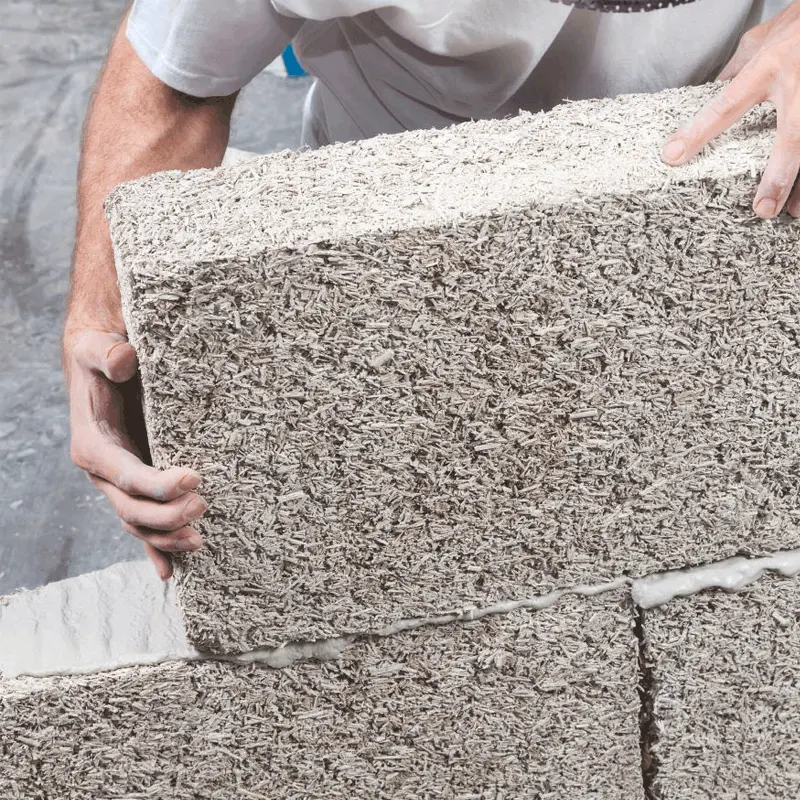
A vapour-open (breathable) insulation regulates indoor humidity by allowing water vapour to pass through, while still providing effective thermal insulation. This reduces the risk of condensation and improves hygrothermal comfort. Hemp, especially in block form, is a well-known breathable insulant, valued for its technical properties and thermal mass.
What is a vapour-open (breathable) insulation?
- Definition of vapour openness: A vapour-open insulation is defined by its permeability to water vapour. It allows vapour generated inside the building to pass through the material, preventing moisture build-up within the walls.
- Difference from impermeable or hydrophobic insulants: Unlike insulants with an impermeable structure or hydrophobic treatment, a vapour-open insulation does not block water vapour. This property is essential for maintaining hygrothermal balance in the building.
- Benefits for humidity regulation and indoor air quality: Vapour-open insulation encourages the diffusion of water vapour, which limits the risk of internal condensation and supports the natural regulation of relative humidity. This function contributes to improved hygrothermal comfort and air quality, notably by reducing the risk of mould growth.
- Impact on thermal comfort and prevention of moisture-related issues: By preventing condensation, vapour-open insulation protects building structures from moisture-related damage such as corrosion or rot. It also helps stabilise indoor temperatures by increasing thermal lag, reducing temperature fluctuations.
Technical properties of vapour-open insulation
- Suitable thermal conductivity: For hemp, dry thermal conductivity is around 0.065 W/(m.K), placing it among the high-performing bio-based insulants.
- Thermal lag and mass: Significant thermal lag, for example 18.5 hours for a 30 cm hemp block, helps delay heat transfer into the building, improving summer comfort.
- Moderate density: At around 300 kg/m³, this density supports humidity regulation, as the material can absorb and release moisture without deterioration.
- Fire performance: Hemp blocks are rated B-s1,d0, meaning they have limited reaction to fire and do not produce significant toxic smoke.
- Sound absorption coefficient: The porous structure of hemp blocks gives them a sound absorption coefficient α of around 0.4 for MULTICHANVRE and up to 0.85 with the BIOSYS system, improving acoustic comfort.
- Indoor air quality: The material is rated A+, indicating very low emissions of volatile organic compounds, contributing to a healthy indoor environment.
Bio-based vapour-open materials: focus on hemp blocks
- Composition: Hemp blocks are made from 84% hemp shiv (the woody core of the hemp stem) combined with a natural hydraulic binder, a Vicat natural prompt cement that is vapour-permeable.
- Natural humidity regulation: This composition ensures good vapour permeability, allowing the wall to regulate indoor humidity without water accumulating in the structure.
- Rodent resistance and durability: The formulation gives the block natural resistance to rodents and pests, supporting long-term durability.
- Locally sourced raw materials: The hemp is grown in Franche-Comté, with a growth cycle of around 120 days, requiring no irrigation or chemical treatments. This local sourcing reduces transport impacts and supports a short supply chain.
- Storage and handling: Before installation, pallets must be stored sheltered, dry, and not stacked, as the blocks are not rot-proof. These precautions prevent moisture damage before use.
Hemp blocks therefore provide a technical solution for projects seeking a vapour-open insulation that is both thermally efficient and healthy, with a bio-based and local origin. For more details on composition and properties, see the composition and characteristics of hemp blocks.
Comparison of vapour-open insulants: performance and uses
| Range | Thickness (cm) | Dry R value (m².K/W) | Useful R value (m².K/W) | Thermal lag (h) | Block weight (kg) | Pallet size (m²/pallet) | Recommended uses |
|---|---|---|---|---|---|---|---|
| MULTICHANVRE | 10 | 1.5 | 1.4 | 6.1 | 6.5 | 21.6 | IWI, EWI |
| MULTICHANVRE | 15 | 2.3 | 2.1 | 9.25 | 10 | 14.4 | IWI, EWI, partitions |
| MULTICHANVRE | 20 | 3.0 | 2.8 | 12.3 | 13 | 10.8 | IWI, EWI, partitions, infill, floors |
| MULTICHANVRE | 30 | 4.6 | 4.2 | 18.5 | 21 | 10.08 | High-performance IWI, EWI, heavyweight partitions, infill, floors |
| BIOSYS | 30 | 4.6 | 4.2 | 18.5 | 21 | 4.44 (standard block) | Infill for reinforced concrete frame, façade walls up to two storeys |
To meet regulatory requirements for thermal insulation, thicknesses vary depending on the material and system chosen. For example, a 30 cm MULTICHANVRE block achieves a useful thermal resistance of 4.2 m².K/W, suitable for new builds or high-performance renovations. The BIOSYS system offers a dry-stacked block with tongue and groove joints, minimising thermal bridges.
In terms of applications, MULTICHANVRE is designed for internal wall insulation (IWI), external wall insulation (EWI), partitions, insulated floors and timber frame infill. BIOSYS is designed for infilling reinforced concrete post-and-beam structures, in buildings up to two storeys with lightweight roofs.
Compatible renders to maintain vapour openness are mainly lime-based, earth plasters or plasterboard indoors, and lime-rich renders with full mesh reinforcement outdoors. These finishes allow the wall to remain breathable while providing mechanical and aesthetic protection.
For a detailed comparison between the ranges, see MULTICHANVRE range: thicknesses and thermal resistance and the BIOSYS building system. A detailed comparison of thermal performance is available on the hemp block thermal performance page.
Choosing the right vapour-open insulation for your project
- Key criteria: Space constraints must be considered, as vapour-open insulation often requires greater thickness than conventional insulants. It is also essential to consider the required useful thermal resistance and its impact on living space, especially for internal insulation.
- Renovation vs new build: In renovation, minimising loss of living space may lead to choosing thinner blocks or hybrid solutions. In new builds, the design can more easily accommodate the thickness needed for high-performance vapour-open insulation.
- Compatibility with loadbearing structures: Hemp blocks are never loadbearing. They must always be installed on or with an existing loadbearing structure (post-and-beam, supporting wall, timber frame, etc.). This technical requirement must be planned from the outset.
- Importance of a thermal study: To accurately determine the thickness and type of vapour-open insulation, a thermal study is recommended. This will take into account the material’s properties, local climate and building configuration.
- Advantages and limitations by climate zone and building type: Thanks to its thermal mass and lag, hemp block offers good summer comfort. However, the required thickness may be a compromise in areas where interior space is limited.
Technical installation of vapour-open hemp block insulation
MULTICHANVRE blocks are installed in three steps: applying a lime-based mortar with a notched trowel, laying the blocks with staggered joints, then mechanically fixing the blocks to the substrate using brackets, metal straps or fixing discs (2 to 5 fixings per m²). Once the masonry is complete, a compatible render is applied for the finish.
In contrast, the BIOSYS system uses dry-stacking with tongue and groove joints, without glue or mortar. The blocks act as permanent insulating formwork for a reinforced concrete post-and-beam structure. This technique minimises thermal bridges and allows rapid assembly, with an estimated rate of up to 30 m² per day (on a suitable site) for two workers, including the structure.
For interior finishes, sprayed plaster, lime, earth plasters or plasterboard are all compatible. For exteriors, lime-rich renders with full mesh reinforcement are recommended to maintain the wall’s vapour openness.
Air-tightness must be managed in a way that preserves the system’s vapour openness. Impermeable membranes that block vapour diffusion should be avoided.
Pallets of blocks must be stored sheltered, dry and not stacked before installation. This is essential because, although naturally resistant to rodents and mould, the blocks are not rot-proof.
Applications for vapour-open hemp blocks include internal and external wall insulation, partitions, floor insulation under screed and timber frame infill. For a full installation guide, see the technical guide to installing hemp blocks.
Environmental and health benefits of bio-based vapour-open insulation
- Natural carbon storage: Hemp cultivation captures atmospheric carbon, which is then stored long-term in the blocks, helping to reduce CO₂ emissions.
- No chemical treatments or irrigation: Hemp is grown without irrigation or chemical treatments, reducing the environmental impact of agricultural production.
- Indoor air quality: Rated A+, the block helps limit emissions of volatile organic compounds, supporting a healthier indoor environment.
- Limiting pollutants and humidity: The material’s vapour openness prevents moisture build-up and limits the development of biological pollutants such as mould.
- Recyclability and renewability: The materials used are renewable and recyclable, supporting a circular economy and reducing construction waste.
For more information on the hemp sector and its environmental impact, see Hemp as a material: the French sector and environmental impact.
Maintenance, lifespan and regulatory compliance
- Durability: Hemp blocks are durable for both internal and external use, provided suitable finishes are applied and storage and installation guidelines are followed.
- Maintenance recommendations: Periodic checks of renders and mechanical fixings are advised to ensure the longevity of the construction.
- Regulatory compliance: Hemp blocks comply with RE2020 (France’s environmental building regulation), offering suitable thermal performance and contributing to indoor air quality.
- Certification developments: An ATEx case A (experimental technical assessment) for internal insulation is being processed by CSTB for the MULTICHANVRE range. The CSTB Technical Approval previously held by the BIOSYS system has expired and is being renewed.
- Role in the overall building system: Hemp blocks are a component of a complete building system, requiring a loadbearing structure and careful management of interfaces to guarantee performance.
For more on these topics, see the guides Lifespan and maintenance of hemp block walls and Hemp block reviews: what does the regulation say about this bio-based material.
Frequently asked questions
What is a vapour-open insulation and why is it important?
A vapour-open insulation allows water vapour to pass through, enabling the wall to regulate indoor humidity. This prevents condensation and improves both thermal comfort and air quality.
Are hemp blocks an effective vapour-open insulation?
Yes, hemp blocks offer good thermal conductivity, significant thermal lag and natural humidity regulation, making them suitable for projects requiring vapour-open insulation.
What thickness of hemp block should I choose for effective insulation?
The thickness depends on the desired thermal performance. For example, a 30 cm MULTICHANVRE block provides a useful thermal resistance of around 4.2 m².K/W. A thermal study is recommended for precise specification.
What is the role of the binder in a hemp block?
The binder is a natural prompt hydraulic cement that is vapour-permeable, ensuring the block’s cohesion while maintaining its breathability.
Can hemp blocks be installed directly onto a loadbearing structure?
The blocks are not loadbearing. They must always be used with a loadbearing structure (post-and-beam, supporting wall, timber frame, etc.) to ensure building stability.
Which renders are compatible with vapour-open hemp block insulation?
Lime-based, earth plasters or plasterboard are suitable for interiors. For exteriors, lime-rich renders with full mesh reinforcement are recommended.
How should hemp blocks be stored before installation?
They must be stored sheltered, dry and not stacked. The blocks are not rot-proof and require this precaution despite their natural resistance to rodents and mould.
Read next
Planning a hemp block project?
Tell us about your project: we will reply within 48 working hours with a tailored costing.