Hempcrete block partitions for offices: acoustic performance and air quality
The 10 cm hempcrete block partition provides measured acoustic insulation of 41 dB, outperforming standard plasterboard partitions. Its surface mass and porosity also help regulate humidity, enhancing comfort in office environments. Dust-free installation makes it suitable for occupied sites.
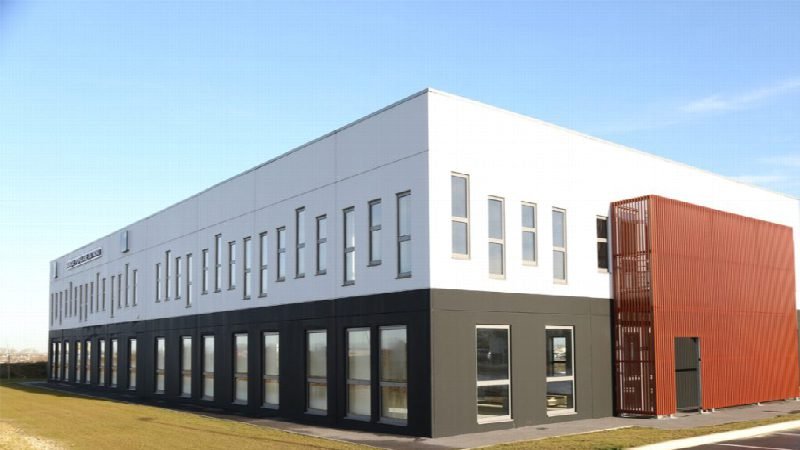
| Solution used | Partitions · 10 cm |
|---|---|
| Area treated | 210 m² of partitions |
| Town | Lons-le-Saunier |
| Département | Jura |
| Year | 2025 |
The 10 cm hemp block partition provides measured acoustic insulation of 41 dB, outperforming a standard plasterboard partition. Its surface mass and porosity also help regulate humidity, improving comfort in office environments. Dust-free installation makes it suitable for projects in occupied buildings.
Order details
This project involved fitting out a 480 m² office floorplate in Lons-le-Saunier, partitioned to create three open-plan areas, four enclosed offices and two meeting rooms. The client wanted to replace the plasterboard partitions installed during a previous refurbishment, which had proved inadequate, particularly in terms of dry air and sound reverberation, leading to complaints from occupants.
Three main requirements were set, in clear order of priority:
- Acoustics: provide sufficient sound separation so that meeting rooms would not be audible from adjacent open-plan spaces.
- Air quality and humidity: address the excessively dry air observed during the heating season, with relative humidity dropping as low as 28%, causing discomfort and irritation.
- Occupied site: maintain activity on half the floorplate during works, requiring operations to proceed with minimal disruption.
Why choose the 10 cm hemp block
The decision to use a 10 cm thick hemp block (with an R-value of 1.5 m².K/W) was made despite the limited thermal relevance of an internal partition, which does not separate different thermal zones. Other properties drove this choice:
- Acoustic performance: Thanks to a higher surface mass (≈36 kg/m²) and porous structure, the hemp block achieves a measured sound reduction of 41 dB, significantly better than the 33 dB of a standard 72/48 single-skin plasterboard partition.
- Humidity regulation: The capillary nature of the material allows it to absorb and release moisture, helping to stabilise indoor relative humidity.
- Clean installation: Cutting the blocks with a handsaw produces no fine dust or VOCs, unlike plasterboard or adhesives, making it ideal for occupied sites.
| Criterion | 72/48 plasterboard partition | 10 cm hemp block |
|---|---|---|
| Measured acoustic reduction | 33 dB | 41 dB |
| Surface mass | ≈ 25 kg/m² | ≈ 36 kg/m² |
| Humidity regulation | negligible | active (capillary material) |
| Dust and VOCs during installation | high | low |
These points are explained in detail in our technical comparison with other materials, which helps guide choices for specific requirements.
Technical characteristics of hemp blocks for partitions
The hemp block used is made up of 84% hemp shiv, the woody core of the hemp stem, bound with Vicat natural prompt cement, which is vapour-open. This mineral binder ensures dimensional stability and durability.
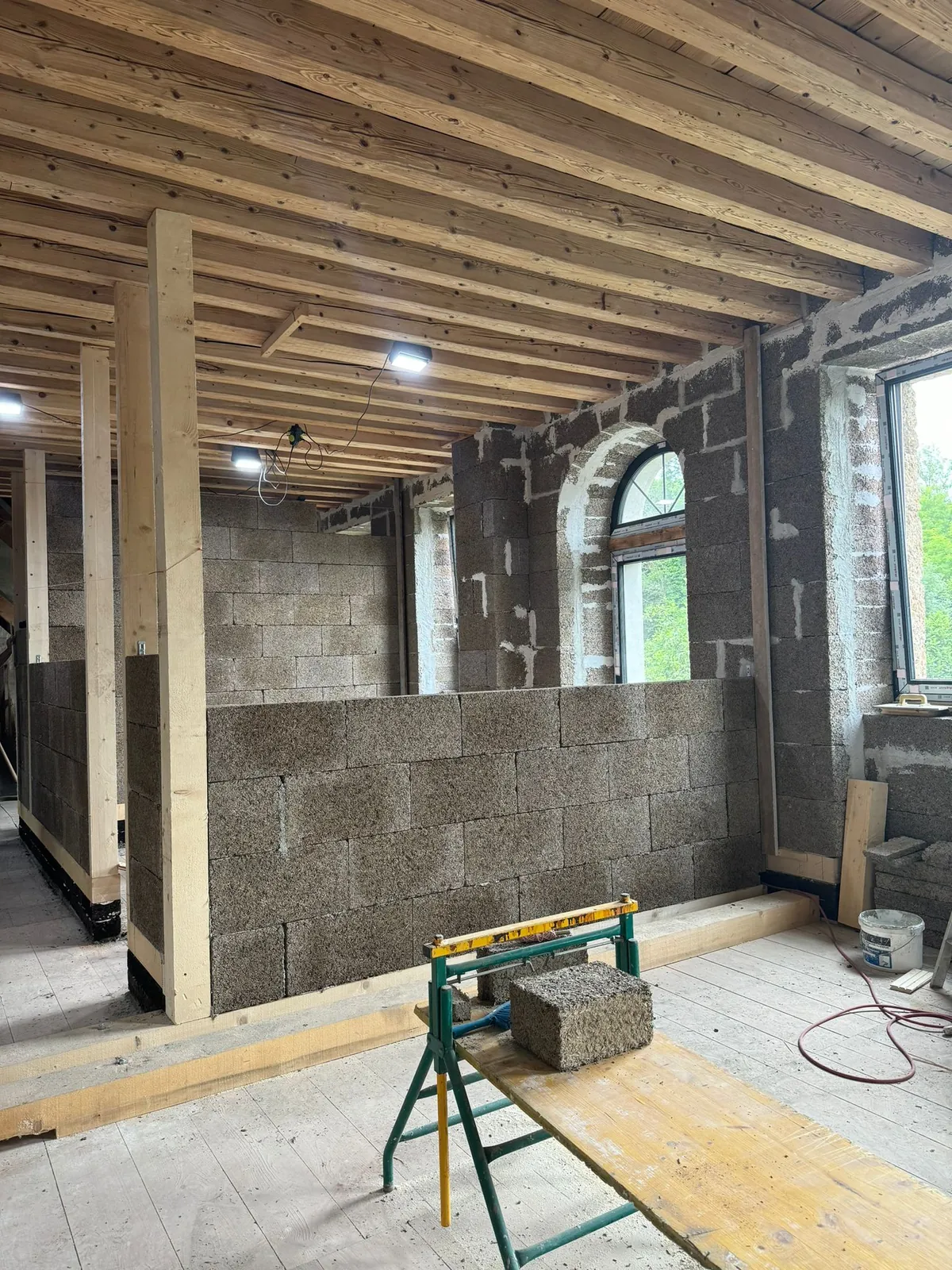
The chosen format for the partition was 60 × 30 cm, 10 cm thick, with an approximate density of 300 kg/m³, giving a surface mass of around 36 kg/m². This mass directly contributes to sound insulation.
Thermal conductivity λ is around 0.065 W/(m.K) when dry, but thermal performance is not a key factor for internal partitions. Thermal lag is 6.1 hours, reflecting the material’s ability to store heat—a minor factor for partitions.
In terms of safety, the block is rated B-s1 d0 for fire, meaning low smoke emission and no flaming droplets, suitable for commercial premises.
The material also achieves an A+ rating for indoor air quality, and an acoustic absorption coefficient α of around 0.4, indicating good ability to reduce sound reverberation in the mid-frequency range.
These technical details are documented in the MULTICHANVRE 10 cm block product sheet (in French) and the associated technical guide and documentation (in French).
How the project was managed in an occupied building
The constraints of working in an occupied building required careful organisation. The floorplate was divided into two halves, with a two-week gap between them to limit noise and dust.
The partitions were installed between the concrete slab and the existing suspended ceiling, with no major changes to the loadbearing structure. Mechanical fixing to the main structure was provided by brackets, at a rate of about two per square metre, ensuring stability without excessive rigidity.
The blocks were cut on site with a handsaw, avoiding fine dust and volatile organic compounds (VOCs) typically produced by plasterboard or adhesives. This method allowed the works to proceed alongside ten workstations at a distance of around ten metres.
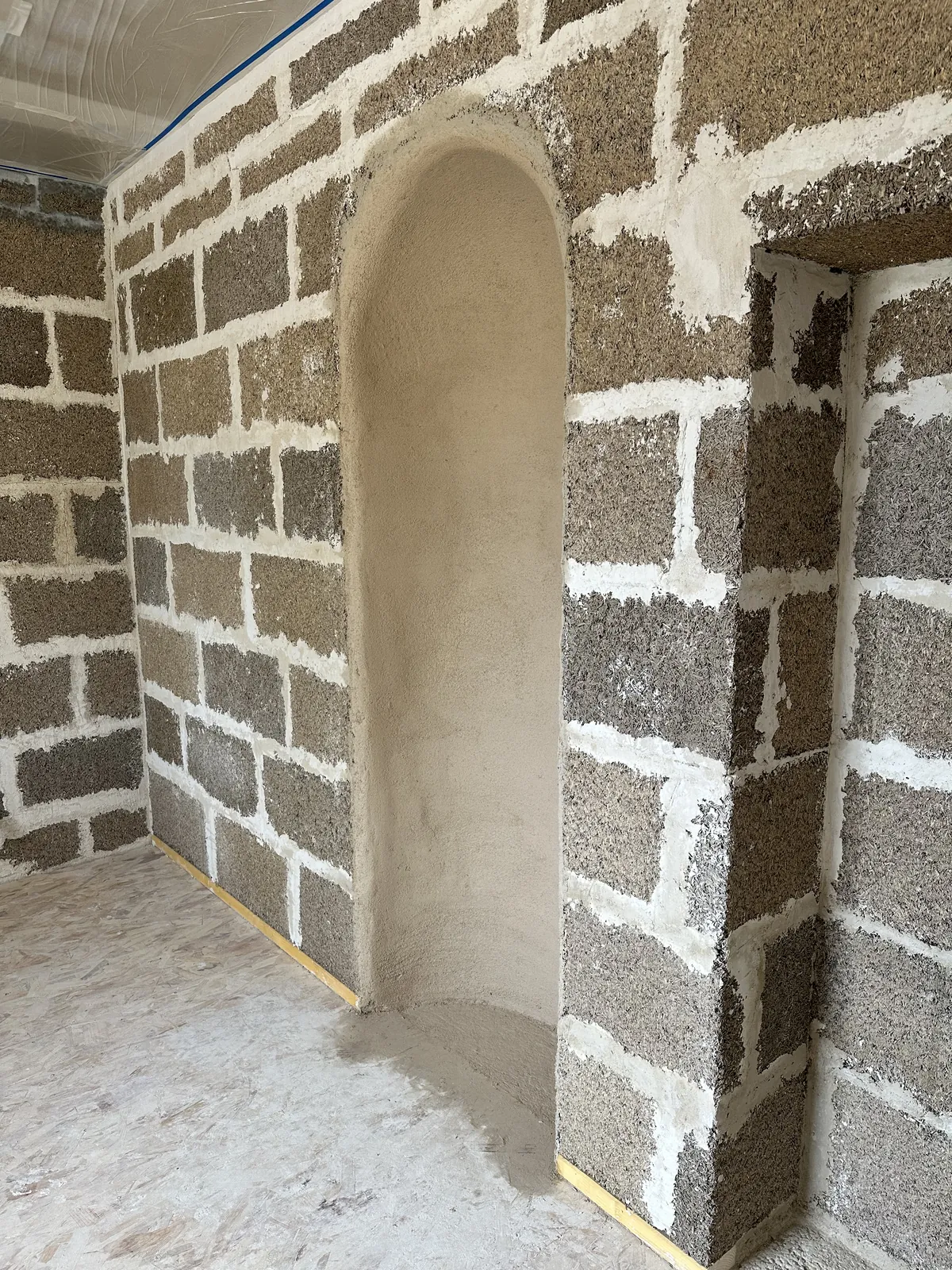
Openings for cable trays were made during installation, avoiding later drilling or cutting, which would have caused extra noise and dust.
Internal finishes were completed quickly, three days after installation, by spraying a plaster-based render followed by a mineral paint. This approach prioritised speed and compatibility with the material’s humidity regulation properties.
Results after a full heating season
After a full heating season, relative humidity measurements were taken in the office. Levels stabilised between 42% and 51%, compared to 28% to 34% previously with plasterboard partitions. This improvement is due to the material’s ability to store and gradually release moisture, reducing air dryness and discomfort.
The hemp block’s humidity regulation works by absorbing excess moisture produced by occupants and releasing it when the air becomes too dry, helping to maintain a more stable and healthy indoor environment. The process is explained in detail in our guide to thermal and hygrothermal performance (in French).
On the acoustic side, meeting rooms with hemp block partitions achieved a measured sound reduction of 41 dB, an 8 dB improvement over the previous plasterboard partitions. While this gain may seem modest in absolute terms, it significantly reduces the intelligibility of conversations, which users notice as improved acoustic comfort.
Feedback from occupants highlights a marked reduction in noise disturbance and a better indoor atmosphere, with no odours or dust during the works. However, it should be noted that the hemp block is a non-loadbearing partition and does not replace technical solutions for structural or high-performance acoustic requirements.
For other commercial building applications, see the commercial building uses page.
Finishes and maintenance for hemp block partitions
Finishes play an important role in the durability and performance of hemp block partitions. On this project, a sprayed plaster render followed by mineral paint was chosen, allowing rapid application and good compatibility with the material’s humidity regulation.
Alternatives are available: lime, clay or earth renders can be used, further enhancing humidity regulation and sound absorption, but they require longer drying times and greater technical expertise.
- Mineral renders are preferred in commercial settings for their thermal mass and durability.
- Mineral paints maintain vapour permeability.
- Maintenance is limited to gentle cleaning and regular inspection to avoid mechanical impacts that could damage the surface.
It is advisable to avoid excessive moisture, which could affect joint cohesion or cause deformation. Detailed technical guides are available to support best practice—see the compatible renders and lifespan and maintenance sections.
Technical comparison of partition solutions for offices
| Criterion | 72/48 plasterboard partition | 10 cm hemp block | 5 cm AAC partition | Clay brick partition |
|---|---|---|---|---|
| Sound reduction (dB) | 33 | 41 | 38 | 40 |
| Surface mass (kg/m²) | ≈ 25 | ≈ 36 | ≈ 30 | ≈ 50 |
| Humidity regulation | negligible | active | low | low |
| Dust and VOCs during installation | high | low | moderate | moderate |
| Suitability for occupied sites | limited | good | average | average |
This table summarises the main characteristics to consider. Hemp blocks offer a good balance of acoustic and hygrothermal performance, with specific advantages for projects in occupied buildings. Further details and comparisons can be found on the technical comparison with other materials page.
Frequently asked questions about hemp block partitions in offices
Are hemp blocks suitable for commercial partitioning?
Yes, they are suitable for non-loadbearing partitions 10 cm thick, installed between slab and suspended ceiling and fixed with brackets. Their main benefits are acoustic and humidity regulation.
What acoustic performance can be expected?
A measured reduction of 41 dB, better than standard single-skin plasterboard partitions, thanks to the mass and porosity that absorb mid-frequency speech sounds.
Was the work possible in an occupied building?
Yes, thanks to the absence of fine dust and VOCs during cutting, and the phased approach in two halves.
What finishes are recommended for hemp block partitions?
Sprayed plaster and mineral paint are recommended for speed and compatibility with humidity regulation, while lime, clay or earth renders are also possible but require more time.
Are hemp blocks loadbearing?
No, they are non-loadbearing, used to divide and distribute spaces, and mechanically fixed to the main structure.
How do hemp blocks improve air quality in offices?
By storing excess indoor moisture and releasing it when the air becomes too dry, helping to maintain more stable and less irritating air.
What are the main advantages of hemp blocks for acoustic partitions?
The increased mass, absorption of mid frequencies and porosity reduce reverberation and improve acoustic comfort in commercial spaces.
For more information, see the frequently asked questions page about hemp blocks.
All these technical details and site feedback demonstrate the relevance of 10 cm hemp blocks for acoustic partitioning in offices, combining comfort, air quality and suitable working conditions.
Frequently asked questions
Can hemp blocks replace plasterboard partitions in offices?
Yes, 10 cm hemp blocks provide better acoustic insulation and active humidity regulation, improving comfort without the disruption associated with plasterboard installation.
What is the acoustic performance of a 10 cm hemp block partition?
It achieves a measured sound reduction of 41 dB, 8 dB more than a single-skin plasterboard partition, significantly reducing the chance of overheard conversations.
Is hemp block installation compatible with occupied workspaces?
Yes, handsaw cutting produces no plaster or adhesive dust, allowing work to continue in occupied spaces with minimal impact on adjacent workstations.
What renders are recommended for hemp block partitions?
Sprayed plaster and mineral paint are commonly used. Lime, clay or earth renders are also possible but require longer drying times.
Are hemp blocks loadbearing?
No, these blocks form non-loadbearing partitions, installed between slab and suspended ceiling and fixed with brackets, for dividing and distributing spaces.
How do hemp blocks improve air quality in offices?
By regulating indoor humidity, they store excess moisture and release it when the air becomes too dry, preventing irritation caused by dryness.
What are the main advantages of hemp blocks for acoustic partitions?
The increased mass, absorption of mid frequencies and porosity of the block help reduce reverberation and improve sound quality in commercial spaces.
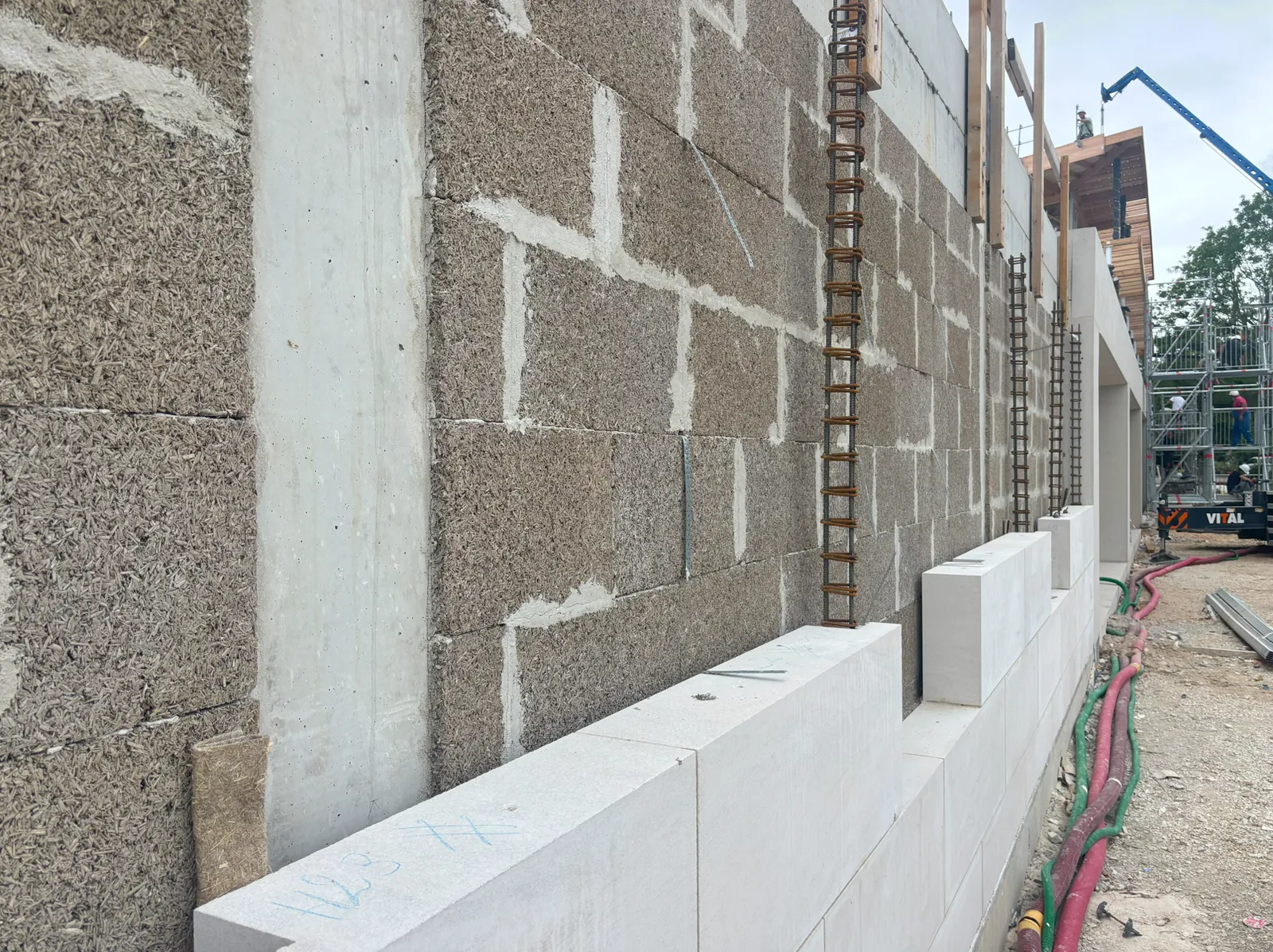
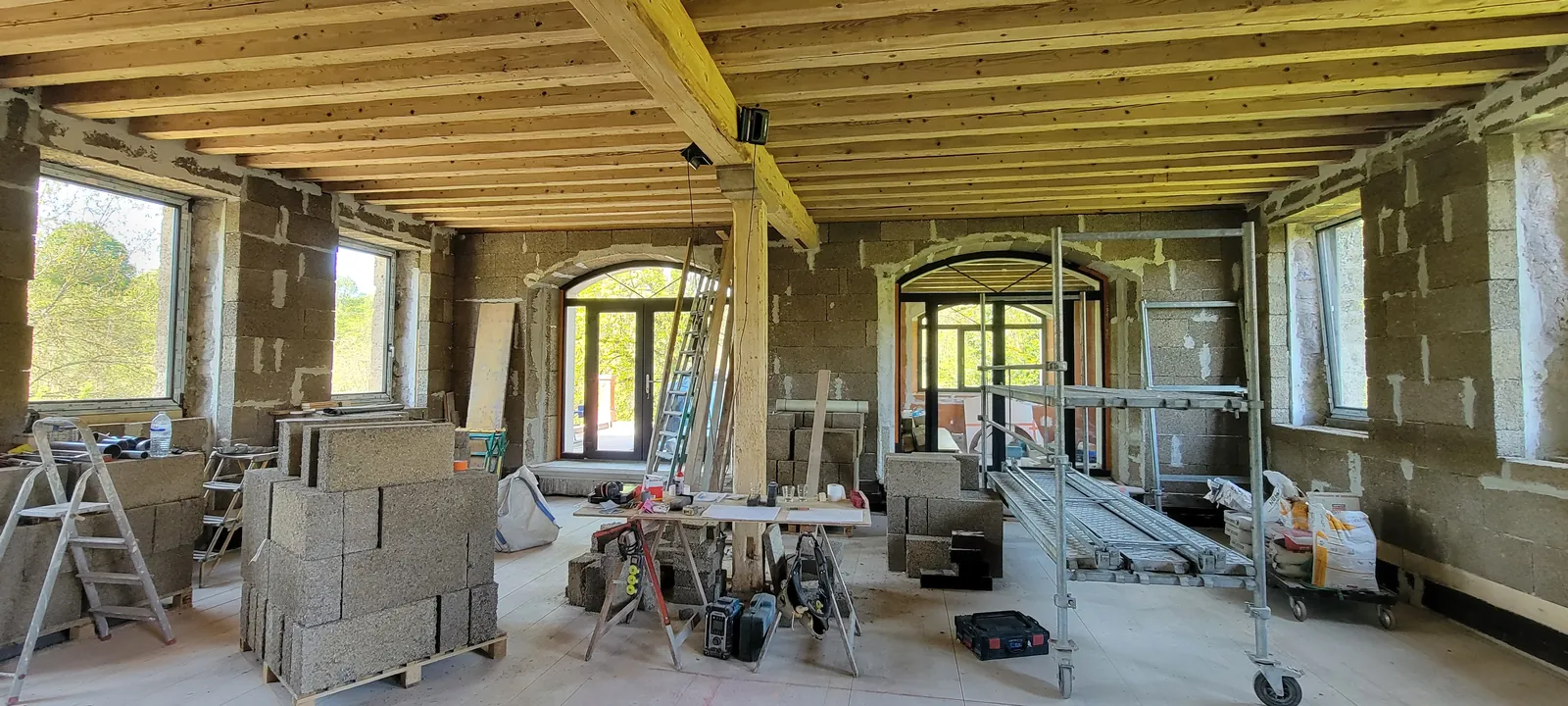
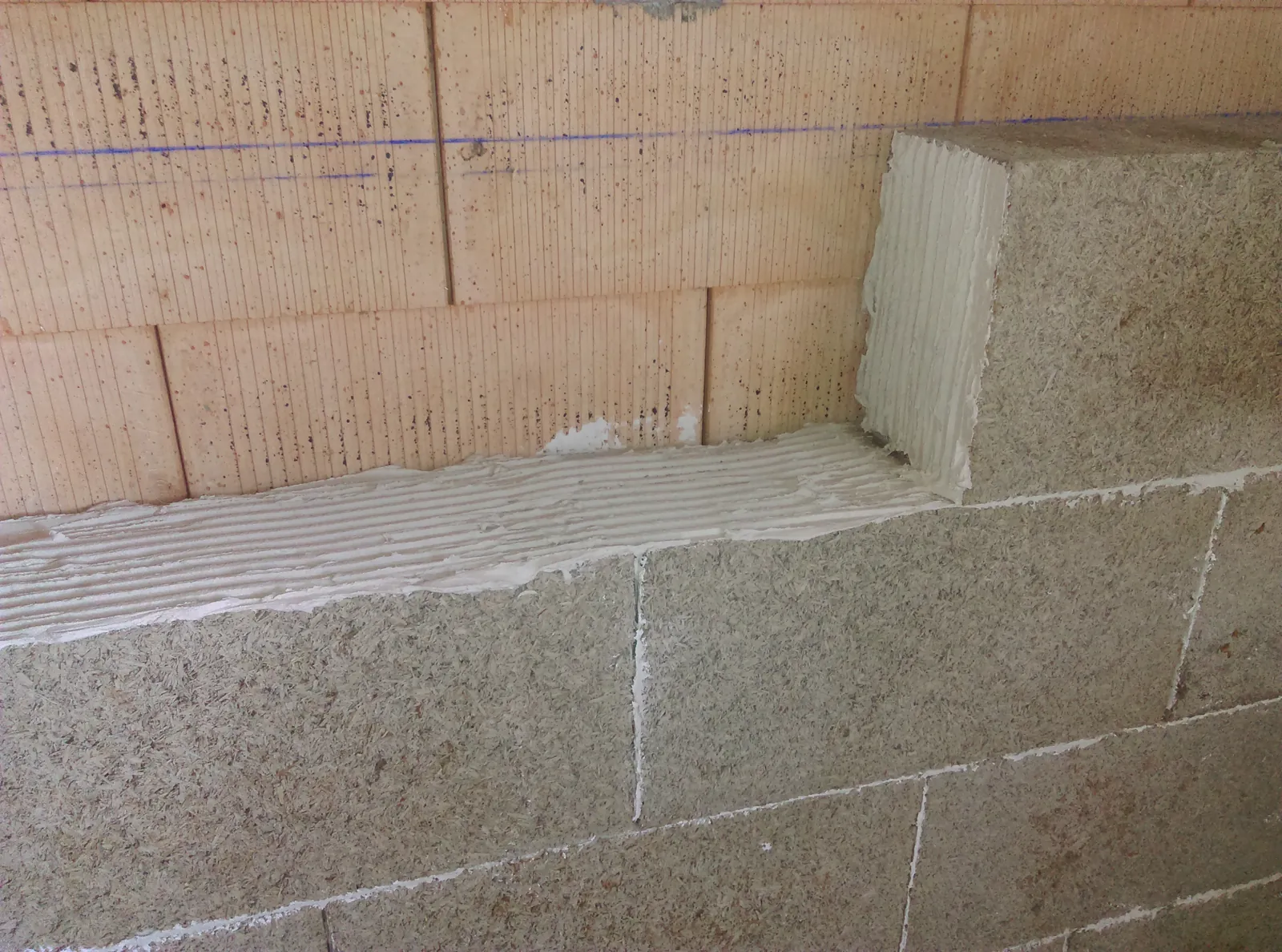
Similar projects in pictures
MULTICHANVRE projects of the same kind, carried out by our customers.
Read next
Planning a hemp block project?
Tell us about your project: we will reply within 48 working hours with a tailored costing.