Timber frame infill with hempcrete blocks: detailed technical guide
Timber frame infill with hempcrete blocks, especially with MULTICHANVRE 20 cm, provides a thermal resistance of R = 3.0 m².K/W without a vapour barrier, and a thermal lag of around 12 hours. This system naturally regulates humidity, offers good thermal mass, and meets RE2020 requirements, making it suitable for cold and temperate climates.
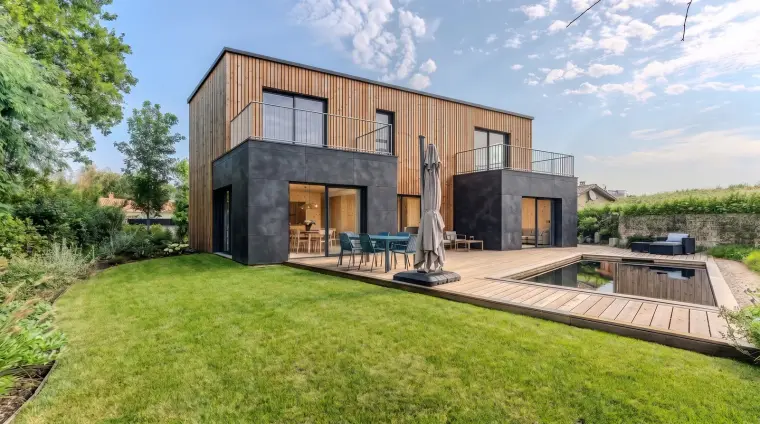
| Solution used | Infill · 20 cm |
|---|---|
| Area treated | 168 m² of walls |
| Town | Pontarlier |
| Département | Doubs |
| Year | 2025 |
Filling a timber frame with hemp blocks, particularly with the MULTICHANVRE 20 cm option, provides a thermal resistance of R = 3.0 m².K/W without a vapour barrier, and a thermal lag of around 12 hours. This system naturally regulates humidity, offers good thermal mass, and meets RE2020 (France's environmental building regulation) requirements, making it suitable for cold and temperate climates.
Project background
This project involves a single-storey house of 118 m², located at an altitude of 850 metres in the Haut-Doubs. This mountainous region is known for its harsh climate, with long, severe winters totalling over 2,800 degree-days, and, in recent years, summer heatwaves with temperatures regularly exceeding 32°C.
Initially, the clients considered a standard timber frame system insulated with glass wool and a variable vapour control membrane. However, two key factors led them to switch to hemp blocks:
- The thermal performance of the system relies heavily on the careful installation of a vapour barrier, which can be a source of defects and building issues if not done correctly.
- Summer discomfort experienced by acquaintances, due to the low thermal mass of glass wool, which leads to overheating and poor humidity regulation.
In this context, hemp blocks were chosen for their ability to provide sufficient thermal mass for significant thermal lag, as well as natural humidity regulation. This approach also simplifies installation by avoiding the delicate fitting of a vapour barrier.
Chosen solution
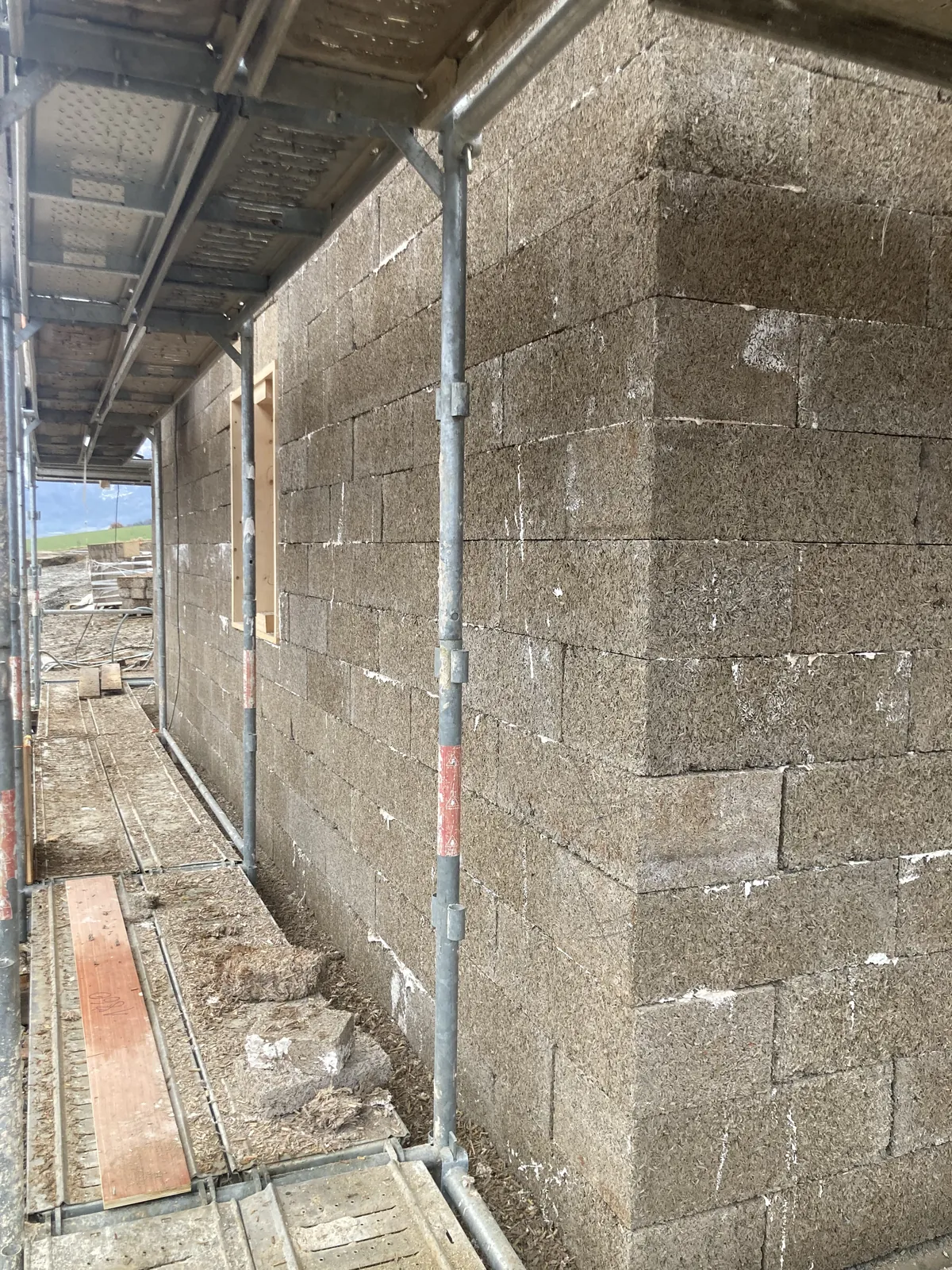
The technical solution adopted was to fill the timber frame with 20 cm thick MULTICHANVRE blocks, in a 60 × 30 cm format. This choice was made because the block thickness exactly matches the standard 200 mm timber stud size, allowing installation without thermal bridges or gaps.
| Specification | Selected value |
|---|---|
| Filling thickness | 20 cm |
| Thermal resistance R of block | 3.0 m².K/W |
| Thermal lag | ≈ 12.3 h |
| Wall area treated | 168 m² |
| Vapour barrier | none |
| Internal finish | sprayed plaster |
The block is made up of 84% hemp shiv, the woody core of the hemp stem, combined with a vapour-open hydraulic binder, Vicat natural prompt cement. This formulation gives the material a thermal conductivity of around 0.065 W/(m.K) and a density of approximately 300 kg/m³, ensuring effective insulation and good thermal mass.
No vapour barrier is required, as the block's vapour permeability allows internal humidity regulation within a comfortable range. The sprayed plaster internal finish protects the block while maintaining its humidity-regulating properties.
Technical comparison of hemp blocks
The MULTICHANVRE range is available in several thicknesses, each with its own thermal and physical properties:
| Thickness | Thermal resistance R (m².K/W) | Thermal lag (h) | Block weight (kg) | Pallet quantity (m²/pallet) | Recommended use |
|---|---|---|---|---|---|
| 10 cm | 1.5 | 6.1 | 6.5 | 21.6 | Partition walls, light lining |
| 15 cm | 2.3 | 9.25 | 10 | 14.4 | Standard lining, partitions |
| 20 cm | 3.0 | 12.3 | 13 | 10.8 | High-performance internal (IWI) and external (EWI) insulation |
| 30 cm | 4.6 | 18.5 | 21 | 10.08 | High-performance external wall insulation |
Thermal conductivity when dry is around 0.065 W/(m.K) and density is about 300 kg/m³, making it a lightweight material, but dense enough to provide significant thermal mass. Thermal lag is a key factor for summer comfort, with around 12 hours for 20 cm thickness.
Compared to conventional insulation such as mineral wool or expanded polystyrene, hemp blocks require a greater thickness to achieve the same thermal resistance. For example, glass wool has a lower conductivity, but less mass and therefore reduced thermal lag.
However, the hygrothermal compatibility of hemp with timber frames is a real advantage for building durability. Humidity regulation and the absence of a vapour barrier simplify internal moisture management and reduce the risk of condensation within the wall.
For more details, see the MULTICHANVRE range and technical comparisons with conventional insulation.
Installation
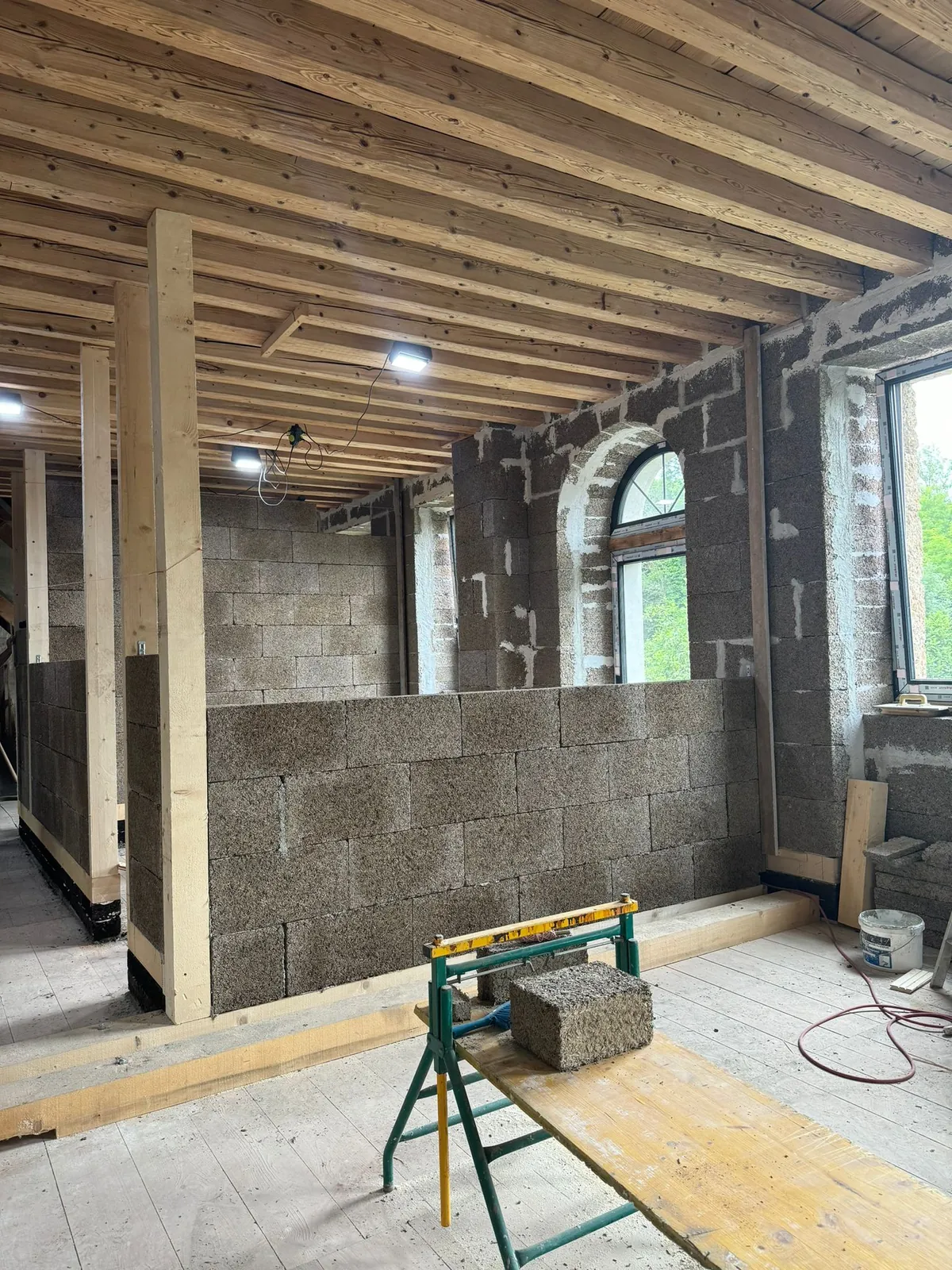
The timber frame was erected in three days. Installing the hemp blocks as infill took around two weeks for two tradespeople, which is similar to the pace of lightweight masonry work.
- Each 20 cm block weighs about 13 kg, making it easy to handle by hand.
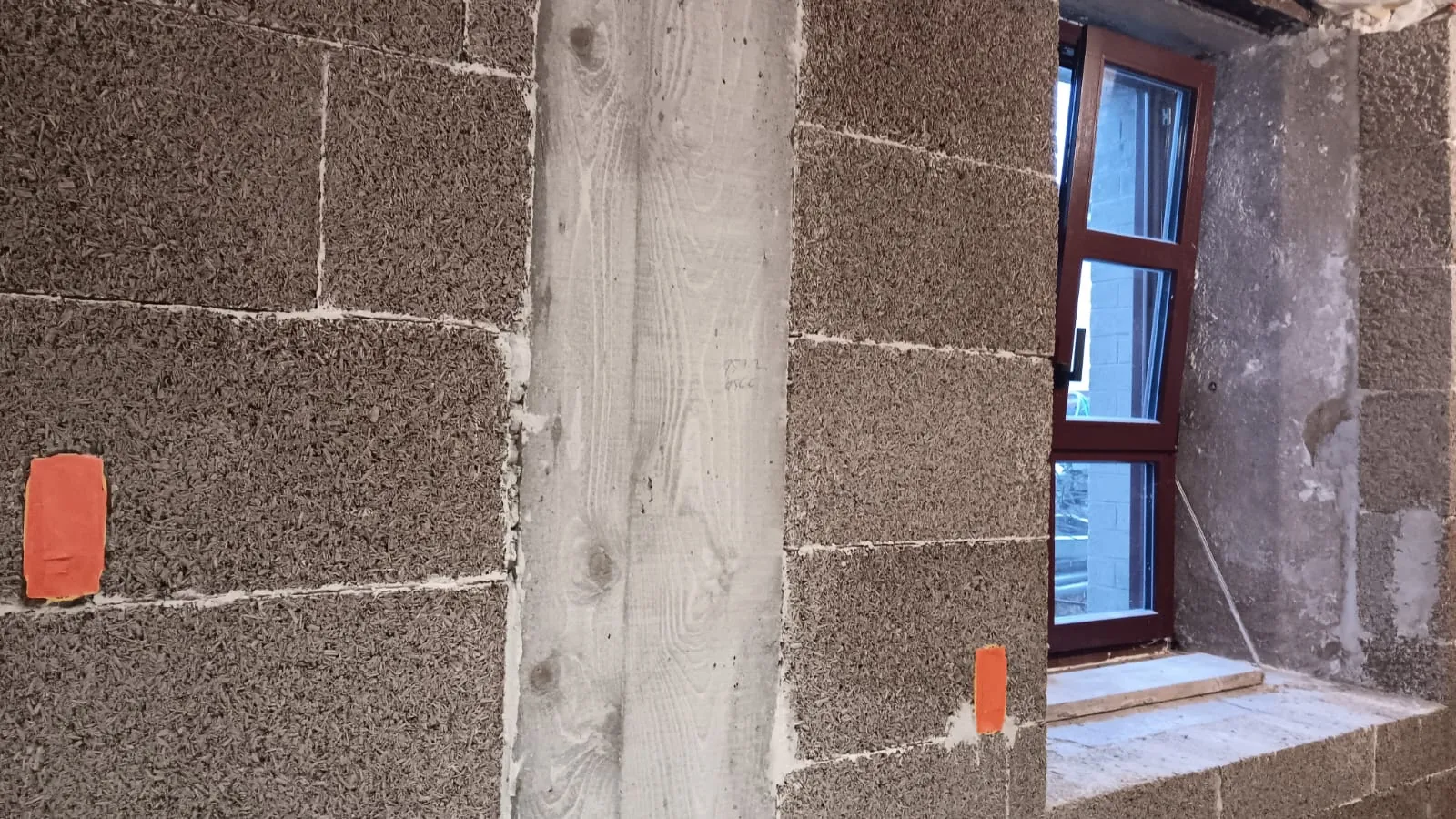
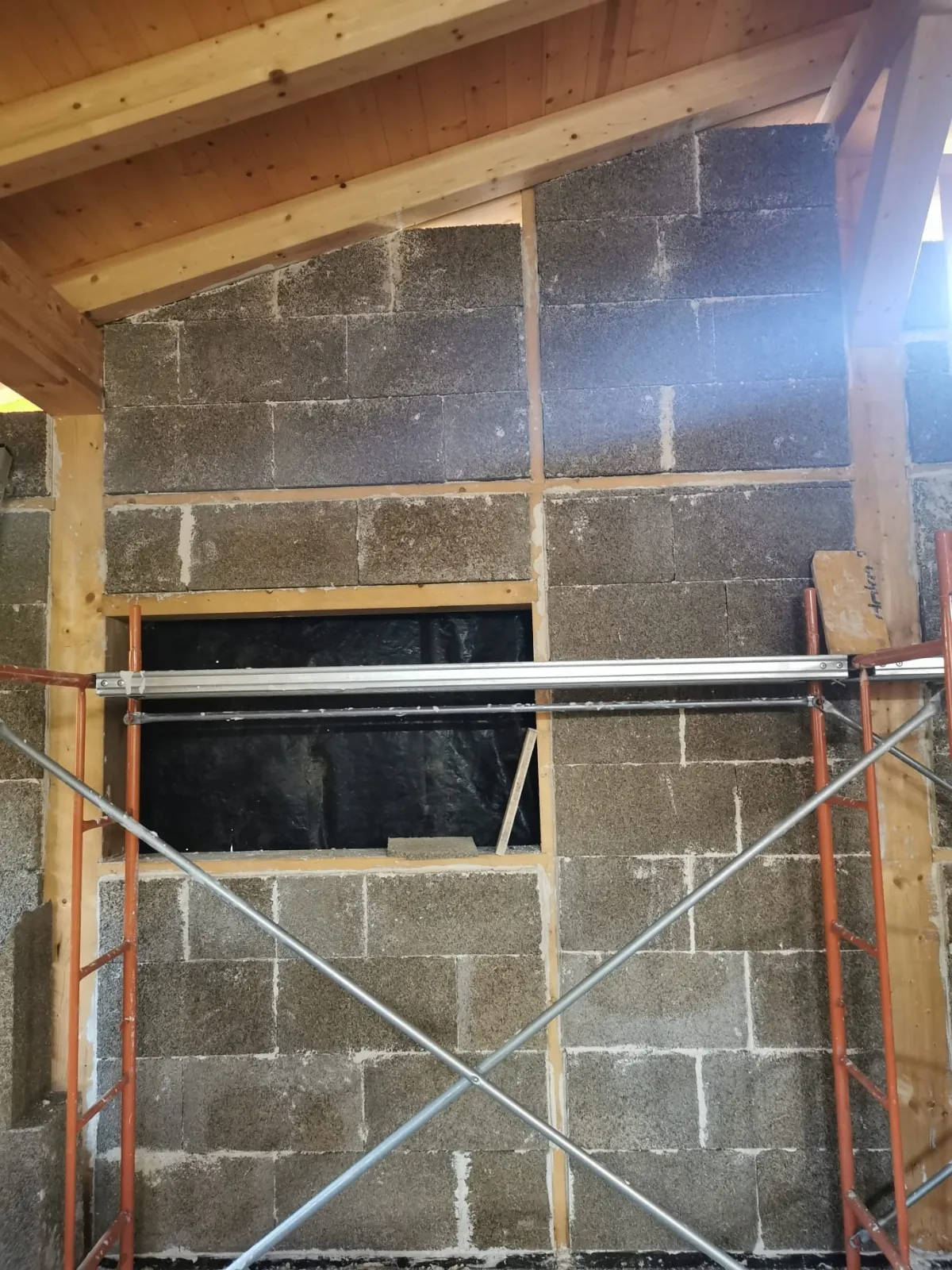
- Blocks are laid in a staggered bond, using a lime-based mortar applied with a notched trowel. This adhesive masonry ensures a consistent mechanical and thermal connection between blocks.
- The blocks are placed directly onto the timber studs, with precise trimming using a handsaw for corners, window returns and lintels, ensuring no thermal bridges or voids.
- Airtightness is achieved with sheathing panels and suitable tapes, ensuring a continuous air barrier, as confirmed by an air permeability test.
The air permeability test produced a Q4Pa-surf result of 0.42 m³/h.m², well below the regulatory threshold, demonstrating the high level of airtightness achieved. It is important to note that this airtightness is mainly due to the timber frame structure and its sheathing panels, not the hemp block itself.
Key points to watch include managing corners, precise block cutting, and careful mortar application to avoid breaks in the insulation. The choice of renders also plays a role in protecting and ensuring the durability of the infill.
A detailed installation guide is available in our technical installation guide.
RE2020 assessment and energy performance
The project was included in a thermal study in line with RE2020. The thermal resistance of the 20 cm MULTICHANVRE block allowed the wall to be validated without needing to increase roof insulation or use compensatory technical systems.
The specific carbon storage of hemp has a positive effect on the Ic construction indicator, helping to reduce the building's overall environmental impact. This is covered in detail in our RE2020 and regulations guide.
After the first full winter, measured heating consumption was around 42 kWh/m²/year, including supplementary heating from a pellet stove. Occupants report no sensation of cold walls, with the internal wall surface never dropping below 18°C, which improves thermal comfort and prevents cold draughts.
The thermal lag of around 12 hours also helps to limit summer overheating, which is particularly important in a region where temperatures regularly exceed 32°C in summer.
Cost analysis and comparison with other insulation
The estimated material cost is about 18% higher than standard mineral wool insulation for the insulation package. However, this is partly offset by eliminating the vapour barrier, which reduces both cost and installation complexity.
- Installing hemp blocks does not require a vapour barrier or any special treatment for internal condensation.
- The size and weight of the blocks make for quick, safe handling, at a pace similar to lightweight masonry.
- The material's durability and reduced risk of moisture-related issues help keep long-term maintenance costs down.
For a more detailed cost analysis and technical comparisons, see our price and comparison guide.
Advantages and limitations of hemp block infill in timber frames
Filling timber frames with hemp blocks offers several technical advantages:
- Humidity regulation: Thanks to its vapour permeability and ability to regulate moisture, it improves indoor air quality and reduces the risk of condensation.
- Thermal performance: With a thermal resistance of 3.0 m².K/W for 20 cm, it meets RE2020 thermal requirements, though it does require greater thickness than some synthetic insulations.
- Thermal mass: The 12-hour thermal lag limits summer overheating, which is a real benefit in climates with large seasonal variations like the Haut-Doubs.
- Mechanical strength: While not load-bearing, the block provides stable, durable infill for the frame.
Limitations to consider include:
- Living space: The required thickness can reduce internal floor area, which is a consideration for renovations or smaller homes.
- Cost: There is a higher initial cost compared to conventional insulation, but this is offset by technical and environmental benefits.
- Regional availability: Local production in Mérey-sous-Montrond makes supply easy in Bourgogne-Franche-Comté, but national distribution is still developing.
Frequently asked questions about timber frame hemp block infill
For detailed answers to common questions on this topic, including the need for a vapour barrier, mechanical strength, suitable thicknesses or durability, see our hemp block FAQ page.
Frequently asked questions
Can hemp blocks be used without a vapour barrier in a timber frame?
Yes, hemp blocks are vapour-permeable and naturally regulate humidity. Airtightness is provided by the frame's sheathing and tapes, so there is no need for an internal vapour barrier.
What thermal resistance does a 20 cm hemp block provide in timber frame infill?
The 20 cm MULTICHANVRE block offers a thermal resistance of R = 3.0 m².K/W, suitable for standard walls and providing high-performance insulation without the need for multilayer systems.
How are hemp blocks installed in a timber frame?
The blocks are laid in a staggered bond with lime-based mortar, supported on the frame. They can be trimmed with a handsaw for corners or lintels, and mechanically fixed with brackets.
Does hemp block infill provide good thermal mass?
Yes, with a thermal lag of around 12 hours at 20 cm thickness, hemp blocks help prevent summer overheating and improve thermal comfort, especially in climates with significant temperature swings.
What are the environmental impacts of hemp blocks in timber frames?
The block combines a formulation of 84% hemp shiv and a natural mineral binder, with an FDES (environmental product declaration) showing low carbon impact. The material stores CO₂, which contributes positively to the building's carbon footprint.
Can different thicknesses of hemp block be used for infill?
In practice, 20 cm thickness matches the standard timber frame stud size. Thinner or thicker blocks are available but require precise adjustment to avoid thermal bridges or voids.
What is the lifespan of a timber frame infilled with hemp blocks?
The material is naturally resistant to rodents and stable over time. Regular maintenance of the renders and checks on airtightness ensure durability in line with standard building requirements.
Similar projects in pictures
MULTICHANVRE projects of the same kind, carried out by our customers.
Read next
Planning a hemp block project?
Tell us about your project: we will reply within 48 working hours with a tailored costing.