Natural insulation and humidity control with hemp blocks
Hemp blocks are a natural insulation material that regulates indoor humidity thanks to their vapour-open structure. Their high hemp shiv content and specific formulation help maintain optimal humidity levels without the need for a vapour barrier, contributing to the hygrothermal comfort of buildings.
| Range | MULTICHANVRE |
|---|---|
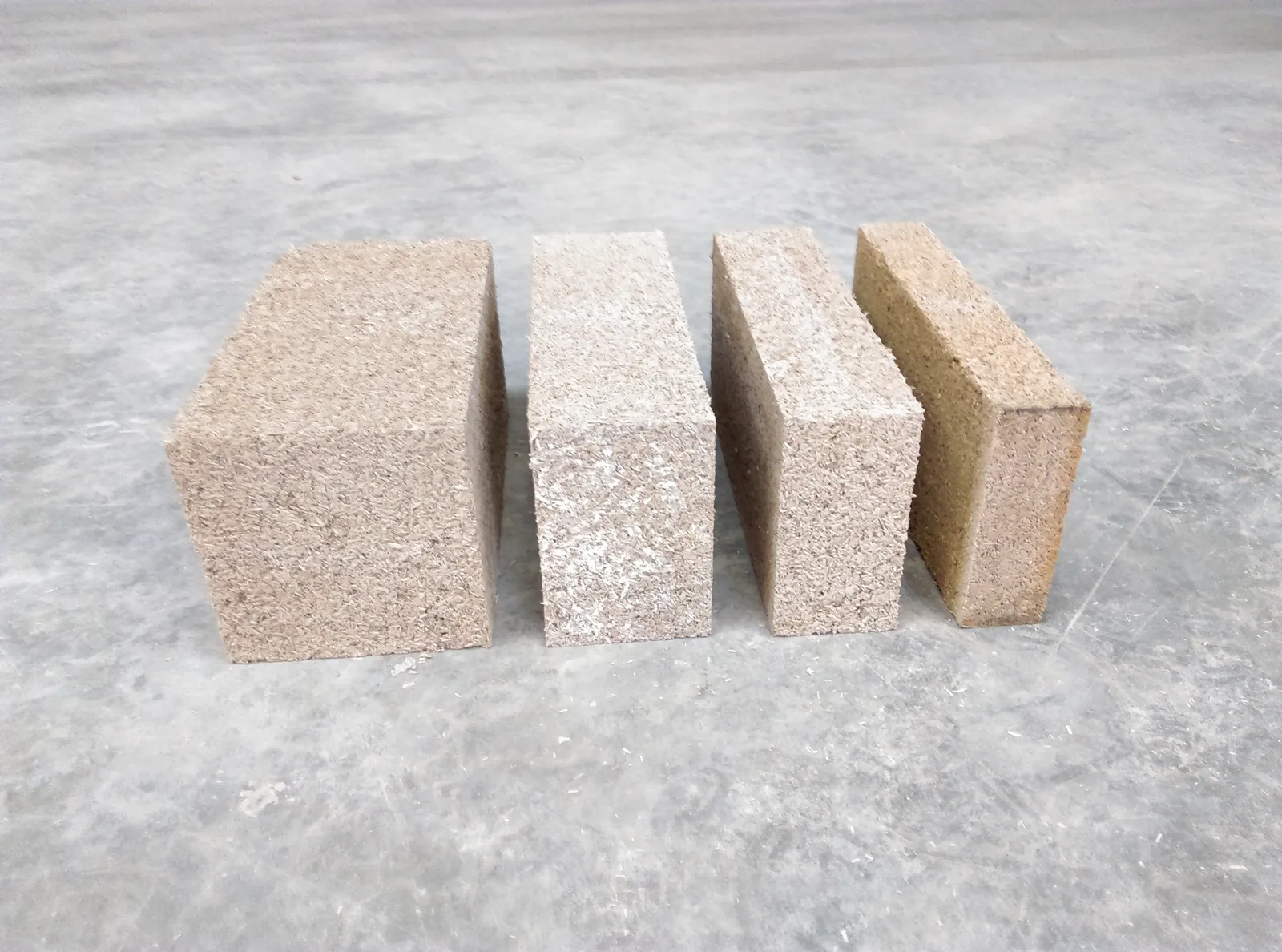
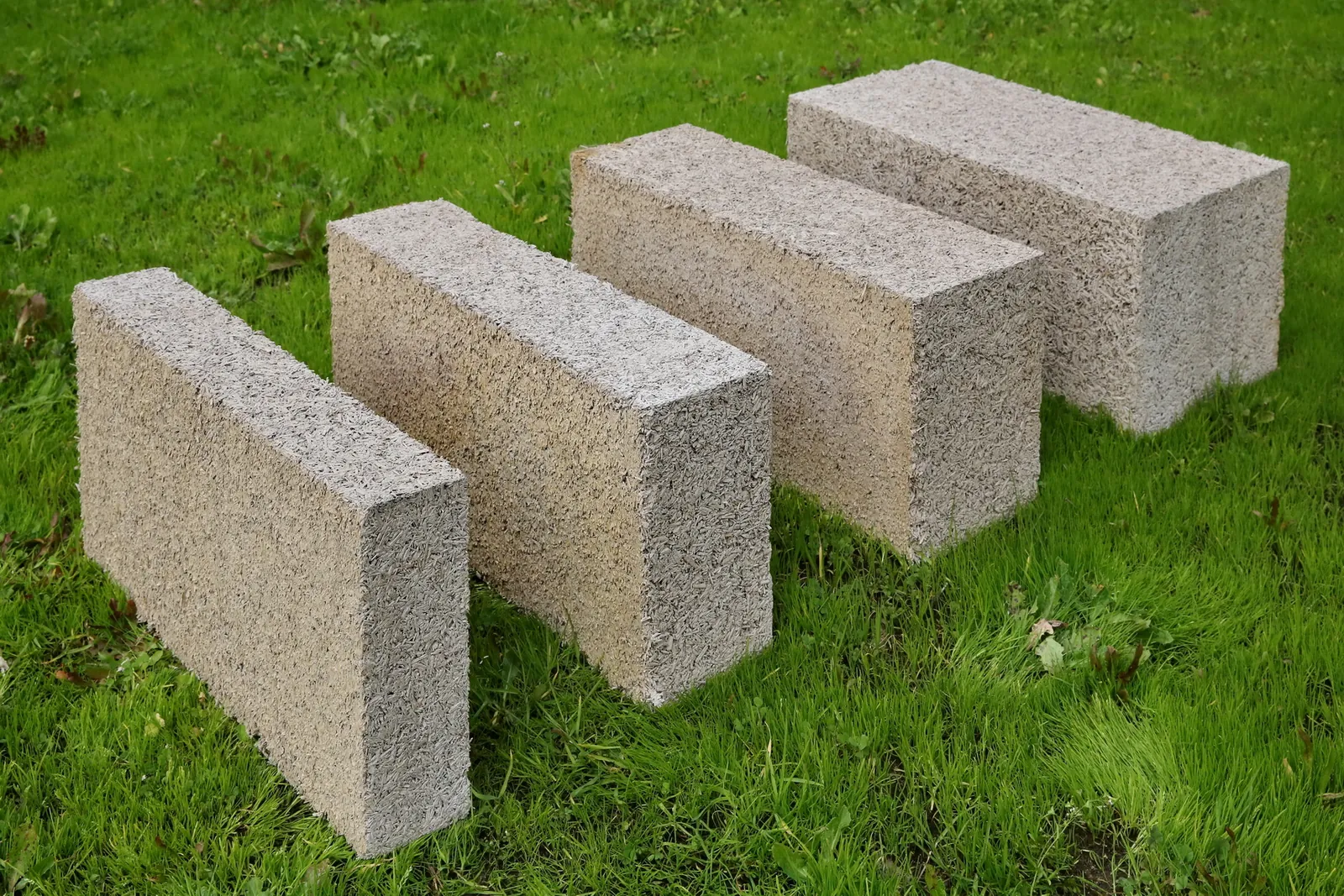
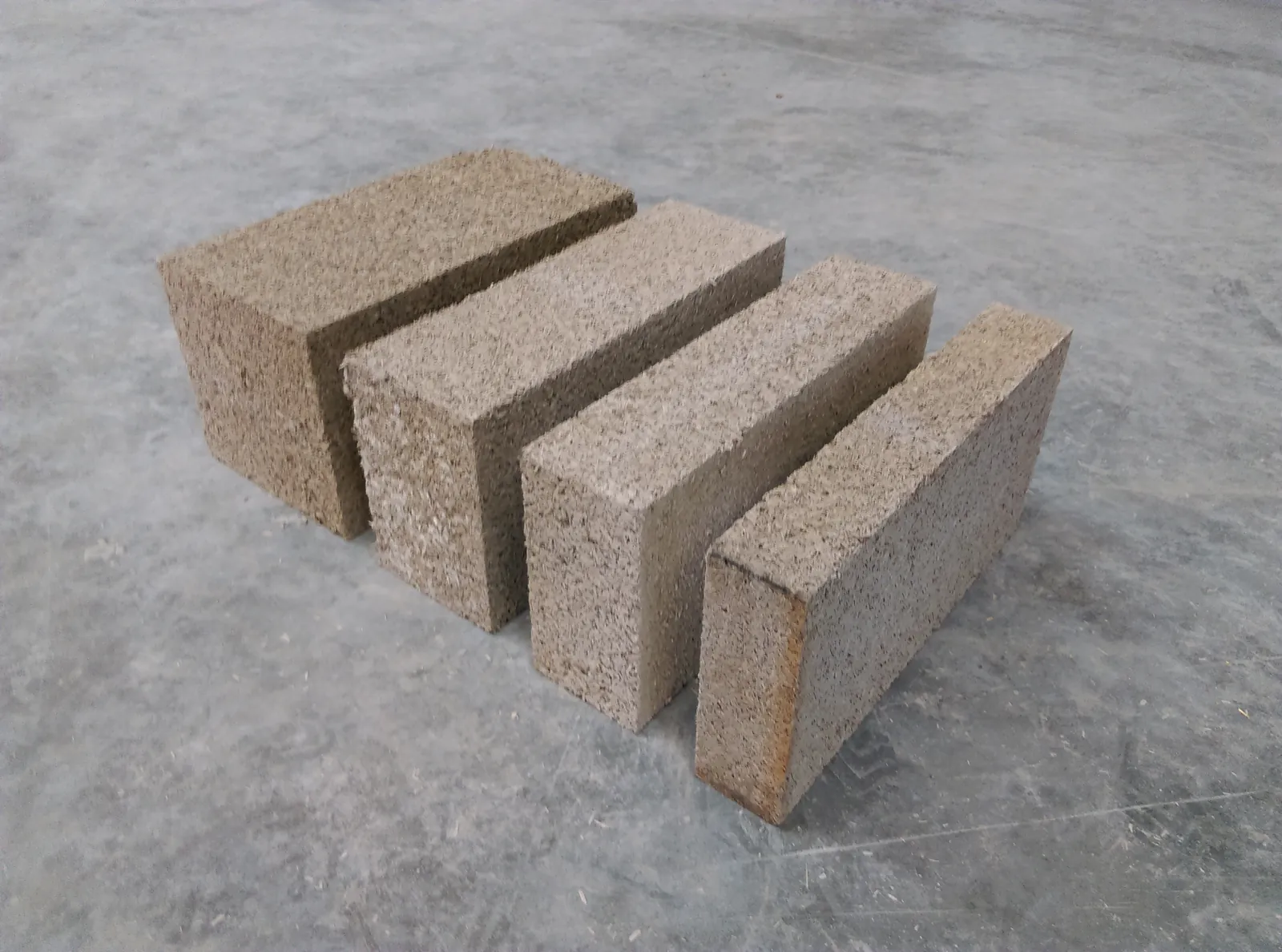
| Format | 60 × 30 × 10 cm |
| Thermal conductivity λ | 0.065 W/(m.K) |
| Density | ≈ 300 kg/m³ |
| Thermal resistance R | R dry 1.5 / R effective 1.4 m².K/W |
| Installation | IWI, EWI, partitions |
The hemp block is a natural insulator that regulates indoor humidity by allowing water vapour to pass through. Its high hemp shiv content and specific formulation help maintain optimal humidity levels without the need for a vapour barrier, contributing to the hygrothermal comfort of buildings.
Understanding the role of a natural humidity-regulating insulator
A natural humidity-regulating insulator is a material that combines thermal insulation properties with the ability to effectively manage indoor moisture levels. This hygrometric management is essential to prevent condensation, limit mould growth and ensure healthy indoor air quality.
In the case of hempcrete, its vapour-open structure allows continuous moisture exchange between inside and out, promoting a natural hygrometric balance. The woody core of the hemp stem, known as hemp shiv, has a porous structure that absorbs and releases moisture as required by the room.
Good indoor humidity regulation offers several benefits:
- Reduces the risk of condensation and stagnant moisture
- Improves summer comfort thanks to thermal lag
- Provides lasting protection for building elements
- Contributes to better indoor air quality
By contrast, conventional synthetic or mineral insulators, such as mineral wools, have low vapour permeability and often require the use of vapour barriers or vapour checks to prevent moisture-related issues. They do not actively manage indoor humidity.
Composition and technical characteristics of the hemp block
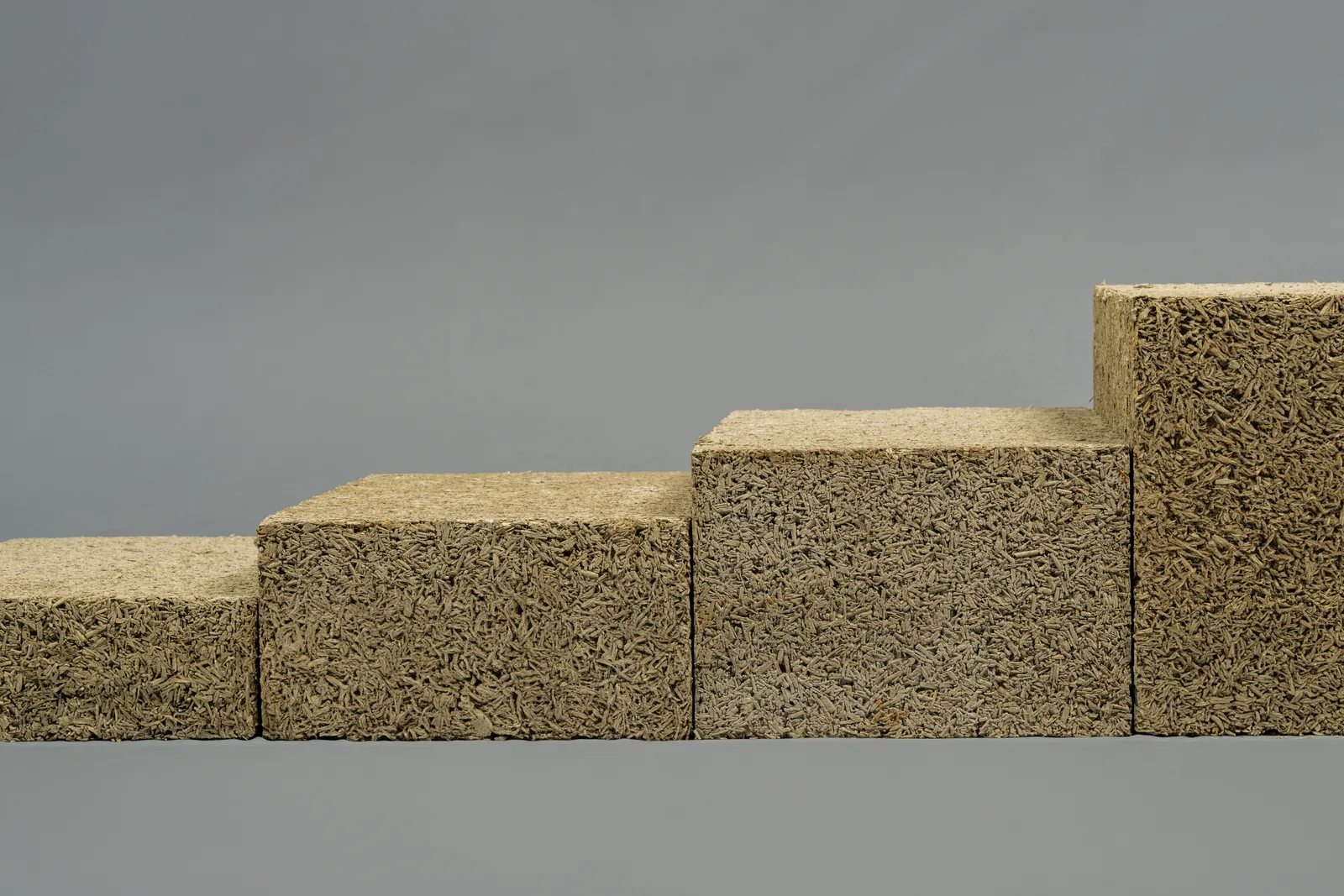
The MULTICHANVRE hemp block is made with 84% hemp shiv, the woody core of the hemp stem, grown in Franche-Comté. This plant core is bound with Vicat natural prompt cement, a hydraulic binder that is vapour-open. This composition gives the block a density of around 300 kg/m³ and a dry thermal conductivity λ of approximately 0.065 W/(m.K).
Its formulation ensures several technical properties:
- Fire reaction: classified B-s1,d0, meaning it is non-combustible with very little smoke and no flaming droplets.
- Natural resistance to rodents: hemp shiv is unattractive to pests, reducing the risk of biological damage.
- Summer comfort: the block offers significant thermal lag (up to 18.5 hours for a 30 cm block), helping regulate temperature swings and limit summer overheating.
- Storage: pallets must be kept sheltered and dry, and not stacked, as the block is not rot-proof despite its natural resistance to rodents and mould.
- Durability: although hempcrete has been used in France since the 1980s with few reported issues, there is no official quantified lifespan. Reference projects by the manufacturer date back to 2017.
Thermal and hygrometric performance of the MULTICHANVRE block
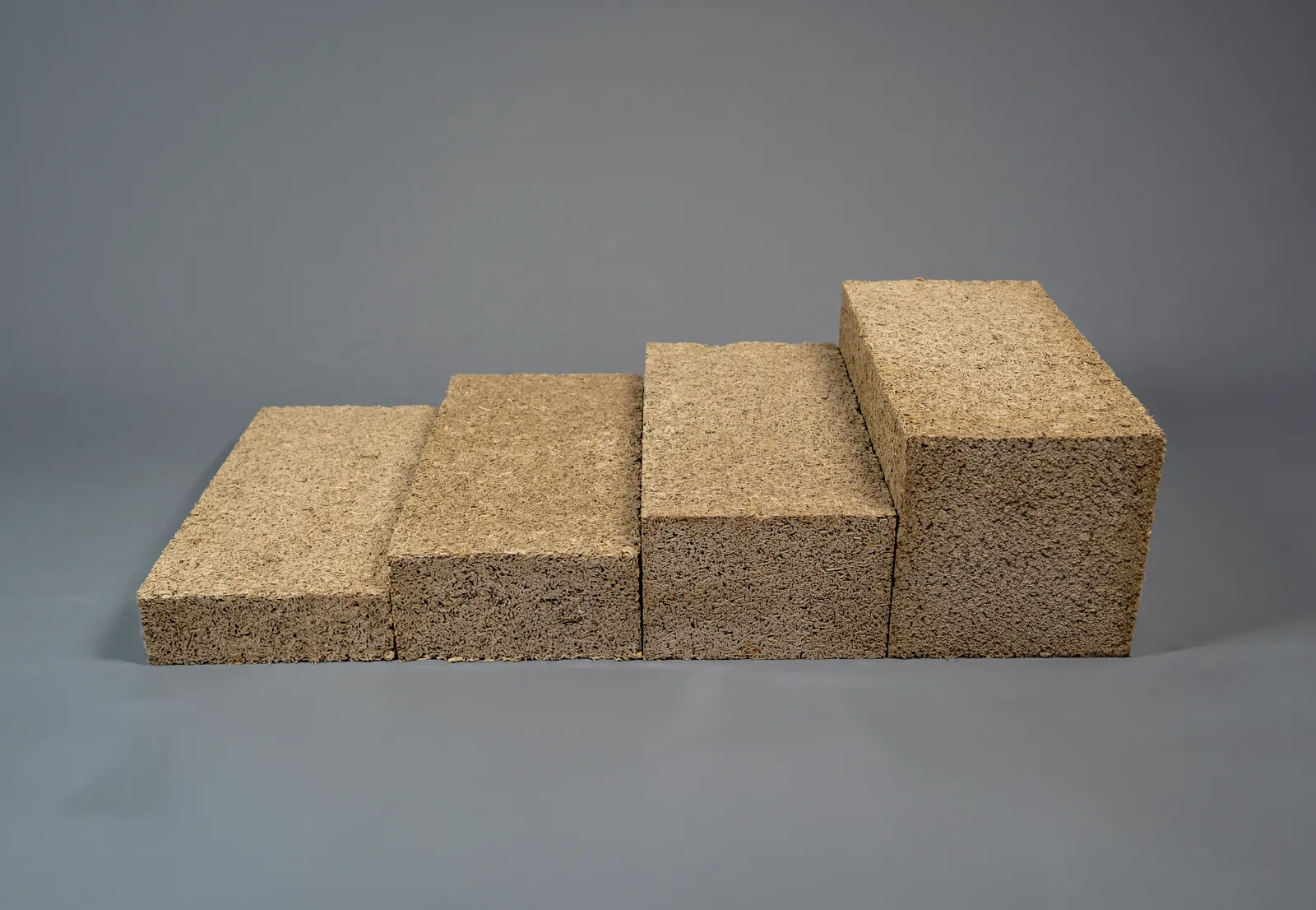
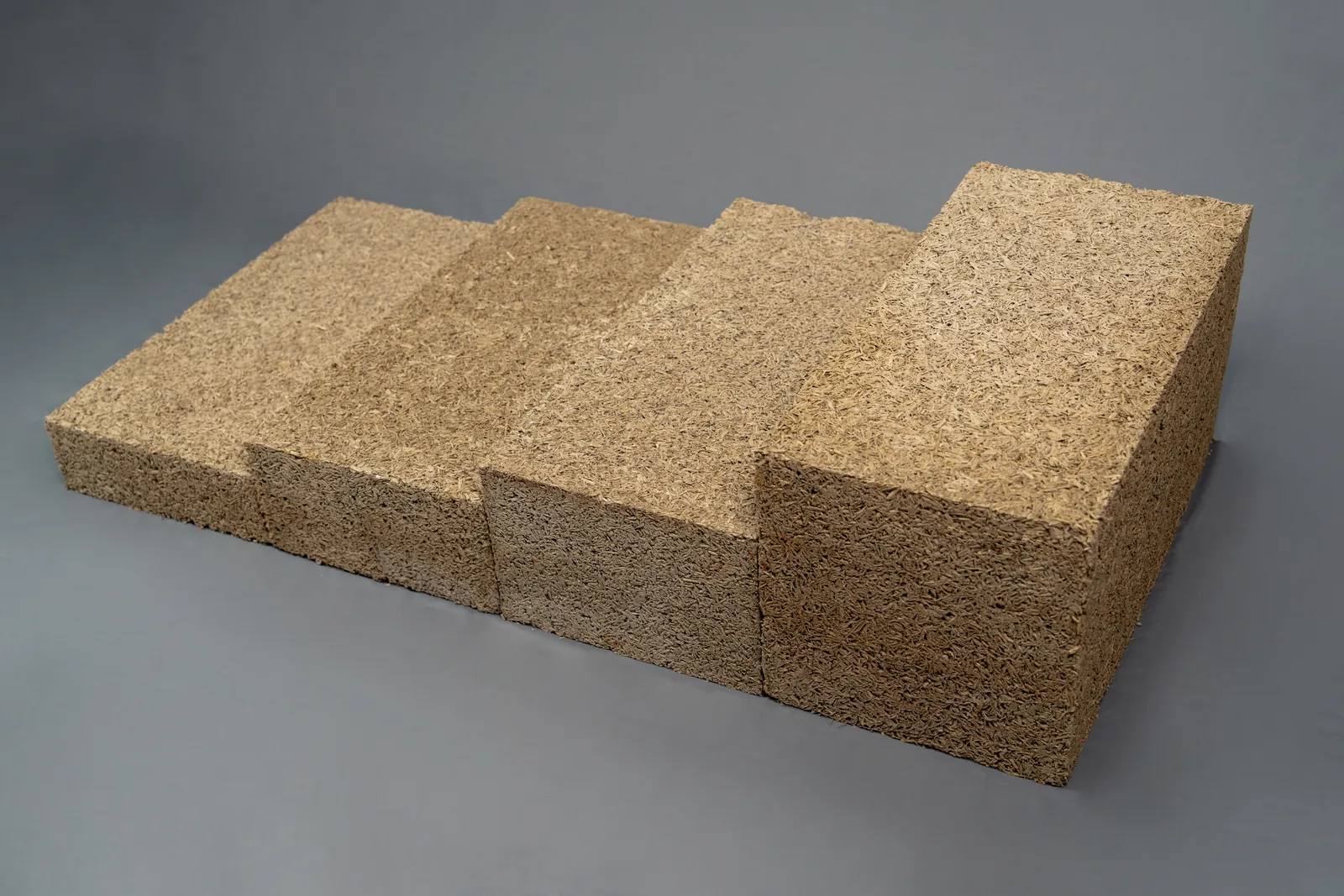
| Thickness (cm) | R dry value (m².K/W) | R in-use value (m².K/W) | Thermal lag (hours) | Block weight (kg) | Pallet quantity (m²/pallet) | Recommended uses |
|---|---|---|---|---|---|---|
| 10 | 1.5 | 1.4 | 6.1 | 6.5 | 21.6 | IWI, EWI, partitions |
| 15 | 2.3 | 2.1 | 9.25 | 10 | 14.4 | IWI, EWI, partitions |
| 20 | 3.0 | 2.8 | 12.3 | 13 | 10.8 | IWI, EWI, partitions, infill, floors |
| 30 | 4.6 | 4.2 | 18.5 | 21 | 10.08 | IWI, high-performance EWI, heavy partitions, infill, floors |
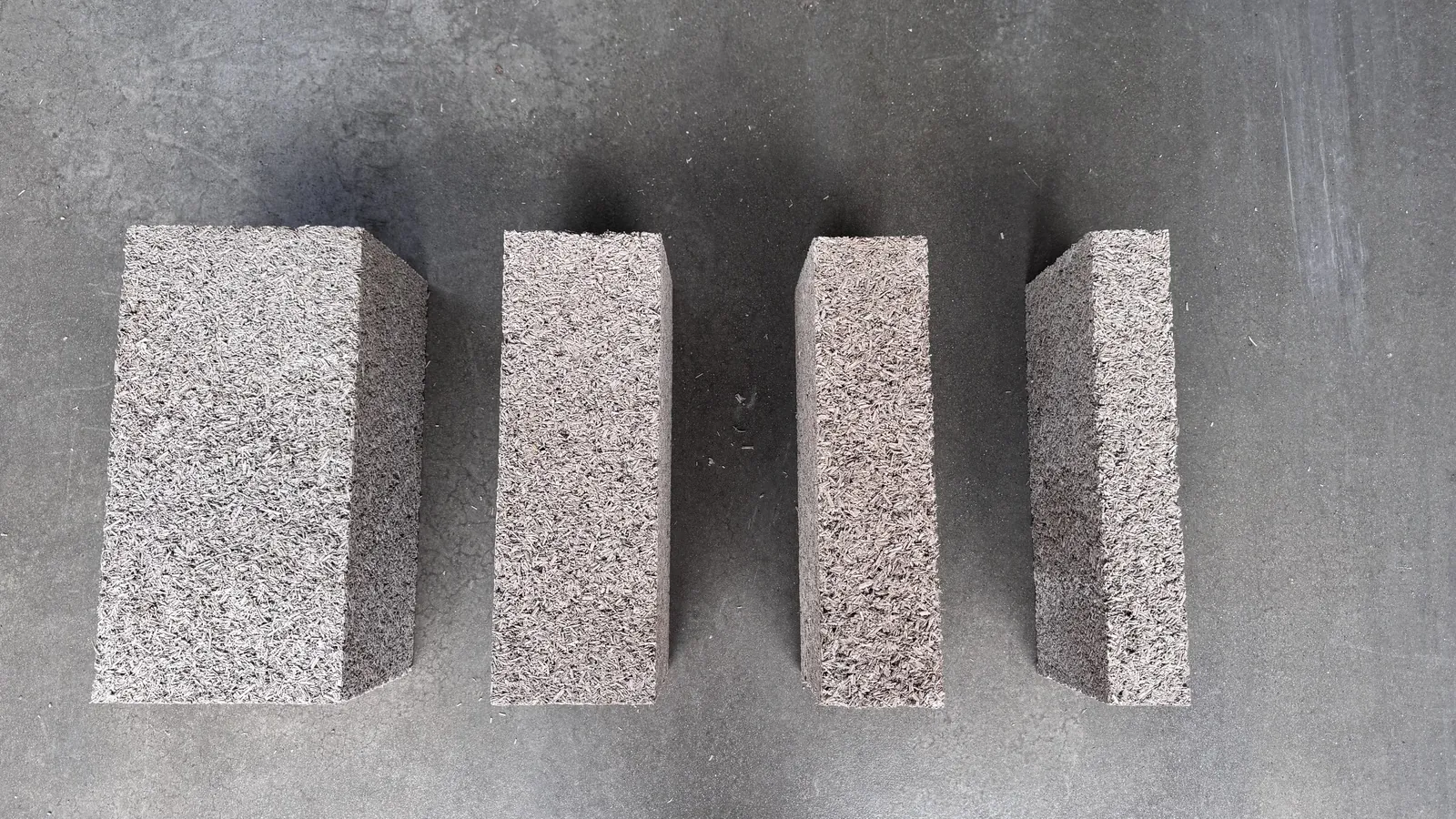
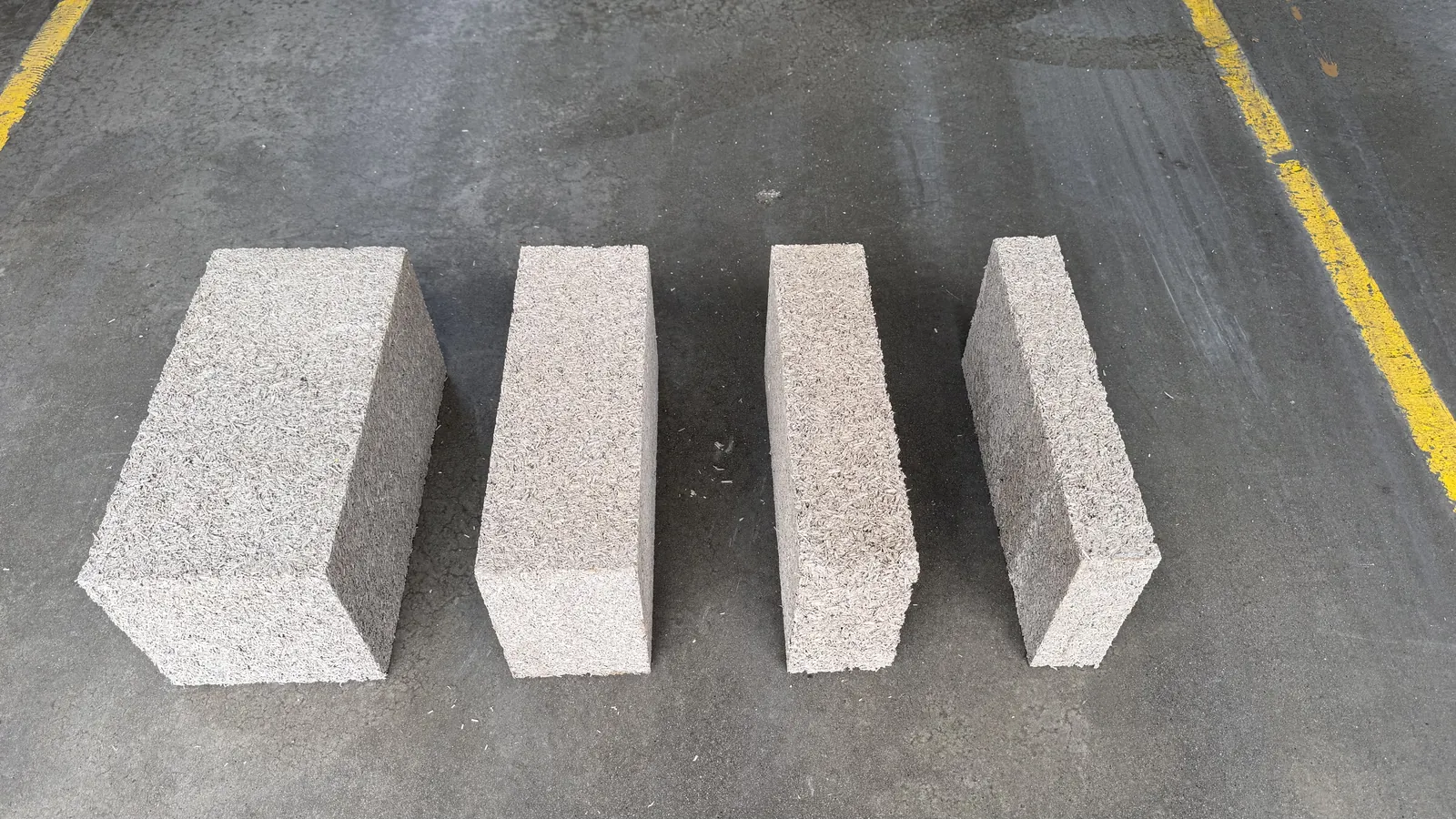
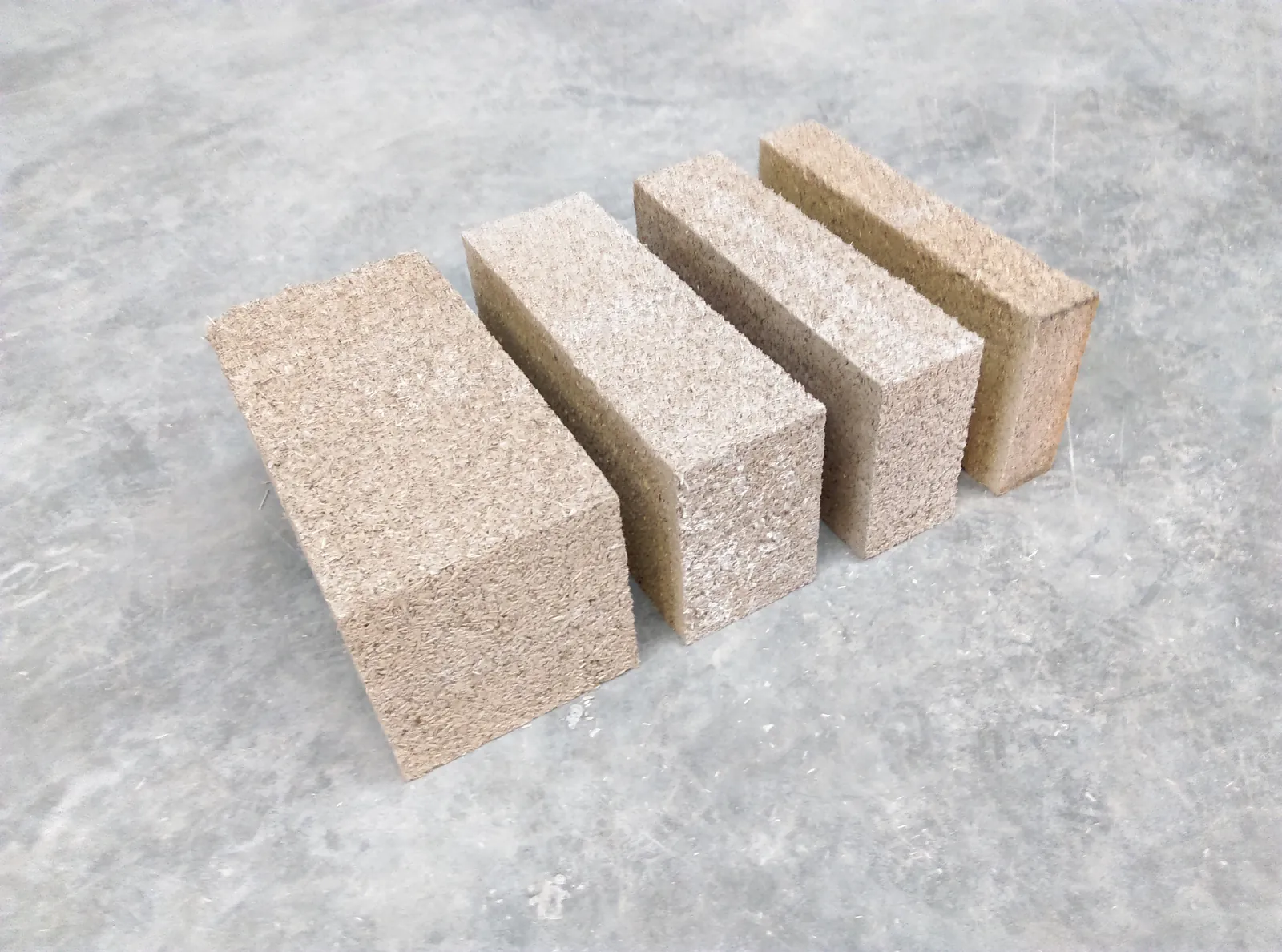
The in-use R value is the figure to use in a thermal study. The MULTICHANVRE block, available in four thicknesses from 10 to 30 cm, is suitable for a range of applications: internal wall insulation (IWI), external wall insulation (EWI), partitions, floors or timber frame infill.
Thermal lag increases with thickness, helping to improve summer comfort by delaying heat transfer through the wall. However, for the same thickness, hempcrete requires more volume than some synthetic insulators to achieve the same R value, which can mean a loss of living space for IWI. This trade-off should be considered according to project constraints.
For more information on the range and its uses, see the dedicated MULTICHANVRE page.
Natural humidity regulation and no vapour barrier required
The hemp block is vapour-open, allowing it to absorb and release moisture in response to changes in indoor and outdoor humidity. This natural regulation usually means a vapour barrier is not needed in the wall build-up.
For this function to work, at least one face of the wall must remain open to the passage of liquid water and water vapour. If an existing wall is closed, for example with a cement render on the opposite side, feasibility should be checked with a specific study.
In wet rooms or areas exposed to water splashes, hempcrete must be protected, for example with a plasterboard lining suitable for wet areas. A vapour barrier is not "never" required, but it is not part of standard recommendations.
To limit condensation and stagnant moisture, it is important that installation maintains the overall vapour permeability of the wall and that finishes are compatible with this function.
Specific installation to ensure humidity regulation
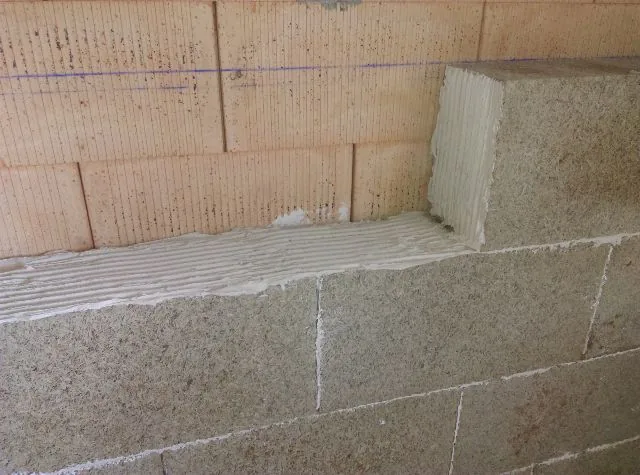
MULTICHANVRE blocks are installed in three stages:
- Apply a lime-based mortar bed (M.B.M. mortar) with a notched trowel, using thin joints of around 3 mm.
- Lay the blocks in a staggered bond, with an overlap of at least one third of the block length (20 to 40 cm), to reduce thermal bridging.
- Fix to the substrate using brackets, metal strapping or fixing discs, with 2 to 5 fixings per square metre, then apply a breathable render.
The first course is laid on a 2 cm waterproof mortar bed to provide a capillary break and level the base. For external wall insulation, this course is placed at least 15 cm above ground level, on a concrete plinth or suitable profile.
Load fixings are only permitted in 20 and 30 cm blocks:
- Up to 10 kg per fixing with 6×100 VBA screws, no pilot hole required.
- Up to 30 kg with chemical anchors (drilling, resin injection, M8 threaded rod).
- For heavier loads, the fixing must pass through the block and bear on the structural frame.
10 and 15 cm blocks are not suitable for load fixings.
Electrical services are installed by chasing and drilling, with conduits and boxes fixed and then filled with hempcrete or a compatible product for the render. For IWI, services can run in the void between the supporting wall and the lining.
Pallets must be stored sheltered and dry, and not stacked, to maintain block quality.
A comprehensive installation guide covers these steps in detail.
Comparison with other natural and synthetic insulators
| Criterion | MULTICHANVRE hemp block 10 cm | Equivalent mineral wool | Synthetic insulation |
|---|---|---|---|
| Thermal conductivity (λ) | ≈ 0.065 W/(m.K) | Generally between 0.03 and 0.04 W/(m.K) | Around 0.03 W/(m.K) |
| Thermal resistance R (10 cm) | 1.5 m².K/W (dry value) | Around 2.5 to 3 m².K/W | Around 3 m².K/W |
| Thermal lag | 6.1 h | Varies, often low | Generally low |
| Vapour permeability | Vapour-open, regulates humidity | Often low, needs vapour barrier | Impermeable, needs vapour barrier |
| Summer comfort | Good, thanks to thermal lag | Moderate | Poor |
| Thickness needed for equivalent R | Greater | Less | Less |
The hemp block therefore offers advantages in humidity regulation and summer comfort, but requires a compromise on thickness and loss of living space for IWI applications. For a suitable choice, see the technical comparison available on our website.
Compatible finishes and maintenance for hemp block insulated walls
Hemp block surfaces should be protected with breathable renders that allow moisture exchange:
- Lime renders for both interior and exterior
- Clay renders for interiors
- Sprayed plaster or plasterboard for interiors, especially in wet areas
Impermeable coatings that block vapour permeability should be avoided, as they compromise natural regulation.
Maintenance is minimal: a hemp block insulated wall requires no special care apart from checking the condition of the render. Durability will depend on protection from water and quality of installation.
For wet rooms, specific precautions are recommended, such as suitable linings or mechanical protection, to prevent direct water exposure.
For further details, refer to our compatible renders guide.
Limits and precautions when using a natural humidity-regulating insulator
The hemp block is not structural: it must always be combined with a load-bearing structure (post-and-beam, supporting wall, timber frame, etc.). This constraint must be considered from the design stage.
For IWI, the loss of living space due to block thickness is a real trade-off, especially when aiming for high thermal resistance. The block requires more thickness than mineral wool for an equivalent R value.
Poor installation can impair humidity regulation, for example if joints are not properly made, if the render is not vapour-open, or if the block is exposed to prolonged water contact.
The hemp block is not intended for use in roofs, pitched ceilings or lofts. Only the BIOSYS U ring beam block is used for forming gable slopes in masonry.
Finally, every application should be validated by a suitable thermal study to ensure regulatory compliance and expected performance.
For more on these aspects, see our resources on breathable insulation installation and composition and characteristics of hemp blocks.
Frequently asked questions
Does a hemp block need a vapour barrier to regulate humidity?
No, hempcrete naturally regulates indoor humidity thanks to its vapour permeability. A vapour barrier is not needed if the wall build-up keeps one face open to water and vapour exchange.
What is the benefit of thermal lag for humidity regulation?
Thermal lag is the time it takes for heat to pass through the material. High thermal lag helps limit indoor temperature swings and indirectly helps stabilise humidity.
Can heavy loads be fixed to hemp insulation blocks?
Loads up to 10 kg can be fixed with 6×100 VBA screws without pre-drilling in 20 and 30 cm blocks. For loads up to 30 kg, chemical anchors are required. For heavier loads, fixings must be anchored to the structural frame.
How are electrical services installed in a hemp block wall?
Chases are cut with a wall chaser, holes with a hole saw. Conduits and boxes are fixed and then filled with hempcrete or a product compatible with the finishing render.
Can hemp blocks be used for external wall insulation without moisture risk?
Yes, for external wall insulation the block greatly reduces thermal bridging and regulates humidity, but it must be protected with a breathable lime render. Installation must follow best practice to prevent water ingress.
What is the typical density of a MULTICHANVRE block?
The approximate density of the MULTICHANVRE block is 300 kg/m³.
Are hemp blocks rot-proof?
The block is not rot-proof. It must be stored sheltered and dry, and not exposed to prolonged contact with water to ensure its durability.
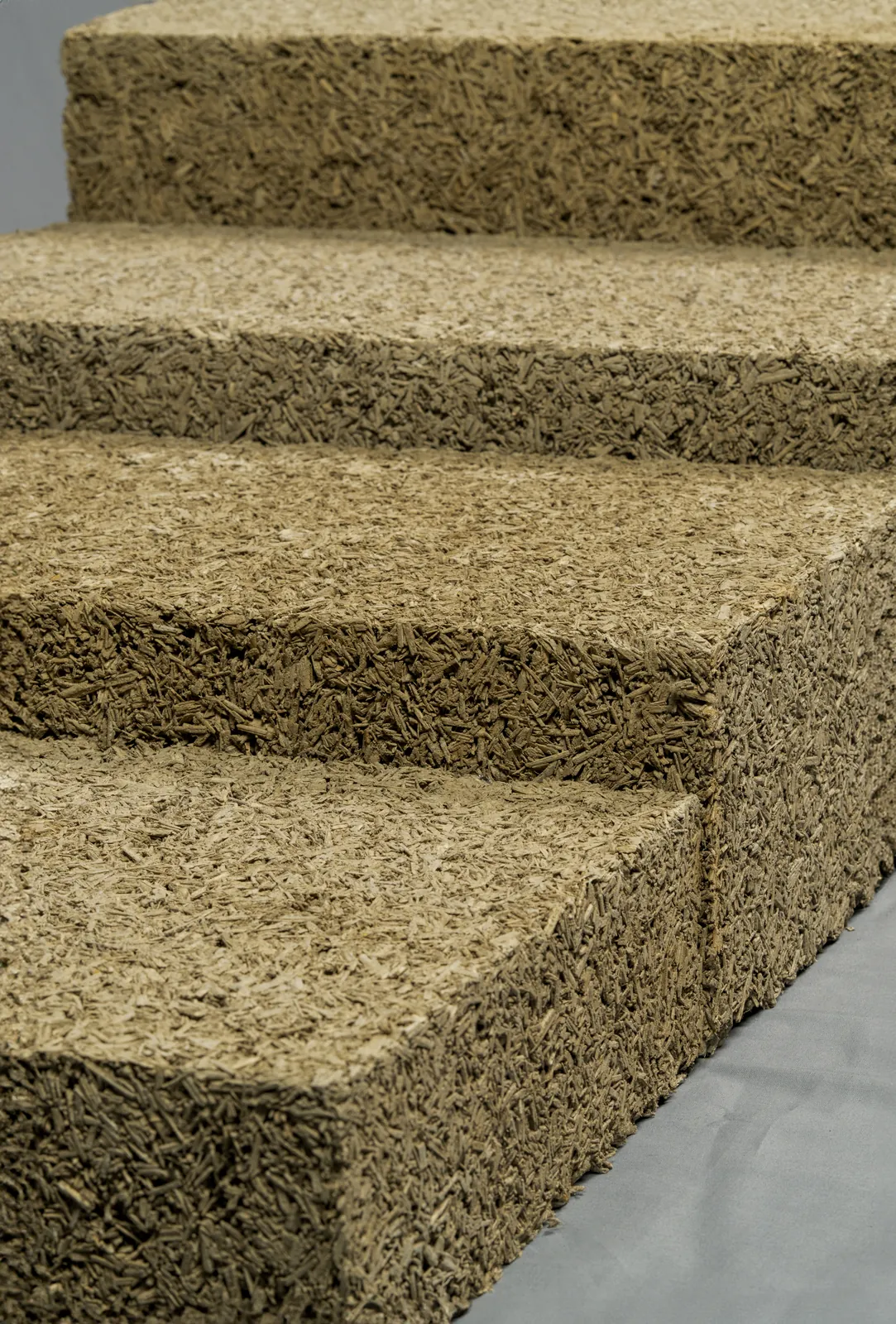
The MULTICHANVRE range in pictures
Read next
Planning a hemp block project?
Tell us about your project: we will reply within 48 working hours with a tailored costing.