Hemp block or rock wool: technical guide and product features
The hemp block, made from hemp shiv and natural binder, provides thermal, acoustic and moisture-regulating insulation. Compared to rock wool, it has a higher density and greater thermal lag, making it suitable for internal and external wall insulation, partitions and floors. Installation requires a specific mortar and a supporting structure.
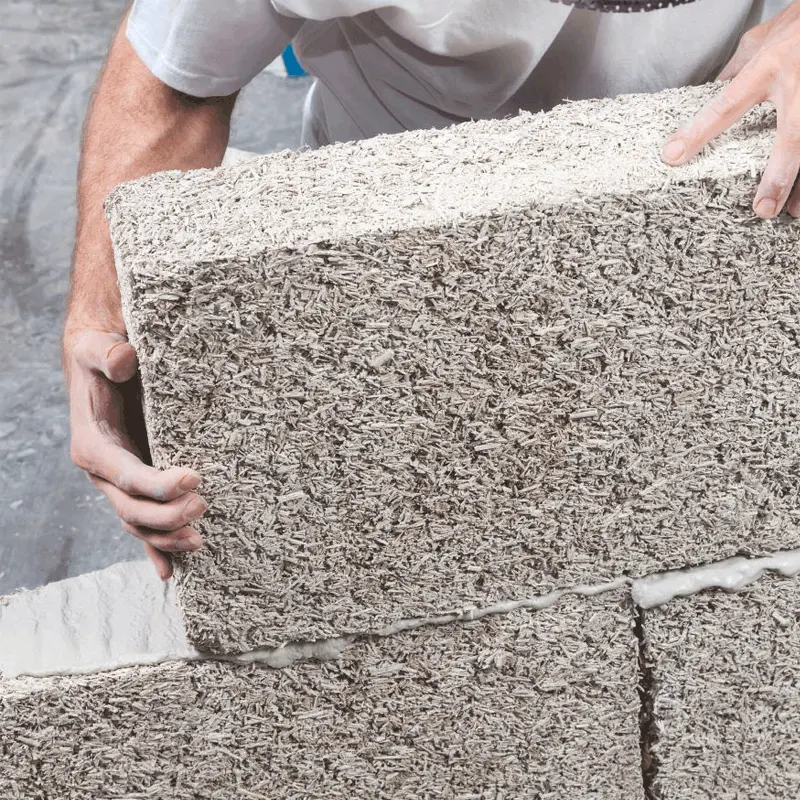
| Range | MULTICHANVRE |
|---|---|
| Format | 60 × 30 × 10 cm / 15 cm / 20 cm / 30 cm |
| Thermal conductivity λ | 0.065 W/(m.K) |
| Density | ≈ 300 kg/m³ |
| Thermal resistance R | Dry R 1.5 to 4.6 / Effective R 1.4 to 4.2 m².K/W depending on thickness |
| Installation | Internal and external wall insulation, partitions, floors, timber frame |
The hemp block, made from hemp shiv and natural cement, provides thermal, acoustic and moisture-regulating insulation. Compared to mineral wool, it has a higher density and greater thermal lag, making it suitable for internal and external wall insulation (IWI/EWI), partitions and floors. Installation requires a specific mortar and a supporting structure.
Definition and composition of the hemp block
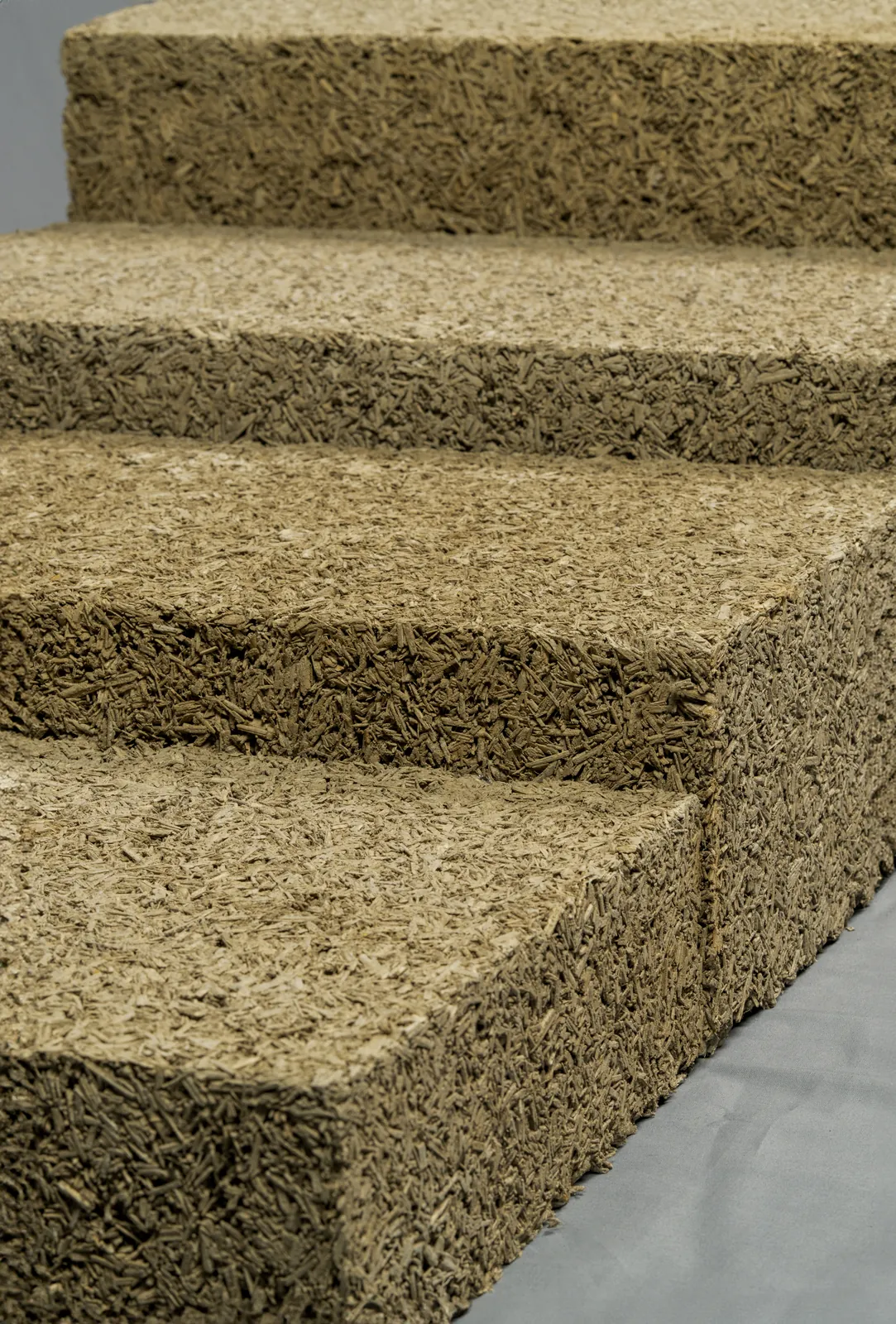
The hemp block is a composite material made primarily from hemp shiv—the woody core of the hemp stem—combined with a vapour-open hydraulic binder, Vicat natural prompt cement. The mix contains around 84% hemp shiv, which gives the block its insulating and hygrothermal properties. All raw materials are sourced in France, from the local Bourgogne-Franche-Comté supply chain, ensuring local manufacturing at our Mérey-sous-Montrond (Doubs) plant.
This block has a dry thermal conductivity of around 0.065 W/(m·K) and a density of about 300 kg/m³. These characteristics provide effective thermal insulation and reasonable thermal mass, with a notable thermal lag of up to 18.5 hours for the thickest block. The material also naturally regulates indoor humidity, maintaining a stable moisture level within a comfortable range.
The hemp block is rated B-s1,d0 for fire reaction, meaning it is not easily combustible and produces little smoke. Its formulation ensures an A+ indoor air quality rating, and it is naturally resistant to rodents, pests and mould, with no need for additional treatment.
Technical data: sizes and thermal resistance
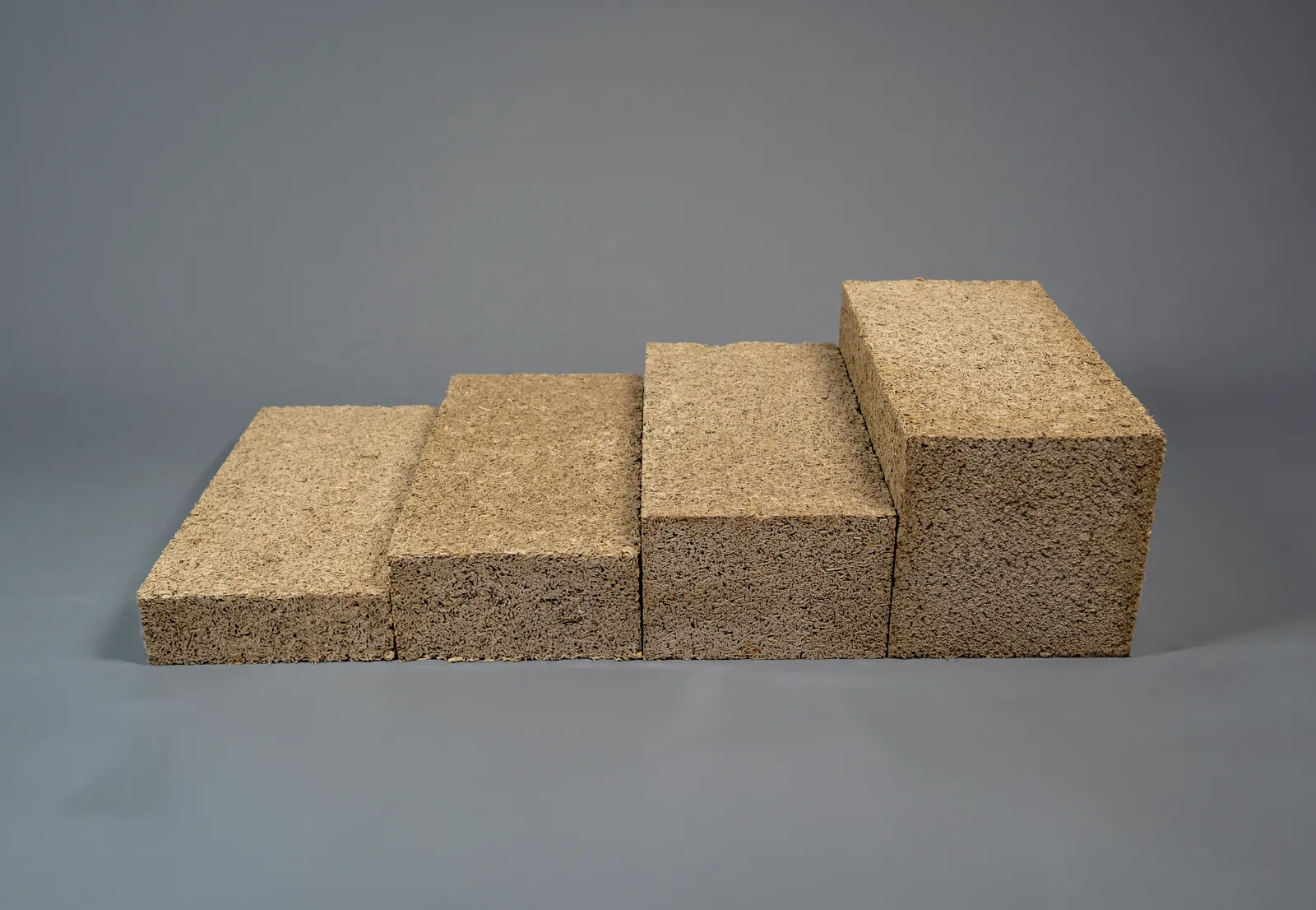
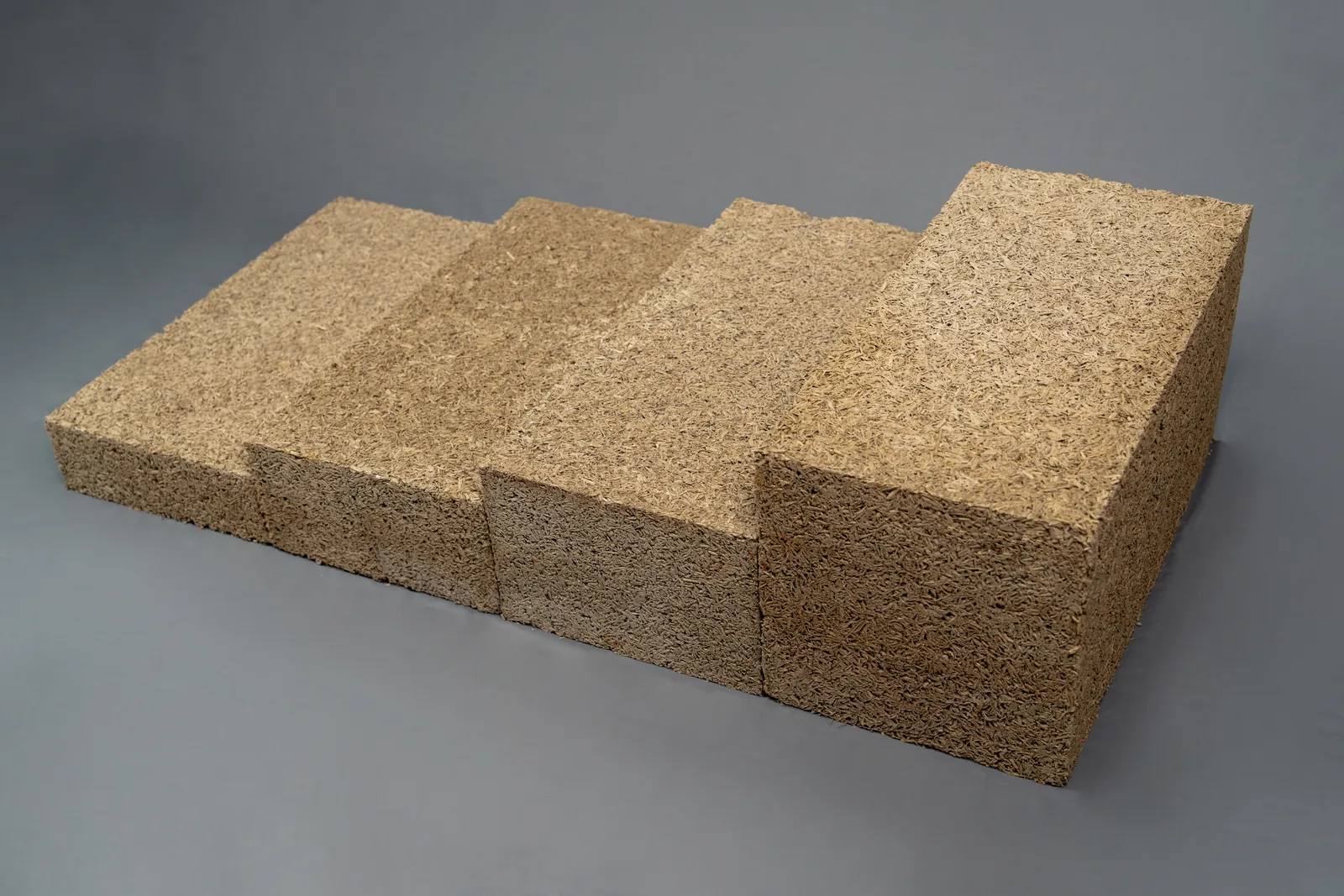
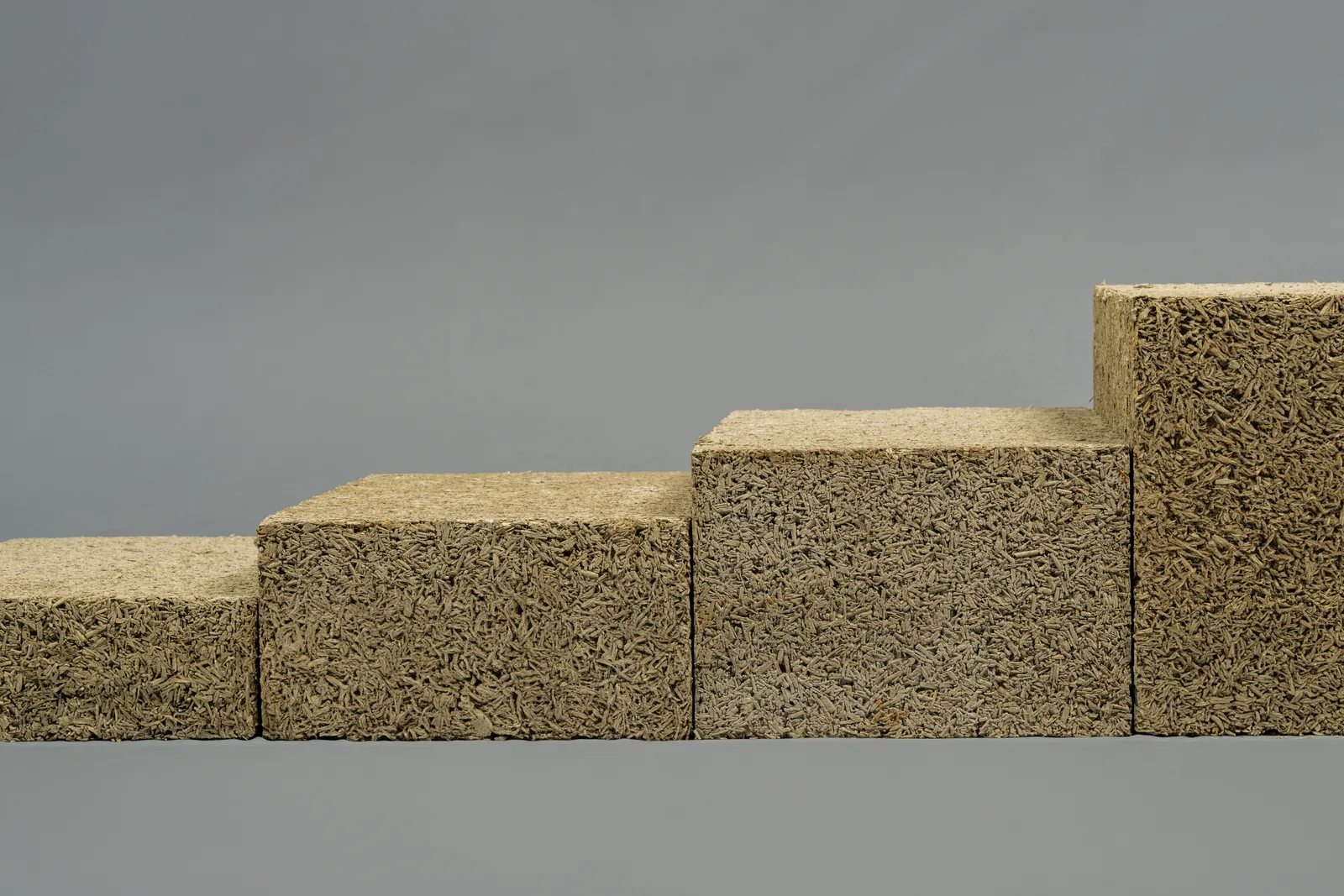
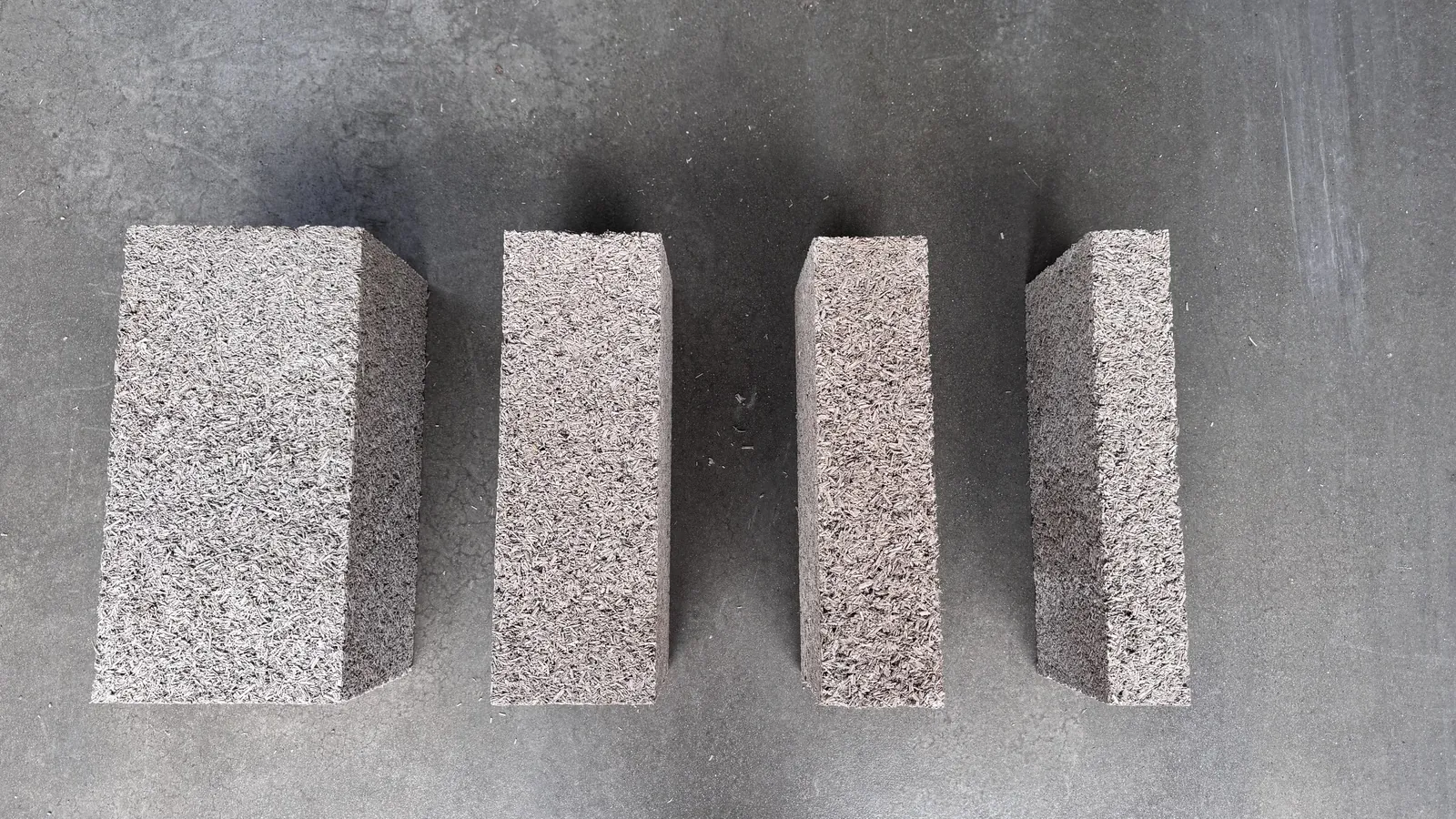
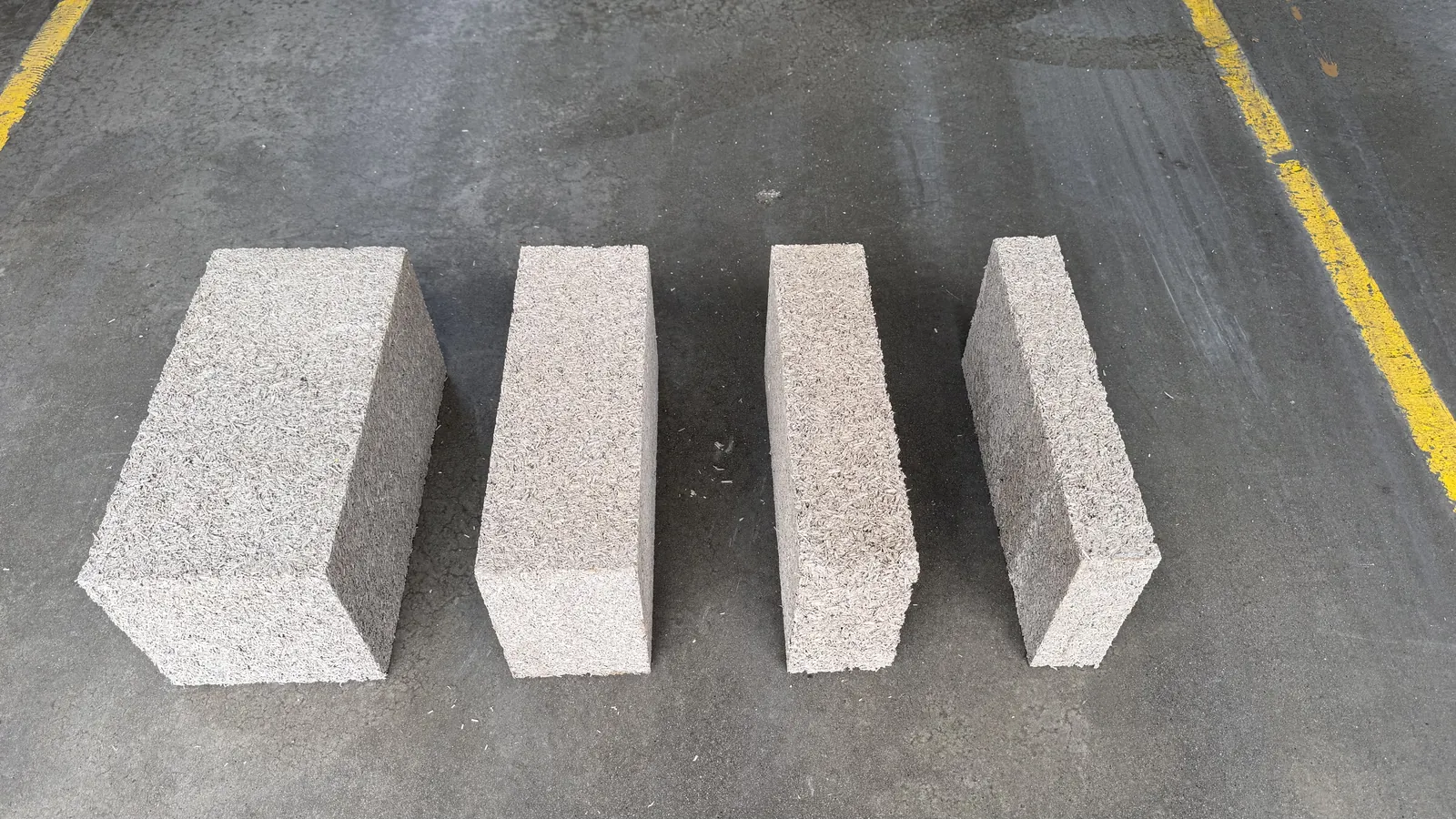
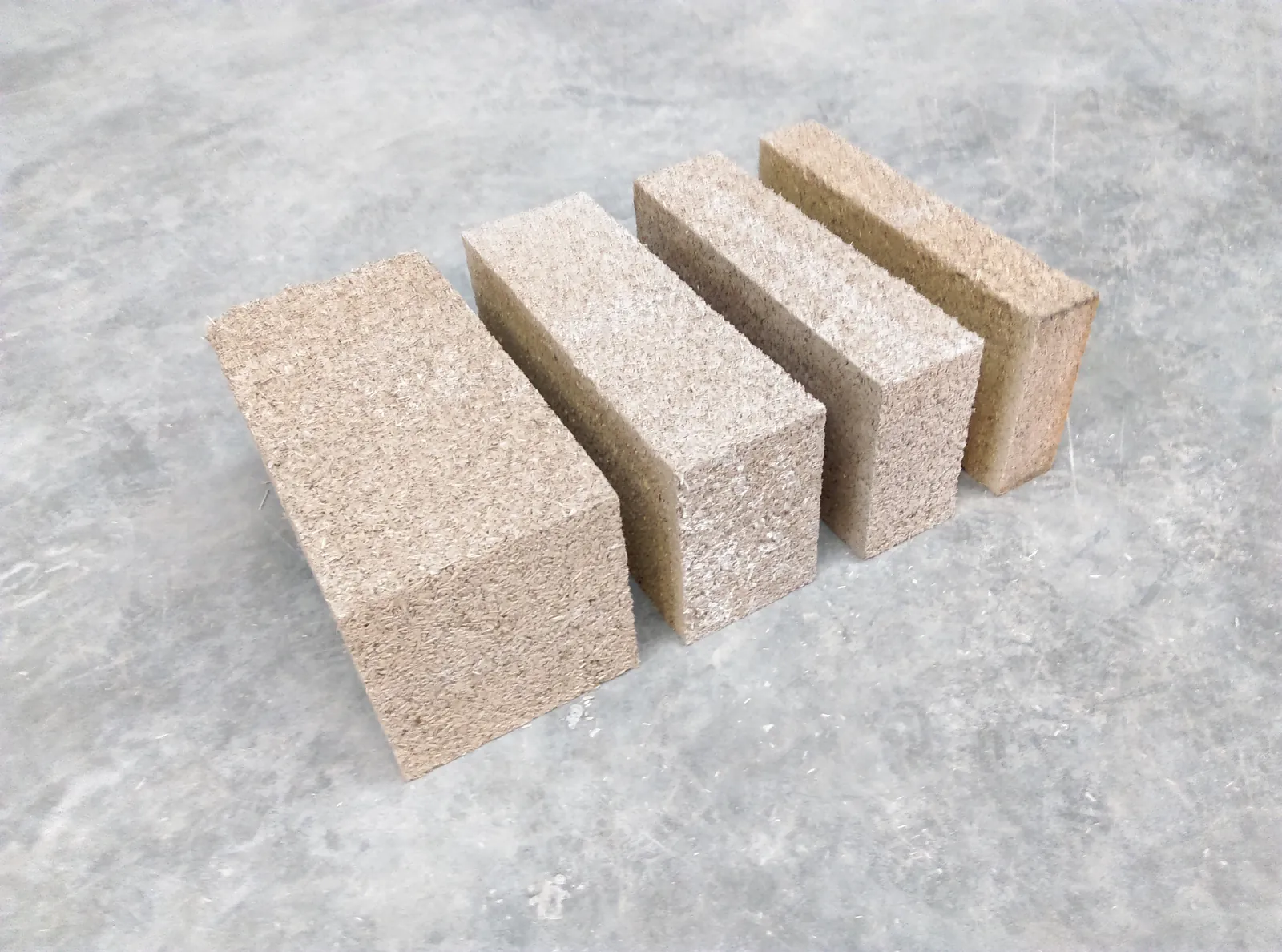
Our MULTICHANVRE range consists of straight-edged blocks in a standard 60 × 30 cm format, available in four thicknesses: 10, 15, 20 and 30 cm. Each thickness offers a different level of thermal resistance, measured in m²·K/W, given as both dry value (R dry) and in-use value (R in-use) for thermal studies. The in-use value reflects real-world conditions, while the dry value is measured in the lab.
| Thickness (cm) | R dry (m²·K/W) | R in-use (m²·K/W) | Thermal lag (h) | Block weight (kg) | Pallet quantity (blocks & m²) | Recommended use |
|---|---|---|---|---|---|---|
| 10 | 1.5 | 1.4 | 6.1 | 6.5 | 120 blocks - 21.6 m² | IWI / EWI |
| 15 | 2.3 | 2.1 | 9.25 | 10 | 80 blocks - 14.4 m² | IWI / EWI / partitions |
| 20 | 3.0 | 2.8 | 12.3 | 13 | 60 blocks - 10.8 m² | Standard internal and external wall insulation (IWI/EWI) |
| 30 | 4.6 | 4.2 | 18.5 | 21 | 56 blocks - 10.08 m² | High-performance EWI and new-build construction |
Recommended uses vary by thickness, from internal and external insulation (10 cm), to partitions (15 cm), and then to IWI and EWI applications for 20 and 30 cm blocks respectively. Please note that the MULTICHANVRE range does not currently have a technical assessment, although an ATEx case A (French technical experiment approval) for IWI is in progress.
For more technical details, see our MULTICHANVRE product data sheets and the full catalogue.
Technical comparison: hemp block vs mineral wool
Hemp blocks and mineral wool are two very different insulating materials. The density of the hemp block, around 300 kg/m³, is much higher than that of mineral wool, which is lighter and more compact. This directly affects the material’s thermal mass, with hemp blocks providing a greater ability to store and release heat, improving summer comfort.
The thermal conductivity of the hemp block is about 0.065 W/(m·K), which is generally higher than mineral wool. As a result, to achieve the same thermal resistance, a thicker hemp block is needed, which can reduce usable floor area for internal wall insulation.
Thermal lag is another key difference: hemp blocks offer a much greater lag, up to 18.5 hours for 30 cm thickness, compared to generally lower values for mineral wool. This helps limit temperature fluctuations inside buildings.
Beyond thermal performance, hemp blocks naturally regulate humidity and deliver A+ indoor air quality, thanks to their composition and vapour permeability. Mineral wool is less effective in these areas.
In terms of durability, hemp blocks are naturally resistant to rodents and mould, while mineral wool may require additional protection. Each material has its own suitable uses and limitations, depending on the project and client requirements.
A visual comparison between the two materials helps illustrate the differences in volume and density, useful for technical decision-making. For more detail, see our hemp block vs glass wool comparison.
Uses and installation of hemp blocks
The MULTICHANVRE hemp block is suitable for a range of construction and renovation uses:
- Internal and external wall insulation (IWI/EWI), with thicknesses chosen for the required performance;
- Lightweight partitions and interior separations;
- Floor insulation under screed, using the 10 cm version;
- Timber frame infill, providing both insulation and thermal mass.
Installing MULTICHANVRE blocks involves three steps: first, apply a lime-based mortar with a notched trowel; next, lay the blocks in a staggered bond to reduce thermal bridging; finally, fix the blocks to the substrate with brackets (about two per square metre) before applying a compatible render. This sequence is specific to the MULTICHANVRE range and does not apply to the BIOSYS system.
It is important to note that hemp blocks are not load-bearing. They must always be combined with a supporting structure, whether that’s a backing wall, timber frame, or reinforced concrete post-and-beam structure for BIOSYS.
For finishing, compatible interior plasters include spray plaster, lime, earth or clay. For exterior use, lime-rich renders are recommended to maintain breathability and durability.
Pallets of blocks should be stored under cover, in a dry place, and not stacked, to avoid moisture and damage. While the block is naturally resistant to rodents, it is not rot-proof and must be protected during storage.
For detailed installation guidance and technical advice, see our hemp block installation guide.
Insulation performance: side-by-side figures
| Characteristic | Value for MULTICHANVRE hemp block | Notes |
|---|---|---|
| Thermal conductivity λ | ≈ 0.065 W/(m·K) | Measured in dry state |
| Thermal resistance R dry | 1.5 to 4.6 m²·K/W depending on thickness (10 to 30 cm) | R in-use is slightly lower; use for thermal studies |
| Thermal resistance R in-use | 1.4 to 4.2 m²·K/W depending on thickness | Recommended value for thermal calculations |
| Thermal lag | 6.1 h (10 cm) to 18.5 h (30 cm) | Time delay for heat transfer |
| Density | ≈ 300 kg/m³ | Average block weight 6.5–21 kg depending on thickness |
| Pallet quantity | 24 to 120 blocks per pallet depending on thickness | Coverage per pallet: 10.08 to 21.6 m² |
These figures illustrate the thermal and physical performance of hemp blocks, essential for sizing insulation to project needs. For further information, our comprehensive technical guide covers these characteristics in detail.
Limitations and technical considerations
Several constraints must be considered when using hemp blocks:
- The block should not be considered load-bearing; it does not support structural loads. A supporting structure must always be planned in advance.
- To achieve the same thermal resistance as mineral wool, a thicker hemp block is needed, which may reduce usable floor area for internal wall insulation (IWI).
- Pallets must be stored under cover, in a dry place, and not excessively stacked (no piling), as the block is not rot-proof despite its natural resistance to rodents.
- The MULTICHANVRE range does not yet have a technical assessment or certified approval, so extra care is needed and you should consult our technical team for validation.
- Even bonded masonry joints remain minor thermal bridges, which should be minimised wherever possible.
- If in doubt about design or installation, a thermal study and advice from our technical team are recommended.
Finishing options and compatibility
Finishes applied to hemp block walls must be vapour-open to preserve the material’s hygrothermal properties:
- For interiors, compatible plasters include spray plaster, lime-based plasters, earth and clay. These materials allow good vapour diffusion and help regulate humidity.
- For exteriors, lime-rich renders are recommended to protect the block while maintaining breathability. These should be applied with full mesh reinforcement for adhesion and durability.
- Hemp blocks can also be directly chased for electrical conduits, making it easy to run services without damaging the insulation.
Careful application of finishes is essential to ensure the long-term appearance and performance of hemp block constructions. Detailed recommendations are available in our guide to compatible renders for hemp blocks.
Choosing between hemp block and mineral wool
The choice between hemp block and mineral wool depends on several technical and practical factors:
- Thermal mass: Hemp block has a higher density, providing greater thermal lag and improved comfort during hot weather.
- Thickness and usable space: Mineral wool is more compact, allowing thinner insulation and minimising loss of floor area for IWI.
- Weight: Mineral wool is lighter, which can make handling and installation easier in some situations.
- Moisture regulation: Hemp block naturally regulates humidity and improves indoor air quality, unlike the more vapour-tight mineral wool.
- Durability: Hemp block is naturally resistant to rodents and mould, while mineral wool can be vulnerable if not protected.
- Installation requirements: Hemp block needs a specific mortar and supporting structure, while mineral wool is usually installed as panels or rolls with lighter systems.
Each material has its own strengths and limitations, depending on the project’s requirements. We recommend consulting our technical team for advice tailored to your thermal, structural and practical needs.
Requesting a quote and advice before ordering
We guarantee a commercial response within 48 working hours for all quote requests. Sales are handled through our network of partner builders’ merchants, with delivery available throughout France.
Before ordering, it’s important to clearly define the intended use, required thickness and site constraints. We recommend reviewing our technical guides and product data sheets to help plan your project.
Indicative prices start at around €35/m² incl. VAT for 10 cm blocks, with prices increasing for greater thicknesses. These are guide prices and must be confirmed with a personalised quote.
For all enquiries, please request a hemp block quote directly on our website.
Frequently asked questions
What is the main difference between a hemp block and mineral wool?
The hemp block is a composite material made from hemp shiv and natural cement, offering superior thermal mass and moisture regulation. Mineral wool is lighter and thinner for the same thermal resistance, but less effective for thermal lag.
Can a hemp block be installed directly without a supporting structure?
No, hemp blocks are not load-bearing. They must be combined with a supporting structure, such as a backing wall, timber frame or post-and-beam structure.
What are the recommended uses for MULTICHANVRE hemp blocks?
MULTICHANVRE blocks are suitable for internal and external wall insulation, partitions, floor insulation under screed, and timber frame infill, with thicknesses chosen to suit the application.
How are MULTICHANVRE hemp blocks installed?
Installation involves applying a lime-based mortar with a notched trowel, laying the blocks in a staggered bond, fixing them to the substrate with brackets, and finally applying a compatible render.
Are hemp blocks resistant to rodents?
Yes, hemp blocks are naturally resistant to rodents, pests and mould, thanks to their formulation and physical properties.
What finishes are compatible with hemp blocks?
Compatible interior finishes include spray plaster, lime, earth or clay, while exterior finishes should use lime-rich renders.
What factors should be considered when choosing between hemp block and mineral wool?
Consider density, thermal lag, compactness, moisture regulation, impact on usable space, durability and installation requirements.
The MULTICHANVRE range in pictures
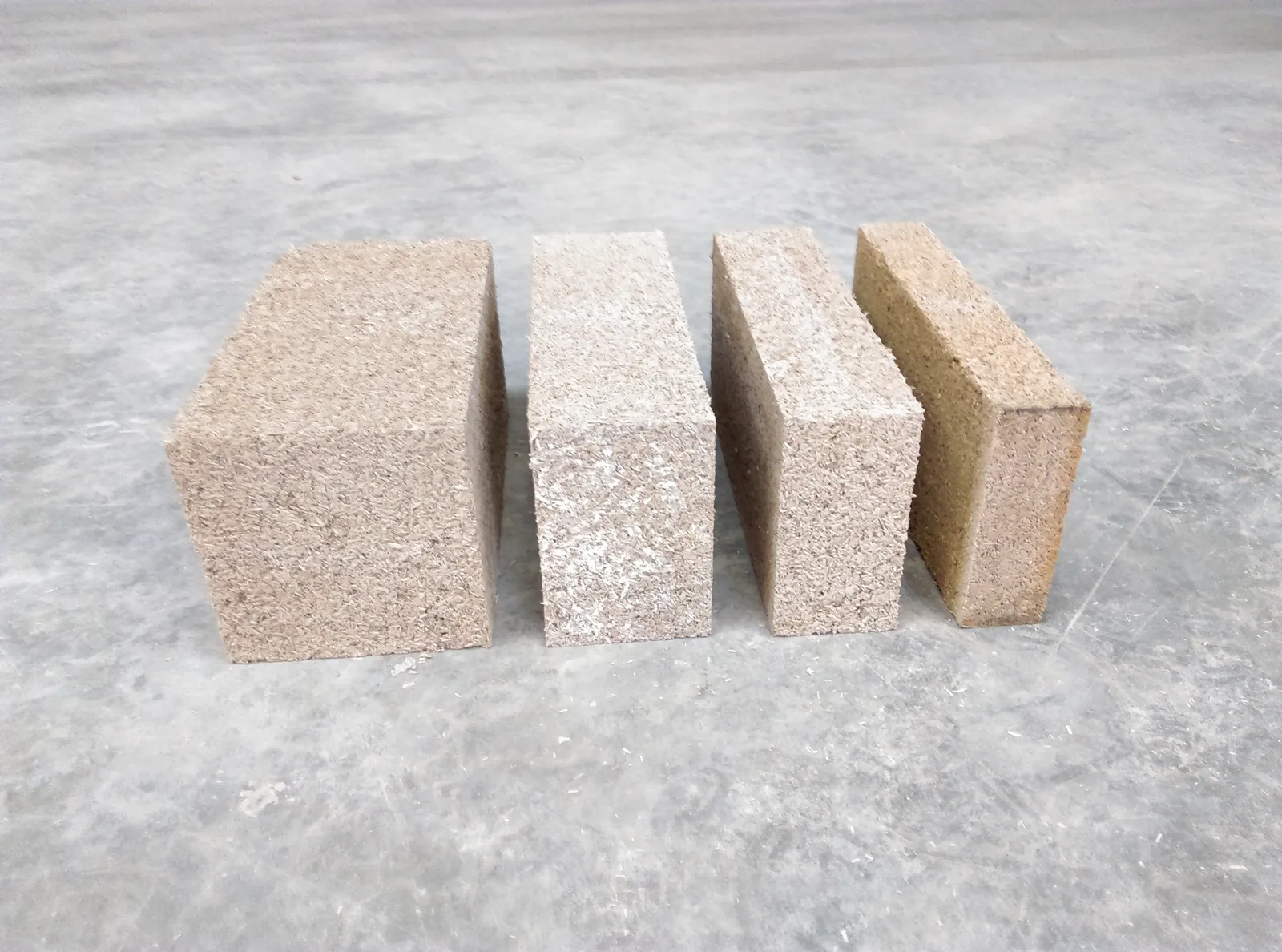
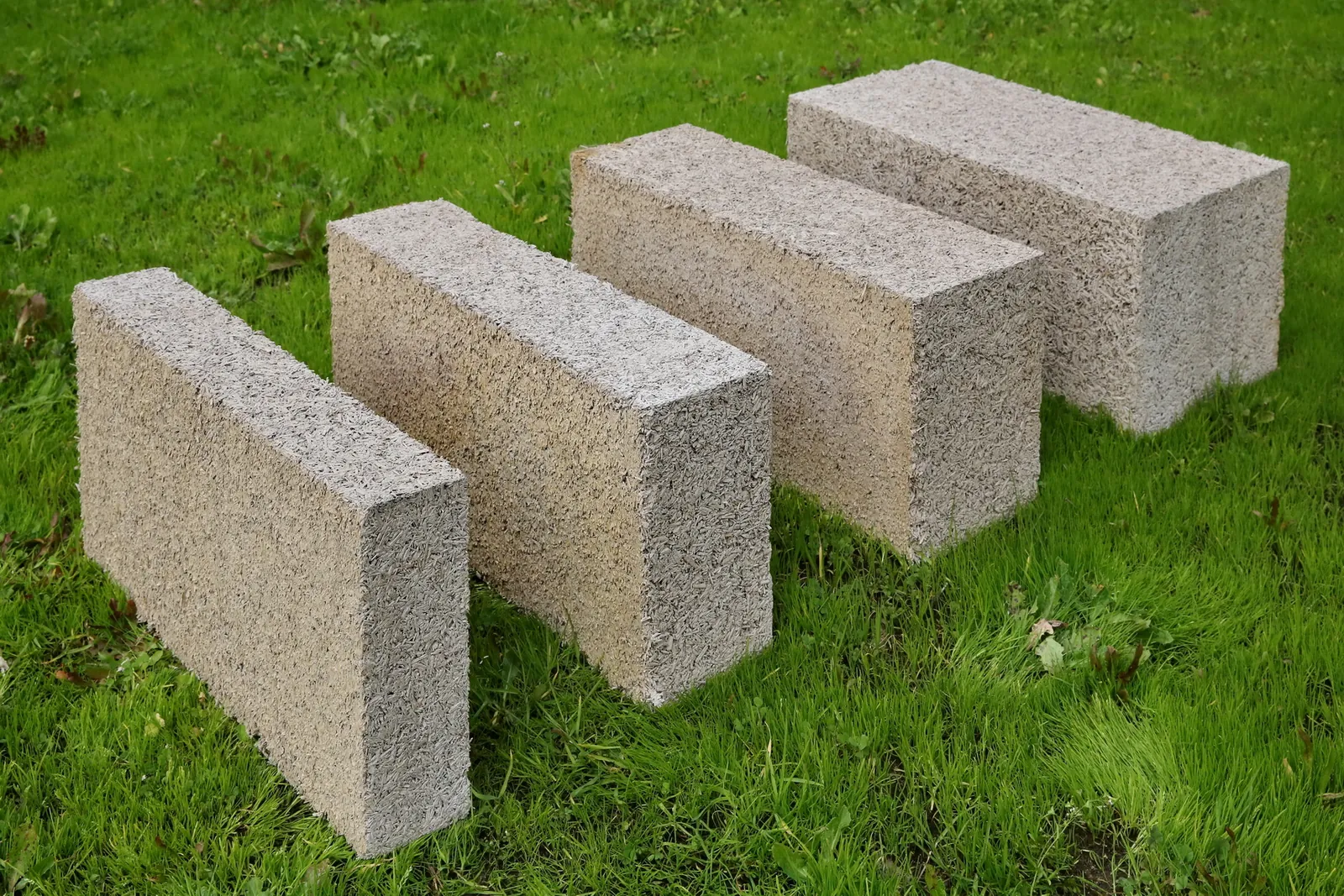
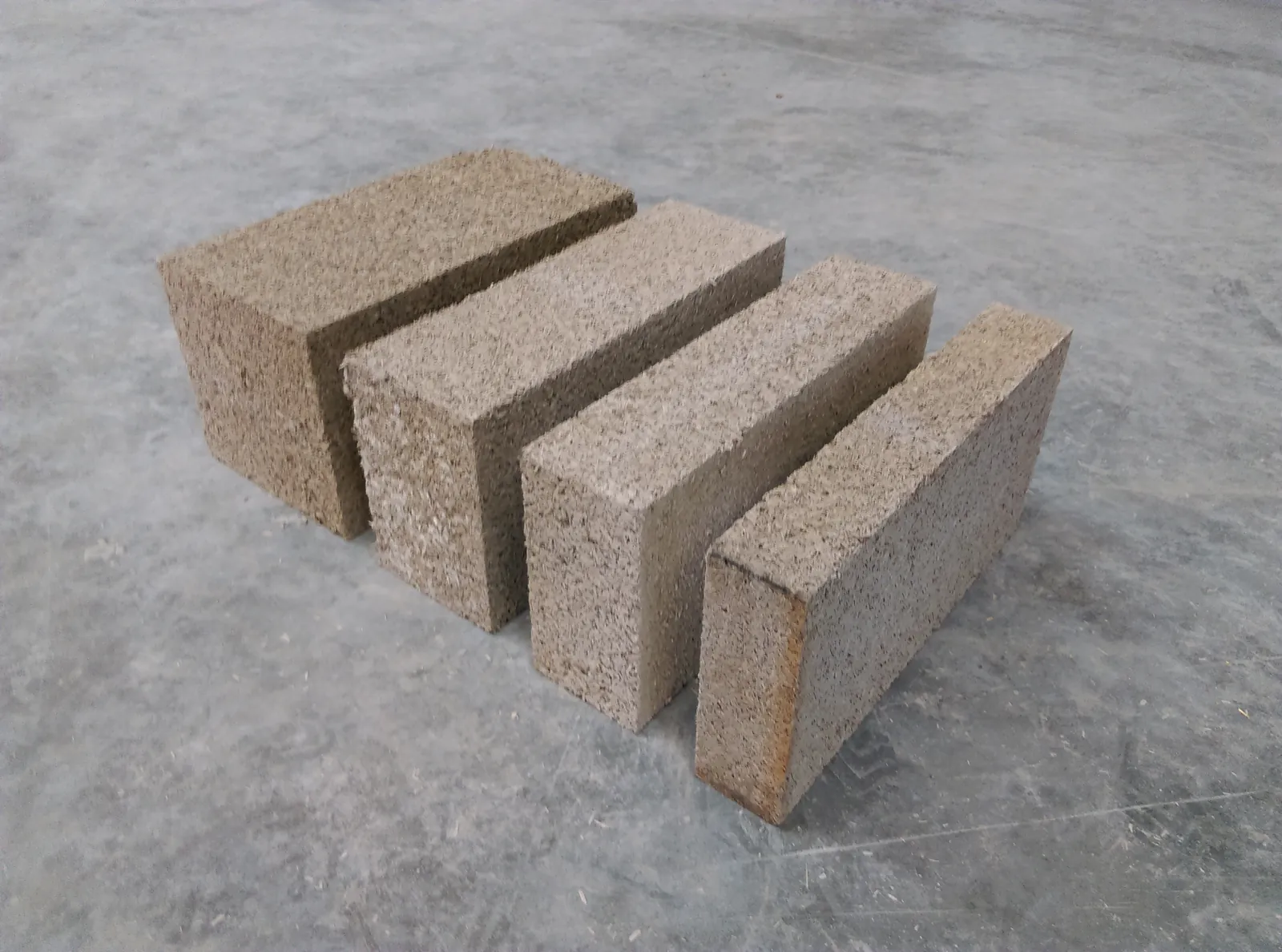
Read next
Planning a hemp block project?
Tell us about your project: we will reply within 48 working hours with a tailored costing.