Insulating damp walls with hempcrete blocks
Thanks to their vapour permeability and moisture regulation, hempcrete blocks are well suited to insulating damp walls. They reduce the risk of condensation, can be used for both internal and external wall insulation, and require careful installation with compatible renders to ensure long-term performance.
| Range | MULTICHANVRE |
|---|---|
| Format | 60 × 30 cm, thickness varies |
| Thermal conductivity λ | 0.065 W/(m.K) |
| Density | 300 kg/m³ |
| Thermal resistance R | Dry R-value 1.5 to 4.6 m².K/W depending on thickness |
| Installation | Internal insulation, external insulation, partitions, floors, timber frame |
Thanks to its vapour permeability and ability to regulate humidity, the hempcrete block is well suited for insulating damp walls. It reduces the risk of condensation, can be used for both internal (IWI) and external (EWI) wall insulation, and requires careful installation with compatible renders to ensure long-term performance and durability.
Understanding damp wall insulation
Damp walls are characterised by the presence of moisture from various sources: rising damp, water ingress, internal condensation or waterproofing defects. This moisture can cause problems such as material deterioration, mould growth, and a decline in the building’s thermal and sanitary performance.
Poor insulation in this context can make these issues worse by trapping moisture within the wall, leading to comfort and durability problems. It is therefore essential to adopt an insulation strategy that respects vapour permeability, allowing moisture to diffuse and preventing internal condensation.
Effective insulation for damp walls is based on several principles: using a vapour-open material that can regulate relative humidity, and ensuring installation methods that maintain the overall breathability of the wall. Hempcrete blocks meet these criteria, offering a solution compatible with walls exposed to high levels of moisture.
Technical characteristics of hempcrete blocks for damp walls
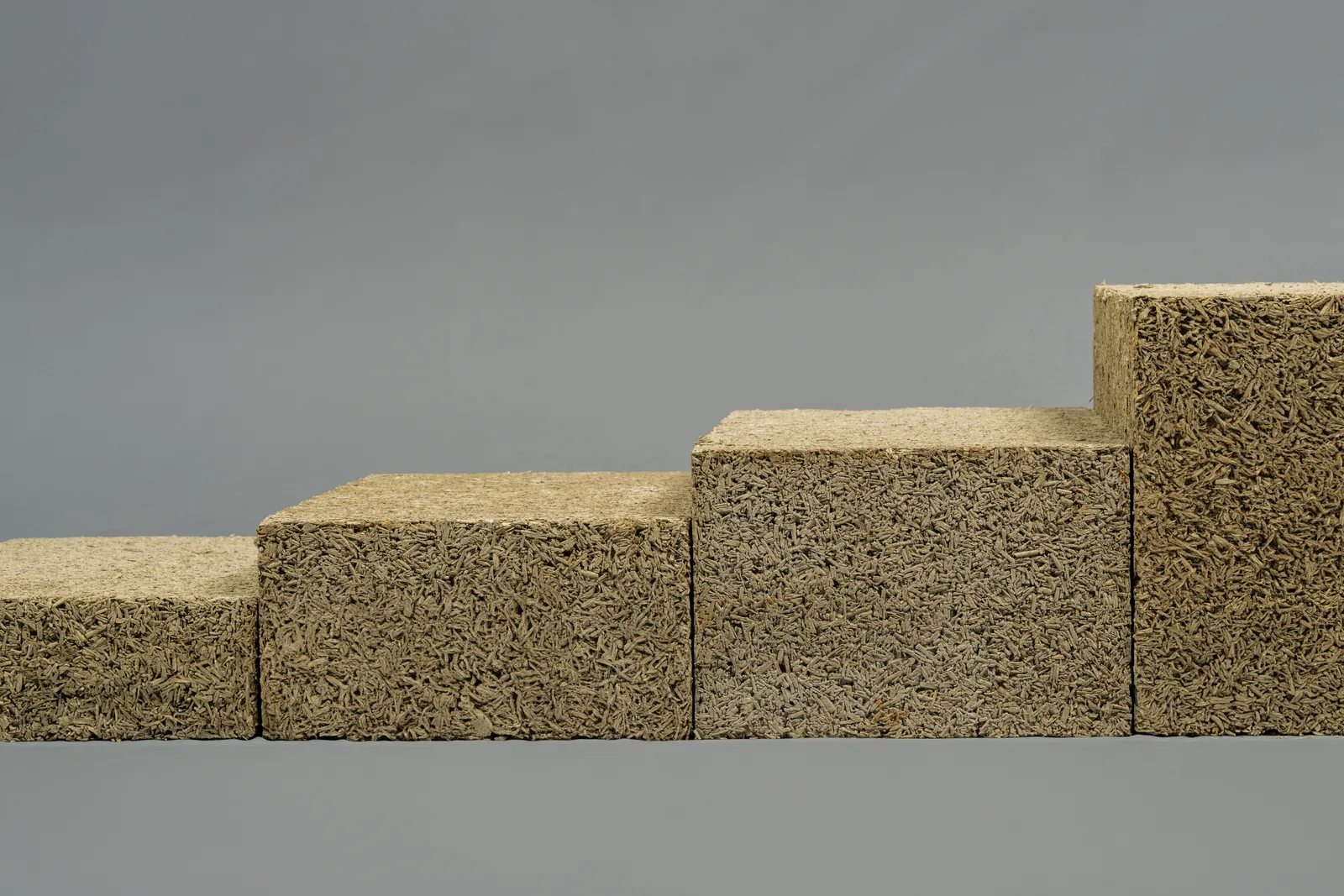
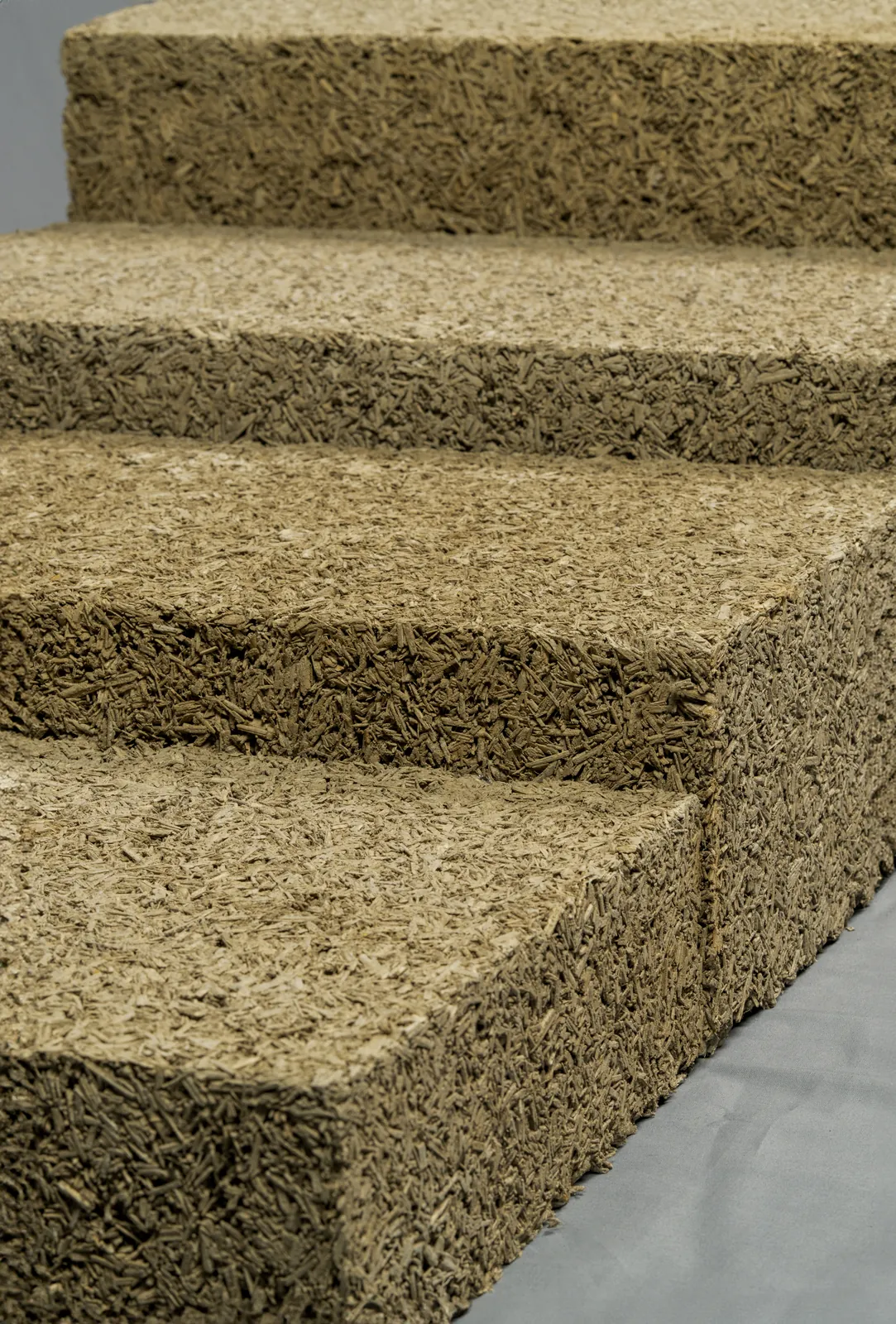
The hempcrete block is made up of 84% hemp shiv, the woody core of the hemp stem, combined with a vapour-open hydraulic binder, Vicat natural prompt cement. This composition gives the material a density of around 300 kg/m³ and a thermal conductivity λ of approximately 0.065 W/(m.K).
The block is naturally vapour-permeable, which helps regulate the building’s humidity by maintaining an optimal indoor moisture level. This property prevents moisture build-up within the wall and reduces the risk of condensation.
In addition, the block is rated B-s1,d0 for fire, equivalent to M1 fire reaction, and is naturally resistant to rodents. However, it is not rot-proof, so care must be taken with storage before installation.
It is important to note that hempcrete blocks are not structural. They must always be used in conjunction with a load-bearing structure such as a supporting wall, timber frame, or post-and-beam system.
Sizes and thermal resistance suitable for damp wall insulation
| Thickness (cm) | R dry value (m².K/W) | R useful value (m².K/W) | Thermal lag (hours) | Block weight (kg) | Pallet coverage (m²/pallet) | Recommended uses |
|---|---|---|---|---|---|---|
| 10 | 1.5 | 1.4 | 6.1 | 6.5 | 21.6 | IWI and EWI |
| 15 | 2.3 | 2.1 | 9.25 | 10 | 14.4 | IWI, EWI and partitions |
| 20 | 3.0 | 2.8 | 12.3 | 13 | 10.8 | IWI, EWI, partitions, infill and floors |
| 30 | 4.6 | 4.2 | 18.5 | 21 | 10.08 | High-performance IWI and EWI, heavyweight partitions, infill and floors |
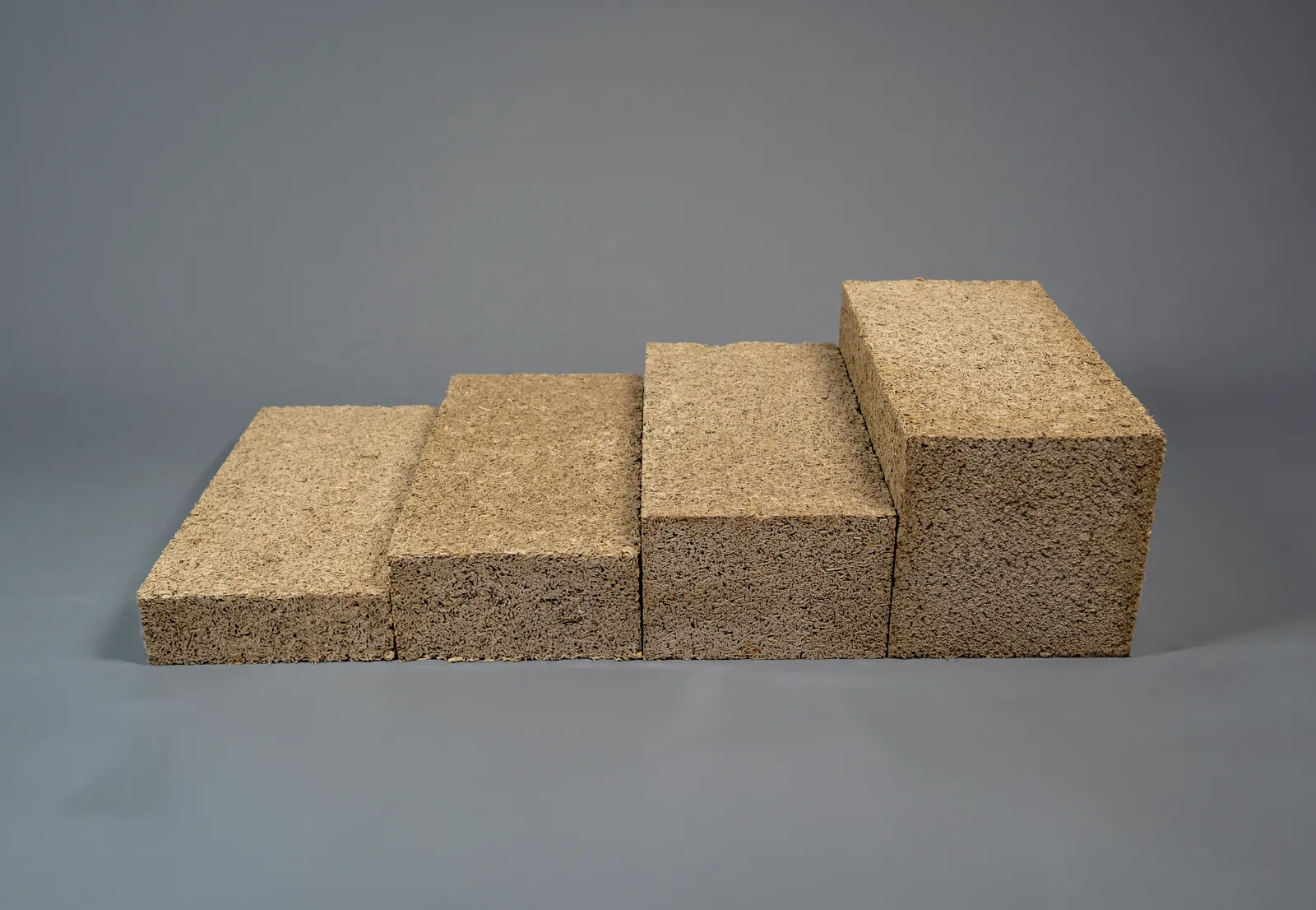
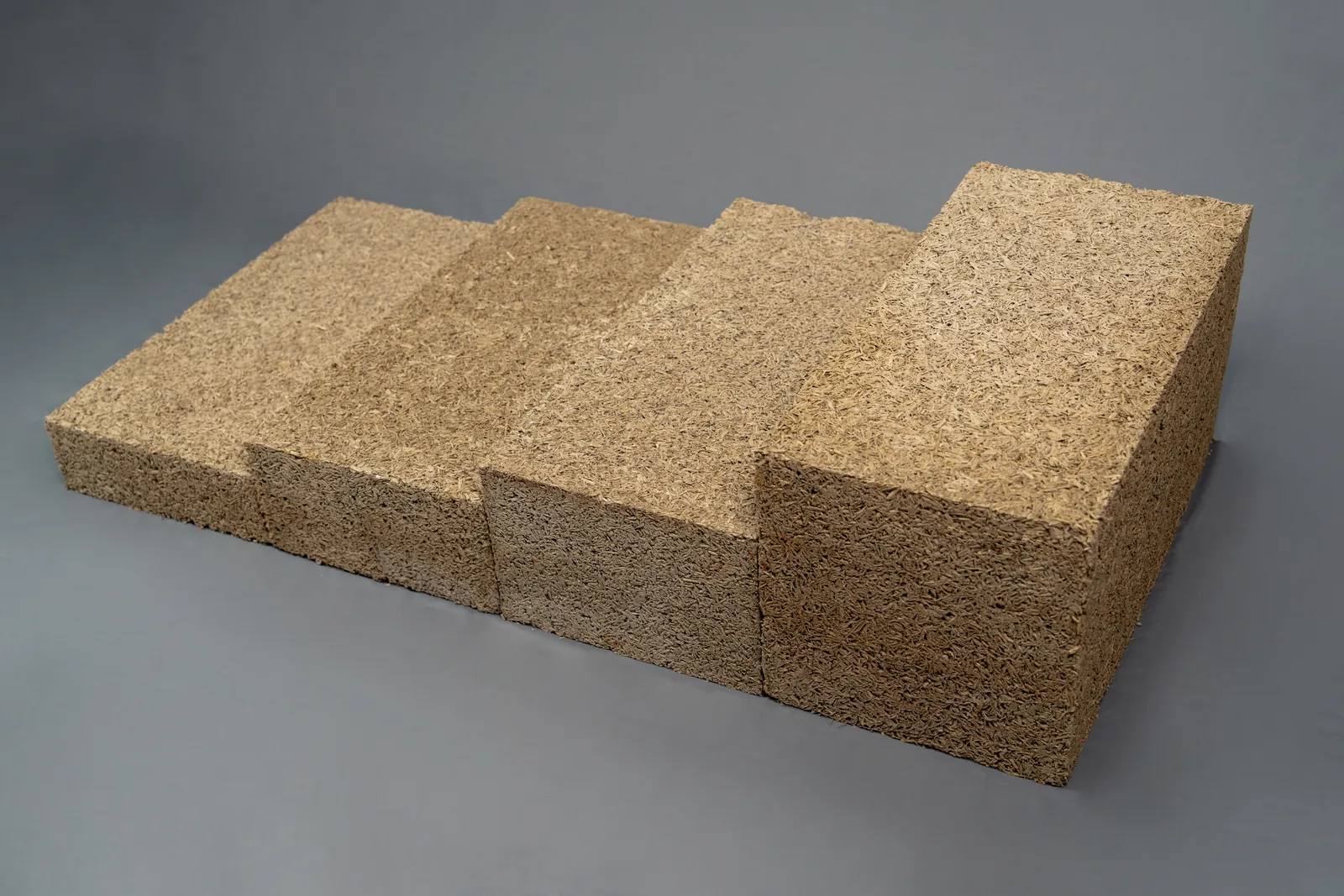
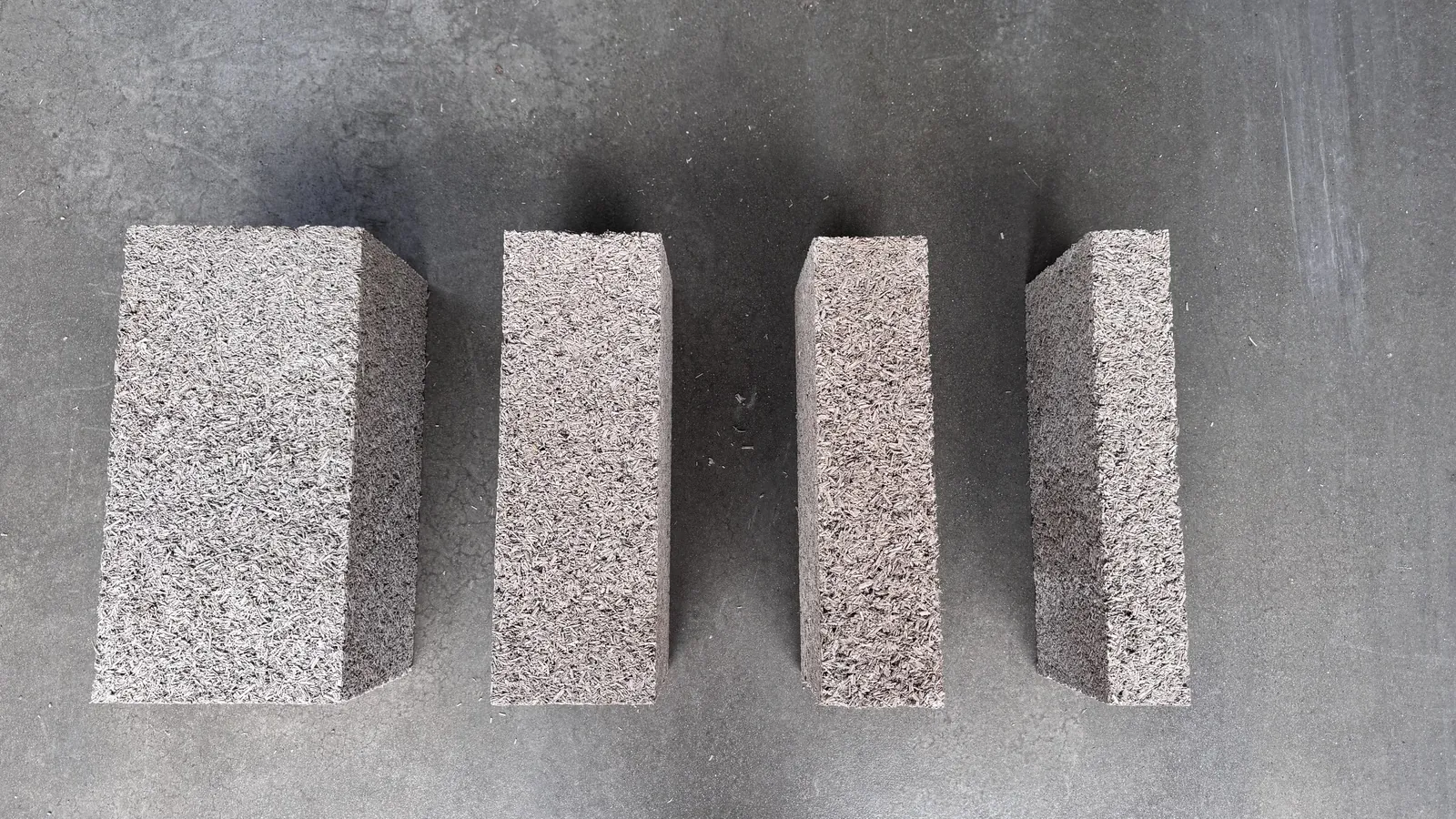
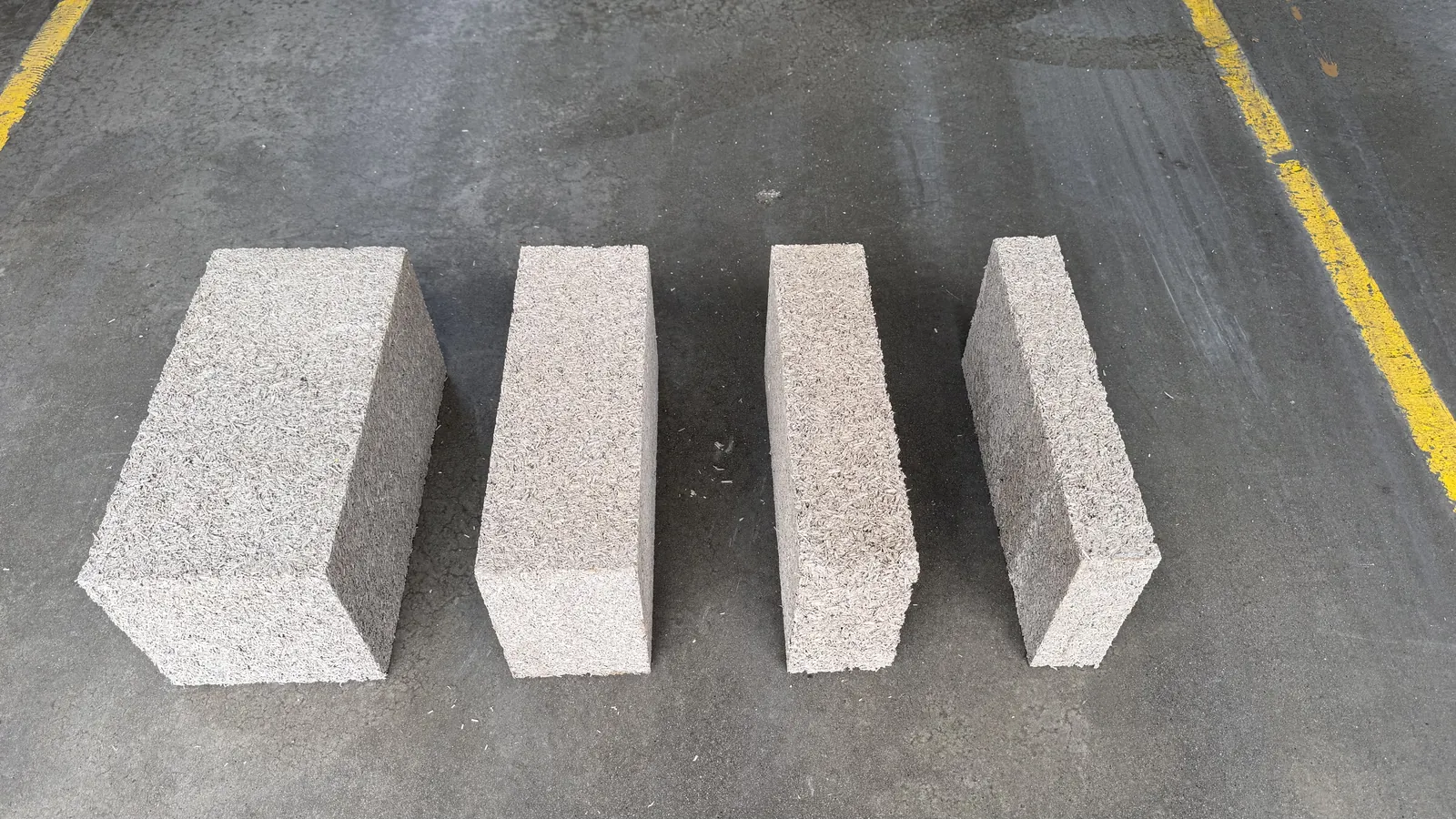
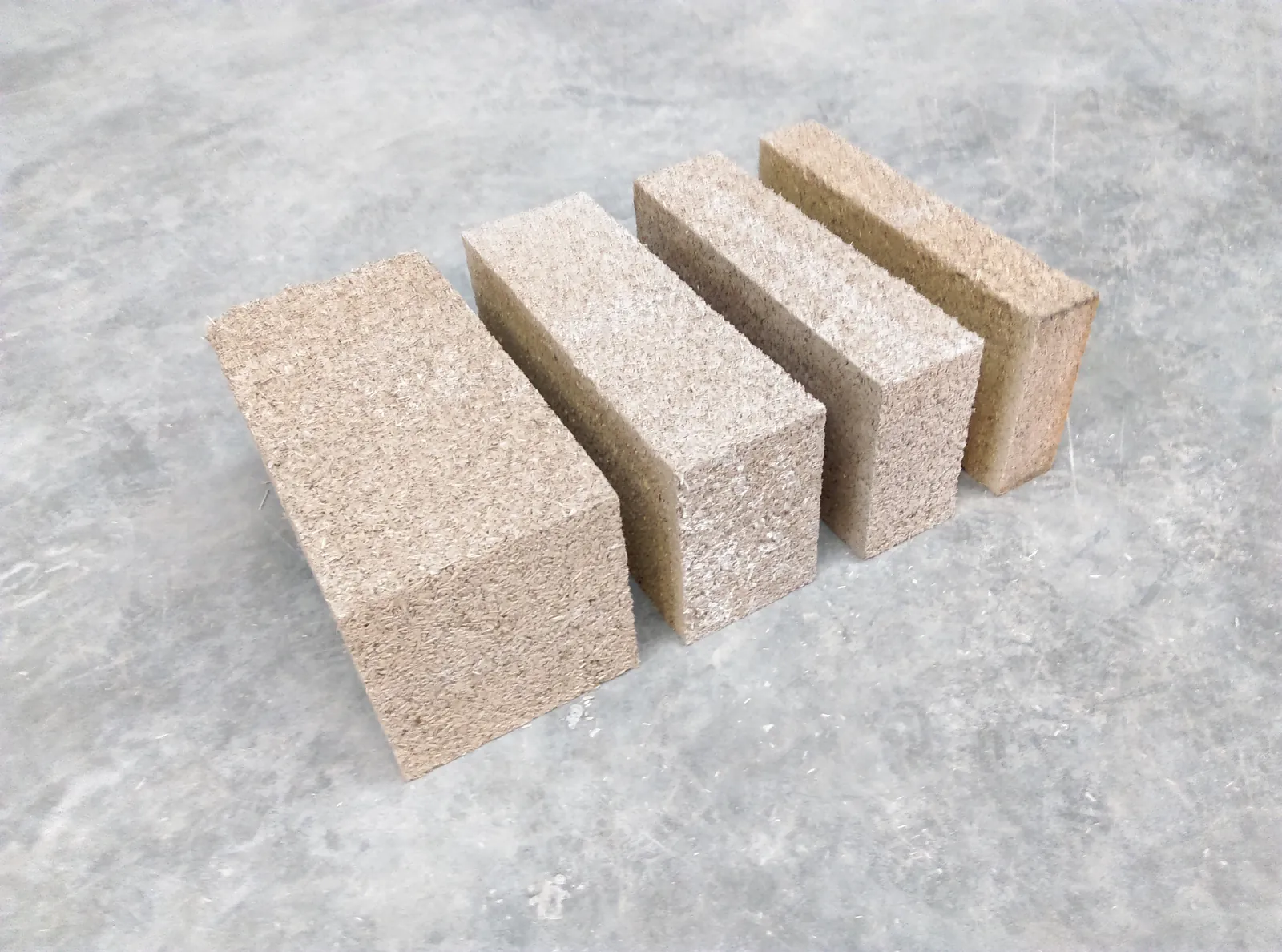
The MULTICHANVRE range offers blocks in 60 × 30 cm formats with various thicknesses to suit the thermal insulation needs of damp walls. The useful thermal resistance values range from 1.4 to 4.2 m².K/W, with the useful value being the one to use for thermal calculations.
Thermal lag, which is the material’s ability to delay heat transfer, is significant—up to 18.5 hours for the 30 cm thickness. This feature helps improve summer comfort in buildings.
Recommended uses include internal wall insulation (IWI), external wall insulation (EWI), partitions, floor insulation under screed, and timber frame infill. For more details on the range, see the dedicated MULTICHANVRE page.
Installing hempcrete blocks for damp walls
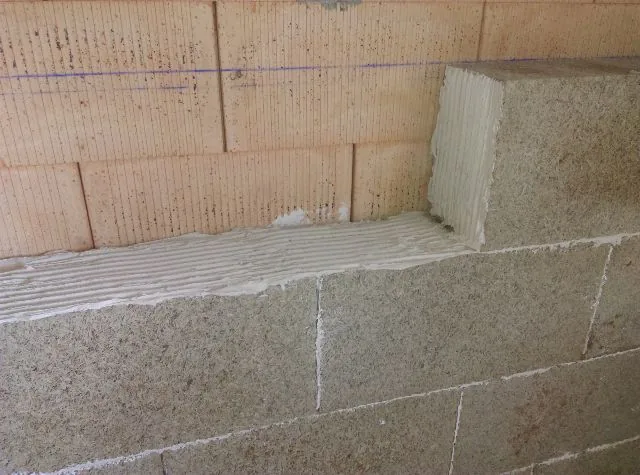
Installing MULTICHANVRE blocks involves three main steps. First, a lime-based mortar is applied with a notched trowel to ensure adhesion and vapour permeability. Next, the blocks are laid with staggered joints using mortar, a method that minimises thermal bridging and ensures good airtightness.
Mechanical fixings are required to guarantee stability. These are installed using fixing brackets, metal straps or fixing discs, with 2 to 5 fixings per square metre.
Compatible interior finishes include spray plaster, lime, earth plaster or plasterboard. For external finishes, a lime render with full mesh reinforcement is recommended to maintain the wall’s vapour permeability.
Pallets must be stored indoors, dry and not stacked, to prevent damage to the material before installation. This precaution is separate from the block’s natural resistance to rodents.
Finally, it is essential to ensure adequate ventilation and careful management of thermal bridges to guarantee the durability and effectiveness of hempcrete insulation for damp walls. For further installation details, our hempcrete block installation guide provides technical information.
Limitations and precautions when using hempcrete blocks for damp walls
Hempcrete blocks are not load-bearing. They must be combined with a suitable structural support, whether that is a supporting wall, timber frame, or post-and-beam system. This requirement is important to consider in wall design.
To achieve the same thermal resistance, hempcrete blocks require greater thickness than mineral wool. This means a reduction in usable floor area for internal wall insulation (IWI), which should be taken into account in the overall project assessment.
Installation and finishing must maintain the overall breathability of the wall. This means that renders and other layers must be vapour-permeable to avoid internal condensation and material degradation.
Do not confuse the block’s natural resistance to rodents and pests with rot-proofness. The block is not rot-proof, and its durability depends on appropriate storage and installation conditions.
An illustration of good storage practice is available on our site on the maintenance and durability page.
Technical comparison of MULTICHANVRE thicknesses for damp walls
| Thickness (cm) | R dry value (m².K/W) | R useful value (m².K/W) | Thermal lag (h) | Block weight (kg) | Blocks per pallet | Pallet coverage (m²) | Uses |
|---|---|---|---|---|---|---|---|
| 10 | 1.5 | 1.4 | 6.1 | 6.5 | 120 | 21.6 | IWI and EWI |
| 15 | 2.3 | 2.1 | 9.25 | 10 | 80 | 14.4 | IWI, EWI, partitions |
| 20 | 3.0 | 2.8 | 12.3 | 13 | 60 | 10.8 | IWI, EWI, partitions, infill, floors |
| 30 | 4.6 | 4.2 | 18.5 | 21 | 56 | 10.08 | High-performance IWI and EWI, heavyweight partitions, infill, floors |
This table summarises the key technical data for MULTICHANVRE blocks for damp wall insulation. The useful thermal resistance value is the one to use for thermal studies in line with regulations.
Block weights and packaging details help with logistics planning and installation. The recommended uses indicate the best applications for each thickness, depending on the specific needs of your project.
Compatible finishes and maintenance for long-lasting damp wall insulation
Internal renders must maintain the vapour permeability and breathability of the hempcrete block. Compatible products include spray plaster, lime, earth plaster and plasterboard. These materials allow water vapour to diffuse and prevent condensation.
For external use, a lime render with full mesh reinforcement is recommended to protect the wall while maintaining its vapour permeability. This finish helps ensure the durability of damp wall insulation.
It is essential to maintain the breathability of the insulation system. Avoid using impermeable layers, which could trap moisture and reduce both thermal performance and durability.
Once installed and protected with suitable renders, maintenance is minimal. However, storage before installation is crucial: pallets must be kept dry, sheltered and not stacked, to avoid any risk of damage.
It is advisable to prevent prolonged water ingress, as the block is not rot-proof and long-term exposure to standing water can affect its performance and durability.
Resources and technical support for hempcrete block damp wall insulation
- Technical documentation includes an installation guide and a quick-reference sheet in PDF format, available via the Technical documentation page.
- To select the right thickness, a thermal study is recommended, taking into account useful thermal resistance, thermal lag and the specific constraints of the building.
- Our sales team responds to quote requests within 48 working hours. You can request a hempcrete block quote directly online.
- The website features a complete range of products and applications, with detailed information to help you develop your project, including our hempcrete block thermal insulation product data sheet and uses of hempcrete blocks for IWI, EWI, partitions and floors.
- Finally, to learn more about the hemp industry and its environmental benefits, see our page on the hemp sector and environmental impact.
Frequently asked questions
Are hempcrete blocks suitable for insulating damp walls?
Yes, their vapour permeability and humidity regulation help reduce moisture-related risks in walls, while providing effective thermal insulation.
What thickness of hempcrete block should I use for a damp wall?
The thickness depends on the required thermal resistance. MULTICHANVRE blocks are available in 10, 15, 20 and 30 cm, with useful R values from 1.4 to 4.2 m².K/W. A thermal study is recommended to determine the right thickness.
Can you install a hempcrete block directly onto a damp load-bearing wall?
The block is not structural and requires mechanical fixing and a suitable support. Moisture management and ventilation must be considered to prevent problems.
Which renders are compatible with hempcrete blocks in damp environments?
Lime-based renders, spray plaster, earth plaster and plasterboard are all compatible, as they maintain the wall’s vapour permeability and breathability.
Should I be concerned about hempcrete blocks deteriorating in damp conditions?
The block is not rot-proof and must be stored dry before installation. Once installed and protected with suitable renders, it performs well in damp conditions thanks to its vapour permeability and resistance to rodents.
How are MULTICHANVRE blocks installed for damp wall insulation?
Installation involves three steps: applying lime mortar with a notched trowel, laying blocks with staggered joints, mechanical fixing with brackets or straps, followed by a finishing render.
Do hempcrete blocks eliminate thermal bridges in damp walls?
They significantly reduce thermal bridges thanks to staggered joints and their format, but do not eliminate them entirely, especially for EWI applications.
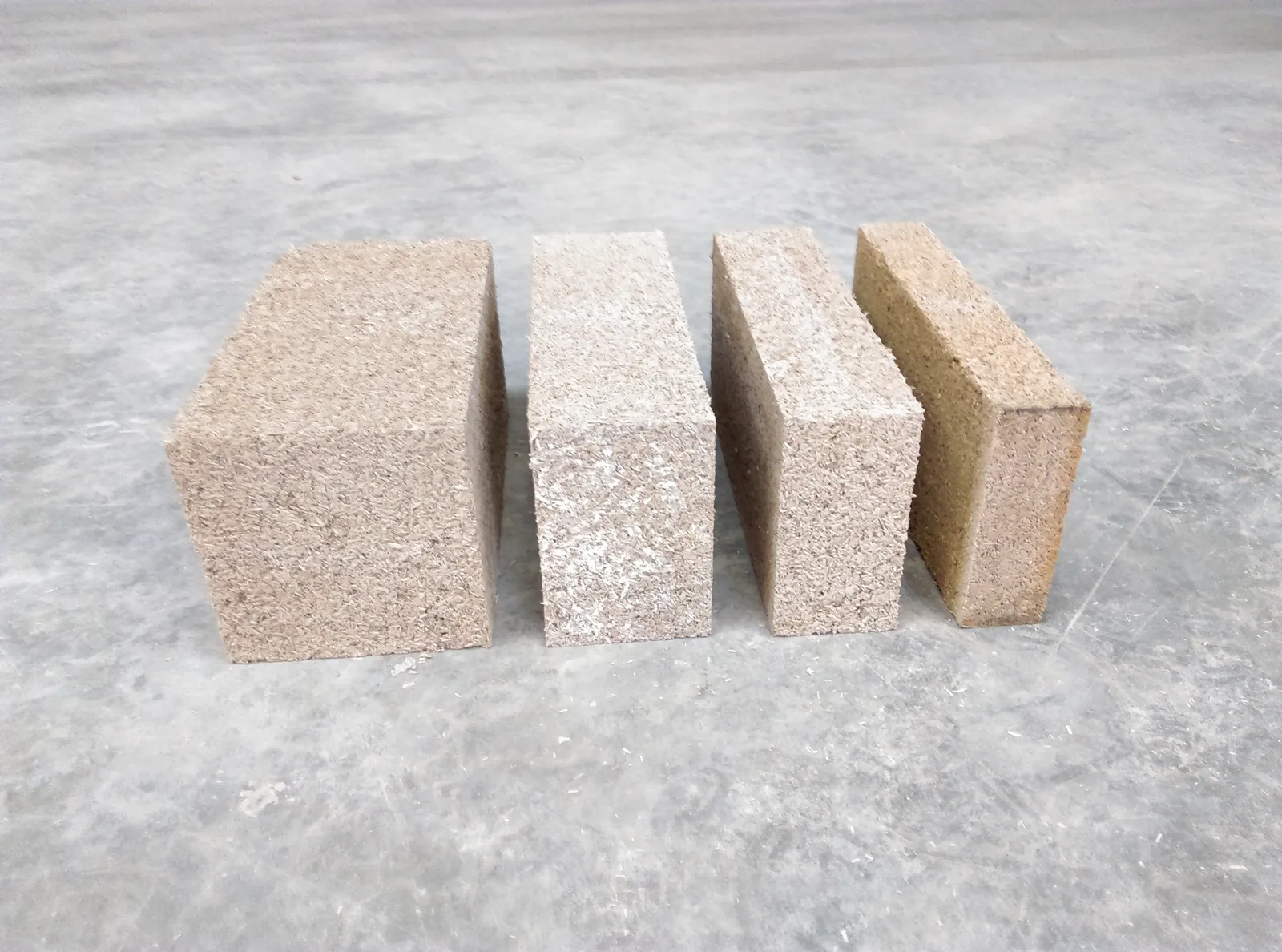
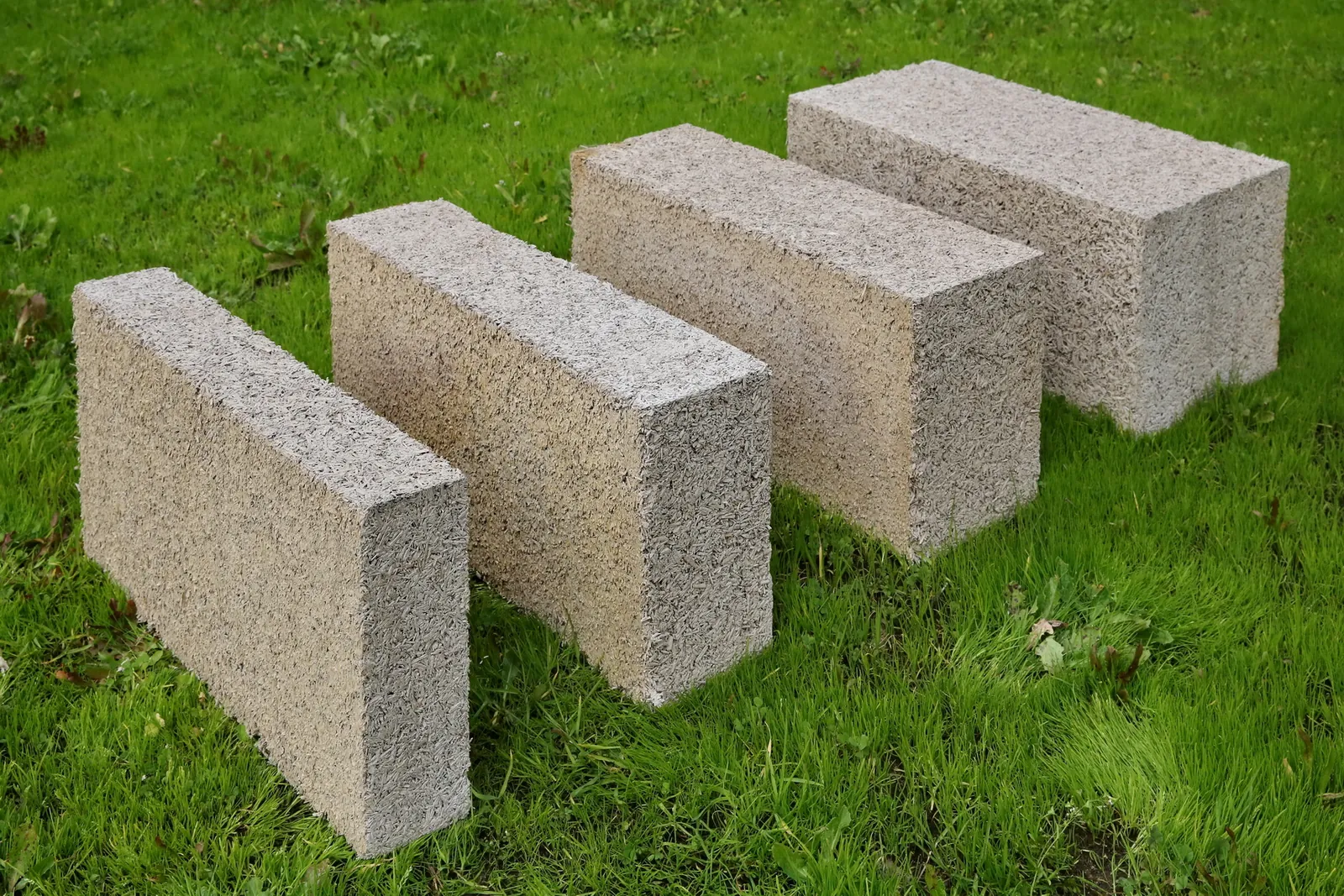
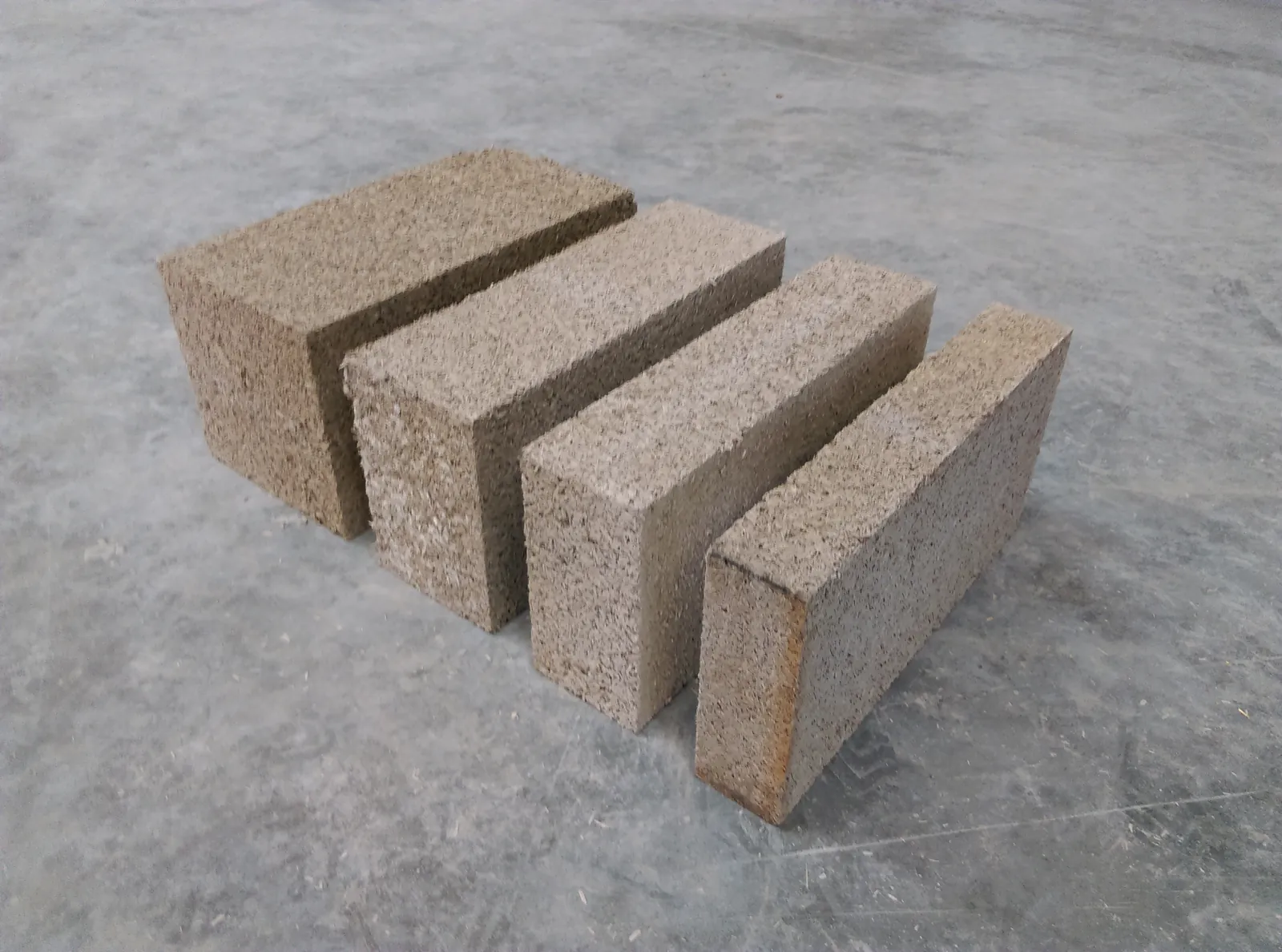
The MULTICHANVRE range in pictures
Read next
Planning a hemp block project?
Tell us about your project: we will reply within 48 working hours with a tailored costing.