Condensation control insulation: understanding the regulations and making the right choice
Regulations require the risk of internal condensation in insulated walls to be limited, especially in new builds and renovation projects. Choosing condensation control insulation means ensuring suitable vapour permeability, effective moisture regulation, and correct installation to prevent problems caused by damp.
 By Julien Compain
Regulations require that the risk of internal condensation within insulated walls is limited, particularly in new builds and renovation projects. Choosing an insulation material to prevent condensation means ensuring suitable vapour permeability, effective moisture regulation, and correct installation to minimise issues related to damp.
Understanding condensation in insulated walls
Internal condensation occurs when water vapour from indoor air passes through a wall and encounters a zone cold enough to cause it to condense into liquid. This phenomenon results from an imbalance between temperature and humidity within the wall’s layers. It’s important not to confuse surface condensation with internal condensation: the former appears on visible surfaces, often due to poor ventilation or insulation, while the latter occurs within the materials themselves—harder to detect, but potentially more damaging.
The consequences of internal condensation can be severe: material degradation through corrosion or decay, mould growth that harms indoor air quality, loss of thermal performance, and even structural damage. Both humidity and temperature play a key role in this process. Good hygrothermal design must anticipate these factors to prevent condensation zones within the insulated wall.
Regulatory requirements for condensation control insulation
Thermal regulations such as RT2012 and RE2020 (France’s environmental building regulation) set targets to improve building energy performance while ensuring durability. A key part of these requirements is controlling moisture and preventing internal condensation in insulated walls.
These regulations set limits on water vapour permeability—that is, a material’s ability to allow vapour to pass through and avoid build-up. They also require sufficient airtightness to limit infiltration that could increase wall humidity. Several standards and unified technical documents (DTU, CPT, professional guides) govern the design and installation of insulated walls to reduce these risks.
In practice, design must use materials that are compatible with each other, suited to the climate and building type, and avoid configurations that encourage condensation. Regulations require that walls are designed to prevent any risk of internal condensation that could compromise the building’s longevity and health safety.
Technical criteria for condensation control insulation
Condensation control insulation must have suitable water vapour permeability. This means it should allow water vapour to pass through to prevent it condensing inside the wall. The resistance to water vapour diffusion (mu factor) is a key parameter to consider.
The material’s ability to regulate humidity is also important. Some materials, known as breathable or vapour-open, can absorb and release moisture, helping to maintain stable indoor humidity and limit the fluctuations that encourage condensation.
Thermal lag—the time it takes for heat to pass through the material—also has an indirect impact on moisture management. High thermal lag helps limit rapid temperature changes, which can reduce condensation formation.
Finally, compatibility with other wall materials is necessary to ensure continuous airtightness and vapour diffusion, as well as overall moisture management.
Comparison table: condensation control insulation technical characteristics
| Insulation | Thermal conductivity λ (W/(m·K)) | Water vapour permeability | Hygroscopic capacity / regulation | Thermal lag (h) | Fire rating | Durability |
|---|---|---|---|---|---|---|
| MULTICHANVRE hemp block 10 cm | ≈ 0.065 | Permeable (low mu factor) | Effective humidity regulation | 6.1 | B-s1,d0 | Store under cover, rodent-resistant |
| MULTICHANVRE hemp block 15 cm | ≈ 0.065 | Permeable | Humidity regulation | 9.25 | B-s1,d0 | As above |
| MULTICHANVRE hemp block 20 cm | ≈ 0.065 | Permeable | Humidity regulation | 12.3 | B-s1,d0 | As above |
| MULTICHANVRE hemp block 30 cm | ≈ 0.065 | Permeable | Humidity regulation | 18.5 | B-s1,d0 | As above |
| BIOSYS block 30 cm | ≈ 0.065 | Permeable | Humidity regulator | 8 to 10 (not standardised) | B-s1,d0 | Structural use with reinforced concrete |
Hemp block as condensation control insulation: features and benefits
The hemp block is made up of 84% hemp shiv—the woody part of the hemp—bound with Vicat natural prompt cement, a hydraulic binder that is vapour-permeable. This composition gives the block high permeability and the ability to regulate indoor humidity, thus reducing the risk of condensation.
The block has a thermal conductivity of around 0.065 W/(m·K) and significant thermal lag—up to 18.5 hours for the 30 cm MULTICHANVRE block. This lag helps stabilise temperature and humidity variations within the wall.
Humidity regulation is provided (without quoting a precise range), helping to maintain optimal indoor humidity. The natural hydraulic binder ensures vapour permeability while giving the material sufficient cohesion.
However, hemp blocks require greater thickness than some thin insulation materials to achieve equivalent thermal resistance. This can affect usable floor area when used for internal wall insulation (IWI), so it’s important to assess this trade-off in your project.
Finally, neither the MULTICHANVRE nor BIOSYS systems are structural. They must always be combined with a load-bearing structure (post-and-beam, supporting wall, timber frame, etc.). For more details, see the full technical product data sheet for hemp block.
Installation and application: controlling condensation with vapour-open insulation
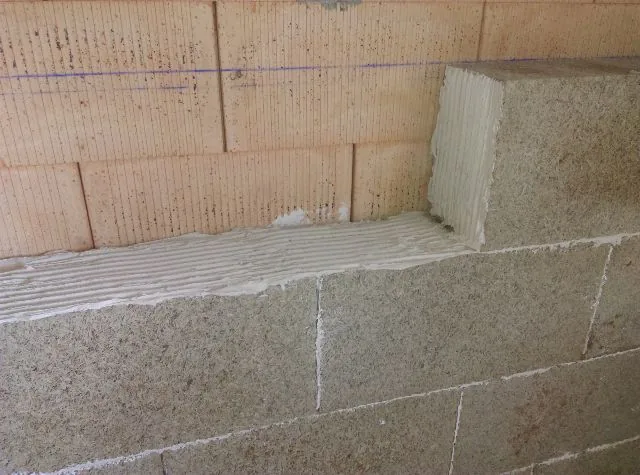
Continuity of insulation and airtight joints are crucial to limiting the risk of internal condensation. For the MULTICHANVRE range, installation is in three stages: apply a lime-based mortar with a notched trowel, staggered mortar joints, then fix to the substrate using brackets, straps or fixing discs (2 to 5 per m²) before the final render. This sequence ensures continuous insulation and minimises thermal bridging.
Installation covers walls, partitions, floors and timber frame infill. For floors, blocks are laid edge-to-edge beneath the screed. Careful detailing at interfaces with the substrate and structural elements is essential to preserve the vapour-open function of the material.
Compatible finishes for vapour-open insulation include lime, plaster or earth renders. These allow water vapour to diffuse and avoid creating barriers to permeability.
Common mistakes include using impermeable renders or unsuitable vapour barriers, failing to maintain joint continuity, and poor detailing at interfaces, all of which can cause condensation points. For more on these aspects, see the practical guide to vapour-open insulation.
Limitations and constraints to consider before choosing condensation control insulation
One of the main drawbacks of vapour-open insulation such as hemp block is the thickness required to achieve a thermal resistance (R) equivalent to thinner insulants. For IWI, this can mean a noticeable loss of usable floor area—a factor that must be carefully considered at the design stage.
Insulation must be suitable for the existing substrate and specific context, especially in older buildings or damp areas. Hemp block can be used in these situations, provided a thorough thermal and hygrothermal study is carried out.
This study is necessary to validate the design and ensure there is no risk of condensation, particularly in renovation projects where configurations are often complex. It also helps optimise summer comfort, moisture management and overall thermal mass.
Finally, maintenance and durability must be considered. The block is not rot-proof and must be stored under cover, dry, and not stacked. Its natural resistance to rodents and mould is an advantage, but careful installation is essential to ensure longevity.
Regulatory guidance and resources for controlling condensation
Several unified technical documents, professional guides and best practice rules are available to support clients and professionals in designing and installing condensation control insulation. These resources set out the relevant standards and good practice to follow.
Technical departments and thermal/hygrothermal consultants play a key role in risk assessment and validating solutions for each project. They use hygrothermal calculation tools to simulate wall behaviour over time and check for the absence of condensation.
Case studies, especially in new build and renovation, are useful for illustrating good practice and the limitations of materials. Regulations are evolving, notably with RE2020 (France’s environmental building regulation) which strengthens requirements for energy performance and air quality, directly affecting the choice of vapour-open insulation.
For a full understanding of the regulatory framework and materials such as hemp block, see hemp block and RE2020 regulations.
Frequently asked questions
What is condensation control insulation?
Condensation control insulation is a material designed to limit moisture build-up inside walls, mainly by allowing water vapour to diffuse and regulating humidity to prevent problems caused by internal condensation.
Why do regulations require condensation control?
Regulations aim to protect building durability and indoor air quality by preventing damage caused by moisture, such as mould or corrosion, through criteria on permeability and airtightness.
How do I choose suitable insulation to prevent condensation?
Choose insulation with sufficient water vapour permeability, good humidity regulation, and appropriate thermal lag, while considering the technical and regulatory constraints of your project.
Is hemp block a good condensation control insulation?
Hemp block offers high permeability and humidity regulation, making it a suitable material for limiting condensation risks—provided installation rules are followed and the right thickness is chosen.
What are the risks of using unsuitable insulation?
Inappropriate insulation can cause internal condensation, leading to material degradation, mould growth, loss of thermal efficiency, and poorer indoor air quality.
Which finishes are compatible with vapour-open insulation?
Lime, plaster or earth renders are compatible with vapour-open insulation such as hemp block, as they allow water vapour to diffuse and help regulate humidity.
Is a specific study needed to validate condensation control insulation?
Yes, a thermal and hygrothermal study is recommended to check for condensation risks, especially in renovation projects or areas with high humidity.
Read next
Planning a hemp block project?
Tell us about your project: we will reply within 48 working hours with a tailored costing.