Breathable stone wall insulation: common questions and technical solutions
Insulating a breathable stone wall requires materials and methods that respect the wall’s natural moisture management. Hempcrete blocks, with their ability to regulate humidity and allow water vapour to pass through, are an ideal solution for both internal and external insulation, helping to prevent condensation and damage to the building.
 By Julien Compain
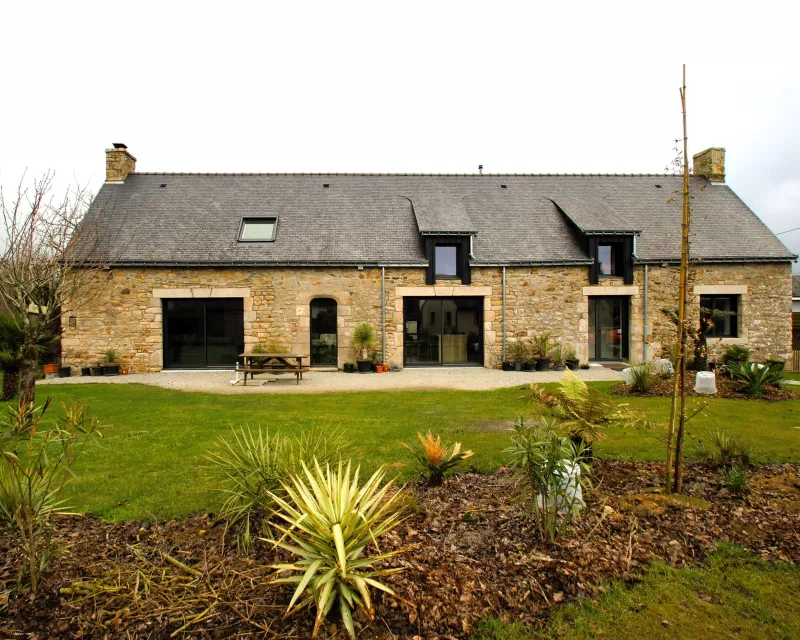
Insulating a breathable stone wall requires materials and techniques that are compatible with the wall’s natural moisture management. Hempcrete blocks, with their ability to regulate humidity and allow water vapour to pass through, are an ideal solution for both internal and external insulation, helping to prevent condensation and damage to the building fabric.
Understanding breathable stone walls: features and challenges
A breathable stone wall is a solid wall that is designed, or has retained the ability, to allow water vapour to pass through naturally. This property depends on the vapour permeability of the material and the absence of impermeable barriers. Stone, often combined with traditional mortar, offers a degree of porosity that enables a balance of humidity between the inside and outside of the building.
This natural breathability is essential to prevent moisture build-up within the wall, which can lead to issues such as mould growth, deterioration of mortars, or even frost damage in some cases. It also contributes to the longevity of older buildings, which were not designed to accommodate modern, impermeable insulation materials.
Older stone walls have specific requirements, particularly the need to maintain this permeability to avoid disrupting moisture transfer. Poorly chosen insulation that blocks breathability can damage the structure and reduce indoor comfort. Moisture management and natural ventilation are therefore central concerns when insulating breathable stone walls.
Why choose breathable insulation for a stone wall?
Natural moisture regulation relies on the wall’s ability to absorb, store and release ambient humidity without accumulating liquid water. Breathable insulation respects this process by remaining vapour-open, thus preventing harmful internal condensation.
In contrast, impermeable insulation acts as a vapour barrier, blocking this diffusion. This can cause cold spots and condensation within the wall, leading to material degradation and poorer indoor air quality.
- Allowing the wall to breathe helps prevent moisture-related problems.
- It ensures greater durability for stone buildings.
- It contributes to a healthy indoor environment by naturally managing humidity.
For all these reasons, insulating a breathable stone wall should be done with materials and techniques that preserve this permeability. This ensures the building’s longevity and a comfortable indoor climate.
Suitable materials for insulating breathable stone walls
The choice of insulation material must take several technical criteria into account:
- Vapour permeability: essential to allow the wall to breathe.
- Thermal mass and thermal lag: to improve comfort, especially in summer.
- Density: a material that is too light may lack thermal mass, while one that is too heavy may be difficult to install.
Hempcrete blocks meet these requirements. Made from 84% hemp shiv (the woody core of the hemp stem) and a mineral binder (Vicat natural prompt cement), they offer a thermal conductivity λ of around 0.065 W/(m.K) and an average density close to 300 kg/m³. This structure ensures effective moisture regulation within a comfortable range, while remaining vapour-open.
Compared to other bio-based or mineral insulations, hempcrete blocks offer a good balance of thermal performance, thermal mass and permeability. Their thermal lag, especially in the 30 cm thickness, is around 18.5 hours, which helps keep interiors cool in summer.
Additional benefits include a fire rating of B-s1 d0, a sound absorption coefficient α of 0.4, an A+ rating for indoor air quality, and natural resistance to rodents. All raw materials are 100% French, renewable and recyclable, with a favourable carbon footprint (verified FDES).
For a detailed overview of sizes and specifications, see the dedicated hemp block page.
MULTICHANVRE range: technical specifications and uses
| Thickness (cm) | Thermal resistance R (m²·K/W) | Thermal lag (h) | Block weight (kg) | Pallet size (blocks/pallet and m²/pallet) | Recommended use |
|---|---|---|---|---|---|
| 10 | 1.5 | 6.1 | 6.5 | 120 blocks, i.e. 21.6 m² | Partition walls, lightweight lining |
| 15 | 2.3 | 9.25 | 10 | 80 blocks, i.e. 14.4 m² | Standard lining, partitions |
| 20 | 3.0 | 12.3 | 13 | 60 blocks, i.e. 10.8 m² | High-performance internal (IWI) and external (EWI) insulation |
| 30 | 4.6 | 18.5 | 21 | 56 blocks, i.e. 10.08 m² | High-performance EWI |
The MULTICHANVRE range is designed to meet a variety of insulation needs. Blocks come in a standard 60 × 30 cm format and four thicknesses. They are intended for bonded masonry installation with staggered joints using lime-based mortar, applied with a notched trowel, ensuring a strong, even bond ready for rendering.
Recommended uses include internal and external wall insulation, partitions, floor insulation under screed, and infill for timber frames. These applications are detailed on the IWI, EWI, partitions, floors and timber frame infill page.
The block is non-loadbearing and must be used to line a supporting wall or fill a frame. The range is currently undergoing certification, demonstrating a commitment to regulatory compliance.
For more technical details, see the dedicated 20 cm hemp block product sheet.
Installation techniques for insulating breathable stone walls
Installing hempcrete block insulation on a breathable stone wall requires careful preparation of the substrate and adherence to certain technical rules:
- Preparing the substrate: the stone wall must be sound, stable, dust-free and free from recent waterproof treatments.
- Fixing the blocks: blocks are installed as bonded masonry using lime-based mortar applied with a notched trowel. Mechanical fixing to the substrate is achieved with brackets, about two per square metre, to ensure overall stability.
- Joint management: staggered joints help reduce thermal bridging and ensure good cohesion of the masonry.
- Applying renders: compatible renders—lime-based, spray plaster, earth or clay—must be vapour-open to maintain the system’s moisture regulation. They are applied after the blocks have been laid and dried.
These techniques are explained in the technical installation guide and in the professional documentation available on the Technical documentation page.
A section diagram illustrating the insulation of a solid stone wall with hempcrete blocks (IWI) shows the order of layers, vapour permeability, and the absence of a vapour barrier that would hinder the wall’s natural breathability.
Practical comparison: hempcrete block versus other common solutions
| Criterion | Hempcrete block | Mineral wool | Aerated concrete | Expanded polystyrene (EPS) |
|---|---|---|---|---|
| Thermal resistance R | 1.5 to 4.6 m²·K/W depending on thickness (10–30 cm) | Higher for the same thickness | Varies, often lower than hemp | Very high at low thickness |
| Vapour permeability | Good, supports moisture regulation | Varies, often vapour-open | Low, can create barriers | Low, impermeable insulation |
| Thermal lag | Up to 18.5 h (30 cm) | Low | Moderate | Very low |
| Environmental impact | Renewable, low carbon (verified FDES) | Varies, sometimes non-renewable | Higher carbon footprint | Fossil-based, non-renewable |
Hempcrete blocks offer a balance of thermal performance, thermal mass, permeability and environmental impact. However, they require greater thickness than some thin insulations to achieve equivalent thermal resistance, which is a factor to consider depending on available living space.
A more detailed comparison is available on the Comparison with concrete block, brick, aerated concrete and wools page.
Maintenance, durability and development of breathable stone wall insulation
Hempcrete blocks are naturally rodent-resistant and their durability is linked to the stability of their components. Maintenance focuses mainly on the renders, which are essential for preserving permeability and protecting the material.
Compatible renders such as lime or natural earths should be inspected regularly and repaired if necessary to prevent water ingress or cracking. This preventative maintenance helps ensure the longevity of both the insulation and the stone wall.
In the long term, breathable insulation helps stabilise the wall’s moisture content, reducing the risk of structural damage. Compliance with RE2020 (France’s environmental building regulation) is made easier by using a bio-based, renewable and recyclable material, helping to cut CO₂ emissions in construction.
For more information, see the comprehensive guide to the lifespan and maintenance of hempcrete block walls.
Indicative costs and steps for a breathable stone wall insulation project
The price of hempcrete blocks varies depending on the chosen thickness, with a typical starting point of around €35/m² incl. VAT for 10 cm thick blocks. This cost rises with thickness due to the increased material and weight to be installed.
Factors influencing the overall cost include:
- The desired thickness and thermal resistance.
- The type of compatible render applied.
- Labour and installation complexity, especially substrate preparation and detailing.
For an accurate estimate, it is recommended to request a personalised quote from the sales team, who typically respond within 48 working hours. You can submit a request directly via the Request a quote page.
Additional resources, technical guides and case studies are available to support project owners in their choices and implementation.
Frequently asked questions
What is a breathable stone wall?
A breathable stone wall is a solid wall that allows natural diffusion of water vapour thanks to its permeability. This feature prevents moisture build-up and supports the longevity of older buildings.
Why avoid impermeable insulation on a stone wall?
Impermeable insulation blocks vapour diffusion, which can lead to condensation, substrate damage and mould growth. Breathable insulation preserves natural moisture management.
Are hempcrete blocks suitable for insulating stone walls?
Yes, hempcrete blocks are vapour-open, have good thermal mass and regulate humidity, meeting the specific needs of breathable stone wall insulation.
What thickness of hempcrete block should I choose for effective insulation?
The MULTICHANVRE range offers several thicknesses from 10 to 30 cm, with thermal resistance R values from 1.5 to 4.6 m².K/W. The choice depends on the desired performance and the balance between living space and insulation.
Which renders are compatible with hempcrete block insulation?
Lime-based renders, spray plaster, earth or clay are all compatible, maintaining the wall’s permeability and moisture regulation.
How long does it take to install hempcrete block insulation?
Installation is quick thanks to the prefabricated system and bonded masonry. For the BIOSYS system, the rate is up to 30 m² per day (maximum, on a suitable site) with two workers, including the structure.
How can I get a quote for insulating a stone wall with hempcrete blocks?
Contact the sales team via the website for a personalised quote, with a typical response time of 48 working hours.
Read next
Planning a hemp block project?
Tell us about your project: we will reply within 48 working hours with a tailored costing.