How much does a hempcrete block house cost? Expert guide
The cost of a hempcrete block house depends on block thickness, system choice, installation and delivery costs. In 2024, typical prices range from €35/m² (10 cm) to €95/m² (30 cm). You’ll also need to factor in the loadbearing structure, finishes and the specific requirements of the material.
 By Julien Compain
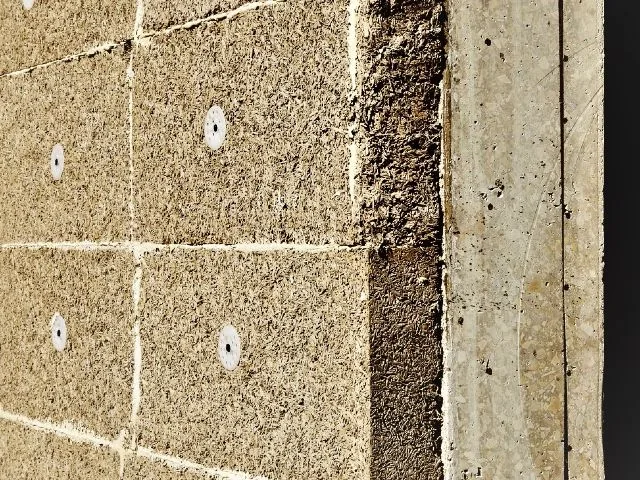
The price of a hempcrete block house depends on the thickness of the blocks, the chosen system, and installation and delivery costs. In 2024, indicative prices range from €35/m² (10 cm) to €95/m² (30 cm). You also need to factor in the load-bearing structure, finishes, and the specific requirements of the material.
Hemp block construction: the essentials
Hemp blocks are made up of 84% hemp shiv, the woody core of the hemp stem, bound with Vicat natural prompt cement, a vapour-open hydraulic binder. This composition gives the material a density of around 300 kg/m³, providing moderate mass that helps regulate humidity and improves thermal comfort.
The blocks come in various formats and are grouped into two distinct systems: MULTICHANVRE and BIOSYS. MULTICHANVRE is designed for insulation, with a range of straight-edged blocks in 10, 15, 20 and 30 cm thicknesses, suitable for internal wall insulation (IWI), external wall insulation (EWI), partitions, floor insulation and timber frame infill. BIOSYS, launched in 2016, is a dry-stacked interlocking system used as a permanent insulating formwork for reinforced concrete post-and-beam structures.
It’s important to note that neither MULTICHANVRE nor BIOSYS are structural. They must always be combined with a load-bearing structure, whether that’s a supporting wall, timber frame or concrete structure. This is a key consideration in design and affects both cost and installation.
Hemp blocks offer specific thermal, hygrothermal and acoustic properties. They provide varying levels of thermal resistance depending on thickness, excellent thermal lag for summer comfort, and natural regulation of indoor humidity. Their fire reaction is rated B-s1,d0 and they are naturally resistant to rodents. All these factors should be considered when choosing the material and integrating it into your home.
Construction systems and their impact on price
The choice of construction system directly affects both price and installation method. The MULTICHANVRE system uses straight-edged blocks in four thicknesses from 10 to 30 cm. These blocks are laid with a lime-based mortar (thin-bed method), with staggered joints and thin joints of around 3 mm. The blocks are fixed to the substrate with brackets or mechanical fixings, then finished with a render. This method requires a certain level of skill and takes longer to install than BIOSYS.
BIOSYS is a more recent system, developed with the Vicat group. The blocks feature grooves and tongues for dry interlocking, with no glue or mortar, which helps minimise thermal bridging. They act as permanent insulating formwork for a reinforced concrete post-and-beam structure. The stated installation rate is around 30 m² per day for two workers, which can reduce labour costs on suitable sites. Packaging also differs: BIOSYS pallets contain fewer standard blocks (24 per pallet versus 56 for MULTICHANVRE 30 cm) and cannot be split, which requires specific logistics.
Neither system currently holds a full certification or a valid Avis Technique. MULTICHANVRE is undergoing certification, with an ATEx expected for internal insulation, while the CSTB Avis Technique for BIOSYS has expired and renewal is underway with no known date. These points should be considered when planning your project, as they may affect regulatory requirements and insurance options.
Indicative prices by MULTICHANVRE block thickness
| Thickness (cm) | Dry R value (m².K/W) | Useful R value (m².K/W) | Thermal lag (h) | Weight per block (kg) | Blocks per pallet | Area per pallet (m²) | Indicative price incl. VAT (€ /m²) | Recommended use |
|---|---|---|---|---|---|---|---|---|
| 10 | 1.5 | 1.4 | 6.1 | 6.5 | 120 | 21.6 | 35 | IWI, EWI |
| 15 | 2.3 | 2.1 | 9.25 | 10 | 80 | 14.4 | 51 | IWI, EWI, partitions |
| 20 | 3.0 | 2.8 | 12.3 | 13 | 60 | 10.8 | 66 | IWI, EWI, partitions, infill, floors |
| 30 | 4.6 | 4.2 | 18.5 | 21 | 56 | 10.08 | 95 | High-performance IWI, EWI, heavyweight partitions, infill, floors |
Indicative retail prices for MULTICHANVRE blocks range from €35/m² incl. VAT for 10 cm blocks to €95/m² incl. VAT for 30 cm blocks. Please note these prices are for guidance only and may vary depending on the merchant and site-specific conditions.
The price-to-thermal-performance ratio is measured here by the useful thermal resistance, which ranges from 1.4 to 4.2 m².K/W depending on thickness. The 30 cm block offers the best thermal comfort, especially in terms of thermal lag, reaching 18.5 hours—a real asset for managing summer heat.
Each pallet contains a different number of blocks depending on thickness and weight, which affects logistics, storage and handling. For example, a pallet of 10 cm blocks covers 21.6 m², while a 30 cm pallet covers only about 10 m².
Block weight increases with thickness, which can impact labour costs and ease of installation. It’s therefore advisable to factor in weight when sizing and planning your build.
Beyond the price of the blocks themselves, it’s essential to include costs for installation, finishes and the associated load-bearing structure to get a true picture of the overall budget. For more details on price per m², see our hemp block price guide per m² for 2026.
Factors affecting the total cost of a hemp block house
The total cost of a hemp block house depends on several factors related to the project and the specifics of the material:
- Wall area and thickness: The chosen thickness directly affects block price and usable floor area, especially for internal wall insulation (IWI), where thickness reduces living space.
- Internal or external insulation: External wall insulation (EWI) can help preserve usable space but requires particular care with installation and finishes.
- Mandatory load-bearing structure: As neither MULTICHANVRE nor BIOSYS are structural, you’ll need a suitable frame (post-and-beam, timber frame, reinforced concrete), which represents a significant part of the total cost.
- Internal and external finishes: Finishes must be compatible with the breathable nature of hemp blocks. Indoors, sprayed plaster, lime, earth or plasterboard are suitable. Outdoors, lime renders with full mesh reinforcement are recommended. These works affect the budget.
- Transport, delivery times and storage: Pallets must be stored under cover and not stacked, which may require dedicated space on site. Delivery times vary by location and season, with an average lead time of about a week.
- Labour, training and skills: Installation requires specific know-how, especially for MULTICHANVRE thin-bed laying or BIOSYS dry-stacking. Training is available for BIOSYS, but there is no official training for MULTICHANVRE, which may affect the availability of skilled installers.
- Fixings and loads: Fixings in the blocks are limited (up to 10 kg in 20 and 30 cm blocks without resin anchors; heavier loads must be fixed to the structural frame), which may require adaptations and extra costs for heavy items such as wall units or sanitary fittings.
These factors should be considered early on to accurately assess the total cost and avoid budget surprises. A thermal study and technical support are recommended to optimise sizing and construction choices.
Tips for optimising your hemp block construction budget
To keep costs under control when building with hemp blocks, here are some tips from our experience:
- Choose the right thickness: Select the thickness that precisely meets your thermal needs and space constraints. For example, with IWI, excessive thickness can significantly reduce living space.
- Use partner builders’ merchants: Buying through our partner merchant network helps reduce logistics costs and provides local support. See the list at where to buy hemp blocks: our partner merchants.
- Plan for compatibility with the load-bearing structure: The design should include the structural frame from the outset to avoid extra costs from later adjustments or reinforcements.
- Follow the technical installation guide: For MULTICHANVRE, the three-step process with M.B.M. mortar, thin joints and render is essential for performance and durability. Following the guidelines avoids costly rework.
- Get a thermal study: A detailed thermal study allows you to size insulation accurately, optimise block thickness, and factor in the useful R value in the overall calculation.
- Request a free quote: Our sales team responds within 48 working hours and will direct you to your nearest merchant. Requests are non-binding and provide a personalised estimate via request a quote.
Technical and economic comparison with other insulation materials
| Material | Thickness for R ≈ 4 m².K/W (cm) | Indicative price (€ /m²) | Main advantages | Limitations |
|---|---|---|---|---|
| Hemp block 30 cm (MULTICHANVRE) | 30 | 95 | Humidity regulation, thermal lag, vapour permeability, fire resistance B-s1,d0 | Greater thickness, reduced living space with IWI |
| Mineral wool | about 20 | varies, often cheaper | Thinner for same R, quick to install | No humidity regulation, not vapour-open, variable fire resistance |
| Aerated concrete | varies, often 20–25 | average | Structural strength, quick installation | Lower humidity performance, limited thermal lag |
| Monolithic clay brick | varies, often 30 | high | Thermal mass, structural strength | Heavy, high cost |
Hemp blocks are thicker than mineral wools for equivalent thermal resistance, which can mean a loss of usable space with IWI. However, they offer hygrothermal benefits, higher thermal lag and better regulation of indoor humidity, improving comfort and durability.
Compared to aerated concrete or monolithic clay brick, hemp blocks are lighter and vapour-open, but require a separate structural frame and suitable finishes. Price is also a differentiating factor, with higher indicative costs per square metre.
For a detailed analysis, see our comparison with concrete block, brick, aerated concrete and wools.
Ordering, delivery and installation: practical aspects
Hemp blocks are sold exclusively through our network of distributor merchants, with delivery available throughout France. There are no direct sales to individuals or from the factory. This ensures appropriate distribution and local service.
Average delivery time is about one week, but can vary from a few days to a month depending on location, time of year and site access. Pallets must be stored under cover, dry and not stacked, to preserve block quality.
Training in the BIOSYS system is available from our partner Vicat, providing the skills needed for fast, reliable installation. For MULTICHANVRE, there is no official training, but we can put you in touch with experienced tradespeople on request.
MULTICHANVRE is installed in three stages: apply lime-based M.B.M. mortar with a notched trowel, lay the blocks with thin and staggered joints, mechanically fix to the substrate, then apply a compatible render. This process ensures thermal performance and wall durability. Specific recommendations must be followed for fixings, which are limited depending on block thickness.
More information on installation is available in our hemp block installation guide.
Economic outlook and limitations of hemp blocks in construction
Despite their advantages, hemp blocks still face economic limitations due to the current lack of full certification. Awaiting an ATEx for MULTICHANVRE and renewal of the Avis Technique for BIOSYS may restrict some markets and requires close attention to regulations.
The loss of living space with IWI is a real trade-off to consider, especially in renovation projects where space may be limited. It’s important to design the house in line with the properties of the material, adopting a suitable bioclimatic approach.
The local hemp sector is growing, with over 200 farmers in Franche-Comté supplying the shiv, supporting the regional economy and delivering a positive environmental impact. Hemp cultivation absorbs a significant amount of carbon during growth, which remains stored in the block, helping to establish hempcrete as a carbon sink—though the full life cycle accounts for all carbon re-emitted at end of life.
Before making any decisions, it’s advisable to carry out a thorough thermal and technical study to adapt the project and optimise costs. Hemp blocks are an attractive solution for sustainable construction, provided they are well integrated both technically and economically.
Frequently asked questions
How is the price per m² for hemp blocks calculated?
The price per m² depends on block thickness, system (MULTICHANVRE or BIOSYS), packaging, installation and finish. Indicative prices range from €35 to €95 incl. VAT/m² depending on thickness. The final price is set by the merchant after a quote.
Are hemp blocks structural?
No, neither MULTICHANVRE nor BIOSYS are structural. They must be combined with a load-bearing structure such as a supporting wall, post-and-beam or timber frame. The block provides insulation and infill.
What factors influence the total cost of a hemp block house?
Beyond the price of the blocks, the cost depends on the area to be insulated, thickness chosen, type of load-bearing structure, internal and external finishes, labour, transport and storage, and any site-specific requirements.
Can you directly compare the R value of hemp blocks with other insulants?
The useful R value of hemp blocks is measured according to the standard, but hempcrete requires more thickness than mineral wools for the same R. The choice should balance usable space and thermal performance.
Where can I buy hemp blocks for a house?
Sales are exclusively through our network of partner merchants in France. You can find the list of merchants on the /ou-acheter page. For a personalised quote, request via /contact#devis.
What finishes are compatible with hemp blocks?
Suitable internal finishes include sprayed plaster, lime, earth or plasterboard. For exteriors, lime renders with full mesh reinforcement are preferred. These finishes maintain the block’s vapour openness and humidity regulation.
Is there training for installing hemp blocks?
Training in the BIOSYS system is available from our partner Vicat. For MULTICHANVRE, there is no official training, but we can direct you to trained tradespeople in some areas.
Read next
Planning a hemp block project?
Tell us about your project: we will reply within 48 working hours with a tailored costing.