Everything you need to know about hempcrete blocks for effective external insulation
External hempcrete blocks are a bio-based insulation material suitable for external wall insulation (EWI). They offer good thermal resistance, natural moisture regulation, and are installed using masonry techniques with appropriate renders. Hempcrete blocks are not load-bearing and require a supporting structure. Installation must follow specific guidelines, especially regarding protection from water.
 By Julien Compain
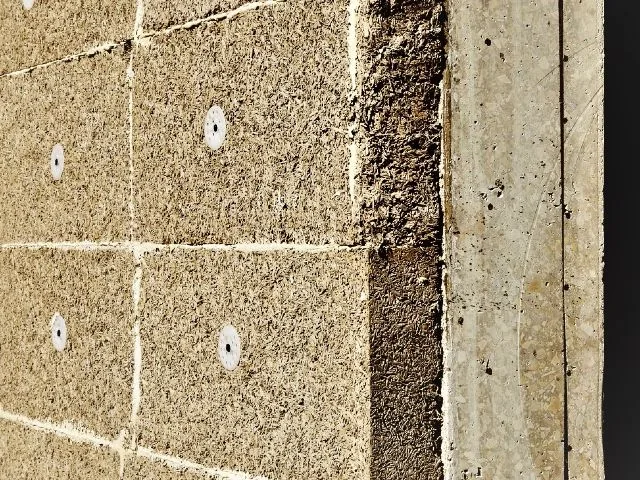
The external hemp block is a bio-based insulation material suitable for external wall insulation (EWI). It offers good thermal resistance, natural humidity regulation, and is installed using masonry techniques with appropriate renders. It is non-loadbearing and requires a supporting structure. Installation must follow precise guidelines, particularly regarding protection from water.
What is an external hemp block and its main characteristics
The external hemp block is a bio-based building material made primarily from hemp shiv (84%), combined with a hydraulic binder—Vicat natural prompt cement. This binder is vapour-open, helping to regulate humidity within the wall. The block has a density of around 300 kg/m³, making it much lighter than traditional masonry blocks.
The MULTICHANVRE range comes in a standard size of 60 × 30 cm, with four available thicknesses: 10, 15, 20, and 30 cm. These thicknesses correspond to dry thermal resistance values ranging from 1.5 to 4.6 m².K/W, allowing for a variety of external insulation requirements.
Key properties of hemp blocks include effective humidity regulation, sound absorption with an α coefficient of 0.4 for the MULTICHANVRE range, and a fire reaction rating of B-s1,d0. These features contribute to improved indoor comfort, particularly by limiting humidity fluctuations and enhancing air quality, certified A+.
It is important to note that to achieve the same thermal resistance as mineral wool, hemp blocks require a greater thickness. This can reduce usable floor area for internal insulation, a factor to consider when choosing insulation. For external insulation, this thickness is included in the total wall build-up.
For more detailed information on composition and characteristics, see our dedicated page on hemp blocks.
Thermal and acoustic performance of external hemp blocks
The thermal performance of external hemp blocks is mainly defined by the thermal resistance R, which varies with block thickness. The MULTICHANVRE range offers blocks with in-use thermal resistance values from 1.4 to 4.2 m².K/W, measured under normal conditions. These values should be considered in thermal studies to size insulation according to regulatory requirements and local climate.
Thermal lag, which indicates the material’s ability to delay heat transfer, reaches 18.5 hours for the 30 cm thick block. This lag, calculated using the standard formula, helps improve summer comfort by limiting overheating in buildings.
Acoustically, the absorption coefficient α is 0.4 for MULTICHANVRE blocks, indicating a moderate ability to absorb sound and reduce internal reverberation. This property enhances acoustic comfort, especially in renovation projects or rooms with high noise levels.
Compared to other bio-based or traditional insulants, hemp blocks have a thermal conductivity λ of around 0.065 W/(m.K), which is higher than mineral wools but offset by their thermal mass and humidity regulation. For a suitable choice, we recommend consulting our technical comparison and our guides on thermal performance.
Appropriate uses for hemp blocks in external insulation
Hemp blocks are suitable for external wall insulation (EWI), particularly as a lining on existing walls. They can be used with various supporting structures, such as masonry walls, timber frames, or post-and-beam systems, provided these structures ensure the building’s stability. The block itself is not loadbearing.
Special care must be taken to protect the blocks from water. Hempcrete is vapour-open but sensitive to liquid water ingress. Suitable lime-rich external renders should be applied to ensure good vapour permeability and protection from the weather. Areas exposed to moisture or splashing require extra precautions or additional protection.
It is important to note that hemp blocks are not intended for roofs or pitched surfaces. BIOSYS U ring beam blocks can be used for gable verge formwork, but not for roof insulation. These limitations are due to mechanical properties and durability requirements in such applications.
To explore recommended uses, see the Applications: IWI, EWI, partitions, floors and timber frame infill page.
Installing and applying hemp blocks for external insulation
Installing hemp blocks for external insulation follows a specific method. Blocks are laid in bonded masonry using a lime-based mortar applied with a notched trowel. Joints are thin, around 3 mm, and blocks are laid in a staggered pattern with at least one third overlap (20 to 40 cm).
The connection to the substrate is made using mechanical fixings such as angle brackets, straps, or fixing discs, with 2 to 5 fixings per square metre as required. This ensures the stability of the hemp lining on the supporting wall.
The first course is laid on a 2 cm bed of waterproof mortar, which acts as a capillary break and levels out any irregularities in the substrate. For EWI, this first course must be at least 15 cm above external ground level, on a concrete plinth tied to the wall or on a dedicated profile.
Chases for electrical services are cut using a wall chaser, with holes made using a hole saw. Conduits and boxes are fixed in place and made good with a compatible product, such as a batch of hempcrete or a fixing suitable for the finishing render. For EWI, as there is no gap between the wall and the hemp insulation, services must be routed directly within the blocks.
Protecting the blocks from water is essential. The external finish is a lime render, which ensures vapour permeability and protection from the elements. A vapour barrier is not required as long as the wall has at least one face open to water and vapour transfer. If in doubt, a thermal study is recommended.
A section diagram of a wall insulated with external hemp blocks illustrates these key principles. For more details on installation, our installation guide provides further information.
Comparison of MULTICHANVRE block thicknesses and performance for external use
| Thickness (cm) | Dry thermal resistance R (m².K/W) | In-use thermal resistance R (m².K/W) | Thermal lag (h) | Block weight (kg) | Packing (blocks/pallet) | Area/pallet (m²) | Recommended EWI uses |
|---|---|---|---|---|---|---|---|
| 10 | 1.5 | 1.4 | 6.1 | 6.5 | 120 | 21.6 | External (EWI) and internal (IWI) insulation |
| 15 | 2.3 | 2.1 | 9.25 | 10 | 80 | 14.4 | EWI, IWI and partitions |
| 20 | 3.0 | 2.8 | 12.3 | 13 | 60 | 10.8 | EWI, IWI, partitions, infill and floors |
| 30 | 4.6 | 4.2 | 18.5 | 21 | 56 | 10.08 | High-performance EWI, IWI, heavyweight partitions, infill and floors |
The choice of thickness depends on the project’s thermal requirements and any constraints on available space. 10 and 15 cm blocks are suitable for light insulation or partitions, while 20 and 30 cm blocks deliver higher performance, especially for EWI.
For more information on the range, see the dedicated MULTICHANVRE range page: thicknesses and performance.
Maintenance, durability and storage of external hemp blocks
Hemp blocks have proven durability since 2017 on our reference projects. Hempcrete has been used in France since the 1980s with few reported defects. However, it is not rot-proof, so special care is needed during storage and installation.
Pallets should be stored under cover, in a dry area and not stacked, to prevent damage from moisture or excessive weight. This is separate from the material’s natural resistance to rodents, pests and mould, which is a key advantage of hempcrete.
External renders should be maintained regularly to ensure ongoing protection from water. Lime renders, which are compatible with the block’s vapour permeability, are recommended. Regular inspections help detect any cracks or deterioration.
We recommend following our guide to the lifespan and maintenance of hemp block walls to ensure the longevity of your project.
Frequently asked questions about external hemp blocks
Several questions often arise regarding the use of hemp blocks for external insulation:
- Do hemp blocks require a vapour barrier for EWI? Generally, no. The block naturally regulates humidity, provided the wall has at least one face open to vapour transfer. A thermal study is recommended as appropriate.
- What is the difference between MULTICHANVRE and BIOSYS for external use? MULTICHANVRE is a bonded masonry insulation system suitable for EWI. BIOSYS is a dry-stacked system used as infill on reinforced concrete post-and-beam structures, with a thicker block and faster installation, but currently without a valid Avis Technique.
- Are hemp blocks compliant with thermal regulations? Yes, provided the in-use thermal resistance values are correctly included in the thermal study. The chosen thickness must suit local requirements and building type.
- How can I buy blocks for external insulation? Distribution is exclusively through a network of partner builders’ merchants. Lead times are typically around one week, depending on location.
- Is training available for installation? Training is available for BIOSYS via our partner Vicat. For MULTICHANVRE, we can direct you to locally trained tradespeople, but there is no official network.
For more details, see the full FAQ on hemp blocks.
For any specific request or quote, feel free to request a free quote for hemp blocks. We will then direct you to the nearest merchant for your project. You can also consult the list of distributors by region.
Frequently asked questions
Can a hemp block be laid directly in contact with external ground?
No. For external insulation, the first course of blocks must be at least 15 cm above ground level, on a concrete plinth or a base profile to prevent rising damp.
Do hemp blocks require a vapour barrier for external insulation?
For EWI, hemp blocks naturally regulate humidity and do not require a vapour barrier, provided the wall has at least one face open to vapour transfer. A thermal study is recommended for each case.
Which renders are compatible with external hemp blocks?
Lime-rich renders are recommended for external use due to their vapour permeability and compatibility with the humidity regulation of hemp blocks.
What thickness of hemp block should I choose for effective external insulation?
This depends on your project’s thermal requirements. The MULTICHANVRE range offers blocks from 10 to 30 cm, with in-use thermal resistance values from 1.4 to 4.2 m².K/W. A suitable choice can be guided by a thermal study.
Are hemp blocks loadbearing materials?
No. Hemp blocks, including MULTICHANVRE and BIOSYS, are not loadbearing. They must be used with a supporting structure such as a substrate wall, timber frame or post-and-beam system.
How are hemp blocks for external insulation distributed?
Sales are exclusively through a network of distributors in France. Average delivery time is about one week depending on location.
Can loads be fixed to a wall insulated with external hemp blocks?
For MULTICHANVRE blocks of 20 and 30 cm, fixings up to 10 kg can be installed with screws without pre-drilling. For heavier loads, fixings must be anchored to the supporting structure.
Read next
Planning a hemp block project?
Tell us about your project: we will reply within 48 working hours with a tailored costing.