Bio-based insulation grants in 2026: how to claim support
In 2026, several financial incentives are available for bio-based insulation, subject to works, income and performance criteria. To claim support, you need to identify the right schemes, prepare a complete application with quotes, and submit your request to the relevant organisations. This guide explains the key steps to putting your application together.
 By Julien Compain
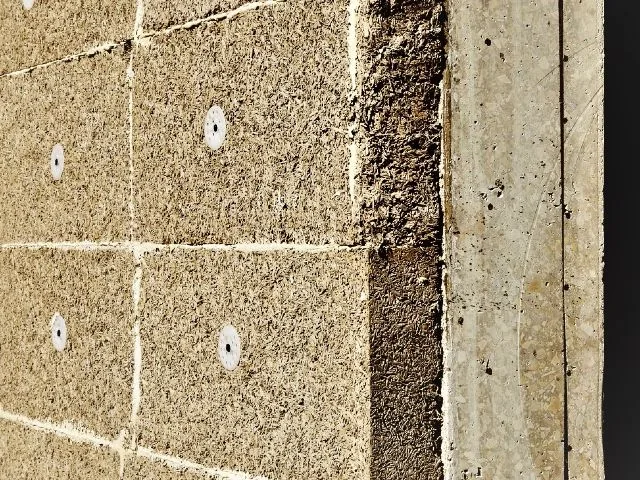
In 2026, several financial incentives are available to support bio-based insulation, subject to conditions regarding the works, income, and performance. To benefit, you must identify the right schemes, prepare a complete application with quotes, and submit your request to the relevant organisations. This guide outlines the key steps for putting together your application.
Understanding bio-based insulation and its benefits
Bio-based insulation refers to the use of materials derived from renewable plant or animal resources to improve the thermal performance of buildings. Commonly used materials include hemp, wood fibre, cork, cellulose wadding, and hemp fibre. These materials are notable for their vapour permeability (allowing water vapour to pass through), thermal mass and lag, and their ability to naturally regulate indoor humidity.
For hempcrete, for example, the mix typically contains 84% hemp shiv—the woody core of the hemp stem—bound with a natural prompt cement. This composition ensures good vapour permeability and a density of around 300 kg/m³, with a dry thermal conductivity λ of approximately 0.065 W/(m.K). Thermal lag can reach up to 18.5 hours in 30 cm thick blocks, helping to keep interiors cooler in summer by delaying heat transfer.
These technical characteristics not only improve thermal insulation but also enhance indoor air quality by reducing the risk of condensation and regulating humidity. Additionally, the hemp used in these materials absorbs a significant amount of atmospheric carbon during growth, which remains locked in the block—an important environmental advantage. For more details on the material, see our dedicated pages Hempcrete blocks and Hemp as a building material.
Overview of financial incentives available in 2026
In 2026, several types of financial support may help fund a bio-based insulation project. These mainly take the form of energy grants, regional or local subsidies, tax credits, and sometimes preferential loans. Their availability and conditions vary by region and according to the schemes in place.
Eligibility criteria often include household income, the type of property (main residence, new build or renovation), geographic location, and the nature of the works. Some local authorities also offer specific programmes focused on thermal renovation using bio-based materials.
It is important to note that not all bio-based materials automatically qualify for support. Each scheme sets out precise technical and administrative requirements, particularly regarding thermal performance and certification. These criteria should be checked carefully before starting the process to avoid disappointment.
Technical and regulatory criteria for eligibility
To qualify for bio-based insulation incentives, materials must meet certain thermal performance standards, often expressed as required thermal resistance (R-value) depending on the thickness installed. For example, with MULTICHANVRE blocks, R-values range from 1.4 m².K/W for 10 cm thickness to 4.2 m².K/W for 30 cm. These figures should be included in the project’s thermal study.
In addition, materials must comply with recognised standards and certifications. For hemp blocks, MULTICHANVRE certification is currently under review, with no technical approval or ATEx issued at present, so eligibility must be confirmed on a case-by-case basis. The BIOSYS system’s technical approval has expired and is awaiting renewal. These points are crucial for the acceptance of grant applications.
Installation must be carried out by qualified professionals, usually with RGE (Recognised Guarantor of the Environment) certification, to ensure compliance with technical and regulatory requirements, including those of RE2020 (France’s environmental building regulation). Adherence to installation guidelines, as set out in our hemp block installation guide, is also required for grant validity.
Comparison table of main bio-based insulation incentives in 2026
| Name of incentive | Type | Eligibility conditions | Amount or rate | Eligible bio-based materials | Managing body | Application process |
|---|---|---|---|---|---|---|
| Energy renovation grant | Grant | Works carried out by an RGE professional, existing property | Varies by project, typically between €10 and €50/m² | Hemp, wood fibre, cork, cellulose wadding | Energy suppliers and certified organisations | Submit application with quotes, invoices and RGE certificate |
| Regional subsidies | Subsidy | Depending on region, income and property type | Amounts vary, subject to regional budgets | Locally recognised bio-based materials | Regional or departmental councils | Specific form, technical and financial documentation |
| Energy transition tax credit (CITE) | Tax credit | Main residence, meets energy performance standards | Percentage of eligible expenditure | Certified materials installed by RGE | Tax authorities | Tax return with supporting documents |
| Zero-interest eco-loan (PTZ) | Loan | Comprehensive energy renovation | Amount capped according to project | Bio-based materials included in works | Partner banks | Bank application with quotes and financing plan |
Practical steps for preparing a bio-based insulation grant application
- Initial project assessment: Analyse thermal requirements, choose the appropriate bio-based material (for example, MULTICHANVRE block for internal or external insulation depending on thickness), and consider space constraints.
- Gathering quotes: Request detailed quotes from partner builders’ merchants and qualified professionals. Ensure quotes clearly state the materials used, their thickness, and corresponding R-values.
- Checking qualifications: Make sure installers hold RGE or equivalent certification, which is essential for most grants.
- Compiling the application: Collect supporting documents: quotes, invoices, RGE certificates, technical data sheets for materials (available in our technical documentation for professionals), and, if required, the thermal study.
- Submitting the application: Send the complete application within the deadlines set by the managing body. Some schemes require submission before work begins.
- Follow-up: After submission, track the progress of your application, respond to any requests for additional information, and receive the grant as per the scheme’s terms. A technical inspection or site visit may be carried out.
Tips for optimising your bio-based insulation project in renovation or new build
Choosing the right thickness and type of hemp block is crucial to balance thermal performance with the specific constraints of your project. For example, MULTICHANVRE blocks are available in 10, 15, 20 and 30 cm thicknesses, with dry thermal resistance values from 1.5 to 4.6 m².K/W, and slightly lower useful values. In internal renovations, insufficient thickness can lead to inadequate insulation, while greater thickness reduces usable floor area—an important trade-off to consider.
Thermal lag, which can reach 18.5 hours with the 30 cm block, is a real advantage for summer comfort, delaying heat ingress. The moisture-regulating ability of hempcrete also helps maintain optimal humidity levels without the need for a vapour barrier, provided the wall is vapour-open to the outside or protected by a suitable lining in wet areas.
To optimise your project, we recommend consulting our technical guides and the hemp block installation guide. Finally, requesting a free quote via our online form gives you a personalised offer and connects you with your nearest partner merchant, making planning and budgeting easier.
Limitations and points to watch regarding bio-based insulation incentives
- Ongoing certification: MULTICHANVRE block is undergoing certification and does not yet have technical approval or ATEx, while BIOSYS is awaiting renewal of its technical approval. This may restrict access to certain grants that require certified materials.
- Means-tested support: Grants are not automatic: they depend on the applicant’s income, property type, and the criteria of each scheme.
- Changing schemes: The amounts, conditions and validity of grants may change during the year, so it is important to keep up to date with official information.
- Thermal study: A prior thermal study is recommended to optimise insulation, check expected performance, and secure eligibility for grants.
- Profitability: Grants do not guarantee the financial profitability of a project. They should be seen as support, not the sole deciding factor.
Where and how to find information on bio-based insulation incentives in 2026
Official government websites and platforms dedicated to energy renovation are the first places to check for information on available grants, their conditions, and how to apply. Local authorities also often have dedicated portals detailing their own programmes.
The network of partner builders’ merchants plays a key role in supporting project owners, supplying blocks and accessories from stock, and directing you to qualified professionals. Our online free quote request form puts you in touch with your nearest merchant, making the process easier.
Consulting our technical documentation for professionals and guides helps you validate your choice of materials and understand technical and regulatory constraints. Finally, it is important to keep up to date with regulatory changes and any local grants that may supplement national schemes.
Frequently asked questions
What are the main incentives available for bio-based insulation in 2026?
Support includes energy grants, tax credits, and local or regional subsidies. Eligibility depends on the type of works, household income, and the technical compliance of materials and installation.
Do I need to use an RGE professional to qualify for grants?
Yes, for most grants, installation must be carried out by an RGE-certified tradesperson or company to ensure technical and regulatory standards are met.
Are MULTICHANVRE hemp blocks certified for grants?
MULTICHANVRE is undergoing certification but does not yet have technical approval or ATEx. Its eligibility for grants must therefore be confirmed on a case-by-case basis through a thermal study and with the relevant organisations.
How do I prepare a grant application for bio-based insulation?
You need to collect detailed quotes, proof of installer qualifications, technical data sheets for the materials, and submit a complete application to the managing bodies within the required deadlines.
Does insulating with hemp blocks always reduce usable floor area?
For internal insulation, hemp blocks require a certain thickness to achieve good thermal resistance, which can reduce usable space. This trade-off should be assessed for each project.
Do grants also cover the installation of hemp blocks?
Grants generally cover both materials and certified labour, but you should check the specific conditions of each scheme.
Where can I get a quote for a hemp block insulation project?
You can request a free quote via our online form. We will put you in touch with your nearest partner merchant for a tailored offer for your project.
Read next
Planning a hemp block project?
Tell us about your project: we will reply within 48 working hours with a tailored costing.