What is the best insulation against heat? Practical checklist
The best insulation against heat combines low thermal conductivity, high thermal lag, and effective humidity regulation. Hemp blocks offer all these qualities, with conductivity around 0.065 W/(m.K), thermal lag up to 18.5 hours, and the ability to regulate indoor humidity, providing natural summer comfort.
 By Julien Compain
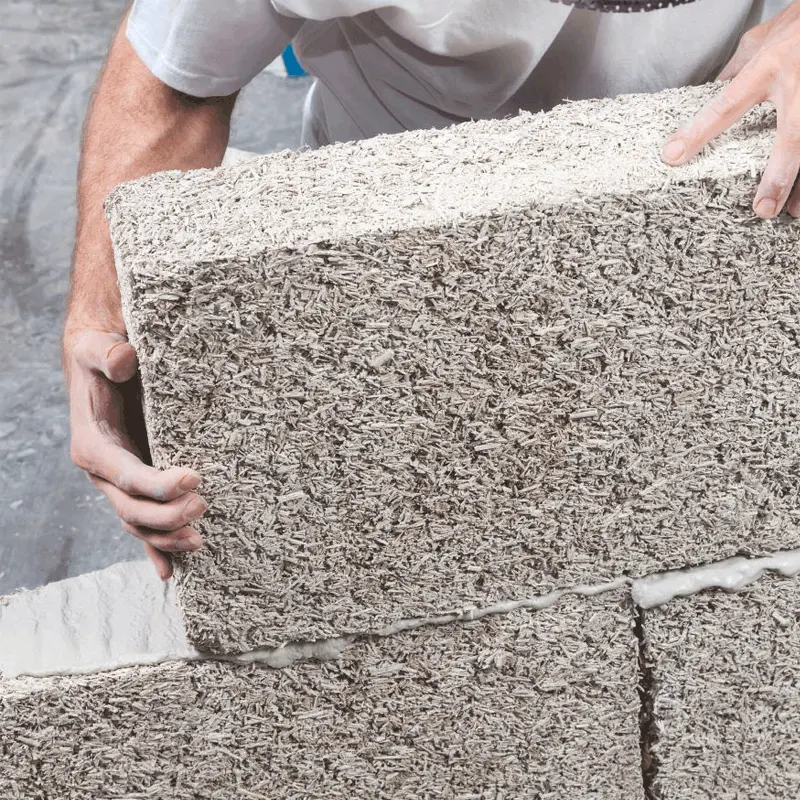
The best insulation against heat combines low thermal conductivity, high thermal lag, and effective moisture regulation. Hempcrete blocks offer all these qualities, with a conductivity of around 0.065 W/(m.K), a thermal lag of up to 18.5 hours, and the ability to regulate indoor humidity, ensuring naturally comfortable summer conditions.
Physical principles of heat insulation
To choose the best insulation against heat, it’s important to understand some fundamental physical principles relating to heat transfer and material behaviour.
- Thermal conductivity (λ): This coefficient measures a material’s ability to conduct heat. The lower the conductivity, the better the insulation. It is expressed in watts per metre-kelvin (W/(m.K)).
- Thermal lag: This is the time it takes for heat to pass through a material. A high thermal lag means heat takes longer to penetrate, which is especially useful for preventing summer overheating and improving indoor comfort.
- Thermal capacity and mass: Thermal capacity refers to the amount of heat a material can store. Combined with density, it contributes to thermal mass, i.e. the building’s ability to buffer temperature fluctuations.
- Moisture regulation: Some materials, such as hempcrete blocks, absorb and release moisture, helping to maintain a stable and comfortable humidity level. This regulation improves indoor air quality and contributes to thermal comfort by reducing discomfort from excessive or insufficient humidity.
Key criteria for choosing effective heat insulation
Effective insulation against heat must meet several criteria to ensure optimal thermal comfort, particularly in hot climates or during summer.
- Low lambda value: Low thermal conductivity (λ) is essential to limit heat transfer. For example, our hempcrete block has a conductivity of around 0.065 W/(m.K), which is competitive among bio-based insulation materials.
- Sufficient thermal lag: The insulation must delay the passage of heat. A high thermal lag, such as that of hempcrete blocks (up to 18.5 hours for 30 cm thickness), helps keep heat out of buildings when outdoor temperatures are high.
- Heat storage and release capacity: Good thermal insulation should be able to absorb heat during the day and release it at night, helping to maintain a more stable indoor environment.
- Regulatory compliance: It’s important that the material meets current requirements, particularly RE2020 (France’s environmental building regulation), which includes thermal and environmental performance criteria.
- Thickness and installation method: Performance also depends on the thickness used and the installation system. The method must be compatible with the building (internal or external wall insulation) and designed to minimise thermal bridges.
Technical comparison of common insulation materials for heat protection
| Insulation | Conductivity λ (W/m.K) | Thermal lag (h) | Density (kg/m³) | Standard R (m².K/W) | Application (IWI / EWI / Floor / Partition) |
|---|---|---|---|---|---|
| Mineral wool | ≈ 0.035 | Low (varies with thickness) | 30-100 | Varies with thickness | IWI, EWI, partition |
| Expanded polystyrene | ≈ 0.035 | Low | 15-35 | Varies | Mainly EWI |
| Wood fibre | ≈ 0.045 | 10-12 | 150-250 | Varies | IWI, EWI |
| Hempcrete block (MULTICHANVRE) | ≈ 0.065 | 6.1 h (10 cm) to 18.5 h (30 cm) | ≈ 300 | 1.5 (10 cm) to 4.6 (30 cm) dry R | IWI, EWI, floors, partitions |
Mineral wool and polystyrene have low thermal conductivity but low thermal mass, so their thermal lag is limited. Wood fibre and hempcrete blocks have higher mass, which improves summer comfort. Hempcrete blocks stand out for their ability to regulate humidity and their acoustic properties, with a sound absorption coefficient α = 0.85. In terms of durability, hempcrete blocks are naturally resistant to rodents, pests and mould, with a fire rating of B-s1,d0, whereas synthetic insulations often require specific treatments.
Spotlight on hempcrete blocks as heat insulation
Hempcrete blocks are made from 84% hemp shiv, the woody core of the hemp stem, combined with a mineral binder, Vicat natural prompt cement. Their density is around 300 kg/m³, giving them good thermal mass and a thermal lag of up to 18.5 hours for 30 cm thickness.
MULTICHANVRE blocks are available in four thicknesses: 10, 15, 20 and 30 cm, with respective dry thermal resistances of 1.5, 2.3, 3.0 and 4.6 m².K/W, and slightly lower in-use values (about 5 to 10% less, depending on application and installation conditions). These thicknesses cover a range of uses: floor insulation, partitions, timber frame infill, internal wall insulation (IWI) and external wall insulation (EWI).
The natural moisture regulation of hempcrete blocks, within a comfortable range, helps maintain a stable and healthy indoor climate, with an A+ indoor air quality rating. In terms of safety, the block meets fire classification B-s1,d0.
However, to achieve the same thermal performance as mineral wool, a greater thickness of hempcrete block is required, which can reduce usable floor area, especially for IWI. The block is not load-bearing and requires a suitable supporting structure, either a supporting wall or a post-and-beam frame for the BIOSYS system ().
For more details on performance and thickness selection, see our MULTICHANVRE range: thicknesses, thermal resistance, thermal lag and the hempcrete block insulation technical data sheet.
How to integrate heat insulation into your project
The choice between internal wall insulation (IWI) and external wall insulation (EWI) depends on the existing building, architectural constraints and thermal objectives. MULTICHANVRE hempcrete blocks are designed for both installation types, as well as for timber frame infill, partitions and floor insulation under screed.
MULTICHANVRE blocks are installed in three steps: applying lime-based mortar with a notched trowel, laying the blocks in bonded masonry with staggered joints, then fixing with brackets and finishing with render. This method ensures a solid bond and good airtightness while limiting thermal bridges.
The BIOSYS system is a dry-stacked construction system, without glue or mortar, combining hempcrete blocks and a reinforced concrete frame. It allows fast assembly and high-performance insulation with an in-use thermal resistance of 4.2 m².K/W.
In all cases, hempcrete blocks must be combined with a suitable load-bearing structure, as the blocks themselves are not structural. Compatible interior finishes include spray plaster, lime, earth or clay, while exterior finishes should be lime-rich renders with full mesh reinforcement to preserve the wall’s thermal and vapour-open properties.
To see an example of assembly, visit our BIOSYS construction system and the comprehensive installation guide.
Comparison table: thermal characteristics of bio-based and conventional insulation
| Material | Thermal conductivity λ (W/m.K) | Thermal resistance R (m².K/W) | Thermal lag (h) | Density (kg/m³) | IWI / EWI compatibility | Fire rating | Indoor air quality |
|---|---|---|---|---|---|---|---|
| Hempcrete block 10 cm (MULTICHANVRE) | 0.065 | 1.5 (dry) / 1.4 (in-use) | 6.1 | ≈ 300 | Floor, partitions | B-s1,d0 | A+ |
| Hempcrete block 15 cm (MULTICHANVRE) | 0.065 | 2.3 / 2.1 | 9.25 | ≈ 300 | Infill, partitions | B-s1,d0 | A+ |
| Hempcrete block 20 cm (MULTICHANVRE) | 0.065 | 3.0 / 2.8 | 12.3 | ≈ 300 | Standard IWI, EWI | B-s1,d0 | A+ |
| Hempcrete block 30 cm (MULTICHANVRE) | 0.065 | 4.6 / 4.2 | 18.5 | ≈ 300 | High-performance EWI, construction | B-s1,d0 | A+ |
| BIOSYS block 30 cm | 0.065 | 4.6 / 4.2 | 18.5 | ≈ 300 | Construction, post-and-beam | B-s1,d0 | A+ |
Checklist before buying heat insulation
Before choosing insulation, check several points to ensure your choice is suitable and your project is successful.
- Reliable, certified technical data: Make sure the performance figures come from accurate technical data sheets, such as those available on our site, and that the materials have the necessary certifications or technical approvals.
- Installation constraints and available space: The chosen thickness must suit the building’s constraints, especially for IWI where usable floor area may be reduced.
- Local climate conditions: Choose the material to suit your region and building type to optimise thermal performance.
- Maintenance and durability: Check storage conditions (keep pallets sheltered and dry), resistance to rodents and pests, and recommendations for finishes that protect the material.
- Technical advice: Don’t hesitate to contact our technical support or a professional for tailored guidance.
- Detailed quote and cost/performance comparison: Request a detailed quote using our form at contact#devis to compare possible solutions.
For practical installation advice, see our comprehensive installation guide.
Effective examples of heat insulation applications
Hempcrete blocks are suitable for many situations to reduce heat:
- Internal insulation of an old stone wall with 20 cm MULTICHANVRE blocks, providing an in-use thermal resistance of 2.8 m².K/W and good thermal mass, with a compatible finish (lime or earth render).
- External insulation with 30 cm MULTICHANVRE blocks, for high thermal performance (in-use R 4.2 m².K/W) and high thermal lag, suitable for new builds or major renovations.
- Timber frame infill with MULTICHANVRE blocks, combining insulation and moisture regulation for year-round thermal comfort.
- Use in partitions and floor insulation under screed, optimising thermal and acoustic performance.
- Assembly using the BIOSYS system, offering fast installation without mortar or glue, with high-performance insulation in 30 cm thickness.
Examples of projects and feedback are available on our projects page.
Resources and support for choosing and installing the best heat insulation
Our website offers a range of tools to help you make the right choice:
- Technical guides and detailed product data sheets, such as the hempcrete block insulation technical data sheet or the guide on thermal performance of hempcrete blocks.
- Documentation on RE2020 thermal regulations and applicable labels.
- Technical support and personalised quotes available via our contact form, with a response time within 48 working hours.
- Installation guides and resources for tradespeople, architects and design offices.
- Advice on maintaining and ensuring the durability of hempcrete block constructions, including sheltered storage and suitable finishes.
For further practical information, we recommend consulting our guides and product data sheets, especially the guide on choosing the right hempcrete block thickness for your insulation.
Frequently asked questions
What is thermal lag and why is it important for heat protection?
Thermal lag is the time it takes for heat to pass through a material. A high thermal lag, such as that of hempcrete blocks (up to 18.5 hours), delays heat penetration and improves summer comfort inside the building.
Are hempcrete blocks suitable for internal insulation against heat?
Yes, 20 cm MULTICHANVRE blocks provide an in-use thermal resistance of 2.8 m².K/W and good moisture regulation. However, the required thickness is greater than for mineral wool, which can reduce usable floor area.
What are the advantages of the BIOSYS system for summer thermal insulation?
The BIOSYS system combines interlocking hempcrete blocks with a reinforced concrete frame, offering an in-use thermal resistance of 4.2 m².K/W and high thermal lag, ensuring effective heat insulation with fast assembly and no glue or mortar.
How can you minimise thermal bridges with a natural insulation like hempcrete blocks?
Hempcrete blocks greatly reduce thermal bridges thanks to their format and bonded masonry or interlocking installation. However, a masonry joint can still be a potential thermal bridge, so careful installation and suitable finishes are essential.
What finishes are recommended for a wall insulated against heat with hempcrete blocks?
For interiors, finishes can include lime render, earth, clay or spray plaster. For exteriors, lime-rich renders with full mesh reinforcement are suitable to preserve the wall’s thermal and vapour-open properties.
Are hempcrete blocks resistant to rodents and moisture?
Hempcrete blocks are naturally resistant to rodents, pests and mould due to their formulation. However, they are not rot-proof and pallets must be stored sheltered and dry before installation.
How can I get a quote for heat insulation with hempcrete blocks?
You can request a personalised quote via our contact form at /contact#devis. Our team will respond within 48 working hours to support your project.
Read next
Planning a hemp block project?
Tell us about your project: we will reply within 48 working hours with a tailored costing.