Internal wall insulation for stone walls with hempcrete blocks: technique and feedback
Hempcrete blocks are well suited to internal insulation of stone walls thanks to their vapour openness, moisture regulation and thermal mass. They improve thermal and hygrothermal comfort without risking damp in the masonry, provided the substrate is properly prepared and the right thickness is chosen.
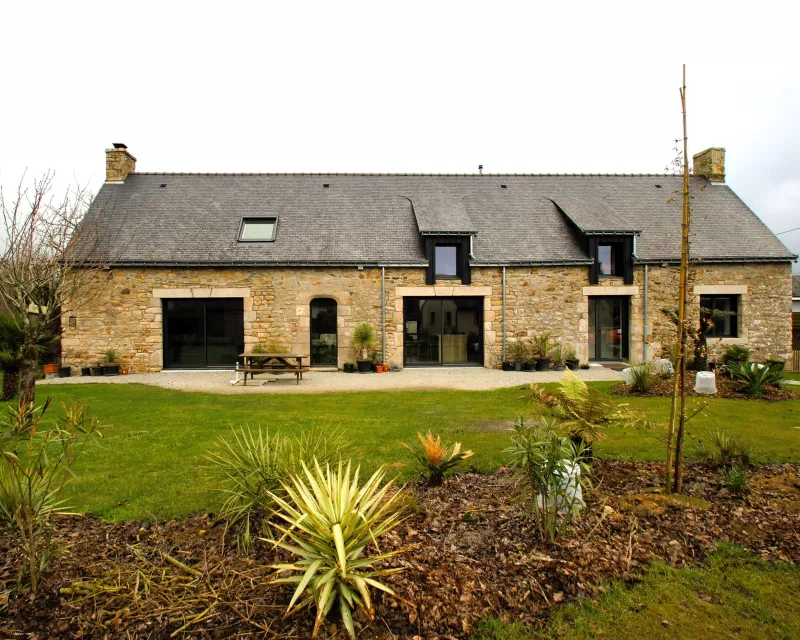
| Solution used | IWI · 10 cm |
|---|---|
| Area treated | 145 m² of walls |
| Town | Mirebeau |
| Département | Côte d'Or |
| Year | 2026 |
Hempcrete blocks are well suited for internal insulation of stone walls thanks to their vapour permeability, moisture regulation and thermal mass. They improve both thermal and hygrothermal comfort without risking damp in the masonry, provided the substrate is properly prepared and the right thickness is chosen.
Starting point: condition of stone walls and moisture issues
Old stone walls, often over 50 cm thick, have a composition and structure that make them highly permeable to water vapour. This ability to absorb, store and release moisture makes them vulnerable to damp-related problems, especially during renovation. Moisture may come from rising damp, water run-off or poor vapour management.
- Stone walls act like a slow sponge: they absorb, store and then release moisture.
- Cement render, often applied in the 1980s, is impermeable and blocks natural evaporation, which can lead to issues such as saltpetre or internal condensation.
- Lack of drainage or sloping ground bringing water to the base of the wall increases the risk of rising damp and chronic moisture.
A prior damp survey is essential. This allows you to measure moisture levels and identify risk areas. For example, in a limestone farmhouse dating from 1878, a moisture level of 78% was recorded at the base of the north wall, making any impermeable insulation unsuitable.
Chosen solution: MULTICHANVRE 10 cm block for internal insulation
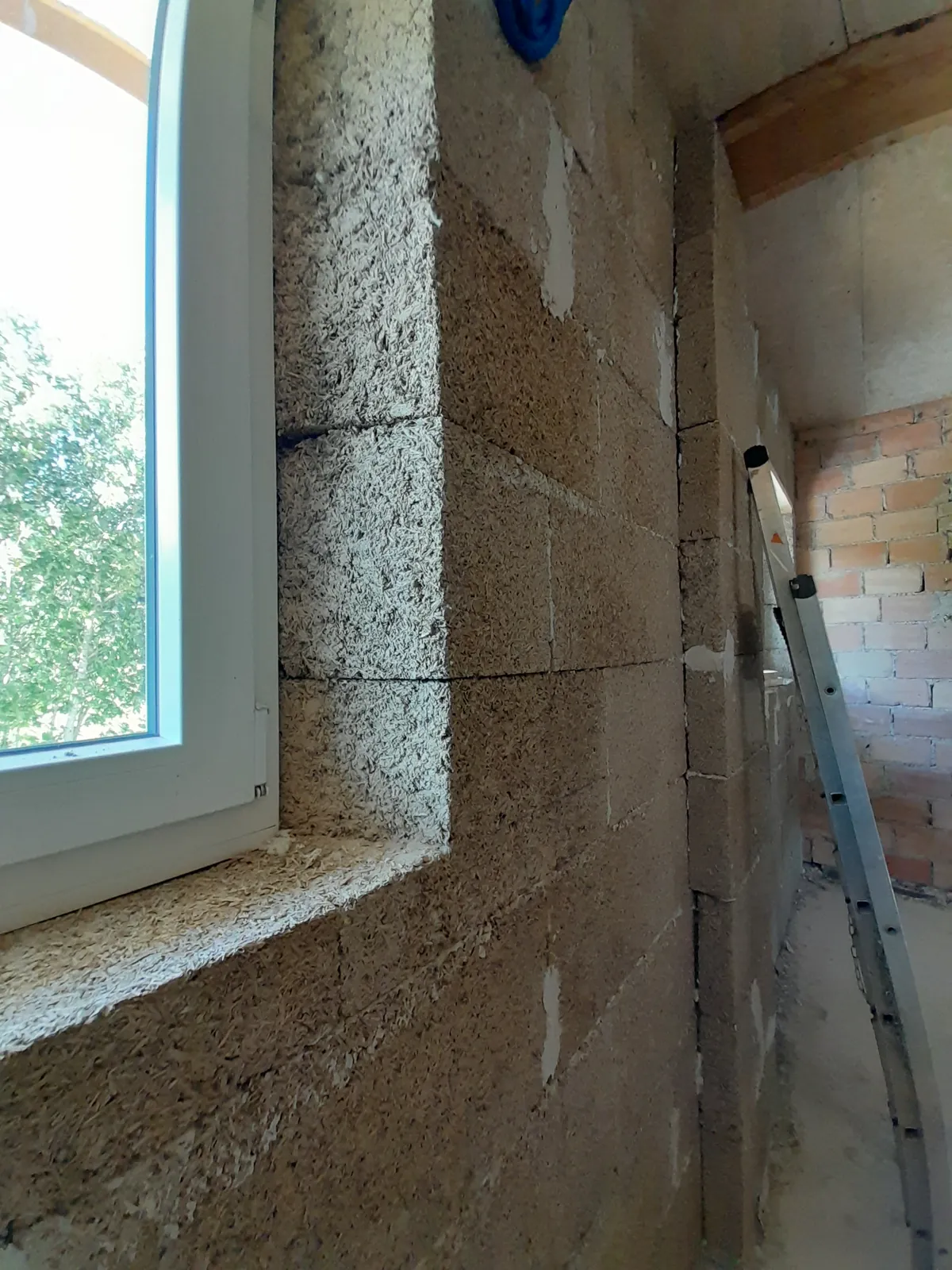
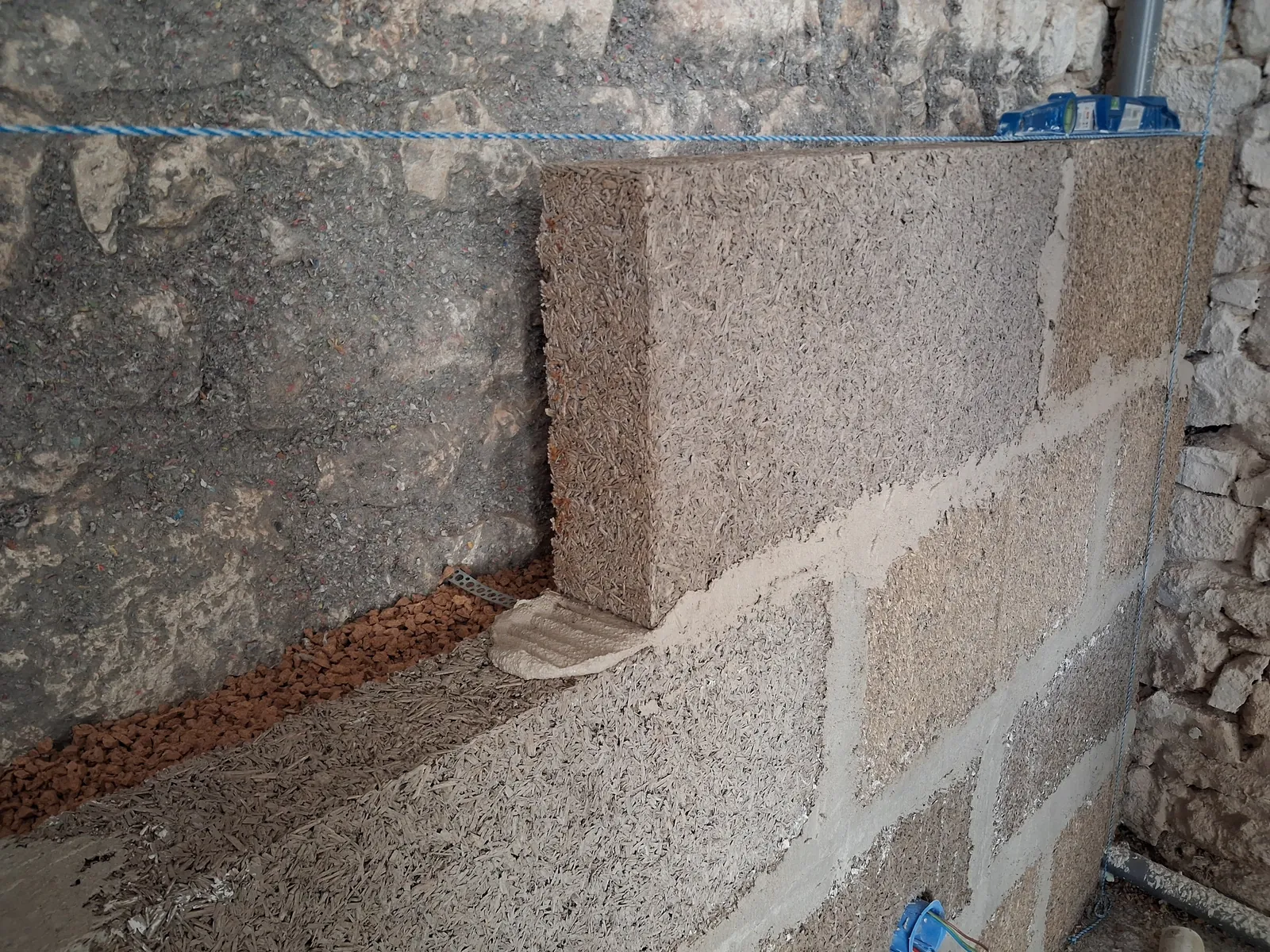
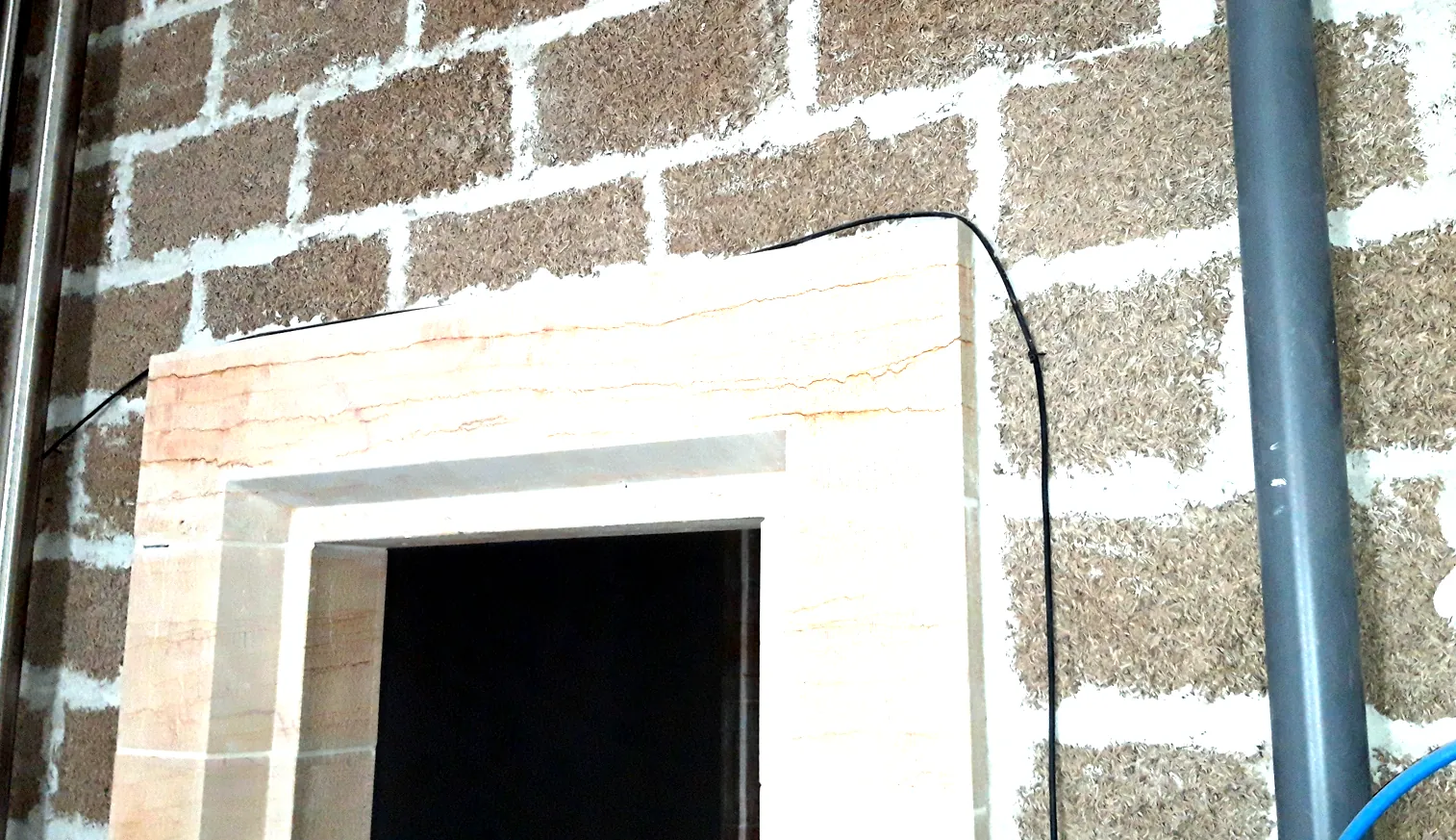
The MULTICHANVRE 10 cm block (60 × 30 cm, R = 1.5 m²·K/W) was selected as a compromise between thermal performance and preserving living space. The system is laid in a staggered bond with lime-based mortar, without a vapour barrier, and fixed to the wall with brackets. As the block is non-loadbearing, it is installed on a sound, loadbearing wall.
The hygrothermal properties of hemp are crucial. Its moisture regulation keeps indoor relative humidity within a comfortable range, reducing fluctuations. The thermal lag of around 6 hours for a 10 cm block helps keep interiors cooler in summer by delaying heat transfer. The material is vapour-open, allowing the stone wall to continue to breathe and dry out.
This choice of thickness is explained in our guide Choosing your thickness, which provides a technical analysis of the trade-offs between thermal performance, thermal mass, and impact on interior space.
Comparing MULTICHANVRE block thicknesses: performance and applications
| Thickness (cm) | Thermal resistance R (m²·K/W) | Thermal lag (h) | Block weight (kg) | Pallet coverage (m²/pallet) | Recommended use |
|---|---|---|---|---|---|
| 10 | 1.5 | 6.1 | 6.5 | 21.6 | Partitions, lightweight lining |
| 15 | 2.3 | 9.25 | 10 | 14.4 | Standard lining, partitions |
| 20 | 3.0 | 12.3 | 13 | 10.8 | High-performance internal (IWI) and external (EWI) insulation |
| 30 | 4.6 | 18.5 | 21 | 10.08 | High-performance EWI |
For stone wall renovations, 10 cm thickness is often preferred to minimise loss of living space. For example, in a room 3.40 m wide, an extra 5 cm of insulation on each wall means 10 cm less usable width. Choosing a greater thickness (15, 20 or 30 cm) improves thermal resistance but requires a trade-off with space.
Each thickness offers a different thermal lag, an important factor for summer comfort. In addition, block weight and pallet coverage affect installation logistics and site management.
The full range and technical details are available on the MULTICHANVRE range page.
Installation: preparation, laying and finishing
- Preparing the substrate: Impermeable cement renders must be removed to restore vapour permeability. This is done by fully hacking off the render, then brushing out the joints. Any defects or cracks are repaired with NHL 3.5 hydraulic lime mortar, which is compatible with stone and vapour-open.
- Drying time: After preparation, allow at least three weeks for the wall to dry naturally before installing the blocks. This helps reduce the risk of trapped moisture.
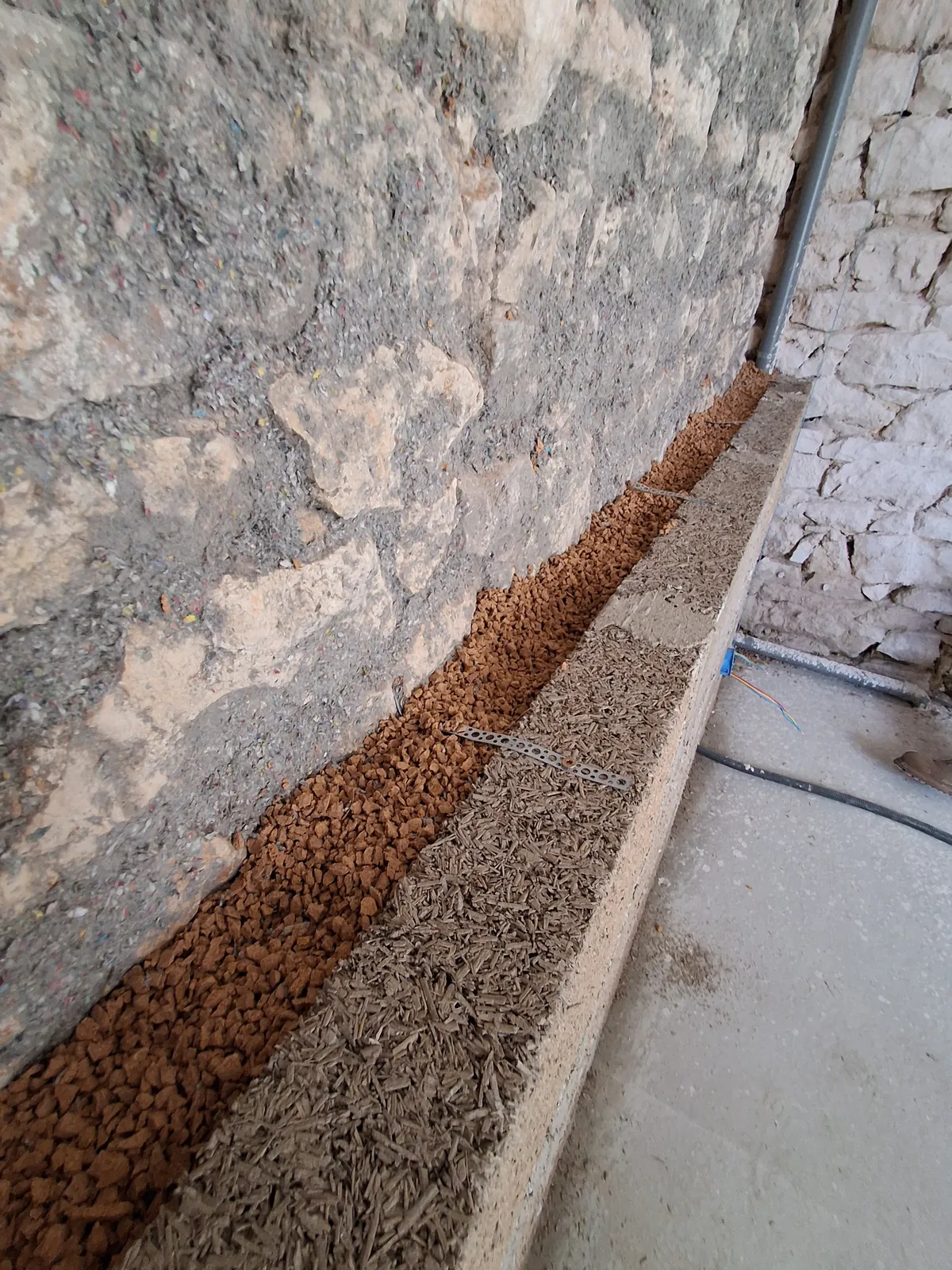
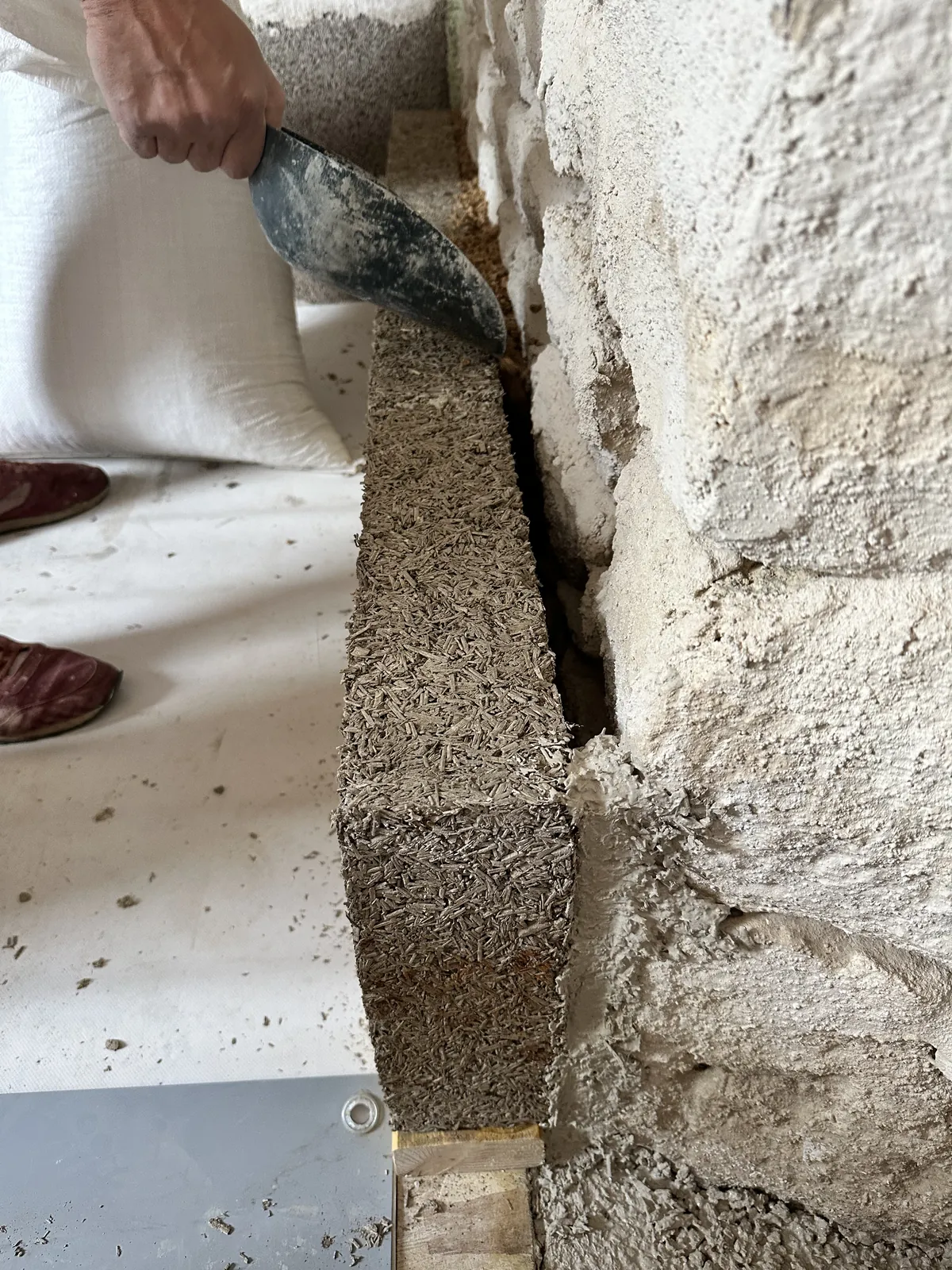
- Laying the blocks: Blocks are laid in a staggered bond, bedded with lime-based mortar applied with a notched trowel. Mechanical fixing to the wall is by brackets, two to five per square metre. Blocks are laid directly against the wall, without an air gap, to ensure good moisture and thermal transfer.
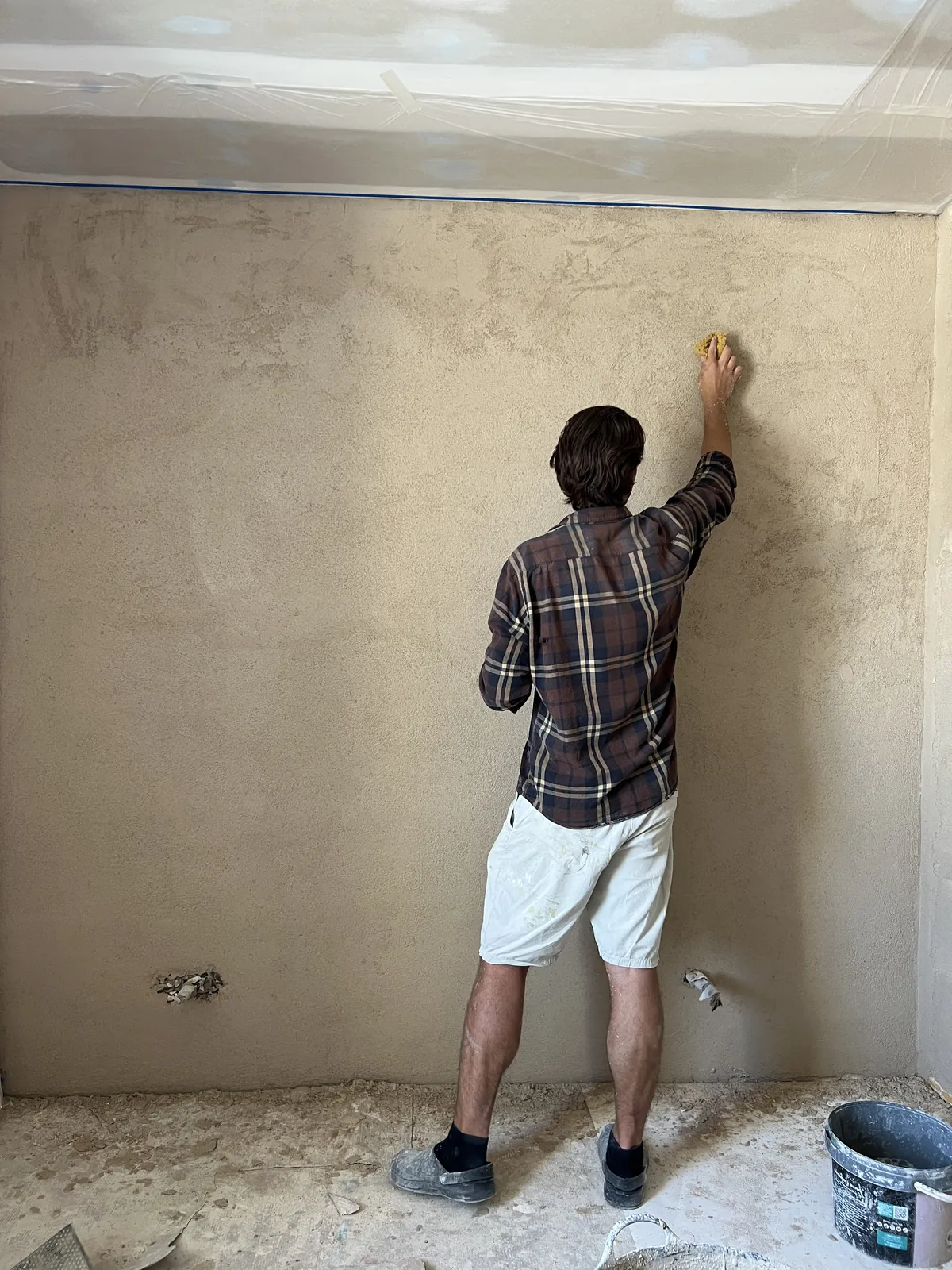
- Finishing: Compatible finishes include lime (air or hydraulic), lime-sand, lime-hemp, or earth plasters. Sprayed gypsum plaster is also possible indoors. These finishes maintain wall breathability and moisture regulation. Cement renders or vapour barriers must not be used, as they block vapour movement.
For window reveals, 5 cm insulation was used to reduce thermal bridging without reducing daylight. Roller shutter boxes were replaced with restored traditional shutters to improve thermal continuity and appearance.
For more technical details, see the guide How to install a hempcrete block.
Measured results after works: thermal and hygrothermal comfort
Measurements taken after three winters show a clear improvement in comfort and thermal performance:
- Overall thermal resistance: The insulated wall increased from around 0.6 m²·K/W to 2.9 m²·K/W, a significant thermal gain, though not reaching BBC levels, which was in line with the comfort objective.
- Perceived temperature: In the living room, the indoor temperature rose from 17°C to 19.5°C for a setpoint of 20°C, reducing the cold wall effect.
- Relative humidity: The hemp block's moisture regulation reduced relative humidity at the base of the north wall from 78% to 61%, limiting the risk of saltpetre.
- Energy consumption: Annual firewood use dropped from 11 to 7 steres, reflecting improved energy efficiency.
- Summer comfort: The 9-hour thermal lag delays temperature rise during the day, allowing effective ventilation during cooler hours and reducing overheating.
These results demonstrate the ability of hempcrete blocks to improve both thermal comfort and building health, maintaining good vapour permeability and reducing moisture-related risks.
Limitations and precautions to consider
- Loss of living space: The thickness of hempcrete blocks, especially 15 cm or more, reduces usable interior space. This trade-off should be considered in renovations, especially in narrow rooms.
- Non-loadbearing: The blocks are not structural and must be installed on a sound, loadbearing wall. For structural needs, the BIOSYS system with reinforced concrete frame is an alternative.
- Pre-treatment of rising damp: Hempcrete blocks tolerate some moisture but do not replace drainage. All rising damp must be treated and impermeable renders removed before installation.
- Durability and maintenance: Compatible finishes must be maintained to preserve breathability and prevent damage. The blocks are naturally rodent-resistant, but regular maintenance of finishes is recommended.
Environmental aspects and local supply chain
Hempcrete blocks are made from 84% hemp shiv, the woody core of the hemp stem, sourced entirely from French supply chains. The mineral binder is Vicat natural prompt cement, which is vapour-open. This composition gives the product a low carbon footprint, with a verified FDES (environmental product declaration).
The material is renewable, recyclable, and naturally rodent-resistant. Local manufacturing in Bourgogne-Franche-Comté, at the Mérey-sous-Montrond plant, helps reduce transport and supports the French hemp industry.
Hempcrete blocks store CO₂ in their biomass, making them a relevant insulation choice for RE2020 projects (France's environmental building regulation). For more on environmental benefits, see Hemp as a building material.
FAQ: common questions about internal insulation with hempcrete blocks
- Why choose hemp over conventional insulation for stone wall renovation? Hemp is vapour-open and capillary-active, allowing stone walls to dry naturally. Impermeable insulations block this movement, encouraging saltpetre and decay. Hemp protects the building fabric and improves comfort.
- What thickness should I choose for a stone wall? 15 cm is a common compromise between thermal performance and preserving living space. Greater thicknesses increase thermal resistance but reduce interior space.
- Should damp issues be treated before installation? Yes. Hempcrete blocks tolerate moisture but do not replace drainage. Rising damp must be treated and cement renders removed from the base of the wall.
- How long and how much labour for a typical project? For around 145 m², the project takes about five weeks with two workers: one week for preparation, two to three weeks for installation and finishing.
- What renders are suitable for finishing? Lime-based renders, sprayed gypsum plaster or earth plasters are recommended to preserve breathability and moisture regulation. Cement renders should be avoided.
For more on these topics, see our FAQ page, as well as technical guides and project feedback.
Frequently asked questions
Why insulate a stone wall with hempcrete blocks rather than conventional insulation?
Hempcrete blocks are vapour-open and capillary-active, allowing the wall to dry to the inside. Impermeable insulation blocks this moisture movement, encouraging saltpetre and decay. Hemp preserves the masonry while improving thermal comfort.
What thickness of hempcrete block is recommended for internal insulation of a stone wall?
15 cm is often chosen in renovation as a compromise between thermal performance (R = 2.3 m²·K/W) and preserving living space. At 20 cm, thermal resistance is higher (R = 3.0) but the loss of space is greater.
Should rising damp be treated before installing hempcrete blocks?
Yes. Hempcrete blocks tolerate moisture but do not replace drainage. Rising damp must be treated and impermeable renders removed from the base of the wall to avoid moisture problems.
How long does a typical internal hempcrete block insulation project take?
For around 145 m², the project can take five weeks with two workers: one week for preparation (substrate treatment), two to three weeks for block installation and rendering.
What types of render are compatible for internal finishing on hempcrete blocks?
Lime-based renders (lime-sand, lime-hemp), sprayed gypsum plaster or earth plasters are recommended as they maintain wall breathability and moisture regulation. Cement renders should be avoided.
Are hempcrete blocks loadbearing?
No, hempcrete blocks are not loadbearing. They are used as lining or infill on a sound, loadbearing wall. For new builds, refer to the BIOSYS system, where the blocks infill a reinforced concrete post-and-beam structure.
How do I choose the thickness of hempcrete block to meet regulations and comfort needs?
The choice depends on your objective: thermal comfort, regulatory compliance, or preserving living space. Technical guides and project feedback are available to help you decide for your situation.
Similar projects in pictures
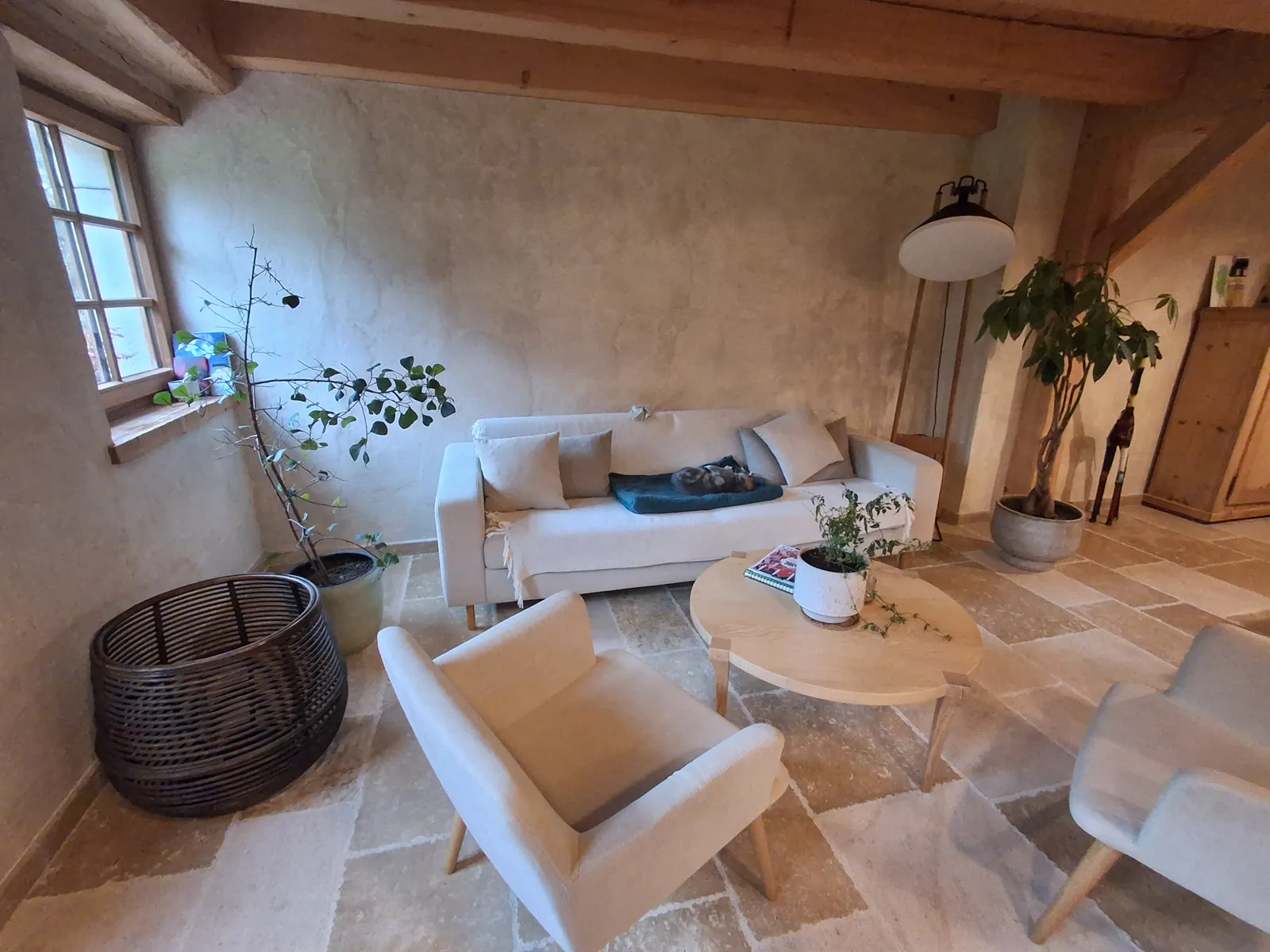
MULTICHANVRE projects of the same kind, carried out by our customers.
Read next
Planning a hemp block project?
Tell us about your project: we will reply within 48 working hours with a tailored costing.