Complete guide to pricing and common mistakes with hemp insulation for stone walls
The cost of insulating a stone wall with hemp depends on the thickness, installation method and finishes chosen. Common mistakes include underestimating the required insulation thickness, incorrect installation, and overlooking the specific characteristics of the material. Requesting a quote will give you an accurate, tailored estimate.
 By Julien Compain
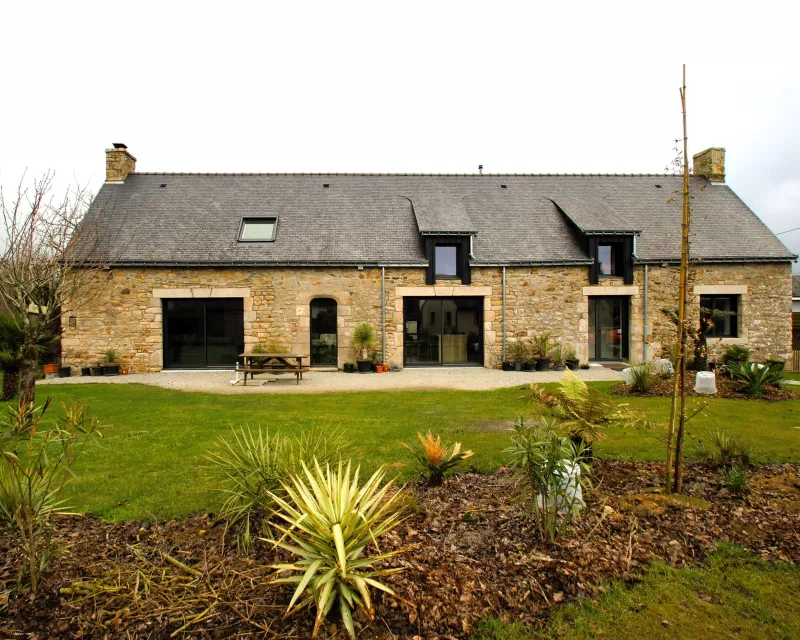
The cost of insulating a stone wall with hemp varies depending on the chosen thickness, installation method and finishes. Common mistakes to avoid include underestimating the required insulation thickness, incorrect installation, and overlooking the specific properties of the material. Requesting a quote will provide an accurate, tailored cost estimate.
Understanding the cost of insulating a stone wall with hemp
The cost of insulating a stone wall with hemp mainly depends on several technical and logistical factors. The thickness of the insulation block is crucial, as it determines both thermal performance and the price per square metre. The type of block used, particularly the MULTICHANVRE range, also affects pricing. In addition, installation—which requires a special lime-based mortar—and the choice of internal and external finishes will add to the overall budget.
Indicative retail prices for MULTICHANVRE blocks vary by thickness: starting from around €35/m² for 10 cm, €51/m² for 15 cm, €66/m² for 20 cm, and up to €95/m² for 30 cm. These prices are for guidance only and reflect typical builders' merchant rates, excluding installation and finishes. The final price charged by partner merchants may vary depending on region and local conditions.
Delivery is another important factor, as it depends on the order volume, site access and required equipment. These parameters can affect the total cost, especially for remote or hard-to-reach sites. It is therefore essential to consider delivery before finalising your budget.
For an accurate quote tailored to your project's specific requirements, we strongly recommend you request a free quote. This will take all factors into account and direct you to the partner merchant nearest your site.
The different hemp blocks suitable for stone walls
For stone wall insulation, the MULTICHANVRE range offers 60 × 30 cm straight-edged blocks in four thicknesses: 10, 15, 20 and 30 cm. These thicknesses correspond to dry thermal resistance values of 1.5, 2.3, 3.0 and 4.6 m².K/W, with slightly lower in-use values, which should be considered in thermal calculations.
MULTICHANVRE blocks are suitable for a range of applications: internal wall insulation (IWI), external wall insulation (EWI), partitions, floor insulation and timber frame infill. The formulation contains 84% hemp shiv sourced from Franche-Comté, combined with Vicat natural prompt cement, and is vapour-open.
It is important to note that neither MULTICHANVRE blocks nor the BIOSYS system are load-bearing. They always require an associated structural support, such as a supporting wall, timber frame or post-and-beam structure.
- 10 and 15 cm blocks are not suitable for fixing loads.
- For 20 and 30 cm blocks, fixings up to 10 kg are possible with 6 × 100 VBA screws without pre-drilling, and up to 30 kg with chemical anchors. For heavier loads, fixings must be anchored to the structural support.
Hempcrete actively helps regulate indoor humidity thanks to its vapour permeability. Thermal lag, which increases with thickness, improves summer comfort by delaying heat transfer through the building envelope.
For further details on the range and applications, see the MULTICHANVRE range: thicknesses, R-values, thermal lag, packaging and IWI, EWI, partitions, floors and timber frame infill.
Common mistakes to avoid when calculating costs and choosing products
- Underestimating the required thickness: To achieve the desired thermal performance, you must select an appropriate thickness. A block that is too thin will not meet regulatory or comfort standards, which can lead to extra costs or poor thermal comfort later on.
- Overlooking the loss of living space with IWI: Internal insulation with hemp blocks reduces usable floor area, a crucial point to factor into both your budget and design.
- Confusing dry thermal resistance with in-use value: The in-use R-value is more representative of real-world performance and should be used in thermal calculations.
- Ignoring the lack of ATEx or certified technical approval for MULTICHANVRE: At present, MULTICHANVRE is not certified and does not have a valid technical approval. An ATEx (French technical experiment assessment) is under review for internal insulation, but with no set date and no extension to other uses.
- Mixing up mortar-laid and dry-stacked installation: MULTICHANVRE is laid in a staggered bond with lime-based mortar, while BIOSYS uses a dry interlocking system. These methods are not interchangeable.
- Forgetting the cost of finishes and accessories: Compatible renders, fixings, and electrical services must be included in the budget to avoid unexpected expenses.
Indicative cost comparison of MULTICHANVRE blocks by thickness
| Thickness (cm) | Dry thermal resistance R (m².K/W) | In-use R-value (m².K/W) | Thermal lag (h) | Weight per block (kg) | Pallet quantity (m²/pallet) | Recommended use | Indicative price incl. VAT (€ /m²) |
|---|---|---|---|---|---|---|---|
| 10 | 1.5 | 1.4 | 6.1 | 6.5 | 21.6 | IWI and EWI | 35 |
| 15 | 2.3 | 2.1 | 9.25 | 10 | 14.4 | IWI, EWI and partitions | 51 |
| 20 | 3.0 | 2.8 | 12.3 | 13 | 10.8 | IWI, EWI, partitions, infill and floors | 66 |
| 30 | 4.6 | 4.2 | 18.5 | 21 | 10.08 | High-performance IWI, EWI, heavyweight partitions, infill and floors | 95 |
This table shows the main characteristics of MULTICHANVRE blocks, including weight, pallet quantity and indicative prices at builders' merchants. Weight and pallet quantity affect logistics and installation, especially handling and the number of pallets required.
Thermal lag, which is the time taken for heat to pass through the material, increases with thickness and helps maintain summer comfort by reducing temperature peaks inside the building.
Technical factors affecting the overall project cost
- Structural support: Hemp blocks are not load-bearing. An additional structure (post-and-beam, supporting wall or timber frame) is required, which adds to the budget.
- Preparation and installation: MULTICHANVRE is installed in three stages, using a lime-based mortar applied with a notched trowel, thin joints of around 3 mm, and a staggered bond with at least one third overlap of the block length. This process requires a certain level of expertise to ensure thermal performance and durability.
- Finishes: Internally, blocks can be finished with lime render, spray plaster, earth plaster or plasterboard. Externally, a lime render with full mesh reinforcement is recommended for durability and vapour permeability. These finishes affect the cost and should be planned for.
- Electrical services: Chases are made with a wall chaser and holes with a hole saw. Conduits and boxes are fixed and then filled with a compatible product. For IWI, services can also run in the space between the supporting wall and the lining.
- Protection in wet areas: In rooms exposed to water splashes, hemp-insulated walls must be protected, for example with plasterboard lining compliant with wet area requirements. This needs to be considered in the cost estimate.
Delivery, storage and logistics: impact on the final price
Hemp blocks are distributed via a network of partner builders' merchants, with delivery available throughout France. Delivery costs depend on the order volume, site access and required equipment (forklift, flatbed, lorry).
Average delivery times range from a few days to a month, depending on destination, time of year and hauliers. Lead times may be longer during winter and summer holidays. Some accessories are made to order, which can also delay delivery.
Pallets must be stored under cover, in a dry place and not stacked, to preserve the quality of the blocks, which are not rot-proof. This precaution is separate from the material's natural resistance to rodents, pests and mould.
All these logistical constraints should be included in the overall budget to avoid unexpected extra costs. For more information on distribution, see where to buy hemp blocks.
Tips for optimising the value for money of your hemp insulation
- Consult the technical team: Before choosing the thickness and product, it is advisable to request a precise specification from our technical team or a thermal engineering consultant.
- Avoid under-sizing thickness: Insufficient thickness reduces thermal performance and can lead to additional costs later on.
- Factor in loss of floor area with IWI: This should be anticipated in both design and budget, especially in renovations where living space is limited.
- Plan for suitable finishes: Choosing renders and finishes appropriate to the application and local climate ensures durability and insulation quality.
- Request multiple quotes: Getting quotes from several partner merchants allows you to compare offers and optimise value for money.
- Plan installation and training in advance: Good preparation and, if needed, installation training will reduce mistakes and extra costs from poor workmanship.
Requesting a quote: an essential step before making your decision
Requesting a quote is free and you will receive a prompt reply within 48 working hours. This provides a personalised estimate that takes your site's specific requirements into account.
The online form directs you to the nearest partner merchant based on your postcode, ensuring delivery is tailored to your location.
This step is essential to avoid unpleasant surprises and optimise your budget, by including all items: blocks, accessories, delivery, installation and finishes. You can access the form to request a quote directly on our website.
Frequently asked questions
What is the average price for insulating a stone wall with hemp?
The indicative price varies depending on the chosen thickness: from €35/m² for 10 cm up to €95/m² for 30 cm, excluding installation and finishes. The final cost depends on the merchant, delivery and site specifics.
Why is the in-use R-value different from the dry thermal resistance?
The in-use R-value takes into account real-life conditions, including humidity and installation, while the dry R-value is a standard laboratory measurement on dry material.
Can heavy loads be fixed directly to hemp blocks?
For 20 and 30 cm blocks, fixings up to 10 kg are possible with VBA screws without pre-drilling, and up to 30 kg with chemical anchors. For heavier loads, fixings must be anchored to the structural support.
Are hemp blocks certified for insulating stone walls?
No technical approval or ATEx has been issued to date for MULTICHANVRE. An ATEx case A is under review for internal insulation, with no set date, and does not cover external insulation or floors.
How can thermal bridges be reduced with hemp blocks in external insulation?
Masonry joints remain thermal bridges. Staggered bond installation with overlap and lime render significantly reduce thermal bridging, but do not eliminate it entirely.
Is a vapour barrier needed with a hemp-insulated wall?
Hempcrete regulates humidity without the need for a vapour barrier, provided at least one face of the wall remains open to water and vapour transfer. If the wall is closed on the other side, a study is required.
Where can I buy hemp blocks to insulate a stone wall?
Sales are exclusively through a network of partner builders' merchants. Delivery is available throughout France. To find a nearby merchant, see our dedicated page or request a free quote.
Read next
Planning a hemp block project?
Tell us about your project: we will reply within 48 working hours with a tailored costing.