Comparing the hempcrete lambda block with other insulation solutions
The hempcrete lambda block provides natural thermal insulation, moisture regulation, and a favourable carbon footprint. However, it requires greater thickness than some thin insulations and comes at a higher cost. Its installation method and hygrothermal properties make it well suited to eco-friendly renovations and bio-based construction.
 By Julien Compain
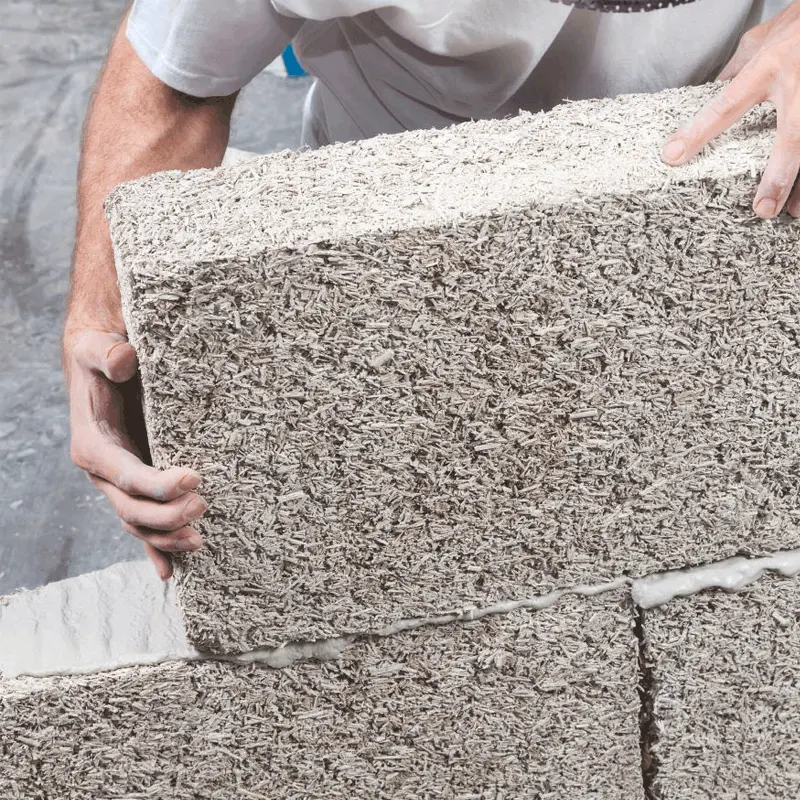
The lambda hemp block provides natural thermal insulation, regulates indoor humidity, and offers a favourable carbon footprint. However, it requires greater thickness than some thin insulation materials and comes at a higher cost. Its installation method and hygrothermal properties make it a suitable choice for eco-friendly renovations and bio-based new builds.
Thermal performance and insulation thickness
The lambda hemp block offers variable thermal resistance depending on the chosen thickness, ranging from R 1.5 m².K/W for 10 cm up to 4.6 m².K/W for 30 cm. This wide range allows you to tailor the thermal performance to the specific needs of your project, whether for lightweight lining, internal wall insulation (IWI), external wall insulation (EWI), or as under-screed insulation.
Its dry-state thermal conductivity is around 0.065 W/(m.K), which is higher than that of some thin insulants such as glass wool or expanded polystyrene. In practice, this means a thicker hemp block is required to achieve the same thermal resistance as these materials.
This need for increased thickness requires careful consideration, especially for IWI, where usable floor space may be reduced. The loss of space is an important factor to weigh up in the thermal and architectural design of your project. For summer comfort, the hemp block offers significant thermal lag—up to 18.5 hours for 30 cm thickness—helping delay heat transfer into the building.
For more guidance on choosing the right thickness for your needs, see our dedicated guide to selecting hemp block thickness. This resource explains the trade-offs between thermal performance, thickness, and intended use.
Moisture regulation and indoor air quality
Hemp blocks stand out for their natural ability to regulate indoor humidity. Thanks to their vapour permeability and equilibrium moisture content within a comfortable range, they help prevent condensation within walls. This property is especially valuable in renovation of older walls, which are often prone to damp problems where impermeable insulation would be unsuitable.
The material is vapour-open, allowing walls to breathe and contributing to excellent indoor air quality, rated A+—an important factor for occupant health.
Unlike some other plant-based insulants, hemp blocks are naturally resistant to rodents, reducing the risk of long-term degradation. These hygrothermal properties make them a relevant choice for buildings where moisture management is a key concern.
Cost and value for money
The indicative price of a lambda hemp block starts at around €35/m² incl. VAT for a thickness of 10 cm, with the price rising in proportion to thickness. This is higher than many conventional insulation solutions such as glass wool or expanded polystyrene, which are cheaper but have different properties.
It is important to note that there is no official price list and the final cost will always depend on a personalised quote, taking into account quantity, location, and the specifics of your project.
This price includes installation with a dedicated mortar and compatible renders or plasters, all essential to the system’s performance and durability. When assessing value for money, the benefits of a local, renewable, bio-based material and its environmental advantages should also be considered.
Installation and technical compatibility
The MULTICHANVRE range is installed with a special lime-based mortar, applied with a notched trowel in staggered joints to ensure a uniform bond between blocks. Fixing to the substrate is done with brackets, two to five per square metre, before applying compatible renders or plasters.
The BIOSYS system, on the other hand, uses dry interlocking assembly (tongue and groove) without glue or mortar. This solution is combined with a reinforced concrete post-and-beam structure and is intended for builds where such a frame is present. Installation rates can reach up to 30 m² per day (maximum, on a suitable site) with two workers, including the structure.
Hemp blocks are not load-bearing; they are used as a lining on an existing wall or as infill for timber or concrete frames. Factory prefabrication eliminates drying times associated with moisture, making site management easier.
However, installation requires specific know-how and suitable tools. To support professionals, technical documentation and an installation guide are available, detailing best practices and the specific features of the material.
Carbon footprint and environmental impact
Made from 84% hemp shiv—the woody core of the hemp stem—the block makes use of a renewable, local resource from the French supply chain. The binder is Vicat natural prompt cement, a hydraulic, vapour-permeable cement that helps limit the environmental impact of production.
The block naturally stores CO₂, as verified by its FDES (environmental product declaration) for 30 cm thickness. This feature helps reduce the building’s carbon footprint, in line with RE2020 requirements (France’s environmental building regulation).
The dry construction process, with no on-site drying time, reduces emissions linked to moisture and treatment during installation. At end of life, the block is recyclable and renewable, supporting sustainable management of construction materials.
Detailed technical comparison: hemp block vs conventional insulation
| Criterion | Lambda hemp block | Conventional insulation (glass wool, polystyrene) |
|---|---|---|
| Thermal resistance (R) | 1.5 to 4.6 m².K/W (10 to 30 cm) | 1.5 to 4.5 m².K/W (thinner, 6 to 12 cm) |
| Thermal conductivity (λ) | ~0.065 W/(m.K) | 0.035 to 0.04 W/(m.K) |
| Thermal lag | Up to 18.5 h (30 cm) | Low, generally < 6 h |
| Density | Approx. 300 kg/m³ | 20 to 40 kg/m³ (glass wool), 15 to 35 kg/m³ (polystyrene) |
| Moisture regulation | Good, vapour-open, equilibrium 50–60% RH | Poor, most insulants are not vapour-open |
| Indicative cost per m² | From €35 incl. VAT (10 cm) | €15 to €25 incl. VAT depending on product and thickness |
| Installation time and complexity | Mortar installation, staggered joints, requires expertise | Quick to install, simple glueing or fixing |
| Durability and maintenance | Depends on compatible renders, resistant to rodents | Variable stability, sensitive to moisture and rodents |
Durability, maintenance and resistance to damage
The durability of hemp blocks depends mainly on the quality of the protective renders or plasters used. Compatible finishes such as plaster, lime, earth or clay indoors, and lime with mesh reinforcement outdoors, are essential to ensure the longevity of the wall. These finishes protect against mechanical and weather-related damage while maintaining the material’s vapour permeability.
The block is naturally resistant to rodents, limiting biological degradation. Maintenance is minimal, provided the building is properly ventilated to avoid excess moisture. The material does not suffer from rapid chemical degradation, which contributes to its long lifespan.
For more information on best maintenance practices and lifespan, the comprehensive guide to durability and maintenance is a useful resource.
Suitable applications and limitations of lambda hemp block
Hemp blocks are well suited to a range of uses in both new build and renovation: internal wall insulation (IWI), external wall insulation (EWI), partitions, timber frame infill, and under-screed floor insulation. They fit into construction systems where thermal performance and moisture regulation are priorities.
As they are non-load-bearing, hemp blocks always require a supporting wall or structural frame, whether masonry, timber or concrete. Installation must be adapted to this technical constraint.
One drawback to consider is the loss of floor area with IWI due to the thickness required, which can be significant compared to thinner insulants. In addition, the block is not suitable for load-bearing applications or areas subject to high mechanical stress.
The choice of hemp block should therefore be based on the technical, climatic and regulatory context of your project. To help with this decision, see our comparisons with conventional insulation and the technical data sheets available on the website.
Frequently asked questions
What is the thermal conductivity of the lambda hemp block?
The hemp block has a thermal conductivity of around 0.065 W/(m.K), which is higher than some conventional insulants such as glass wool.
Is the hemp block suitable for load-bearing walls?
No, hemp blocks are not load-bearing. They are designed to line an existing supporting wall or to infill a timber or concrete frame.
How is the MULTICHANVRE hemp block installed?
Installation is carried out using a special mortar applied with a notched trowel in staggered joints, fixed to the substrate with brackets before rendering.
Does the hemp block regulate humidity?
Yes, it naturally regulates indoor humidity thanks to its vapour permeability and ability to maintain a comfortable moisture range.
What is the carbon impact of the hemp block?
Mainly made from renewable hemp shiv, the block stores CO₂, with a verified FDES for 30 cm, reducing the building’s carbon footprint.
Is the hemp block compatible with all types of render or plaster?
It requires compatible finishes, such as plaster, lime, earth or clay indoors, and lime with mesh reinforcement outdoors, to ensure durability and performance.
What is the indicative price of the lambda hemp block?
The indicative price starts at around €35/m² incl. VAT for a thickness of 10 cm, with the cost increasing according to the chosen thickness.
Read next
Planning a hemp block project?
Tell us about your project: we will reply within 48 working hours with a tailored costing.